


Bobbin Turned Stool
These bobbin turned stool pieces offer tactile turned woodwork and sturdy forms that anchor a traditional interior with authentic period character.
Bobbin Turned Stool
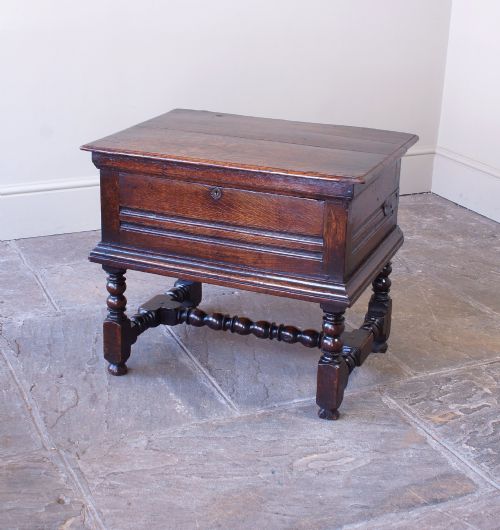
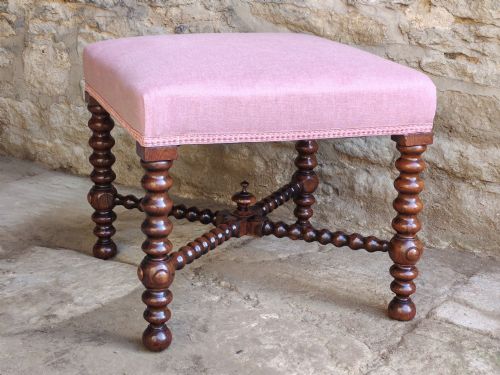
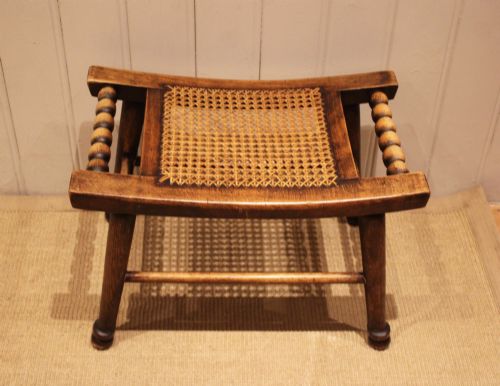
A bobbin turned stool brings structured turned woodwork into domestic spaces through forms ranging from low footstools to box stools and cane seat designs. Buyers search for this phrase to find seating defined by distinctive spool-like turnings along the legs and stretchers.
The versions most commonly met on this page span the seventeenth century up to the Victorian era and the early twentieth century. They appear in oak, beech, walnut, and rosewood, often complemented by cane work, fabric, or tapestry tops.
The selection includes joined constructions alongside box stools and footstools that reveal how domestic seating evolved across distinct centuries. Each piece displays the characteristic rhythmic turnings that give the style its enduring appeal among collectors of vernacular and formal furniture.
Materials and construction
Timbers such as oak, beech, walnut, and rosewood provide the structural integrity required for these turned frames. Craftsmen shaped the spool motifs on lathes before assembling the legs and stretchers with traditional joinery.
Seating surfaces utilise woven cane, solid wood, or upholstered pads covered in fabric, tweed linen, and tapestry. These varied materials reflect both utilitarian farmhouse origins and more refined nineteenth-century drawing room aesthetics.
The inventory records functional forms including box stools, footstools, side chairs, and metamorphic library steps.
Assessing quality and character
The crispness and depth of the lathe work dictate the visual strength of the turning. Sharply defined spools with uniform symmetry indicate skilled execution by the maker.
The integrity of the structural joints and the condition of original timbers differentiate a robust survival from a heavily restored example. Selection of dense hardwoods like oak and rosewood generally supports better longevity than softer secondary woods.
The Bobbin Turned Stool Glossary
- Bobbin turning
- A form of woodturning characterised by a sequence of rounded spool-like shapes resembling bobbins of thread. This decorative motif appears predominantly on the legs and stretchers of seventeenth-century and revival furniture.
- Box stool
- A low seating form featuring a hinged lid that opens to reveal a storage compartment beneath. These pieces combine utility with decorative turned underframes.
- Cane work
- Woven plant material used to create resilient and breathable seat panels. It requires careful hand-weaving around the frame aperture.
- Back stool
- An early form of seating possessing a wooden backrest attached to a stool base without arms. They predate standard dining chairs in many vernacular settings.
- Joined construction
- Furniture assembled using mortise and tenon joints secured with wooden pegs rather than metal fasteners. This traditional method ensures stable frame construction.
Bobbin Turned Stool: Frequently Asked Questions
How do I date a bobbin turned stool?
Dating relies on examining the timber species, joinery techniques, and overall wear patterns present on the frame. Oak and joined construction typically point to seventeenth-century or early revival origins, while rosewood and walnut often suggest Victorian manufacture.
Comparison with documented examples in archives helps narrow the production window. Hardware and upholstery remnants also offer clues to the period of origin.
Are cane seats difficult to maintain?
Cane seats require gentle cleaning with a damp cloth and should be kept away from excessive direct heat sources to prevent the material from drying out and snapping. Proper humidity levels help preserve the elasticity of the woven fibres over time.
Weight distribution matters when using cane furniture daily. Sitting carefully avoids stretching or puncturing the delicate woven surface.
Where should I place a box stool?
A box stool functions well in hallways, living rooms, or bedrooms where its internal storage compartment proves useful for blankets or small items. The flat top provides a stable surface for seating or occasional placement.
Placing the piece away from direct sunlight protects both the timber finish and any upholstered elements from fading. Their compact footprint allows them to fit easily into smaller spaces.
What is the difference between a footstool and a dressing stool?
Footstools are generally lower to the ground and designed to support seated feet rather than acting as primary seats. Dressing stools stand at a standard height suitable for use at a vanity or dressing table.
Dressing stools frequently feature upholstered pads in fabric, tapestry, or tweed linen. Footstools more often display exposed wooden tops or simple woven cane surfaces.