




Mid 19th Century Stool
A mid 19th century stool brings compact Victoriana into a room, offering both decorative presence and practical seating.
Forms and Origins
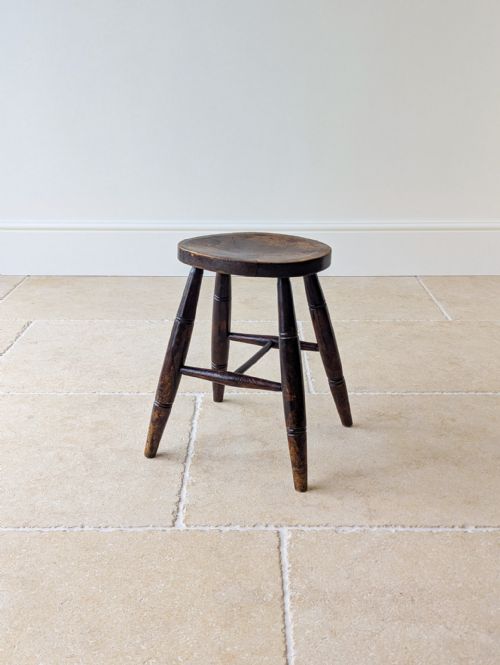
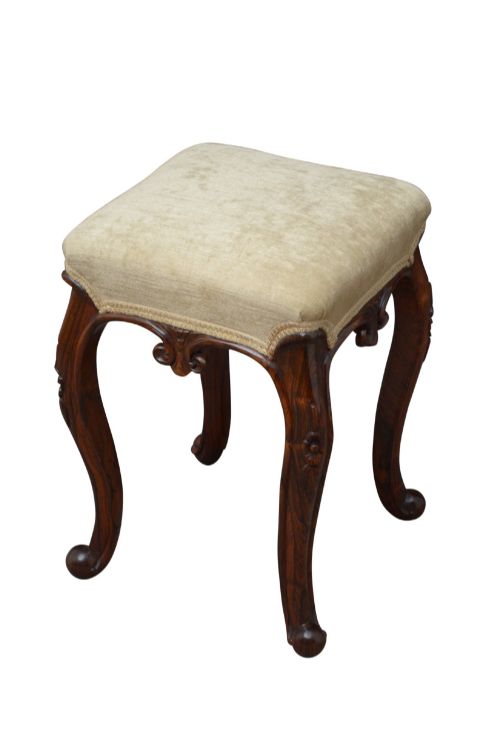
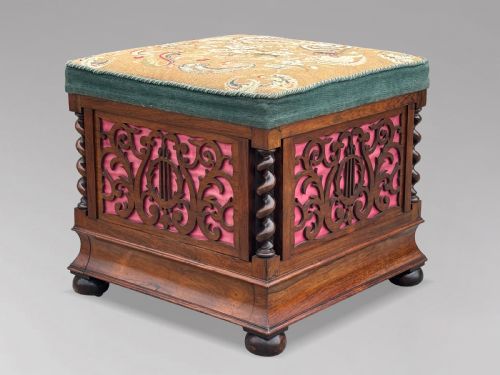
A mid 19th century stool encompasses a variety of domestic seating, from low footstools and gout stools to large centre stools and music stools. These pieces originate primarily from British and French workshops, though Scandinavian Empire examples also appear in the archive.
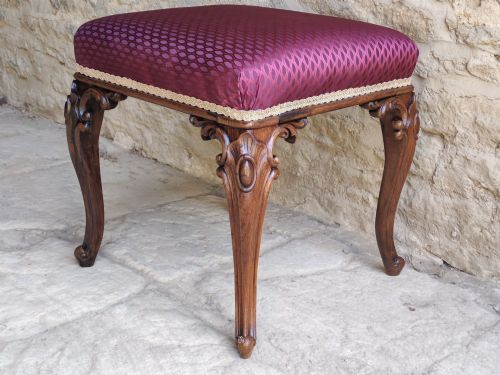
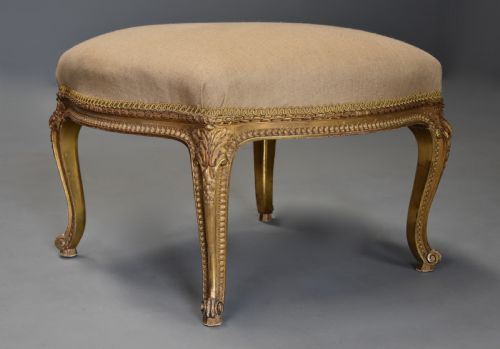
The prevailing styles reflect Victorian tastes alongside French Rococo Revival and Louis XV Revival influences. Buyers frequently encounter low footstools upholstered in fabric or linen, alongside substantial centre stools designed for the middle of a room.
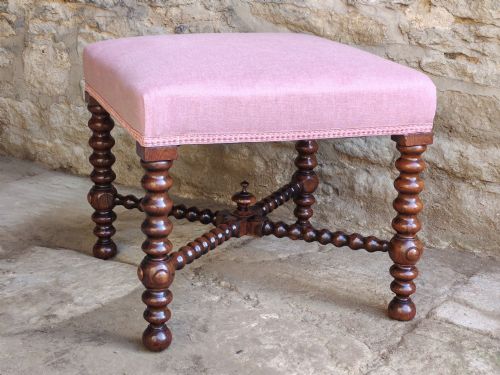
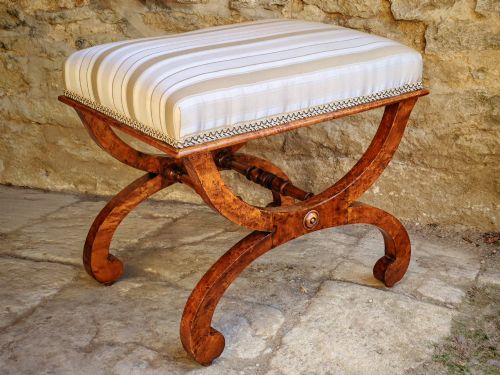
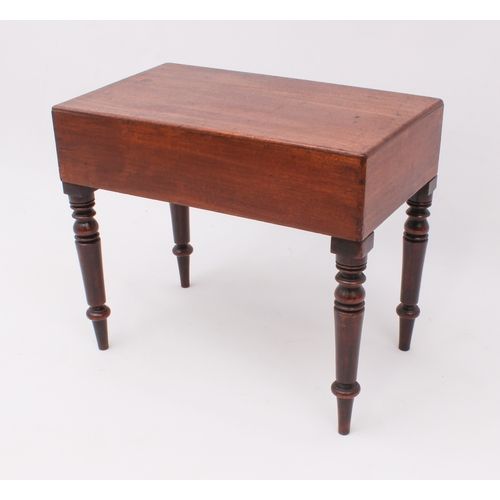
Form follows function across the selection, with specialised pieces such as adjustable gout stools and box seat music stools sitting alongside simple turned-leg and X-frame designs. Walnut, rosewood, mahogany, and giltwood provide the structural basis for these diverse forms.
Distinctions in Quality
The refinement of the timber carving and the choice of facing wood dictate the upper tier of the range. Solid rosewood, burr maple, and heavily carved giltwood demand greater craftsmanship than standard mahogany or softwood frames.
Detailing such as bobbin turned legs, barley twists, and maker stamps elevate specific examples. The integrity of the original upholstery materials and the precision of adjustable mechanisms further separate standard seating from exceptional pieces.
Retail Price Guide 2026
Typical UK retail prices for mid 19th century stool, calculated from the Sellingantiques database of over a million retail prices indexed since 2003. This retail price guide relies exclusively on Sellingantiques data; no external sources or auction records are used, so the figures do not describe the wider market.
The documented styles span Victorian, Regency, and French Rococo Revival periods.
LOIDRAULT FRERES PARIS
The Mid 19th Century Stool Glossary
- Centre stool
- A large stool designed to stand freestanding in the middle of a room rather than against a wall. These pieces typically feature finished upholstery and decoration on all sides.
- Gout stool
- A specialised low stool featuring an adjustable incline to support the legs or feet. They often incorporate leather or fabric pads.
- Giltwood
- Timber coated with gold leaf or gilt gesso to create a brilliant metallic surface. This finish frequently appears on pieces influenced by French revival styles.
- X frame
- A structural base formed by intersecting curved or straight timbers shaped like the letter X. This configuration provides inherent strength and visual movement.
- Barley twist
- A decorative turning technique resembling a rope wound around a cylinder. It remains a popular characteristic of mid-century wooden legs and stretchers.
Frequently Asked Questions
How do I identify a mid 19th century stool?
Examine the timber, turning styles, and upholstery choices to establish the period. Characteristic woods like rosewood and walnut, combined with Victorian revival styles, point directly to this era.
Look for construction methods and secondary woods typical of the mid-nineteenth century. Maker stamps can also provide definitive confirmation of origin.
Where should I place a centre stool?
A centre stool belongs in the middle of a room where its finished upholstery and carved frame can be viewed from all angles. They work well in larger living spaces as a flexible seating option.
Ensure there is adequate walk space around the piece to appreciate its proportions. They also serve effectively as a soft alternative to traditional coffee tables.
What is the difference between a footstool and a gout stool?
A standard footstool provides a simple, flat elevated surface for resting the feet. They are typically stationary and upholstered in fabric, needlework, or leather.
A gout stool includes an adjustable mechanism to angle the support surface. This targeted design specifically catered to Victorian notions of comfort and health.
How do I care for antique upholstery?
Protect antique fabric and leather by keeping the stool away from direct sunlight and heat sources. Gentle vacuuming with a soft brush attachment removes surface dust without damaging delicate fibres.
Avoid harsh chemical cleaners on giltwood or polished rosewood frames. Professional conservation is recommended for fragile gold braid or antique textiles.