



Giltwood Footstool
A giltwood footstool brings formal nineteenth-century gilt-finished timber and plush upholstery into a room.
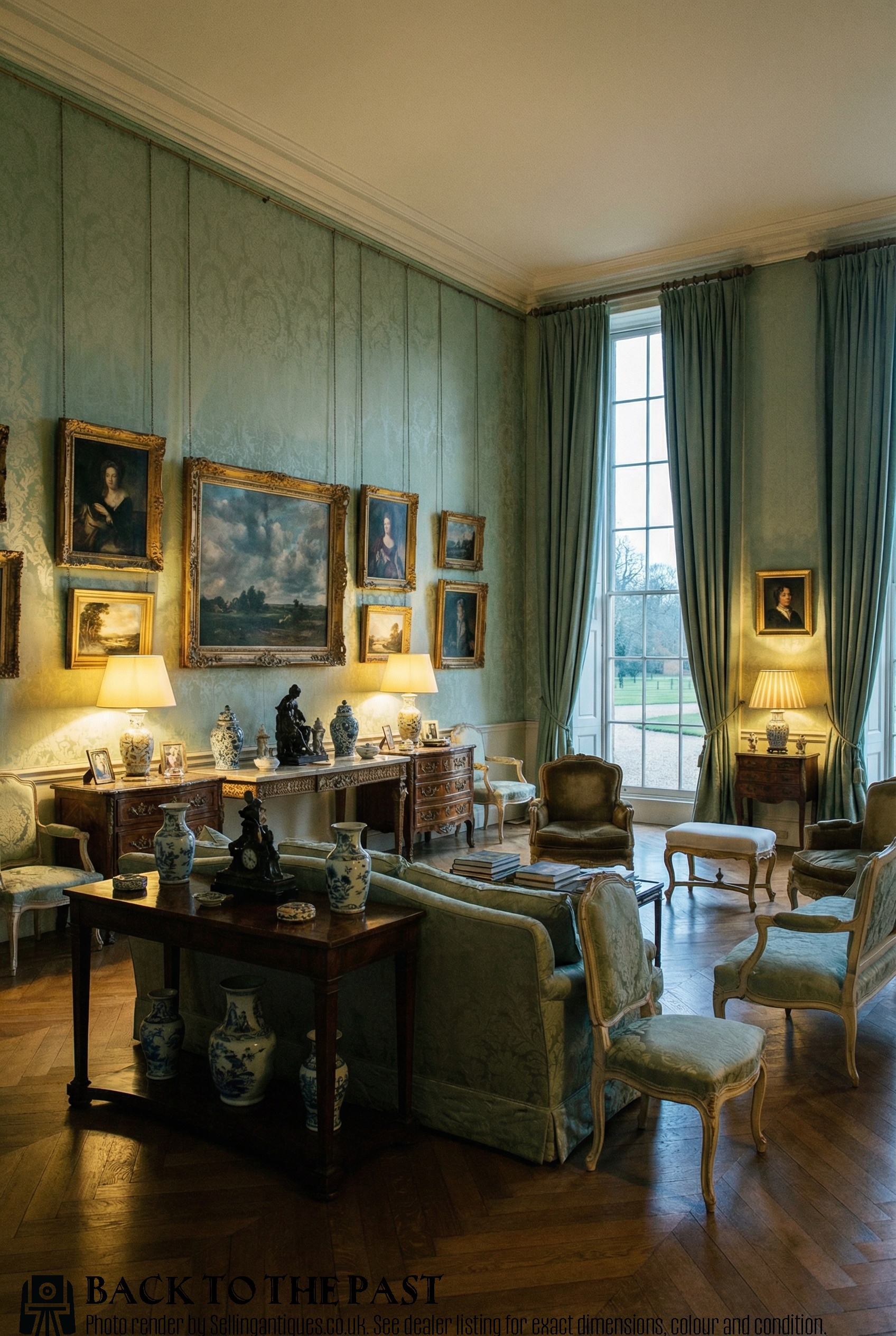
What these pieces are
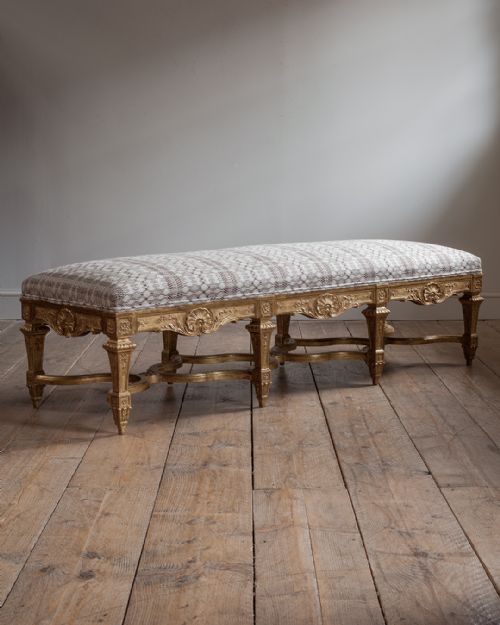
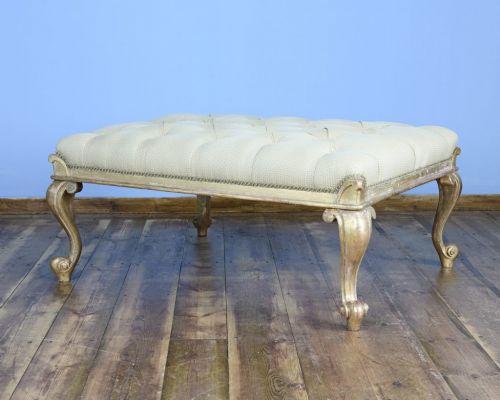
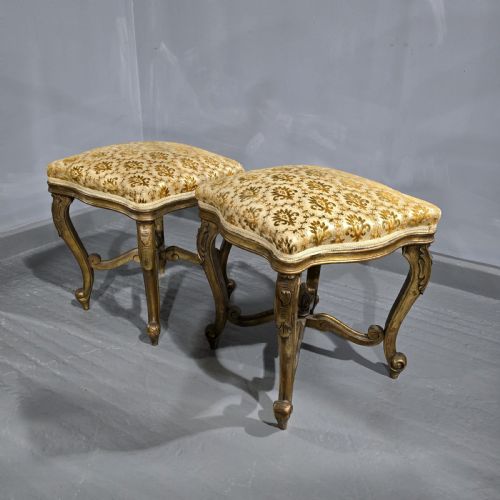
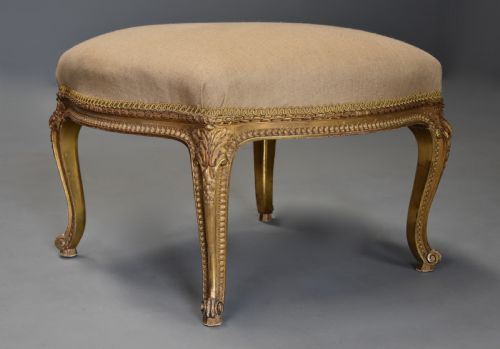
A giltwood footstool is a low seating form constructed from wood covered in gesso and gold leaf or paint, frequently upholstered in velvet, silk, or embroidered textile. The pieces appearing in this category span the nineteenth century, including Victorian, Regency, and Georgian revival examples alongside Louis XV revival and French Chinoiserie styles. Forms vary from simple rectangular shapes to large circular pieces, oval frames, X-frame curule designs, and rocking gout stools.
Buyers encounter numerous Victorian and mid-nineteenth-century items alongside revival pieces that reflect earlier French and English tastes. The listings combine practical low seating with decorative carving, often featuring deep buttoning, padded tops, or intricate wooden frames. Whether built as a standard lounge stool or a specialised rocking gout stool, each piece pairs a gilded wooden base with tactile fabric upholstery.
How they were made
Makers constructed these footstools using timber such as wood and painted wood, applying a layer of gesso to smooth the surface before adding the gilt finish. Carvers shaped the wooden frames with decorative details ranging from simple curved profiles to elaborate Rococo ornamentation and carved X-frame structures. The resulting giltwood surface gives each piece its characteristic metallic sheen and texture.
Upholstery formed an essential part of the construction, utilising fabrics like red silk, velvet, embroidered textiles, and standard padded covers. Artisans secured these materials over deep padding, sometimes incorporating deep buttoning to create firm yet comfortable resting surfaces. The combination of timber, gesso, giltwood, and fabric defines the material composition of these nineteenth-century items.
Retail Price Guide 2026
Typical UK retail prices for giltwood footstool, calculated from the Sellingantiques database of over a million retail prices indexed since 2003. This retail price guide relies exclusively on Sellingantiques data; no external sources or auction records are used, so the figures do not describe the wider market.
Some nineteenth-century occupants rested their aching joints upon rocking gilt gout stools.
What varies in quality
The standard of a giltwood footstool depends upon the depth and precision of the carved timber beneath the gesso and gilt finish. Pieces displaying crisp, hand-carved ornamentation in styles like Louis XV revival or Rococo sit at a different level of craftsmanship from simpler, unadorned frames.
The choice and execution of the textile upholstery also differentiate the pieces, from basic padded covers to fine embroidered textiles and deep-buttoned red silk. Furthermore, structural forms such as X-frame curule designs or rocking mechanisms require more complex joinery than standard four-legged stools.
Miles & Edwards
The Giltwood Footstool Glossary
- Giltwood
- Timber treated with gesso and covered in gold leaf or metallic gilt finish. This surface treatment gives nineteenth-century frames their characteristic bright appearance.
- Gesso
- A plaster-like mixture applied to wood to create a smooth base before gilding. It allows carvers to achieve sharp details beneath the gilt layer.
- Curule stool
- An X-frame seating form derived from classical Roman folding chairs. This structural layout provides a distinctive crossing support beneath the upholstered top.
- Gout stool
- A specialised low stool designed to elevate feet or legs, sometimes featuring a rocking mechanism. These pieces accommodated nineteenth-century domestic comfort.
- Rococo style
- A decorative design movement characterised by asymmetric curves, C-scrolls, and naturalistic ornamentation. It appears frequently on revival footstools from this period.
Frequently Asked Questions
What is a giltwood footstool?
A giltwood footstool is a low nineteenth-century seat featuring a timber frame coated in gesso and gilt, paired with fabric upholstery.
These pieces range from simple rectangular pads to carved Victorian and Regency designs upholstered in velvet, silk, or embroidered textile.
How were giltwood footstools used?
Nineteenth-century households used these low stools to support feet while sitting in armchairs or lounge seating. Some variations, such as rocking gout stools, specifically served to elevate and rest tired legs.
Beyond basic utility, their ornate carved frames and gilded surfaces functioned as decorative accents within formal drawing rooms and parlours.
How do I identify Victorian pieces?
Victorian examples often display characteristic nineteenth-century proportions, deep buttoning, and heavy timber construction.
They frequently incorporate revival influences such as Louis XV curves or Rococo carving alongside standard Victorian upholstery fabrics.
What styles are available?
The available pieces include Victorian, Regency, and Georgian revival designs, alongside Louis XV revival and French Chinoiserie.
Carved ornamentation and frame shapes vary from circular and oval formats to X-frame curule structures and rocking forms.