



Antique Upholstered Footrest
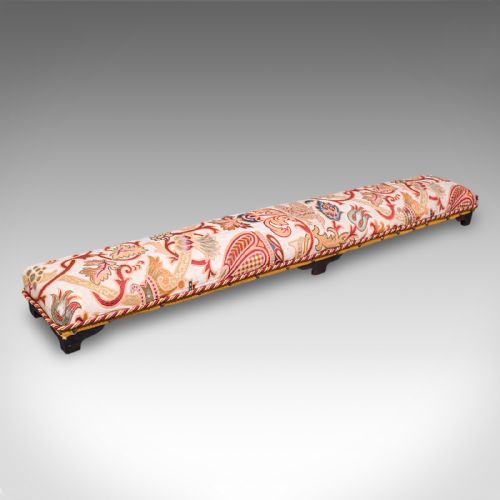
An antique upholstered footrest brings low, tactile comfort to a room, offering sturdy timber frames and soft period textiles for fireside or dressing use.
Antique Upholstered Footrest
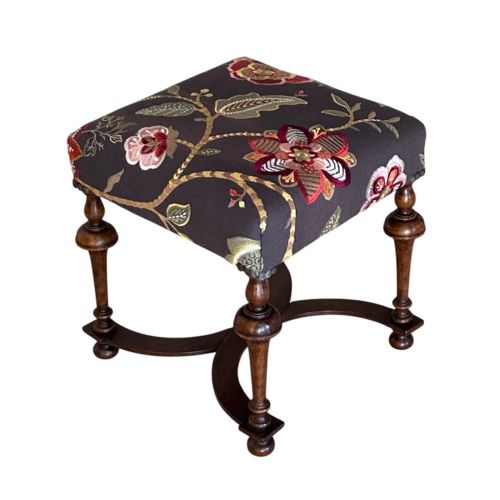
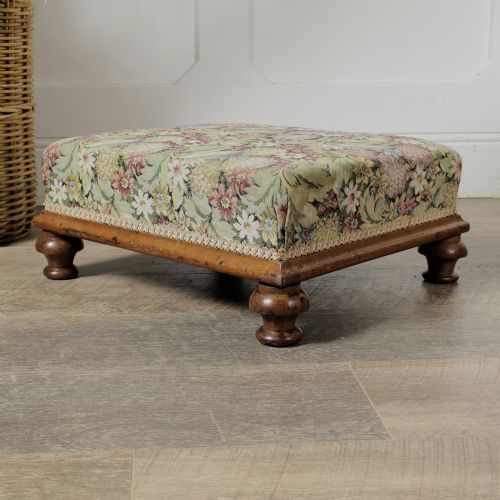
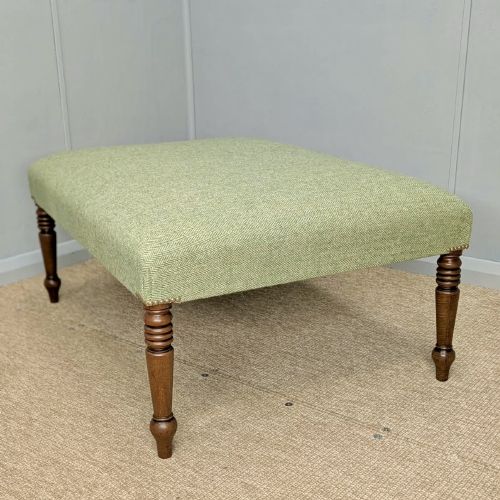
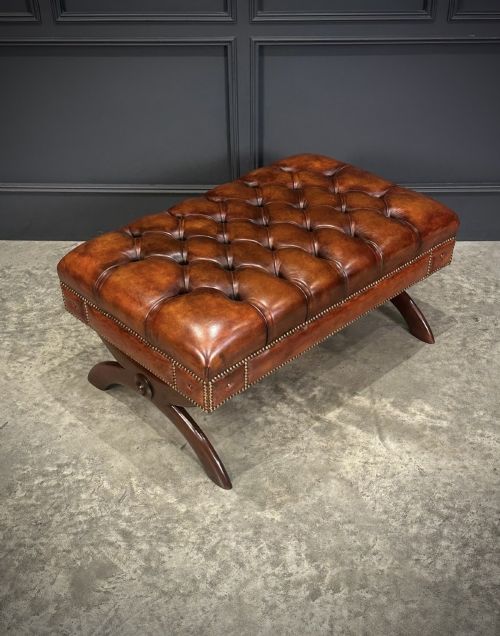
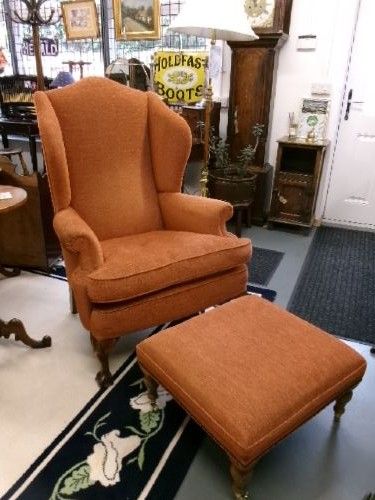
An antique upholstered footrest encompasses low stools, dressing stools, and ottomans designed to support the feet or provide low seating. The pieces on this page span the eighteenth century, the Regency era, the Victorian period, and the early twentieth century.
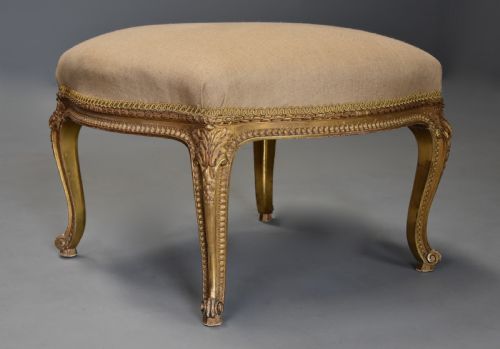
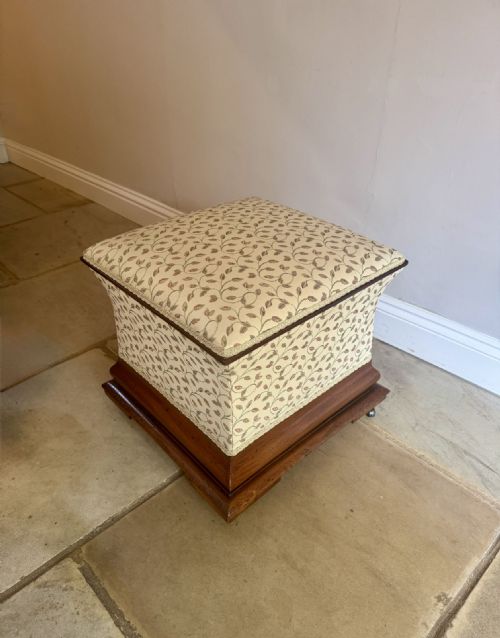
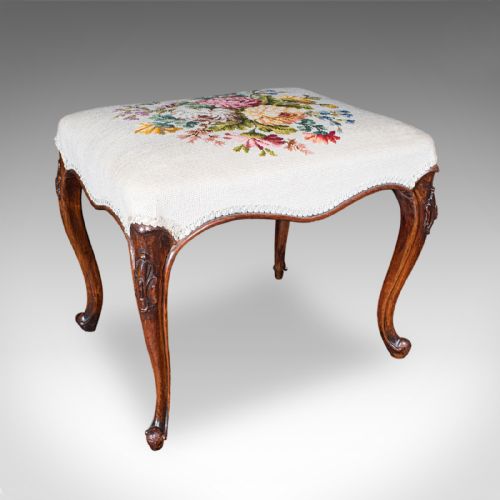
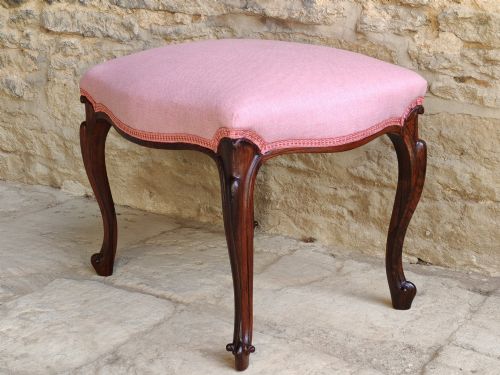
Most examples meet you as compact footstools or fireside seats, frequently appearing in walnut, mahogany, or rosewood frames. Formats range from simple oblong shapes to carved cabriole leg variants and larger storage ottomans.
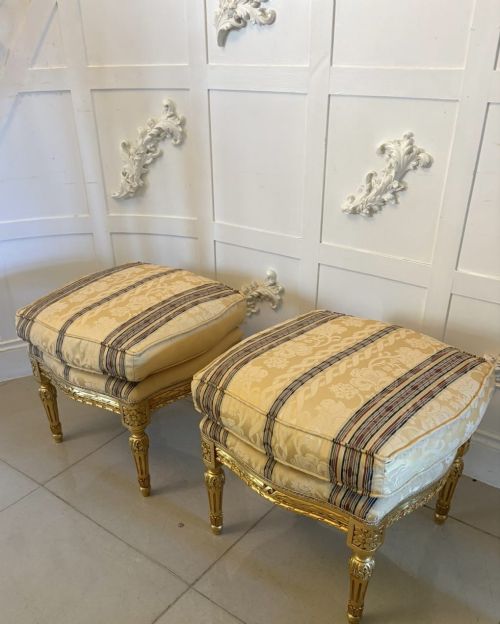
Origins stretch from English workshops to French ateliers, taking in Queen Anne, Chippendale, and Victorian Rococo revival styles alongside plain nineteenth-century utility pieces.
Assessing quality
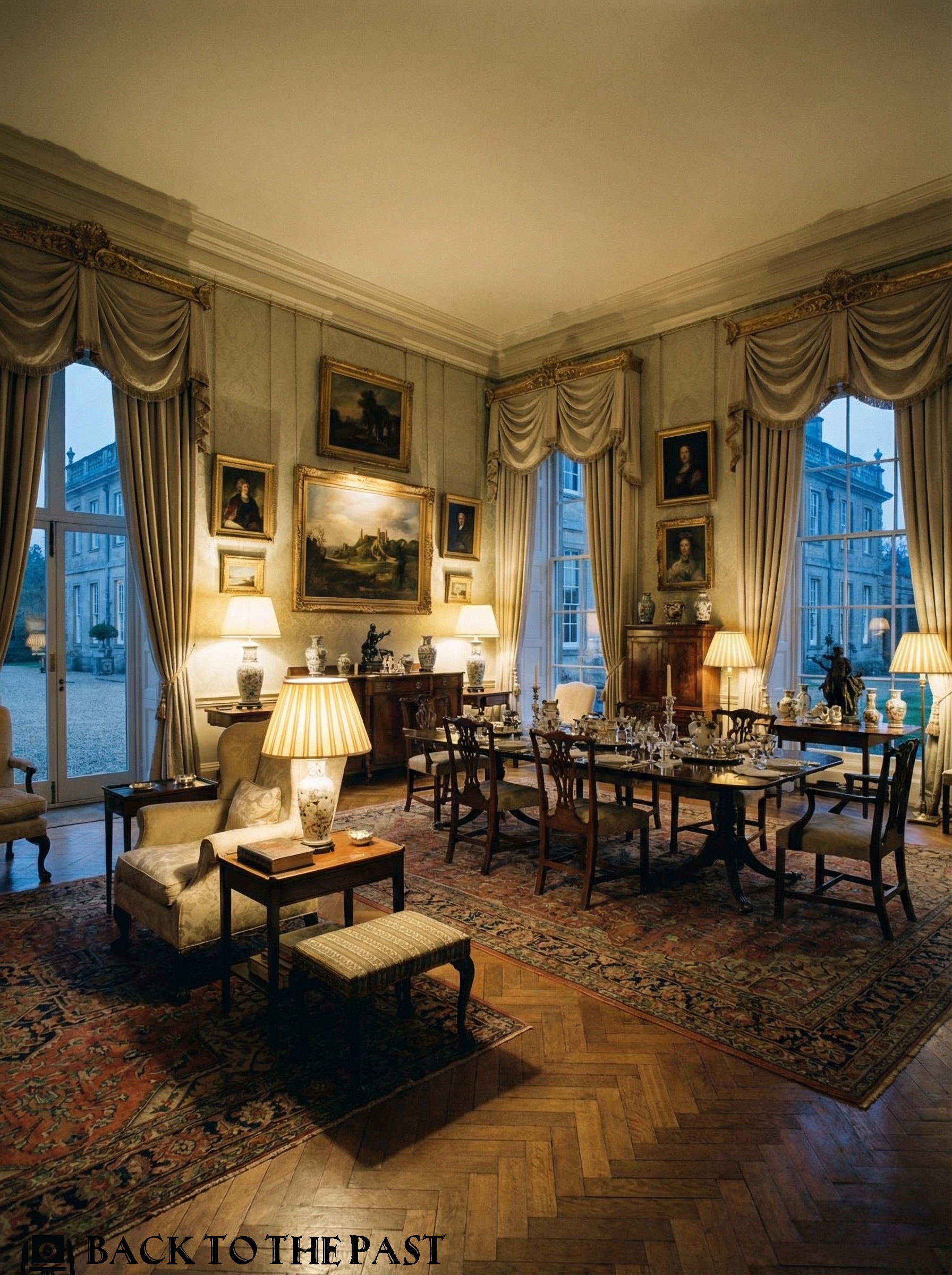
Quality rests in the crispness of the timber carving and the architectural integrity of the frame joints. Substantial hardwoods and balanced proportions distinguish finer workshop output from simpler utility seating.
The sophistication of the secondary details, such as carved scroll tops, giltwood finishes, or maker stamps, separates standard production from exceptional pieces.
Antique Upholstered Footrest Retail Price Guide 2026
Typical asking prices for upholstered footrest among the pieces listed under this phrase on Sellingantiques today, from the lower quarter to the upper quarter. They describe what is for sale here now, not the wider market.
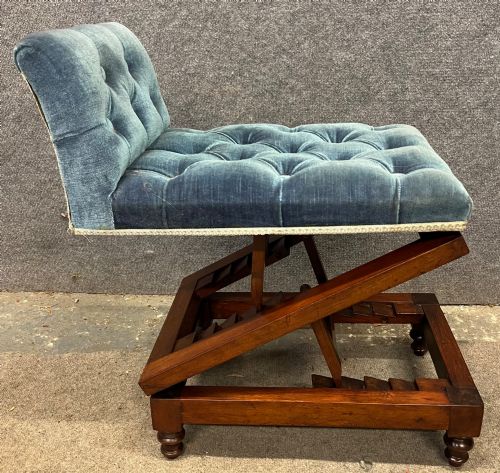
The furniture forms include simple fireside footstools, dressing table seats, metamorphic gout stools, and large storage ottomans.
Mathew Gregson·Loidrault Freres Paris
The Antique Upholstered Footrest Glossary
- Cabriole leg
- A furniture leg that curves outward and then tapers inward, typically finishing in a pad or scroll foot. This shape draws inspiration from animal limbs and appears frequently on eighteenth-century and revival seating.
- Needlepoint
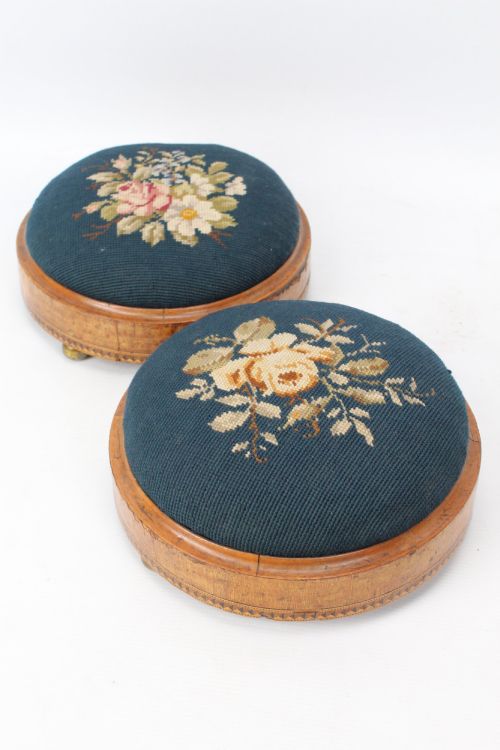
- A type of canvas work embroidery executed with wool yarn, commonly used for historical footstool upholstery. It provides a durable, textured surface with pictorial or geometric patterns.
- Gout stool
- An adjustable footrest designed to elevate and angle a foot for comfort, often associated with nineteenth-century walnut or beech frames. These utilitarian pieces frequently include mechanical adjustments.
- Ottoman
- A low, upholstered seat or footstool without a back or arms, sometimes incorporating internal storage beneath the hinged top. Larger examples serve double duty as seating and footrests.
- Bobbin leg
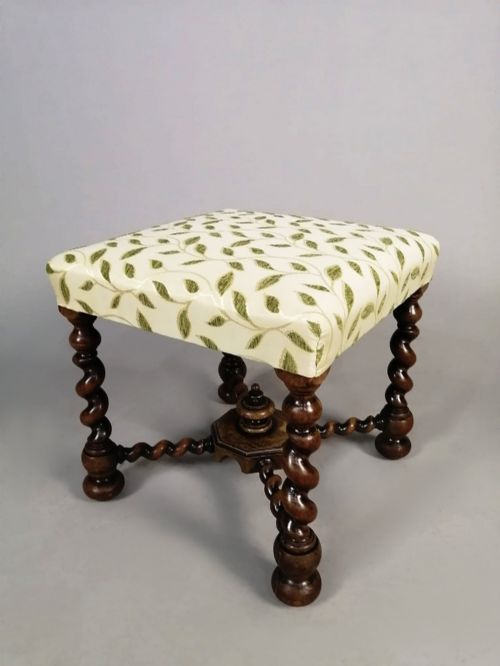
- A turned furniture leg shaped with a series of rounded, spool-like swellings along its length. This decorative turning style is characteristic of mid-nineteenth-century rosewood and walnut frames.
Antique Upholstered Footrest: Frequently Asked Questions
How were antique footrests used originally?
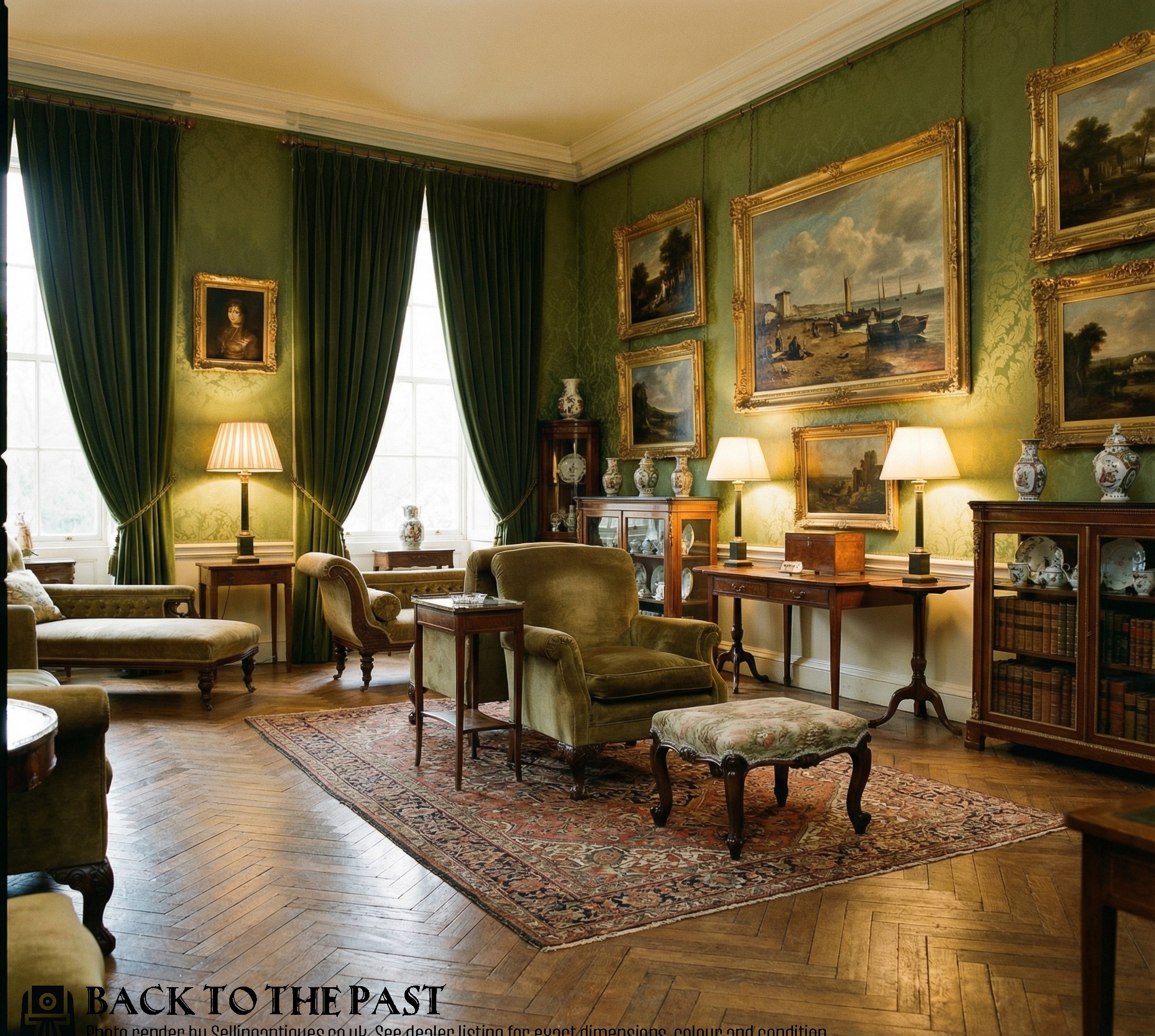
These pieces served near firesides to keep feet elevated away from cold draughty floors, or stood beside dressing tables to provide low, movable seating. Larger ottoman variants occasionally offered enclosed storage for textiles or personal items.
Over time, their domestic role shifted from pure utility to decorative accessory work, reflecting changing fashions in interior comfort and upholstery fabrics.
How do I identify a Victorian footstool?
Victorian examples typically display dark timbers like rosewood and walnut, often paired with needlepoint, wool, or velvet upholstery. Look for distinctive details such as cabriole legs, bobbin turnings, or heavy brass castors.
Earlier nineteenth-century versions lean towards robust mahogany frames, while later Victorian pieces embrace revival styles and more elaborate carved decoration.
Should I reupholster an antique footrest?
Many pieces survive with worn or replacement fabric, and some are explicitly offered ready for new upholstery to suit modern interiors. Selecting a suitable textile allows you to match existing room decor while preserving the underlying wooden frame.
Retaining original needlepoint or period leather is preferable if the material remains sound, but fragile covers justify careful replacement with appropriate traditional fabrics.
What is the difference between an ottoman and a footstool?
Footstools are generally smaller, compact supports designed purely for resting feet or low sitting. Ottomans tend to be larger, sometimes functioning as independent seats with internal storage compartments.
Both forms share similar wooden framing techniques and upholstery methods, but their scale and storage capacity dictate where they sit within a room.