



Gold Gilt Stool
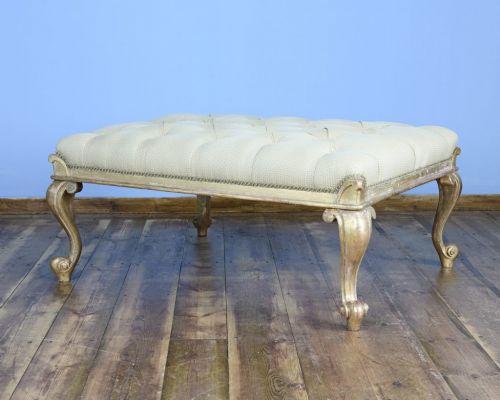
A gold gilt stool brings polished surface and carved form into a room, offering a seat or footrest rooted in 19th-century revivalism.
Gold Gilt Stool
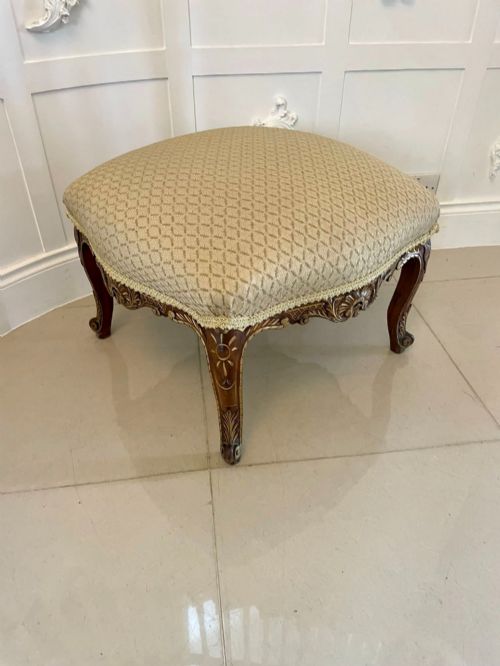
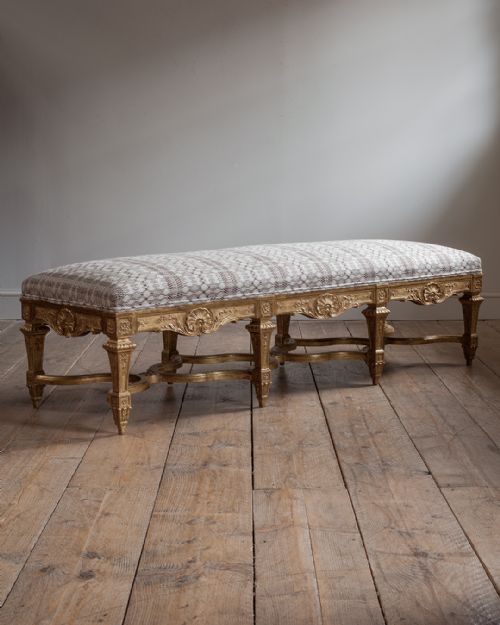
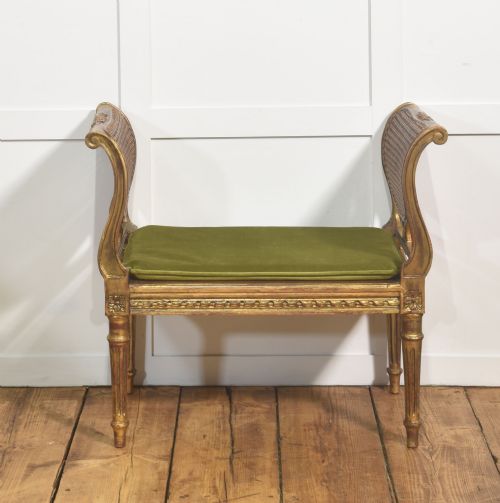
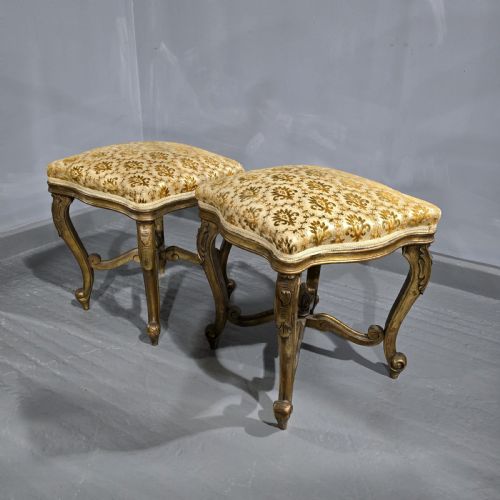
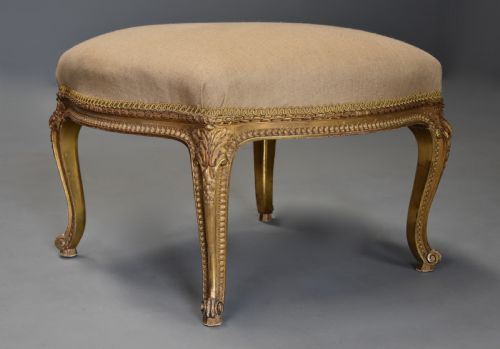
A gold gilt stool encompasses a variety of seating forms, from low footstools and ottomans to grand window seats and duet stools. These pieces draw heavily on historical French and English vocabulary, frequently appearing in styles such as Louis XVI, Louis XIV, Neoclassical, and Victorian.
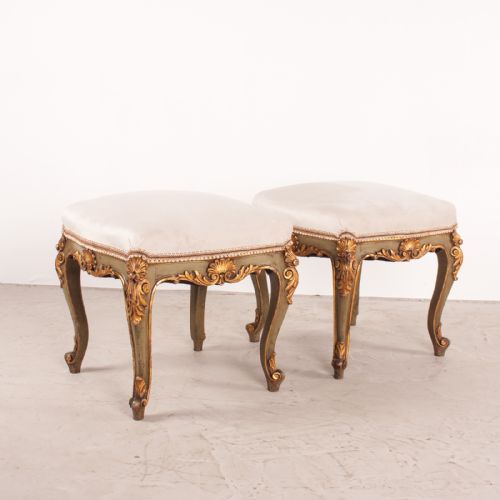
The version most commonly met on this page is the 19th-century carved giltwood stool, often featuring upholstered tops in silk, velvet, or patterned textiles. Makers of the period drew inspiration from continental revivals, producing both paired items for formal rooms and singular eccentric forms like rocking gout stools or curule frames.
Materials and construction
Carved wood forms the structural core of these pieces, utilising walnut, beech, or general hardwoods shaped with decorative motifs. Gesso is frequently applied over the timber base to provide a smooth, receptive ground for subsequent gilding.
Surface decoration relies upon metallic leaf applied to create the characteristic gold finish, sometimes combined with parcel gilt highlights or ebonised contrast. Upholstery techniques range from plain fabric stretches to deep buttoning in red silk, secured alongside cane panels or adjustable screw mechanisms.
A late 19th-century rocking gout stool offers a gentler way to elevate tired feet after a long day.
Craftsmanship and distinction
The depth and crispness of the wood carving separate standard production from superior examples, particularly where acanthus leaves, fluting, or figurative details are hand-chiselled rather than cast or stamped. The application of the gilt layer also dictates refinement, with subtle burnished highlights offering greater visual depth than flat metallic paint.
Structural integrity rests upon the joinery of the frame and the quality of the underlying gesso foundation, which prevents the gold leaf from dulling over time. Authenticity of period upholstery materials, frame woods such as walnut, and maker stamps add notable distinction to individual pieces.
LOIDRAULT FRERES PARIS·A.M.E. Fournier
The Gold Gilt Stool Glossary
- Giltwood
- Timber that has been decorated with gold leaf applied over a prepared gesso ground. This technique creates a luminous surface finish characteristic of formal 18th- and 19th-century seating.
- Curule stool
- An ancient Roman magistrate seat form revived in 19th-century neoclassical designs, featuring two opposing curved legs that cross in an X-shape. It often lacks a back and functions as an occasional or foot stool.
- Gesso
- A plaster mixture applied to wood frames to create a smooth surface before gilding. Its presence underneath gold leaf is standard in traditional giltwood manufacturing.
- Parcel gilt
- A finish where only specific carved elements or raised details of a wooden object are gilded, leaving the underlying wood or ebonised surface visible elsewhere.
- Window seat
- An elongated bench or stool designed to fit beneath a window recess. These pieces frequently incorporate armrests and upholstered tops suited for sitting.
Gold Gilt Stool: Frequently Asked Questions
What periods do these gilt stools come from?
The pieces listed here span the 19th century, incorporating Georgian influences alongside Victorian productions and later revivals up to the early 20th century.
Stylistic references look back further to Louis XIV, Louis XVI, and Empire designs, demonstrating how later makers reinterpreted earlier European court aesthetics.
How were gold gilt stools used originally?
These items functioned as versatile seating, serving as footstools, window seats, duet piano stools, and occasional resting places in formal drawing rooms.
Certain specialised forms, such as rocking gout stools or adjustable screw-top piano seats, indicate specific domestic utility for comfort and posture.
What fabrics cover the upholstered tops?
Upholstery materials seen across these pieces include silk, velvet, cane panels, and general decorative textiles.
Deep buttoning in red silk and simpler woven fabrics reflect both the original period taste and later reupholstery choices made to preserve the frames.
How can I tell a French style stool apart from an English one?
French style stools often display characteristic revival motifs like Louis XV curves, neoclassical fluting, or parcel gilt walnut frames associated with Parisian workshops.
English pieces from the same era frequently align with Victorian, William IV, or Adams aesthetic traditions, employing ebonised woods and distinct carved proportions.