



Victorian Tapestry Footstool
These Victorian tapestry footstools combine comfortable low seating with intricate needlework, offering a touch of period charm for any interior.
Identifying Victorian tapestry footstools
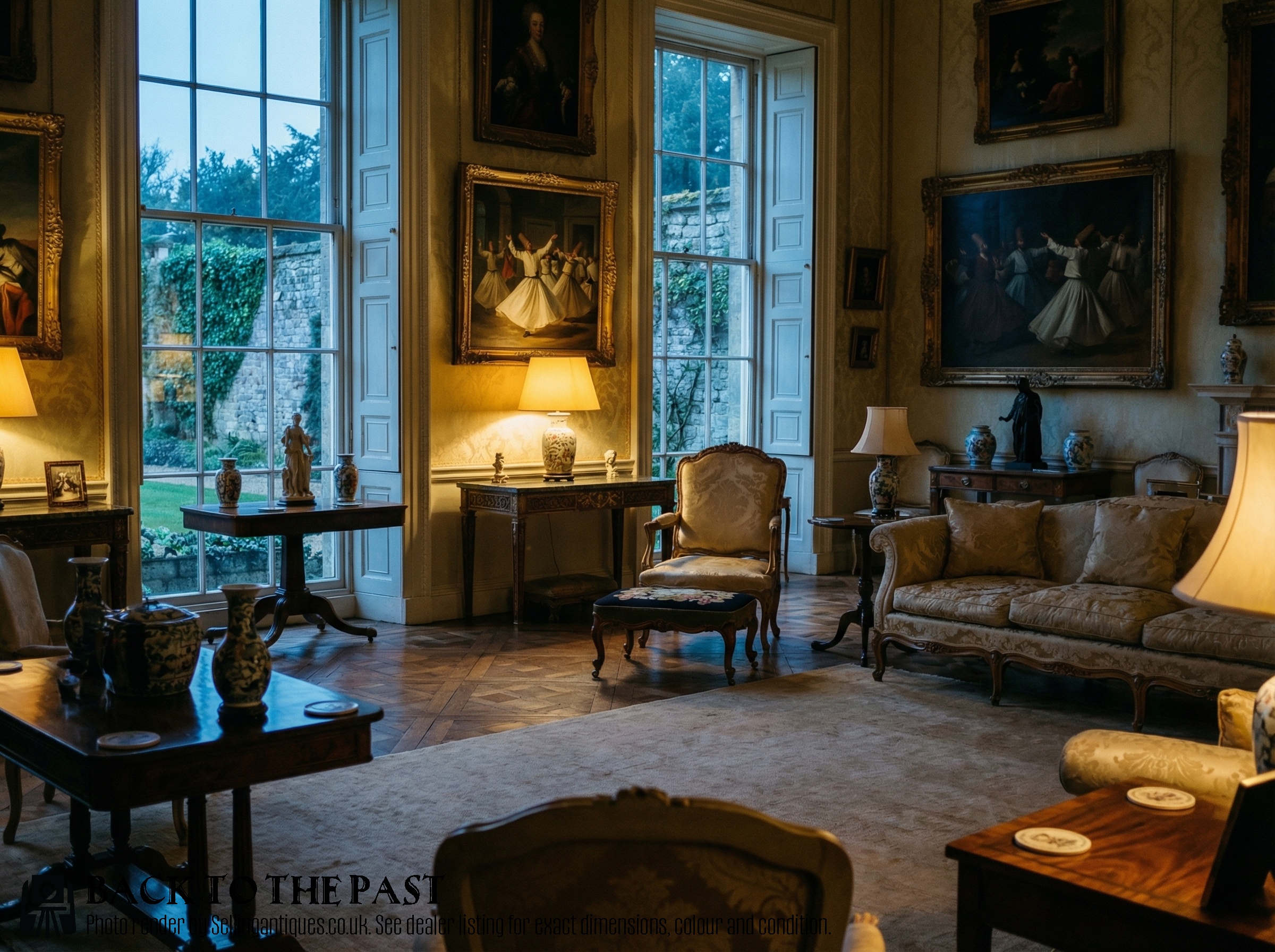
A victorian tapestry footstool is a low seat designed to support the feet or serve as a small occasional perch near firesides and dressing areas. The pieces on this page span the Victorian era, including early examples alongside later revivals.
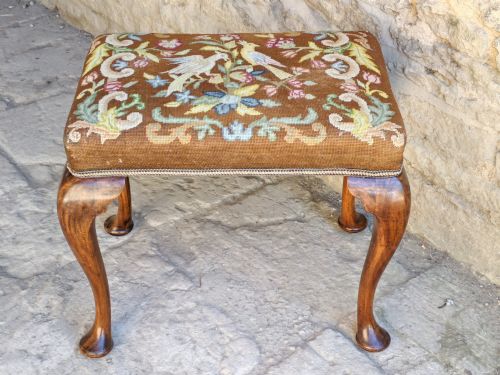
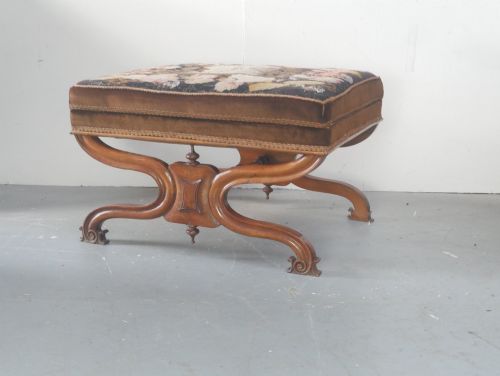
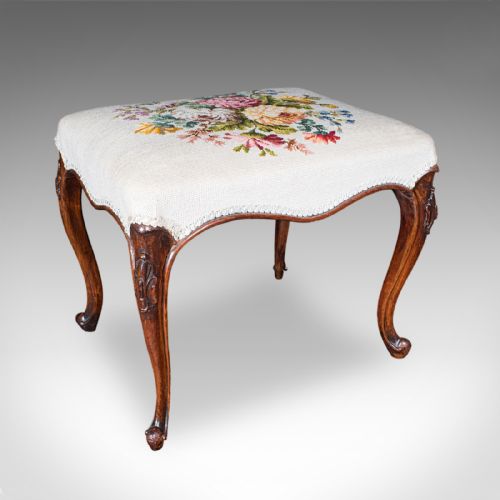
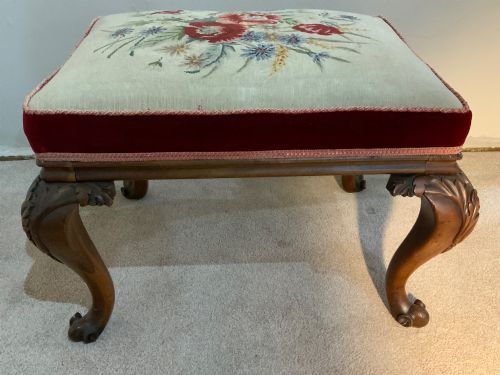
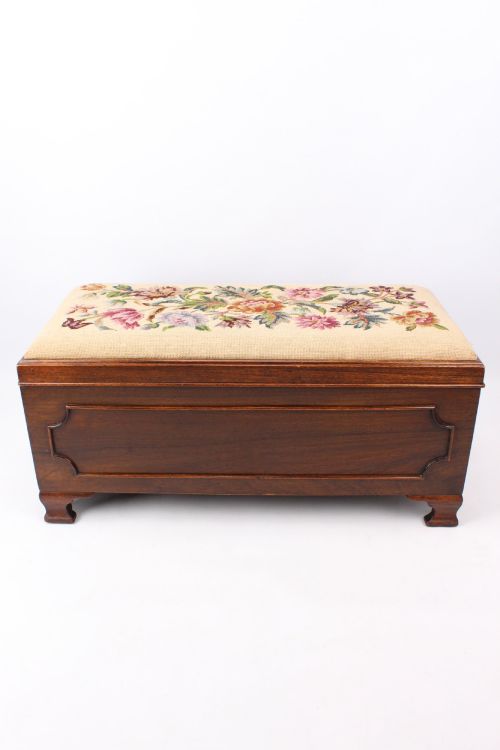
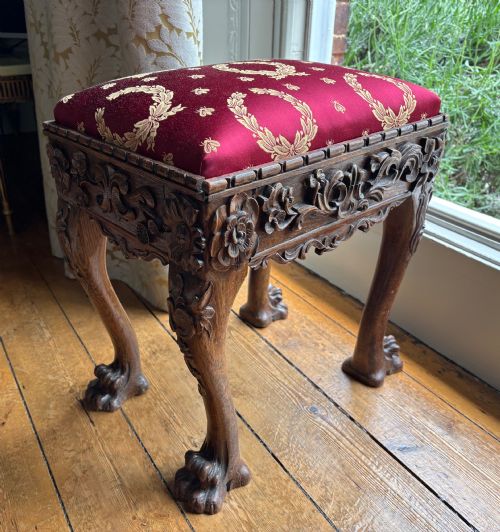
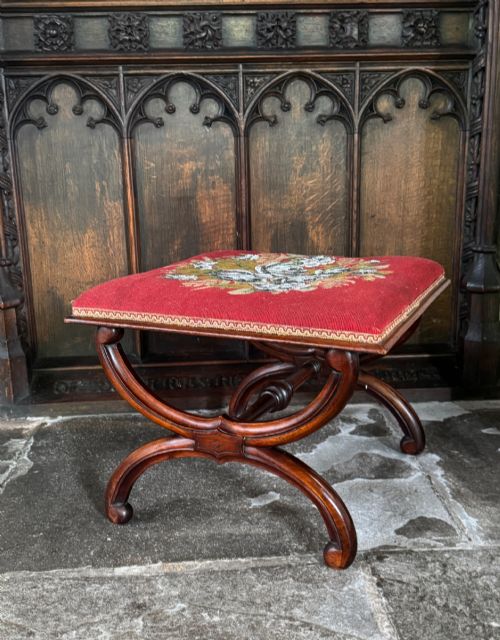
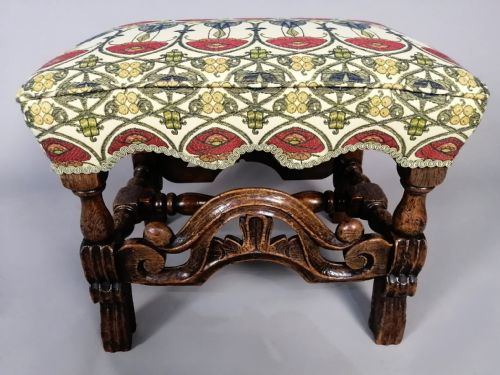
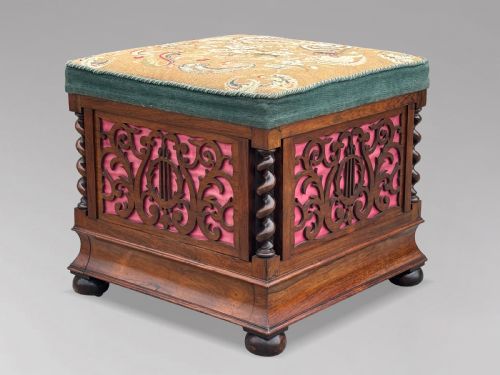
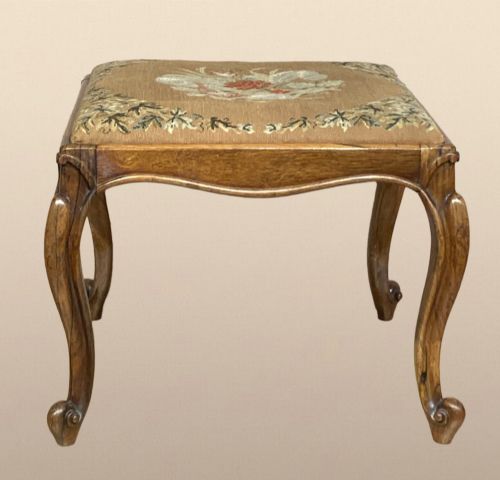
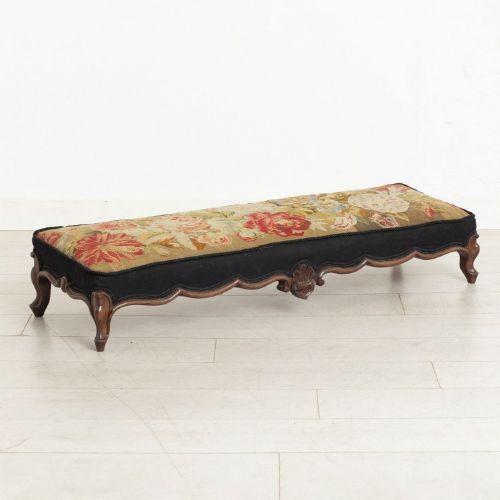
Most items appear as small stools or box seats featuring textile tops. The forms range from simple low footstools to shaped mahogany frames and larger centre stools.
Originating predominantly from English workshops, these furnishings reflect the domestic comfort of the nineteenth century. Buyers encounter various timber frames paired with decorative needlework surfaces.
Materials and construction
The wooden frames utilise solid timbers such as walnut, mahogany, and rosewood, sometimes shaped with revival styling. Certain pieces incorporate brass details alongside fabric and velvet elements.
Upholstery relies on wool tapestry and needlepoint textile work. Artisans stitched intricate wool designs by hand to cover the padded seating structures.
Retail Price Guide 2026
Typical UK retail prices for victorian tapestry footstool, calculated from the Sellingantiques database of over a million retail prices indexed since 2003. This retail price guide relies exclusively on Sellingantiques data; no external sources or auction records are used, so the figures do not describe the wider market.
Some Victorian footstools doubled as secret storage boxes for sewing gear beneath the tapestry top.
Assessing quality and craftsmanship
The finesse of the needlepoint tapestry distinguishes finer examples from simpler production. Dense wool stitching and complex floral or pictorial designs indicate superior artisan skill.
Timber frame construction also dictates the standing of a piece. Robust hardwoods, well-defined carving, and intact joinery elevate the overall calibre of the stool.
The Victorian Tapestry Footstool Glossary
- Needlepoint
- A type of embroidery stitched on canvas mesh. This forms the decorative top surface of the footstool.
- Tapestry
- A thick woven or stitched textile featuring pictorial designs. Victorian examples frequently depict floral or geometric motifs.
- Box seat
- A stool with a hinged top that opens for storage. These combine utility with decorative upholstery.
- Walnut
- A dense hardwood utilised for framing furniture. It offers a rich dark grain visible on many Victorian pieces.
Frequently Asked Questions
What is a Victorian tapestry footstool?
A Victorian tapestry footstool is a small nineteenth-century seat featuring a timber frame and an embroidered wool needlepoint top.
These pieces were designed for drawing rooms and firesides to provide comfort and decorative appeal.
How were these footstools used?
They served primarily to support the feet while sitting in armchairs or by the fireplace. Some variations also functioned as music stools or dressing seats.
Their compact size allowed them to move easily around domestic living spaces as needed.
What woods appear in the frames?
Makers utilised hard timbers such as walnut, mahogany, and rosewood for structural durability. Gilt finishes also appear on select formal pieces.
The choice of timber typically reflects the prevailing style of the specific decade.
How do you identify the period?
Dating relies on timber selection, frame profiling, and the style of the needlepoint upholstery. Early Victorian pieces often feature rosewood or walnut with traditional floral needlework.
Construction methods and secondary woods further help establish the age of the item.