




Carved Giltwood Bench
A carved giltwood bench brings classical grandeur to a room, offering gilded seating crafted in styles from Louis XVI to English Regency.
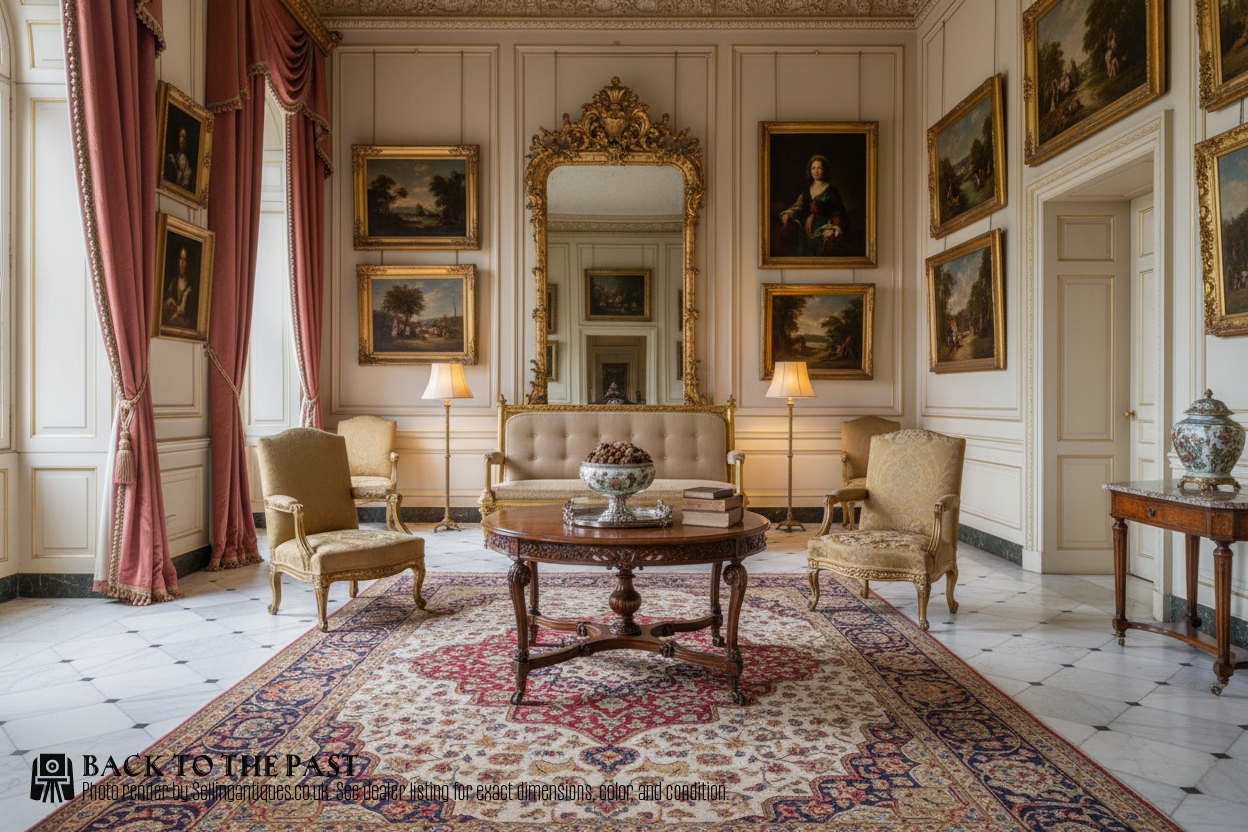
Carved Giltwood Bench
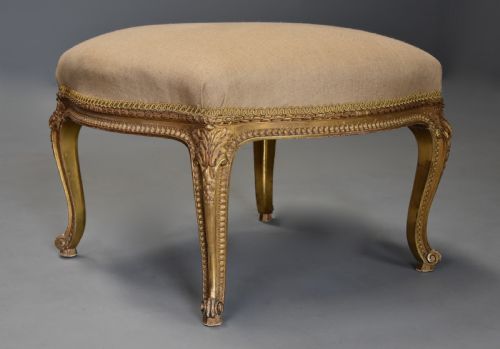
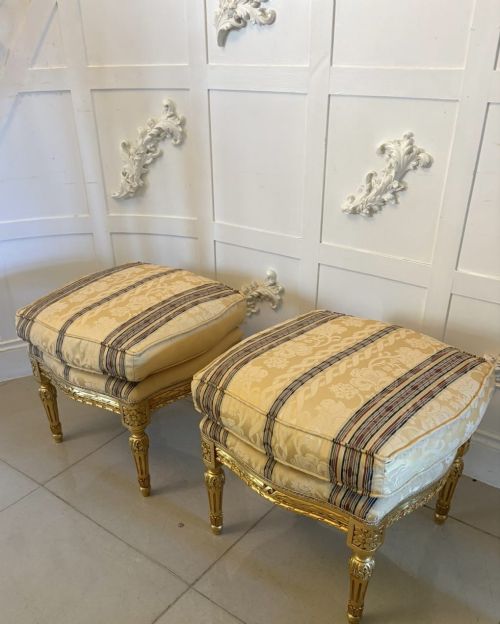
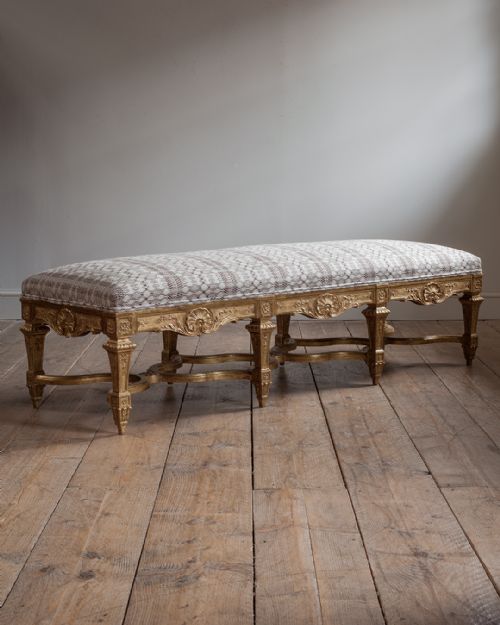
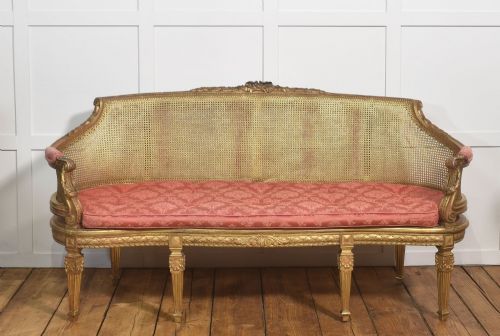
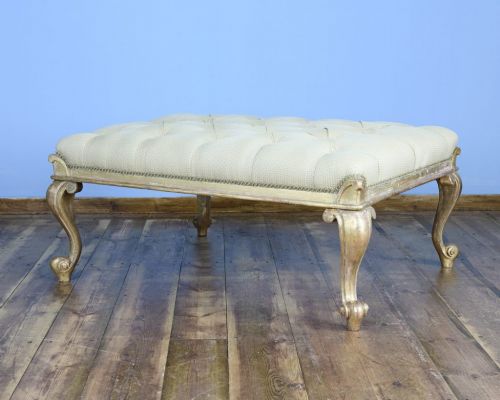
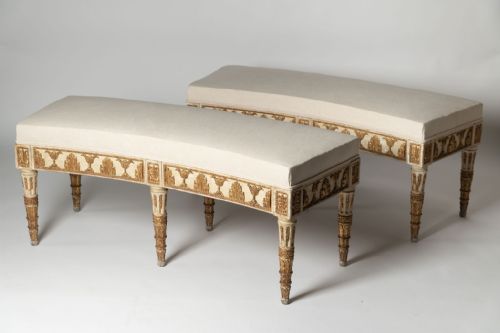
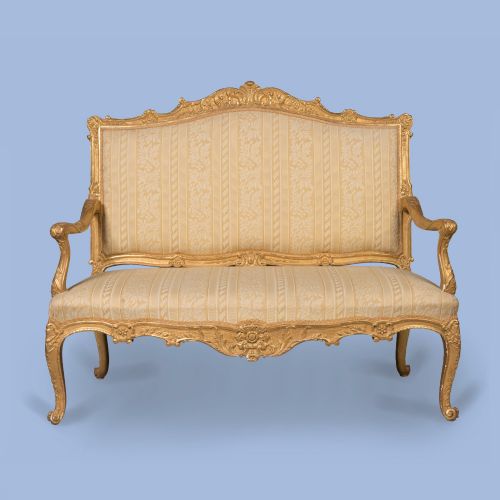
A carved giltwood bench encompasses various seat forms, from window seats and long stools to multi-seater sofas and canapés. These pieces emerge predominantly from the nineteenth and eighteenth centuries, reflecting historical revivals including Louis XV, Louis XVI, and neoclassical designs.
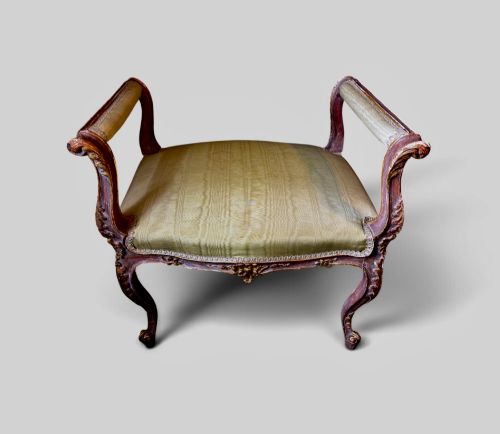
The selection frequently includes French salon seating alongside English country house pieces and Italian craft. Buyers encounter window seats with scrolled arms, curule X-frame stools, and grand settees gilt in gold leaf or painted gold.
Makers drew on classical vocabulary, producing items with cane panels, silk upholstery, and parcel gilt finishes. Each object balances structural timber framing with decorative surface carving suited to formal interiors.
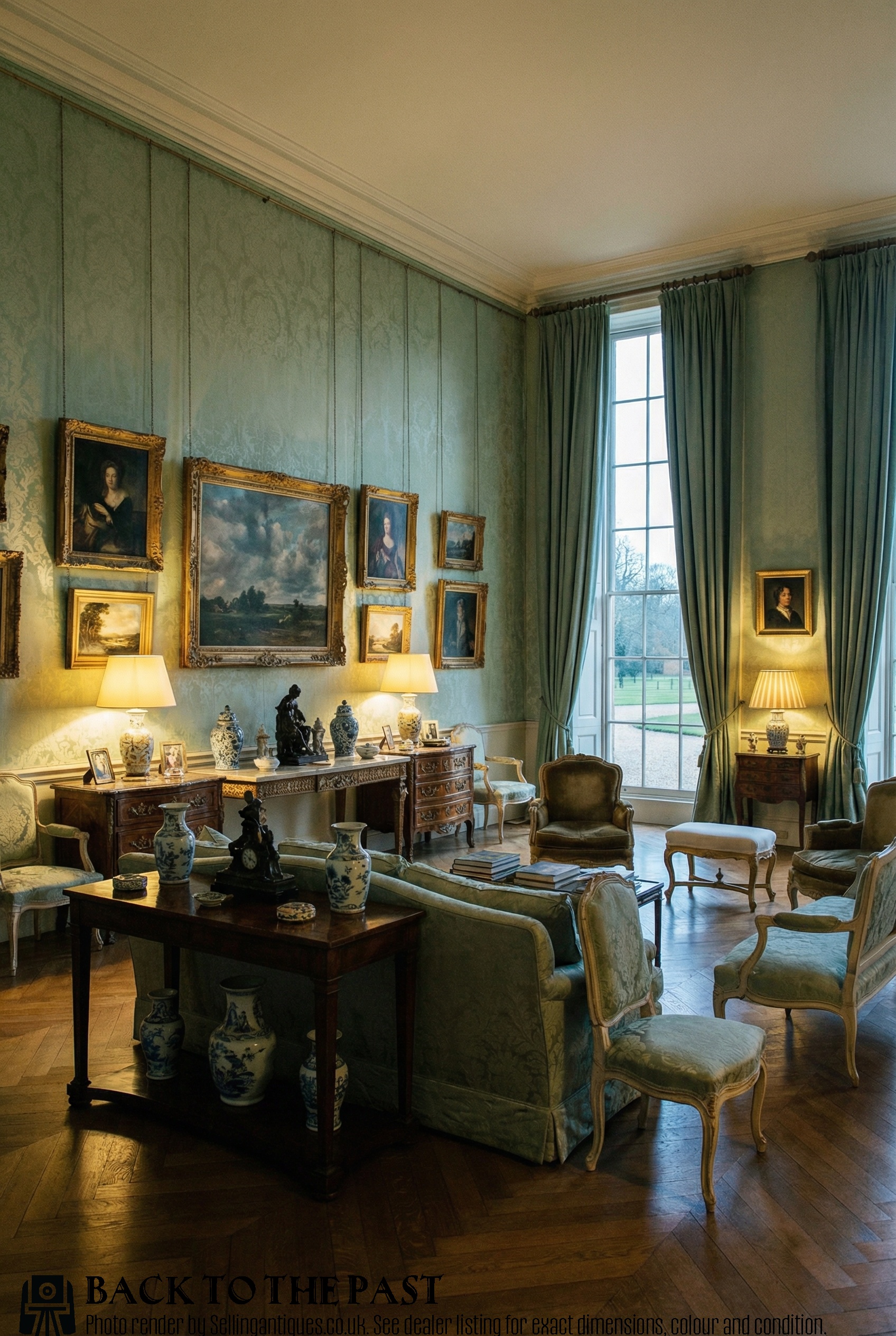
Distinctions in craftsmanship and survival
The depth and crispness of the hand carving distinguish finer examples from simpler production, particularly where acanthus leaves, scrollwork, or lion masks appear. Superior pieces retain their original gold leaf application rather than later repainting, preserving the subtle textures of the gesso beneath.
Structural integrity depends on the retention of original timber framing and undisturbed joinery through the centuries. The quality of the secondary materials, such as fine cane work or dense hardwood foundations, marks the difference between standard workshop output and exceptional salon seating.
Carved Giltwood Bench Retail Price Guide 2026
Typical asking prices for carved giltwood bench among the pieces listed under this phrase on Sellingantiques today, from the lower quarter to the upper quarter. They describe what is for sale here now, not the wider market.
Listings span the eighteenth, nineteenth, and early twentieth centuries, incorporating Georgian items alongside French provincial pieces.
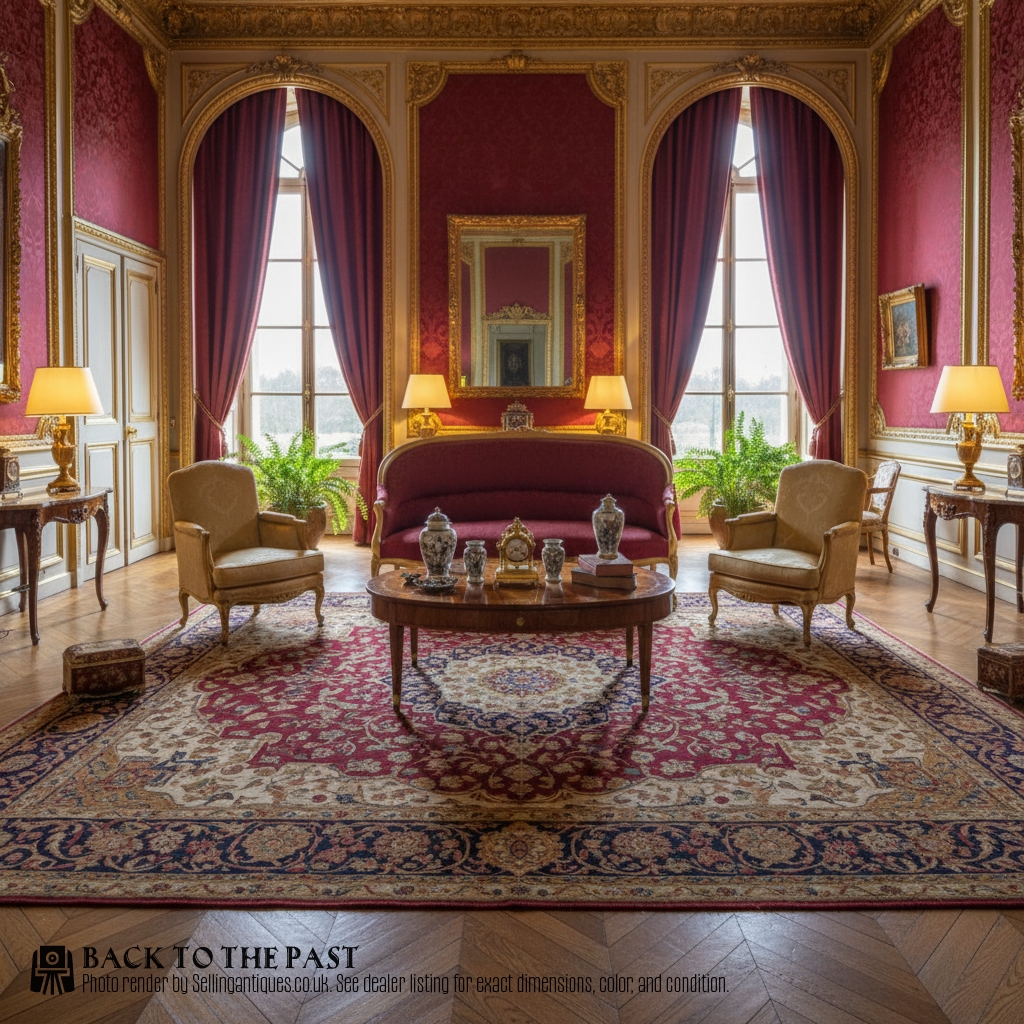
Giles Grendey·Miles & Edwards
The Carved Giltwood Bench Glossary
- Giltwood
- Timber coated with gold leaf over a prepared gesso ground. This finish provides a luminous metallic surface that catches the light in formal rooms.
- Canapé
- A decorative French upholstered settee or sofa. These items typically feature exposed carved wooden frames and open arms.
- Curule stool
- An X-frame seat derived from classical Roman magistrate chairs. The crossing legs create a stable geometric profile often found in neoclassical pieces.
- Window seat
- A long, backless or low-backed bench designed to fit within a window recess. They frequently incorporate scrolled ends and upholstered tops.
- Gesso
- A plaster-like mixture applied to wood to create a smooth surface for gilding. Skilled carvers rely on this layer to hold fine detail before gold leaf application.
Carved Giltwood Bench: Frequently Asked Questions
Where should I place a giltwood bench?
These benches suit formal drawing rooms, hallways, or bedroom window recesses where their decorative frames add architectural interest.
They function well as standalone statement items or paired with complementary salon suites.
How do I care for giltwood furniture?
Keep giltwood away from direct sunlight and excessive moisture to protect the delicate gold leaf and underlying gesso.
Dust gently with a dry, soft cloth and avoid modern chemical polishes that can damage the metallic surface.
What is the difference between a settee and a canapé?
A settee is a general term for a wide seat accommodating multiple people, originating in British and European traditions.
A canapé specifically denotes a French-style upholstered sofa with an exposed decorative wooden frame and cabriole legs.
Are X-frame stools comfortable for daily seating?
X-frame or curule stools were historically designed for occasional seating or footrests rather than lounging.
Their sturdy cross-braced frames prioritise architectural presence and portability over deep cushioning.