


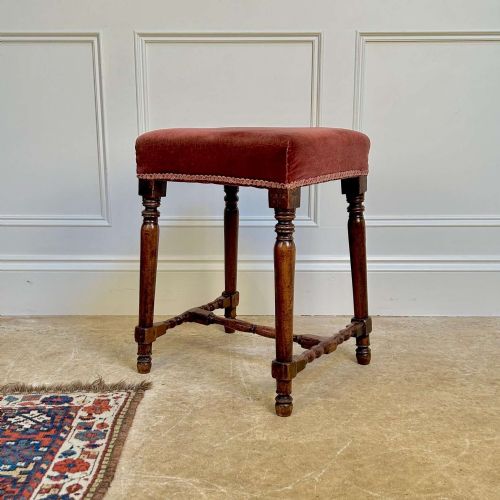


Red Upholstered Stool
When a red upholstered stool catches the eye, it brings warmth and useful seating to a corner or fireside.

Red Upholstered Stool
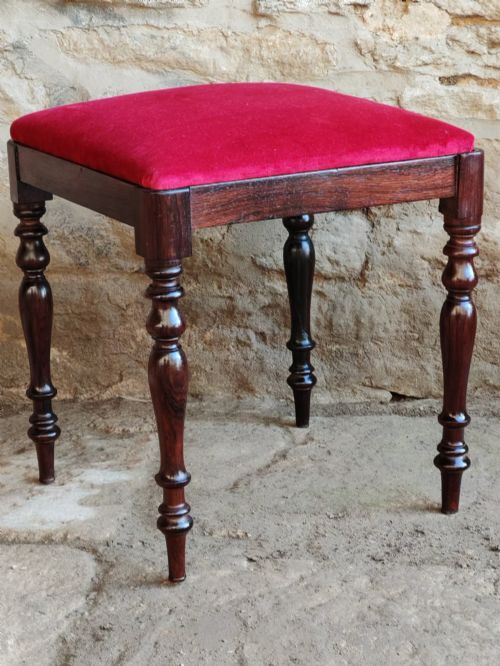
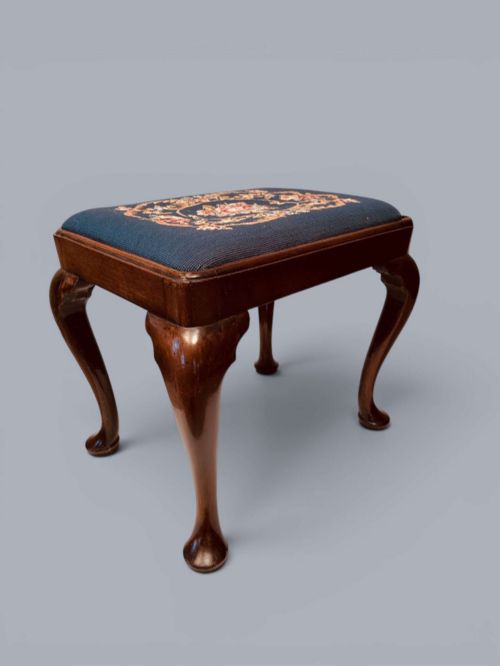
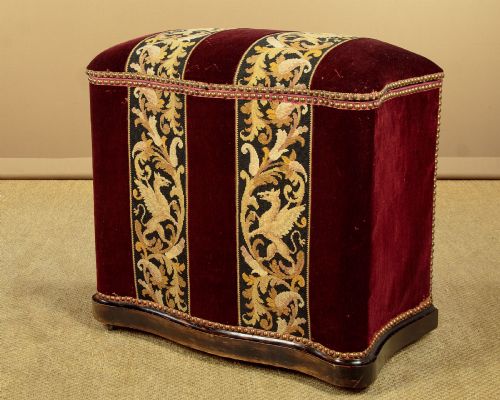
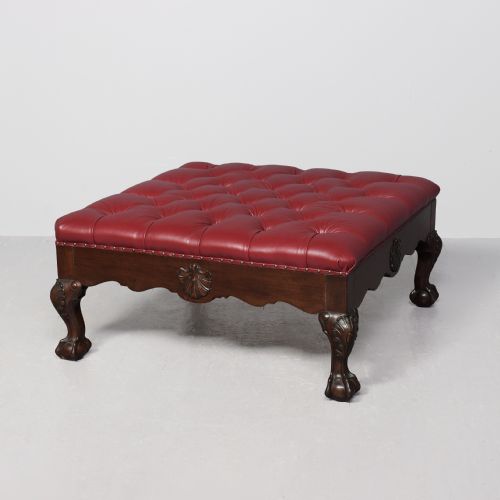
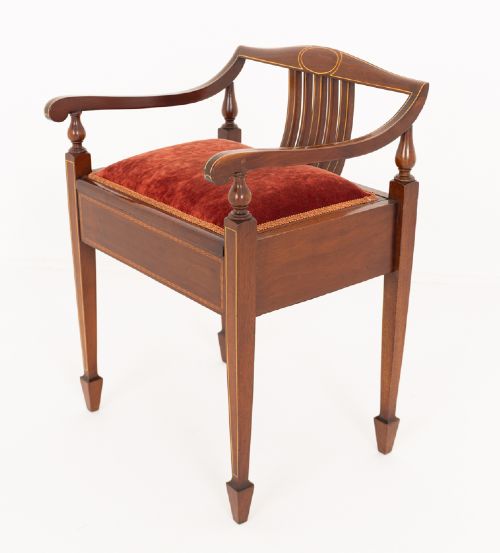
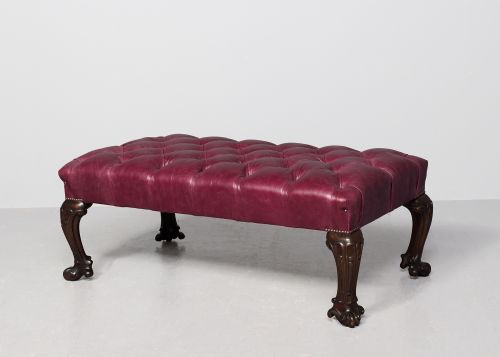
A red upholstered stool spans centuries of domestic seating, from compact footstools to large centre ottomans. The examples found here range through mahogany and walnut frames covered in red hide, velvet, damask, and needlepoint textiles.
Most pieces date from the Victorian era and the nineteenth century, though earlier Georgian forms and later Edwardian revivals appear regularly. Forms vary from simple x-frame constructions to elaborately carved cabriole-legged window seats and piano stools.
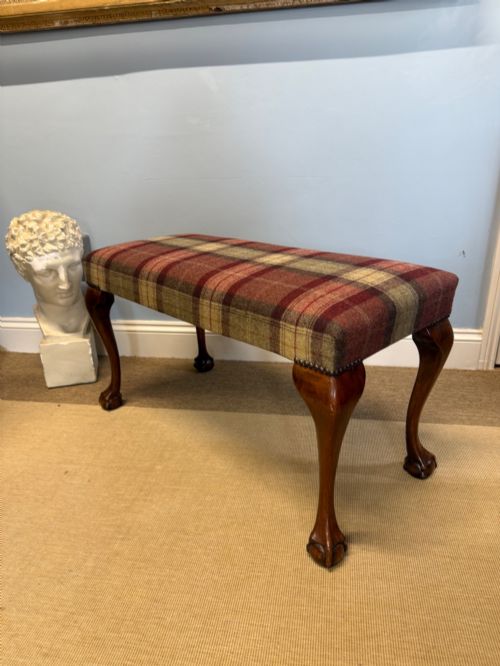
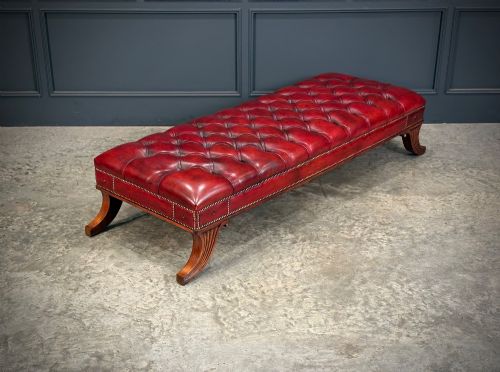
The phrase red upholstered stool encompasses everything from low fireside rests to long dressing table benches. Buyers encounter various interpretations of historical design, including Chippendale, Regency, and Gothic styles.
Materials and Construction
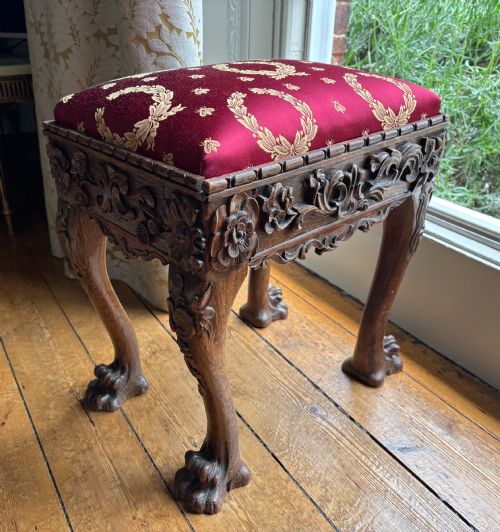
Timbers like mahogany, walnut, rosewood, and oak form the structural foundations of these frames. Joinery methods involve traditional techniques suited to each period, such as turned legs, carved claw and ball feet, and structural x-frames.
Upholstery relies on traditional stuffing secured with webbing and finished with textile coverings such as leather, hide, damask, velvet, or needlework. Brass studding often fastens the hide edges to the wooden rails on larger nineteenth-century examples.
Red Upholstered Stool Retail Price Guide 2026
Typical asking prices for red upholstered stool among the pieces listed under this phrase on Sellingantiques today, from the lower quarter to the upper quarter. They describe what is for sale here now, not the wider market.
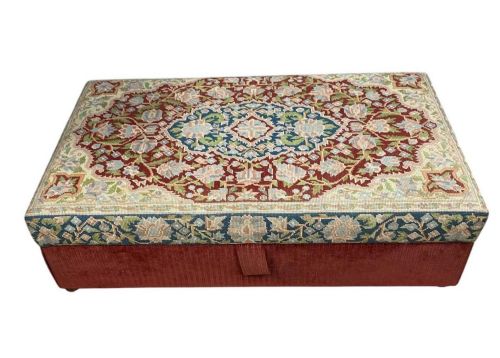
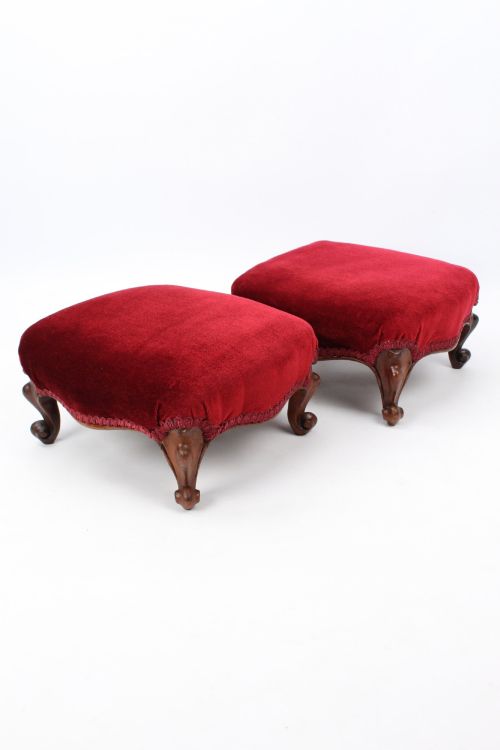
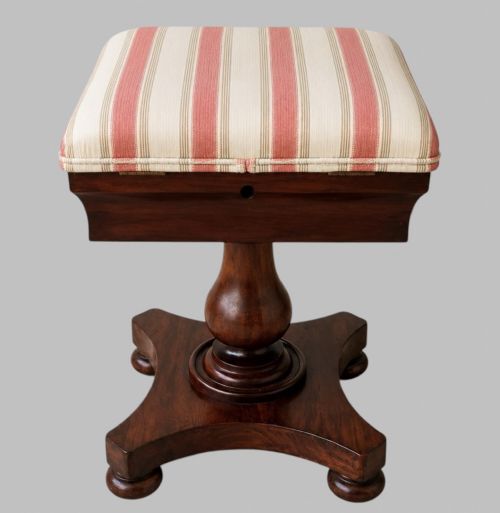
Even the smallest footstool occasionally hides a secret sewing box beneath its red velvet lid.
Evaluating Craftsmanship
Quality rests in the precision of the woodwork and the integrity of the frame construction. Carved details such as scroll tops, cabriole legs, or claw and ball feet show the hand of a skilled maker.
The selection of covering materials also marks the tier of a piece. Finer examples utilise heavy hides, detailed needlepoint, or damask fastened securely to substantial hardwood frames rather than lighter veneers.
Hallett And Sons·Howard And Sons·Mathew Gregson
The Red Upholstered Stool Glossary
- X-Frame
- A cross-legged structural design forming an intersection beneath the seat. This ancient form appears frequently in Regency and Victorian seating.
- Cabriole Leg
- A furniture leg that curves outward and then tapers inward to a foot. This shape is common on Georgian and Victorian stools.
- Centre Stool
- A large freestanding stool designed to sit in the middle of a room rather than against a wall. These pieces often feature substantial upholstery and robust wooden frames.
Red Upholstered Stool: Frequently Asked Questions
Where should I place a red upholstered stool?
These pieces fit naturally at the foot of a bed, beside a fireside chair, or beneath a dressing table. Their compact footprint allows them to move easily between rooms as extra seating.
Larger centre models work well positioned in the middle of a dressing room or large hallway. Smaller footstools slide neatly under tables or rest against low seating.
How do I date an antique stool?
Dating relies on observing the timber species, leg profiles, and construction methods used in the frame. For instance, heavier mahogany and rosewood often point toward the nineteenth century, while lighter walnut can suggest earlier periods.
Upholstery style and materials also offer clues, though many pieces receive new fabric over time. Comparing the frame's carved details to known design books helps narrow down the decade.
What is the difference between a footstool and a window seat?
Footstools are generally low to the ground and square or rectangular, designed primarily to support feet while sitting. Window seats are longer, often higher, and built to accommodate one or more people sitting by a window.
Window seats frequently feature decorative ends, armrests, or backrests similar to small benches. Footstools remain simpler and more portable for everyday use around a room.
Are piano stools adjustable?
Many piano stools from the Edwardian and late Victorian periods include mechanical height adjustments. A twisting seat or side mechanism allowed musicians to find a comfortable height.
Other piano stool variants incorporate hinged seats that lift to reveal internal storage compartments for sheet music.