


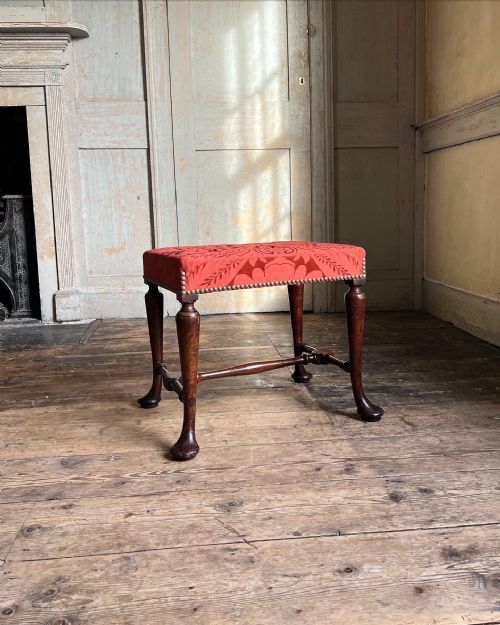


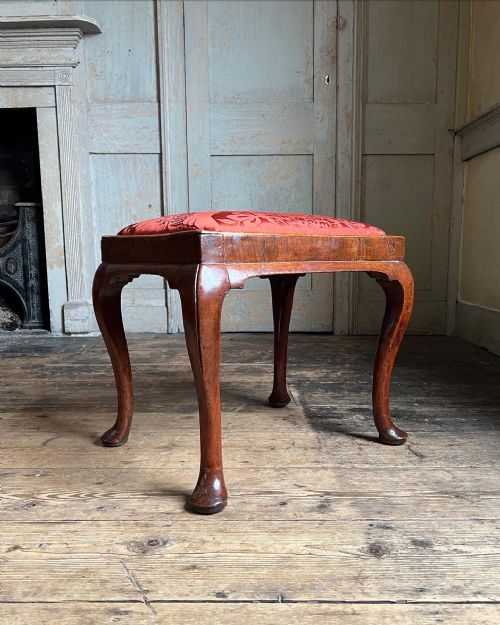
Red Damask Stool
A red damask stool brings rich woven textile and period timber together into a compact seat that elevates any traditional interior.
Red Damask Stool
When you search for a red damask stool, you are looking at upholstered seating framed in timber, often featuring distinct period carving or turnings. The red damask stool examples appearing here span centuries from the Georgian era through to the Victorian period and nineteen-hundred.
You will encounter various forms in this category, including piano stools, X-frame stools, dressing stools, and window seats. These pieces combine supportive wooden structures with patterned textile upholstery to serve functional and decorative roles in a room.
Materials and construction
The frames rely on hardwoods such as mahogany, walnut, oak, rosewood, and teak, which provide structural stability and surfaces suitable for carving. Artisans shaped these timbers into cabriole legs, X-frames, and architectural supports.
Upholstery uses damask fabric and other textiles stretched over padded foundations. This combination of dense timber joinery and woven fabric creates a durable and visually rich seat.
Red Damask Stool Retail Price Guide 2026
Typical asking prices for red damask stool among the pieces listed under this phrase on Sellingantiques today, from the lower quarter to the upper quarter. They describe what is for sale here now, not the wider market.
One resourceful maker carved an entire stool from solid teak, ensuring it could survive tropical climates and energetic pianists alike.
Measures of quality
Quality rests in the crispness of the timber carving and the architectural balance of the frame. Pieces with well-drawn proportions and carefully executed joinery stand apart from simpler iterations.
The choice of primary wood and the integrity of the period upholstery textile also define the upper tier of these pieces. Hand-carved details and substantial hardwood frames indicate higher workshop standards.
The Red Damask Stool Glossary
- Damask
- A reversible figured fabric with patterns formed by contrasting warps and wefts, traditionally woven in silk, wool, or cotton. It provides the signature patterned surface seen on these stools.
- Cabriole leg
- A furniture leg that curves out and then narrows inward, typically ending in a pad or claw foot. This form originates in antiquity and recurs across Georgian designs.
- X-frame
- A seating base constructed from intersecting members forming an X shape when viewed from the side. This classical structural form appears in neoclassical and revival pieces.
- Anglo-Indian
- A descriptive term for furniture made in India by native craftsmen for British residents, frequently utilising dense exotic timbers like rosewood and teak. These items display distinct regional carving motifs.
Red Damask Stool: Frequently Asked Questions
What periods do these stools date from?
The pieces span multiple centuries, including seventeenth, eighteenth, and nineteenth-century examples alongside items from nineteen-hundred. Georgian and Victorian eras are well represented in the available selection.
Craftsmanship and timber choices shift across these eras, reflecting the prevailing design tastes of each successive period.
Where were these stools used historically?
These seats functioned in various domestic settings, from dressing rooms and music rooms to formal reception spaces. Dressing stools and window seats served specific architectural niches within larger homes.
Smaller footstools and piano stools provided movable seating where rigid chairs proved impractical.
How do I identify different styles?
Style identification relies on examining structural motifs and leg forms, such as neoclassical X-frames or Chippendale style carved woodwork. Regional variations like Anglo-Indian carving also distinguish specific geographic origins.
Comparing the timber species and decorative carving against known design periods clarifies the likely date of manufacture.
How should I care for a period stool?
Protect the timber frames from direct sunlight and sudden humidity changes to prevent wood cracking or veneer lifting. Regular dusting preserves the polished finish of hardwoods like mahogany and walnut.
Upholstery care involves gentle vacuuming with a soft brush attachment to protect the woven damask fabric from abrasive particles.