






Louis XVI Style Stool
These louis xvi style stool pieces bring formal neoclassical elegance to a room, offering low seating or footrests shaped by classical restraint.
Louis XVI Style Stool
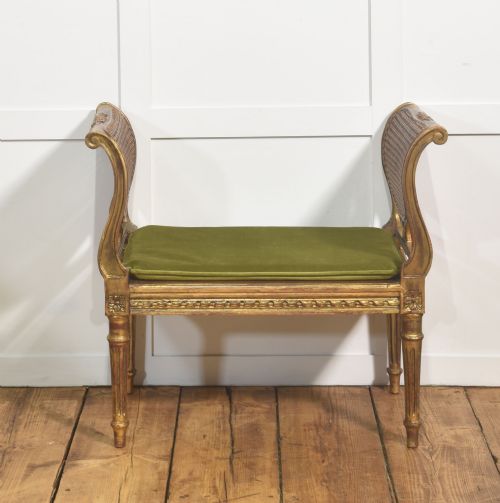
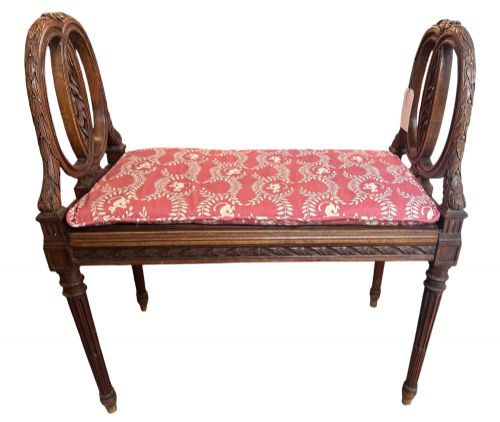
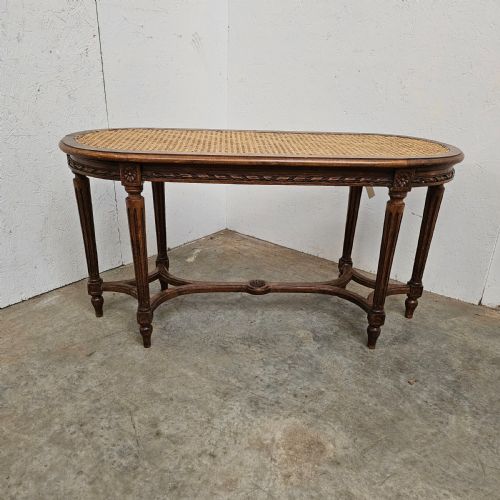
When you search for a louis xvi style stool, you encounter low seating designed with classical symmetry and restraint. The pieces here span the nineteenth century and the early twentieth century, taking forms such as window seats, footstools, banquettes, and duet music stools.
You are most likely to meet examples in the French Louis XVI style or French Neoclassical taste, alongside related Gustavian and Adam style pieces. These range from compact circular boudoir stools to longer window seats and paired footstools.
How they were made
Carved wood frames provide the structural foundation, executed in walnut, beech, and giltwood or painted wood finishes. Artisans shaped these frames with classical motifs before applying surface decoration and gilding.
Upholstery and seating surfaces employ fabric, velvet, damask fabric, and cane. Caned panels are woven into wooden frames, while upholstered versions rely on traditional textile coverings.
Some duet stools survived decades of piano practice without losing a single strand of their original cane work.
What varies in quality
The precision of the wood carving determines the crispness of the classical detail on the frame. Finer examples show sharp relief work in the carved wood, whereas simpler pieces display softer or plainer execution.
The choice of primary material and finish separates categories, from solid walnut and carved giltwood to painted wooden surfaces. The integration of cane seating or high-grade textile upholstery similarly distinguishes the construction tier.
The Louis XVI Style Stool Glossary
- Giltwood
- Wood that has been coated with gold leaf or a gold-coloured finish. This technique highlights the carved ornamentation of the frame.
- Cane
- Woven material made from rattan or stripped plant stems. It forms resilient, open-patterned seating panels in frames.
- Banquette
- A long upholstered seat or bench without a backrest. These often accommodate multiple sitters by a window.
- Neoclassical
- A design style drawing inspiration from the classical art and architecture of ancient Greece and Rome. It emphasises straight lines, symmetry, and restrained ornamentation.
- Duet stool
- An extended bench designed for two people to sit side by side, frequently used at a keyboard or dressing table.
Louis XVI Style Stool: Frequently Asked Questions
Where do people place a window seat?
These long seats fit naturally beneath window recesses or at the foot of a bed. They provide a resting spot that does not block natural light.
Their low profile also suits hallways or dressing rooms where space is at a premium.
How do I care for giltwood frames?
Dust giltwood surfaces gently with a soft, dry cloth to protect the metallic leaf layer. Avoid liquid cleaners or abrasive materials that might damage the finish.
Keep the wood away from direct sunlight and damp environments to preserve the gilding.
What is a boudoir stool?
A boudoir stool is a small, often circular seat traditionally kept in a private dressing room or bedroom. These pieces offer a compact perch for grooming or dressing.
They frequently feature upholstered tops or decorative painted wooden frames.
Can I use a duet stool at a piano?
Duet stools provide an extended seating surface originally intended for two musicians playing a keyboard instrument together. Their wider proportions also suit placement at large dressing tables.
The sturdy walnut or beech frames support paired sitters comfortably.