


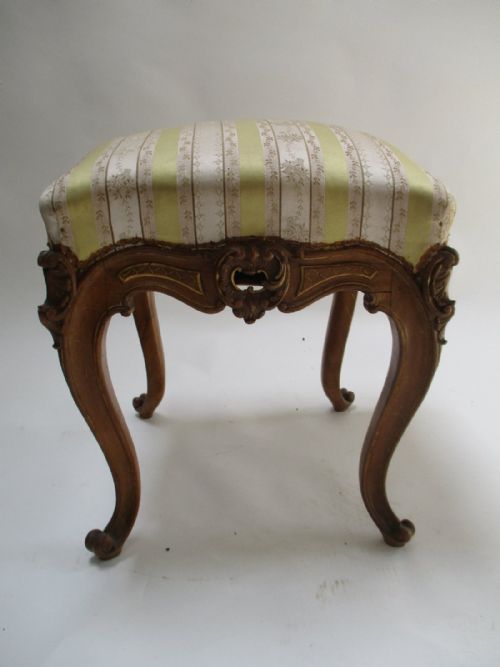

Gold Leaf Stool
A gold leaf stool brings distinct classical proportion and gilded presence to a room, ranging from grand window seats to modest footstools.
Gold Leaf Stool
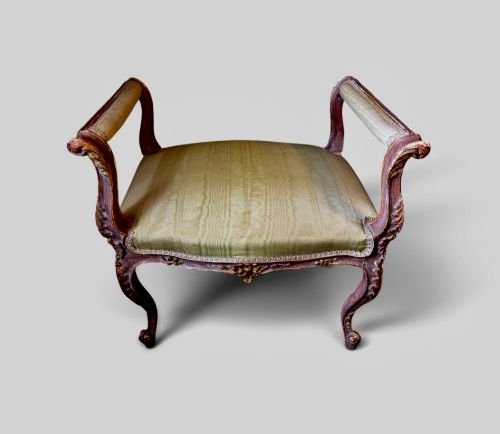
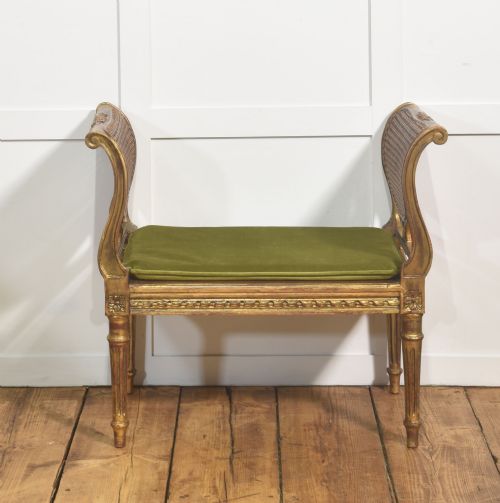
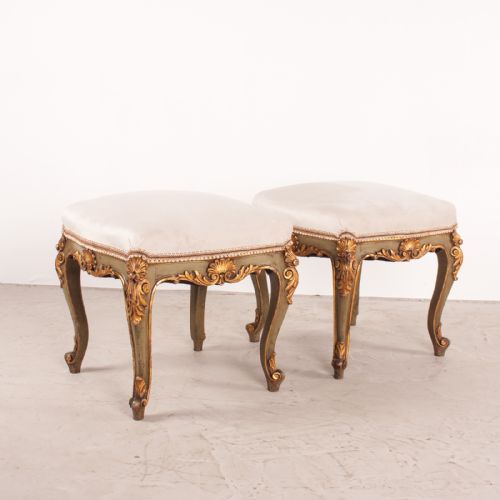
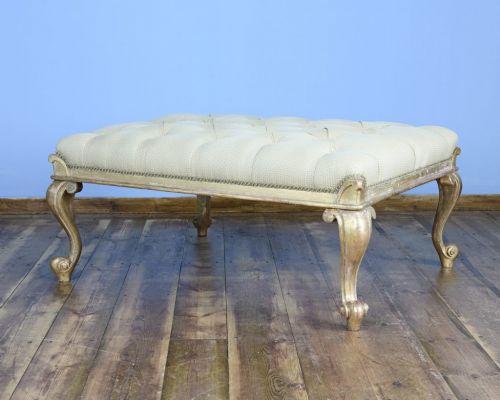
A gold leaf stool combines decorative framing with functional seating, appearing in forms such as window seats, footstools, and piano stools. These pieces draw on historical vocabularies including Louis XVI style, Rococo revival, and neoclassical design.
The materials span giltwood, gesso, walnut, and cane, paired with upholstery in velvet, silk, and fabric. Visitors to this page will frequently encounter 19th-century examples alongside early 20th-century revivals.
Makers utilised traditional woodworking methods to shape benches, ottomans, and curule stools. The resulting objects function equally as piano seating or decorative window furniture.
Materials and Construction
Giltwood and gesso form the primary structural and decorative surfaces of these items. Artisans applied thin sheets of gold leaf over prepared wooden frames, often incorporating carved walnut or painted details.
Upholstery relies on traditional textiles such as silk, velvet, and standard decorative fabrics. These materials cover padded seats that range from simple footstools to grand scale window benches.
The available forms span window seats, piano stools, curule stools, and footstools across Victorian and continental styles.
Assessing Quality and Craftsmanship
The depth and crispness of the carving separate standard productions from finer works. Deeply sculpted giltwood and detailed gesso enrichment indicate superior workshop practice.
The integrity of the gilded surface and the quality of the underlying wood timber dictate the overall standard. Pieces retain greater appeal when the original gilding and structural joinery remain intact.
The Gold Leaf Stool Glossary
- Giltwood
- Wood that has been decorated with gold leaf or gold paint. This finish defines the visual character of many period seats.
- Gesso
- A plaster mix applied to wood surfaces to create a smooth base for gilding. It allows for sharp relief carving beneath the gold leaf.
- Curule stool
- An ancient Roman form of folding seat with curved legs. Later neoclassical revivals adapted this shape into rigid gilded frames.
- Window seat
- An elongated stool designed to sit beneath a window. These pieces often feature armrests and upholstered tops.
- Parcel gilt
- A finishing technique where only specific portions of an object are gilded while other areas show wood or paint.
Gold Leaf Stool: Frequently Asked Questions
Where should I place a gilded window seat?
These long stools suit placement beneath bay windows, at the foot of a bed, or along a blank hallway wall.
Their narrow profile ensures they occupy minimal floor space while providing an intentional decorative accent.
How do I care for antique giltwood?
Dust surfaces gently with a dry, soft cloth and avoid modern chemical polishes. Moisture and abrasive cleaners can damage the delicate gold leaf application.
Keep pieces away from direct sunlight and radiators to protect the underlying wood and gesso.
What is the difference between a footstool and a window seat?
Footstools are compact and low to the ground, designed specifically to support feet while sitting in an armchair.
Window seats are longer, taller, and built as standalone furniture pieces intended for actual seating.
How do I identify neoclassical style elements?
Neoclassical pieces feature straight tapered legs, symmetrical proportions, and classical motifs like fluting and wreaths.
This aesthetic contrasts with the curved, asymmetrical lines found in earlier Rococo revival designs.