




White Painted Stool
White painted stool selections bring crisp Nordic charm and understated provincial utility to interiors through enduring painted wood finishes.
White Painted Stool
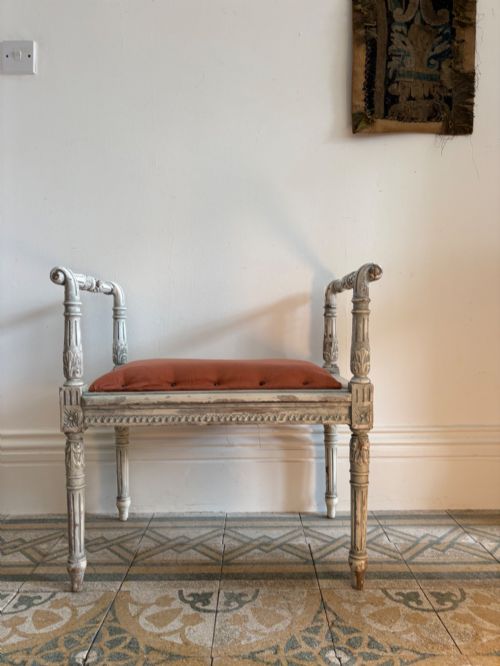
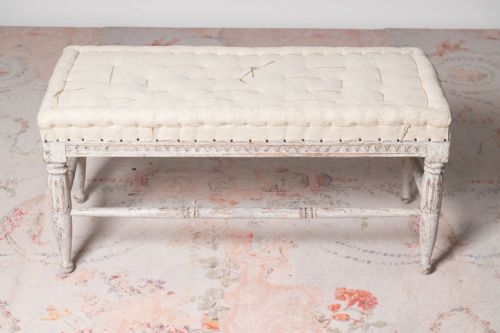
A white painted stool brings functional seating and subtle historic character into a room through pale finishes and simple wooden forms. When buyers search for a white painted stool, they encounter diverse historical interpretations ranging from Scandinavian neoclassical designs to rustic country bench seating.
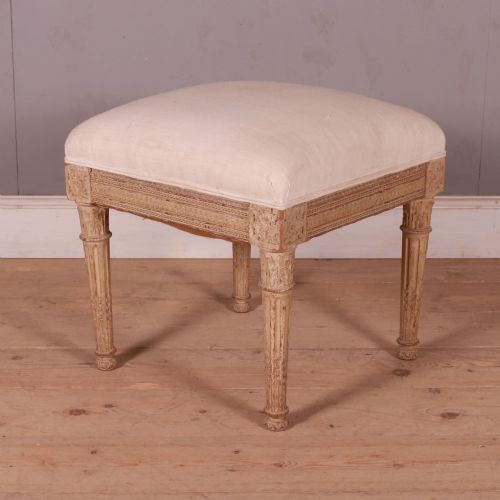
The options appearing on this page lean heavily towards Swedish Gustavian models and regional nineteenth-century pieces. These items serve varied domestic purposes, functioning as dressing seats, low footrests, or decorative window benches.
Beyond Scandinavian workshops, the selections include French provincial forms and Asian folk art variations. Each object displays distinct regional craftsmanship while sharing a pale exterior coat of paint.
Materials and construction methods
Makers constructed these pieces using timber frames fashioned from pine and various native woods, often applying multiple layers of paint over the bare surface. Some examples incorporate carved detailing directly into the wooden structure before finishing.
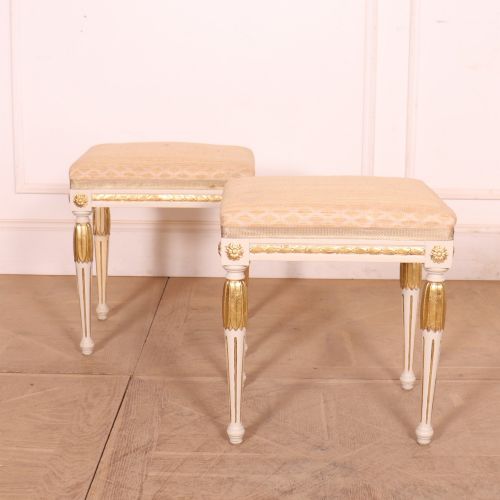
Upholstered variations feature traditional textile coverings such as silk and linen secured to the seat pads. Accents of gold leaf occasionally appear alongside the painted wooden framework to highlight specific decorative mouldings.
White Painted Stool Retail Price Guide 2026
Typical asking prices for white painted stool among the pieces listed under this phrase on Sellingantiques today, from the lower quarter to the upper quarter. They describe what is for sale here now, not the wider market.
Some nineteenth-century makers evidently decided that carved wooden tusks and sculpted elephant bodies made entirely appropriate seating.
Assessing quality and craftsmanship
The distinction between standard examples and finer pieces lies in the sophistication of the timber carving and the subtlety of the paint application. Original period surfaces displaying genuine wear carry greater integrity than later repainted interpretations.
Structural joinery methods also dictate quality, with scratch-built country forms differing significantly from refined neoclassical workshop production. The retention of original upholstery textiles further separates basic seating from higher-tier decorative examples.
The White Painted Stool Glossary
- Gustavian
- The Swedish neoclassical design movement spanning the late eighteenth and nineteenth centuries, characterised by restrained classical motifs and pale painted finishes.
- Scratch built
- Describes vernacular furniture constructed directly by local makers without standard factory templates or commercial machinery.
- Gold leaf
- Extremely thin sheets of beaten gold applied to wooden surfaces to highlight decorative carvings and architectural details.
- Window seat
- An elongated stool or low bench designed specifically to fit the architectural recess of a domestic window.
White Painted Stool: Frequently Asked Questions
What rooms suit a white painted stool?
These pieces fit naturally into bedrooms, hallways, or living spaces where pale wood finishes complement neutral interior colour schemes. Their compact scale allows them to function easily as moveable auxiliary seating.
They also serve effectively as low footrests or decorative plant stands when placed beside larger armchairs and sofas.
How do I care for painted wooden furniture?
Maintenance requires only gentle dusting with a dry or slightly damp cloth to protect the historic painted surface from moisture damage. Avoid placing timber pieces in direct sunlight or near strong heat sources.
Regular careful handling preserves the underlying wood and prevents unnecessary chipping of the original paint layers.
Are these stools comfortable for daily sitting?
Many nineteenth-century examples feature padded seats upholstered in silk or linen designed for sitting at dressing tables or desks. Firmer wooden top variations provide sturdy temporary perches rather than deep lounging comfort.
Adding a removable cushion can easily adjust the seating experience for everyday use.
How can I identify a Gustavian style stool?
Gustavian pieces typically display straight tapered legs, subtle fluted carving, and pale monochrome paint finishes inspired by French neoclassical court aesthetics. Swedish makers adapted these continental designs into simpler, harmonious domestic forms.
They lack the heavy ornamentation of earlier baroque periods, favouring clean architectural lines.