


Georgian Window Stool
These georgian window stool pieces bring architectural poise and compact seating to a room, formed across periods from the eighteenth century to the twentieth.
Georgian Window Stool
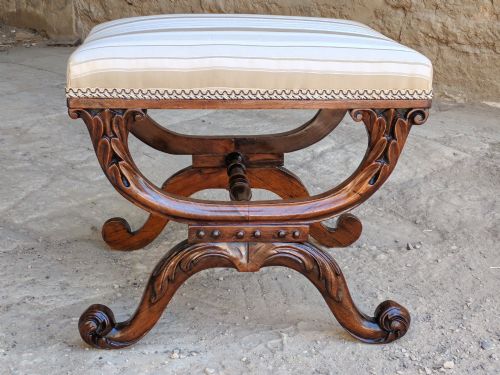
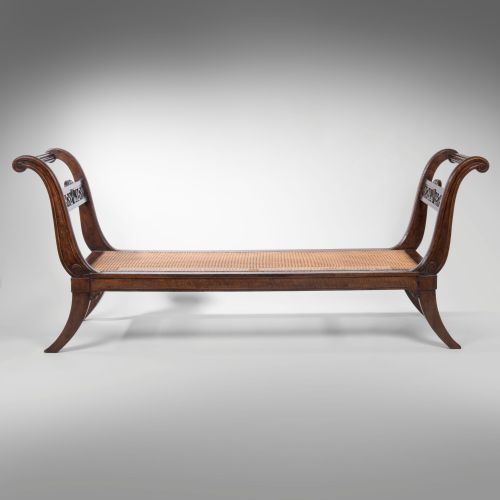
A georgian window stool serves as a low, elegant seat designed specifically to fit beneath a sill or within a bay, appearing in forms such as benches, footstools, and X-frame window seats. The examples on this page span the eighteenth and nineteenth centuries, alongside later revivals, reflecting how seating evolved from simple mahogany frames to elaborate carved and giltwood designs.
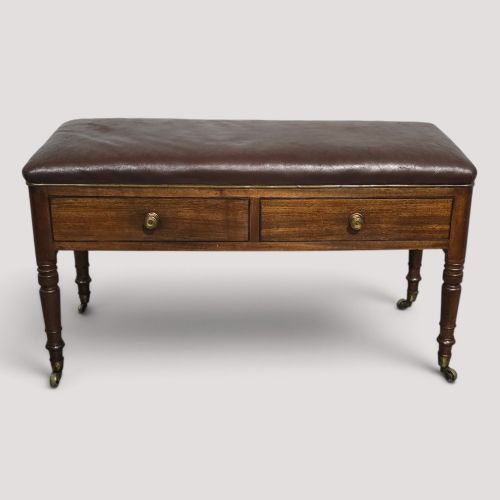
Most pieces you meet here rely on mahogany, walnut, or painted pine frames, often paired with traditional upholstery fabrics, velvet, or leather. They appear in styles ranging from George III and Regency to Adam and Georgian Revival, showing the enduring utility of low seating in domestic interiors.
How they were made
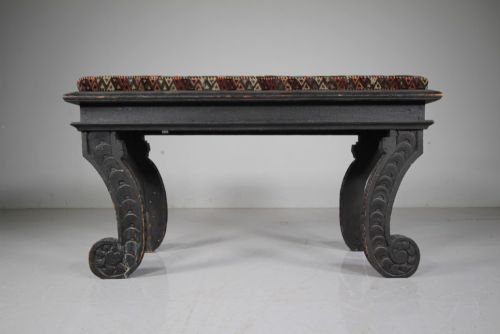
Makers shaped these frames from solid timbers including mahogany, walnut, rosewood, burr maple, and pine, employing joinery suited to weight and proportion. Surface enrichment included carved details, giltwood, and painted finishes applied to wood structures.
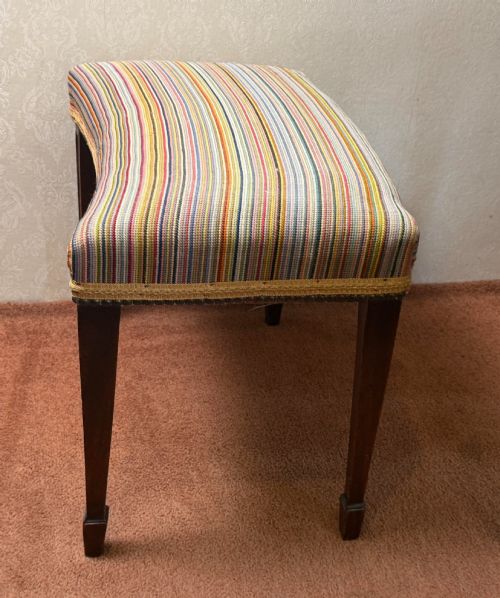
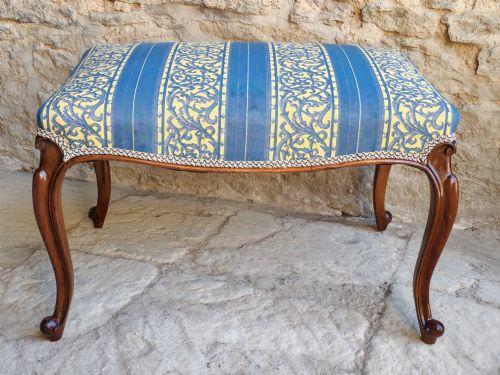
Upholstery completed the form, utilising textile, velvet, fabric, and buttoned leather secured with brass-studded detailing. Frames incorporate elements such as square tapering legs, cabriole legs, and X-frame supports.
Some nineteenth-century makers doubled their output by designing the same mahogany frame to serve as a dressing stool or a window seat.
What varies in quality
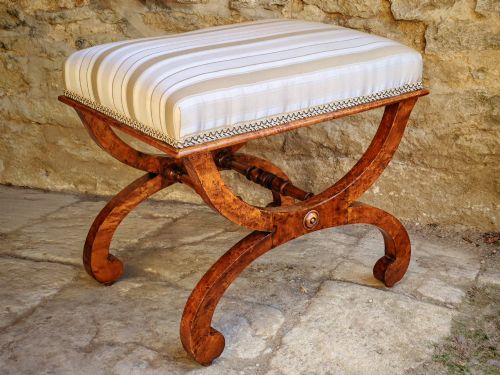
Quality rests in the precision of the timber framing and the elegance of the proportions, distinguishing a piece drawn with careful lines from a heavier, uninspired build. Timber selection plays a part, where richly figured burr maple or finely grained mahogany elevates the object.
The sophistication of the carving and the integrity of the structural joinery separate standard workshop output from exceptional examples. Detail work, such as neat brass-studding and well-executed upholstery, marks the distinction between ordinary and superior pieces.
Gillows of Lancaster
The Georgian Window Stool Glossary
- X-frame
- A seating support formed by intersecting diagonal timbers that create an X-shape when viewed from the side. This structural form appears frequently on Regency and later window seats.
- George III
- The design style spanning the reign of King George III, noted for classical restraint and fine mahogany craftsmanship. Pieces from this period often display clean architectural lines.
- Giltwood
- Timber coated with a thin layer of gold leaf or gold paint over a prepared gesso ground. This finish decorates more formal frames and seats.
- Serpentine
- A curved line that undulates gently outward and inward, often seen along the seat rail of a mid-eighteenth-century stool. It provides a fluid visual rhythm to the woodwork.
- Cabriole leg
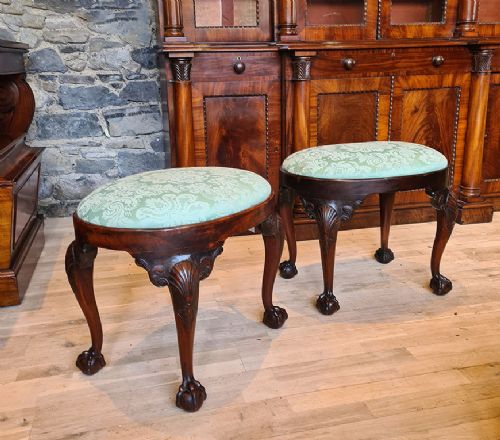
- A furniture leg that curves outward at the knee and tapers inward toward the foot, inspired by the shape of an animal's leg. It is a common feature on eighteenth-century Irish and English stools.
Georgian Window Stool: Frequently Asked Questions
Where should I place a window stool?
These low seats suit placement beneath sills, at the end of a bed, or in hallways where tall furniture would block light or movement.
Their compact proportions allow them to sit neatly against walls or within architectural recesses without dominating the floor space.
How do I identify a George III piece?
Look for timber quality, typically dense mahogany, paired with restrained classical carving such as fluting or paterae. Proportions tend to be balanced and structural elements remain purposeful.
Check for square tapering legs or straight seat rails which distinguish eighteenth-century work from later revival interpretations.
What is an X-frame window seat?
An X-frame seat uses crossed diagonal stretchers or legs to support the upholstered top, creating a distinct architectural silhouette. This form draws on classical precedents and appears in Regency designs.
The crossing timbers distribute weight while offering a strong visual statement suited to formal rooms.
How do I care for antique upholstery?
Keep textile and leather surfaces away from direct sunlight to prevent fading and drying of the material. Gentle dusting with a soft brush preserves the weave and the surrounding wood.
Avoid chemical cleaners on antique leather and fabric, relying instead on professional conservation advice if maintenance is needed.