



Red Velvet Footstool
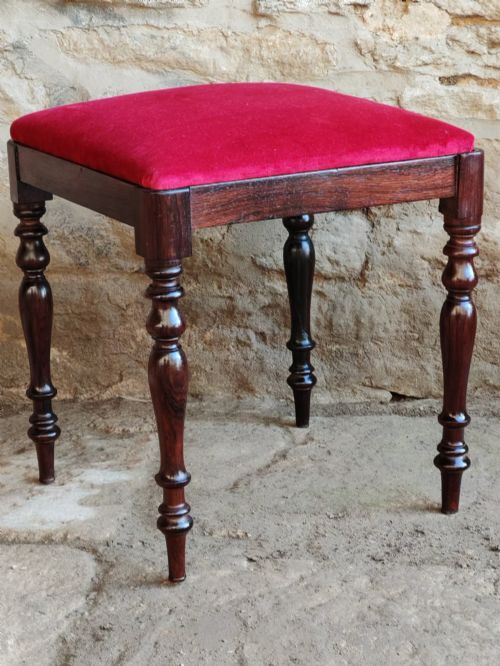
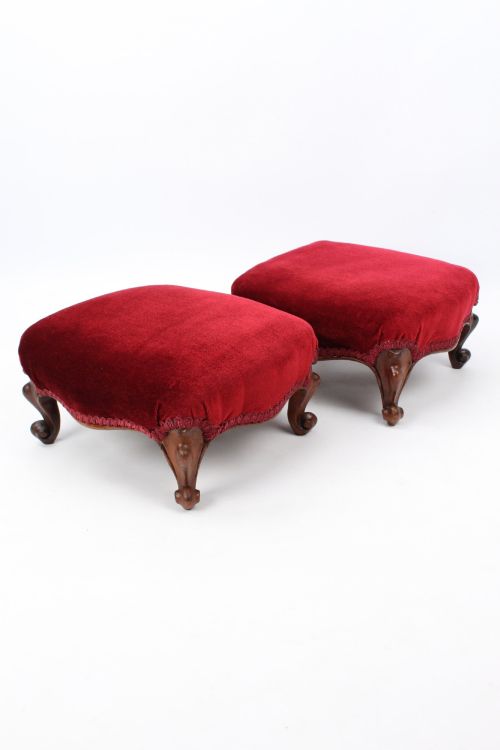
A red velvet footstool brings rich texture and traditional craftsmanship into a room.
Red Velvet Footstool
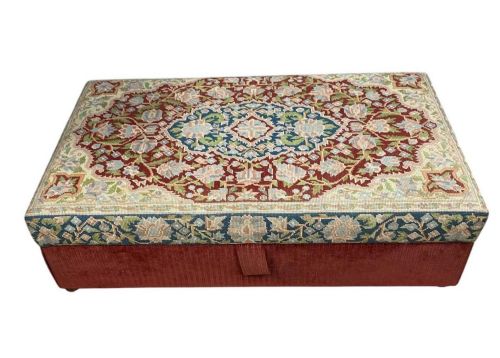
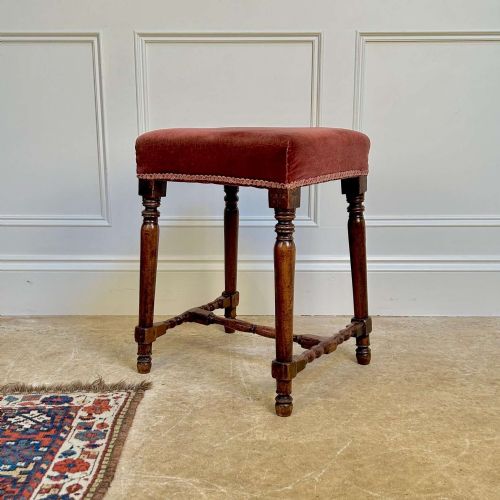
A red velvet footstool is a low seating piece designed for rest, often taking the form of a footstool, centre stool, or small ottoman. These furnishings appear across several historical eras, spanning from the eighteenth century through the nineteenth century.
The versions most commonly met on this page include Victorian examples alongside earlier Georgian pieces. Makers constructed these items using various woods including walnut, mahogany, oak, and other hardwoods.
Design influences range across Victorian Rococo Revival, Gothic Revival, and French Chateau styles. Pieces frequently feature textile upholstery in velvet, with some examples displaying recent re-upholstery in patterned or crushed velvet.
How they were made
Construction relies upon solid timbers such as walnut, mahogany, and oak to form the sturdy frames. Workshops shaped these hardwoods using traditional joinery methods appropriate to each respective period.
Upholstery forms a central element of these items, utilising textiles like velvet paired with internal padding. Metal components such as brass occasionally appear in the hardware or decorative detailing of the frames.
Red Velvet Footstool Retail Price Guide 2026
Typical asking prices for red velvet footstool among the pieces listed under this phrase on Sellingantiques today, from the lower quarter to the upper quarter. They describe what is for sale here now, not the wider market.
What varies in quality
Quality rests upon the integrity of the hardwood frame and the fidelity of the period style. Pieces reflecting specific design movements like Gothic Revival or Victorian Rococo Revival demonstrate more elaborate stylistic ambition.
The standard of upholstery and the preservation of the underlying timber structure distinguish different tiers of pieces. Original frame construction combined with sympathetic textile renewal separates standard examples from finer works.
The Red Velvet Footstool Glossary
- Footstool
- A low piece of furniture designed to support the feet while sitting. These items range from small paired stools to larger centre pieces.
- Upholstery
- The materials, including textile covers and padding, that form the soft seating surface. Velvet is frequently recorded on these pieces.
- Gothic Revival
- A nineteenth-century design style drawing inspiration from medieval architecture and ornamentation. This aesthetic appears in architectural woodwork on specific stools.
- Centre stool
- A larger freestanding seating form intended to be viewed from all angles within a room. These date from the mid-nineteenth century.
Red Velvet Footstool: Frequently Asked Questions
What periods do these footstools come from?
The available pieces span the eighteenth century and the nineteenth century, including specific dates around eighteen hundred and eighteen fifty. Victorian examples are particularly common.
Stylistic markers help identify the era, ranging from Georgian simplicity to Victorian Rococo Revival and Gothic Revival ornamentation.
What materials were used to build them?
Frameworks utilise solid hardwoods such as walnut, mahogany, and oak. These durable timbers provided structural support for daily use.
Upholstery consists of textiles, predominantly velvet, sometimes renewed in modern workshops using mauve or crushed velvet patterns.
How do I distinguish between styles?
Victorian Rococo Revival pieces often display curved lines and ornate carving, whereas Gothic Revival items show medieval architectural influences. Georgian pieces tend to exhibit more restrained proportions.
Examining the woodwork and leg profiles reveals the distinct design language of each period.
Where were these stools placed historically?
Stools served as movable seating or foot rests within principal rooms of a house. Centre stools occupied prominent positions where they could be approached from multiple sides.
Their compact size allowed easy relocation near hearths or armchairs.