

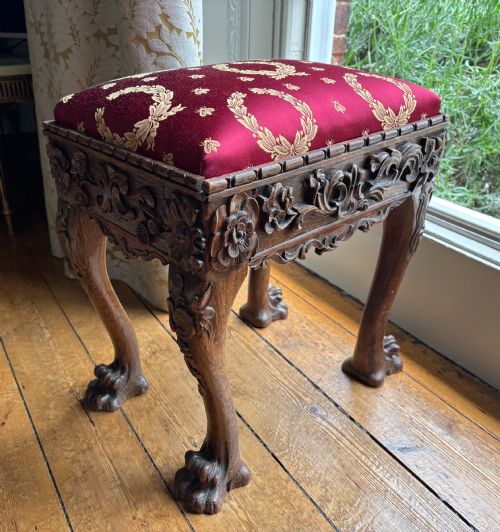
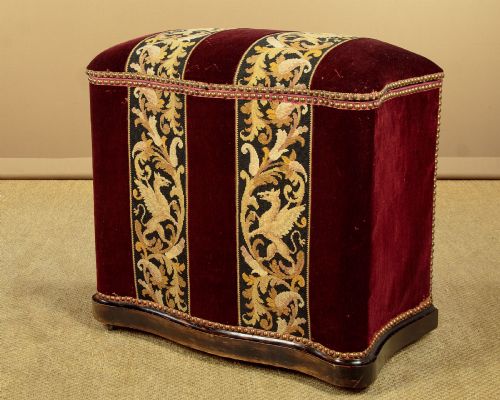
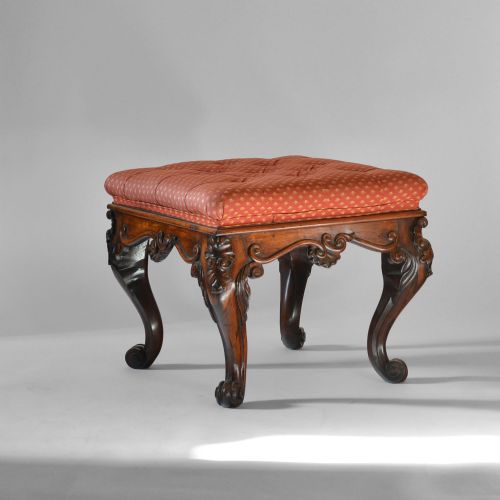
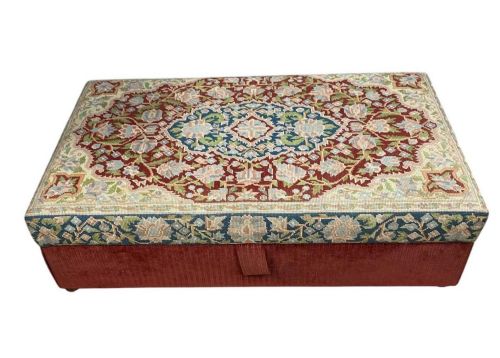
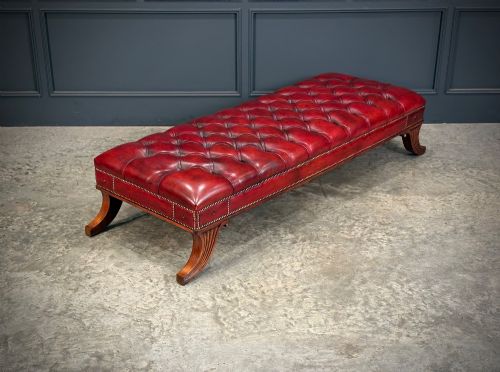
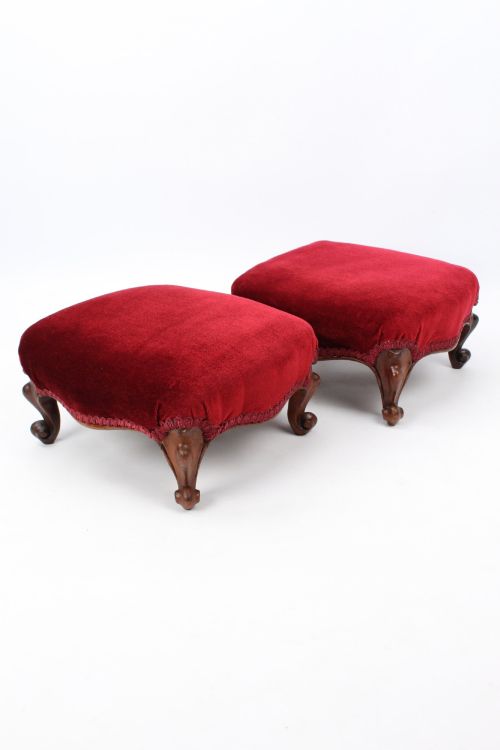
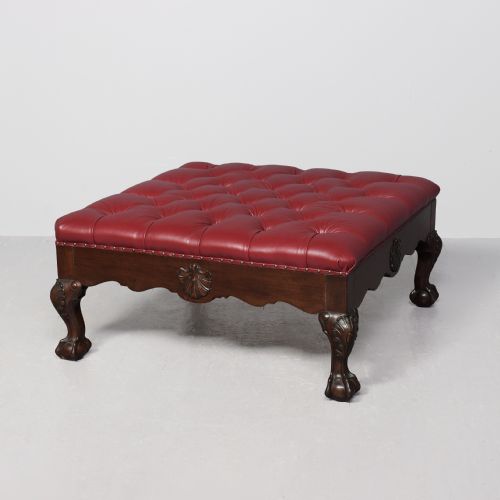
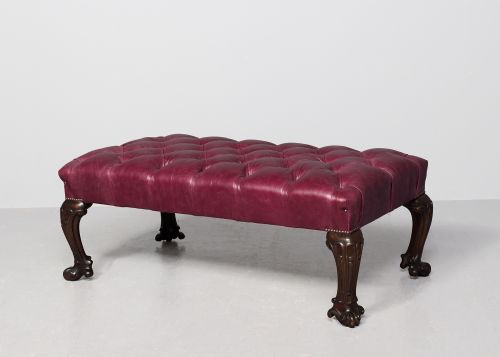
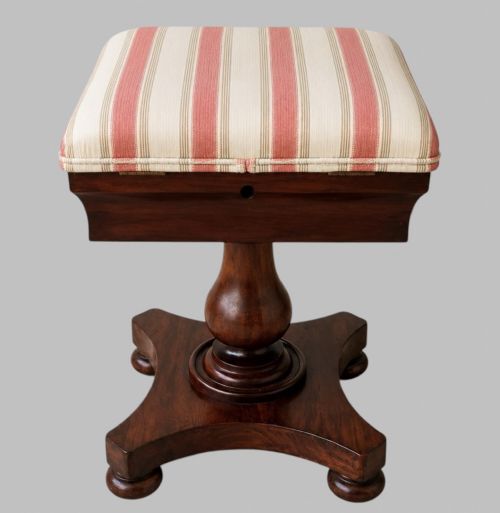


Red Upholstered Ottoman
When you search for a red upholstered ottoman, you enter a lineage of nineteenth-century seating built for comfort and function.
Red Upholstered Ottoman
A red upholstered ottoman encompasses footstools, storage chests, and long window seats originating primarily in the nineteenth century and the Victorian era.
Buyers meet sturdy mahogany frames, walnut structures, and occasional oak or pine bodies supporting crimson textiles, red hides, and patterned wools.
The phrase covers various historical revivals, including Chippendale style, Gothic forms, and French Louis revivals alongside simpler country house boxes.
Materials and Construction
Makers built the structural frames using dense hardwoods like mahogany, walnut, rosewood, and oak, often incorporating intricate hand-carving or turned legs.
Upholstery methods involved deep buttoning, brass-studding, and traditional textile coverings such as velvet, silk, leather, and needlepoint over padded interiors.
Hinged box ottomans and storage chests combined sturdy joinery with internal compartments designed for linen, sewing supplies, or domestic storage.
Red Upholstered Ottoman Retail Price Guide 2026
Typical asking prices for red upholstered ottoman among the pieces listed under this phrase on Sellingantiques today, from the lower quarter to the upper quarter. They describe what is for sale here now, not the wider market.
Listings feature eighteenth-century pieces alongside Victorian examples, with mahogany and walnut prevailing as the primary framing materials.
Judging the Standard
The calibre of a piece rests upon the crispness of the timber carving, the structural integrity of the frame joints, and the authenticity of the materials.
Superior examples display balanced proportions, heavy timber framing, and meticulous attention to historical revival details such as scroll tops or fluted legs.
Hallett & Sons·Howard & Sons
The Red Upholstered Ottoman Glossary
- Ottoman
- A low, upholstered seat or couch without arms or a back, frequently constructed with internal storage space beneath a hinged lid.
- Buttoning
- An upholstery technique where twine is pulled through padding and secured with buttons to create a diamond-shaped tufted pattern.
- X-frame
- A furniture base formed by intersecting curved or straight timber members shaped like the letter X, common on nineteenth-century stools.
- Needlepoint
- A type of counted thread embroidery stitched on canvas, often used historically as durable decorative covering for footstools.
- Rosewood
- A heavy, dense tropical timber featuring dark grain patterns, utilised for high-status nineteenth-century seating and accent furniture.
Red Upholstered Ottoman: Frequently Asked Questions
What is a red upholstered ottoman?
A red upholstered ottoman is a traditional low seat or storage chest covered in red leather, velvet, or textile, dating mainly from the nineteenth century.
These pieces function as footstools, window seats, or blanket boxes while adding a striking splash of colour to a room.
How were nineteenth-century ottomans used?
Original nineteenth-century pieces served multiple domestic purposes, acting as comfortable foot rests by the fireplace or as seating by windows.
Many examples featured hollow interiors designed for storing linens, sewing materials, or household items out of sight.
How do I care for antique leather upholstery?
Leather-upholstered ottomans require gentle cleaning with dry cloths and occasional treatment with appropriate conditioning balms to prevent drying.
Keep antique timber and fabric away from direct sunlight and excessive heat sources to preserve the original materials.
How can I tell a Victorian ottoman from a Georgian one?
Victorian pieces frequently feature heavier proportions, darker woods like walnut or mahogany, and deep buttoning, while Georgian styles show lighter frames with carved details.
Construction methods, joinery types, and secondary woods inside storage compartments also help indicate the correct period of manufacture.