



Antique Centre Stool
An antique centre stool brings generous seating and classic proportion to a room, offering a sturdy yet graceful anchor for traditional interiors.
Antique Centre Stool
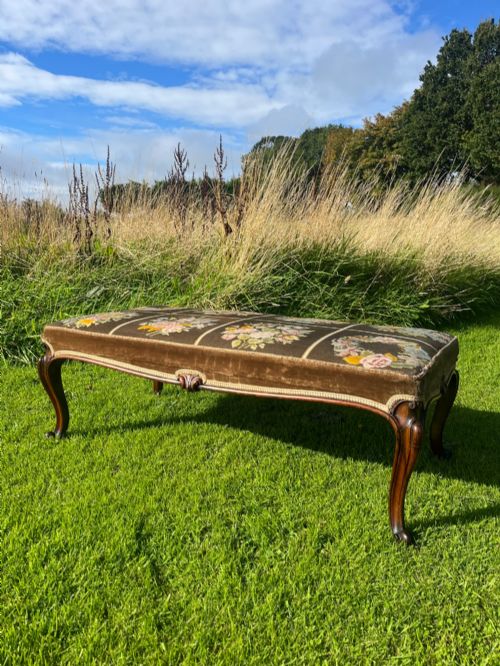
An antique centre stool provides low, substantial seating designed to sit prominently in a room rather than against a wall. The pieces catalogued here span the nineteenth century, including Georgian styles, William IV designs, and Victorian examples.
How they were made
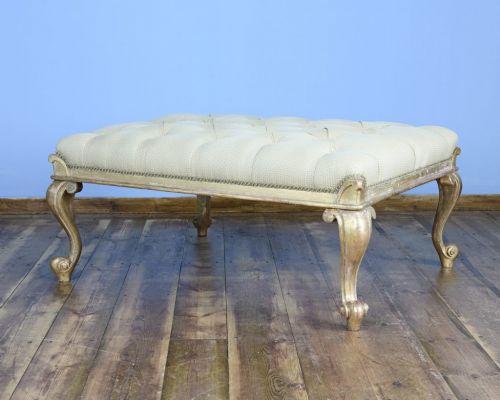
Cabinetmakers constructed the supportive frames of these stools using dense hardwoods such as mahogany, walnut, rosewood, and oak. Carved elements in giltwood or parcel gilt appear on French and revival pieces, showing detailed hand-chizzling and shaping.
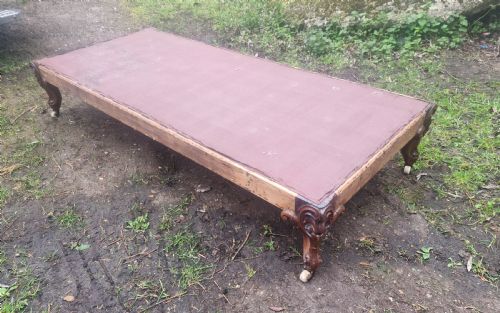
Upholstery techniques range from traditional buttoned leather to deep padding covered in velvet and various fabrics. Many nineteenth-century frames survive ready for reupholstering, showing the underlying webbeding and stuffing methods of the period.
Listings feature eighteenth-century revival styles alongside mid-nineteenth-century Victorian walnut, rosewood, and mahogany examples.
What varies in quality
The refinement of the timber carving dictates much of the visual distinction across these pieces. Crisp, deep hand-carving on rosewood or walnut separates superior frames from simpler turned legs.
Scale and proportion also define the better examples, particularly grander William IV and country house pieces that balance substantial dimensions with balanced architectural lines.
The Antique Centre Stool Glossary
- Centre stool
- A freestanding seat designed to be viewed from all sides, placed in the middle of a room rather than against a wall. These large stools often double as footstools or window seats.
- Parcel gilt
- A decorative treatment where selected portions of a wooden frame are covered in thin gold leaf while the underlying wood or paint remains visible. This technique highlights carved details.
- Giltwood
- Timber that has been entirely coated with gold leaf over a prepared gesso ground. It provides a bright, reflective surface typical of formal nineteenth-century revival seating.
- William IV
- A British design period spanning the 1830s characterised by heavy, robust proportions and classical architectural motifs. Furniture from this era often uses dense mahogany.
Antique Centre Stool: Frequently Asked Questions
Where do you put a centre stool?
These stools sit in the middle of a room, often serving as a coffee table alternative when topped with a tray, or providing flexible seating.
They work particularly well in large living spaces, dressing rooms, or at the foot of a bed.
Are centre stools comfortable to sit on?
Many of these pieces feature generous padding and deep upholstery, making them suitable for casual seating.
Some historical examples require updated webbing and cushioning to achieve a firmer sit for daily use.
How do I date a nineteenth-century stool?
Dating relies on identifying the timber choice, carving styles, and structural joinery characteristic of periods like the Georgian era or Victorian times.
Revival styles such as Louis XV or Jacobean often incorporate nineteenth-century interpretations of earlier motifs.
Can I use a centre stool as a coffee table?
Using an upholstered stool with a firm top as a coffee table is a common way to incorporate these pieces into modern rooms.
Placing a stable wooden or metal tray on top protects the leather or fabric surface from spills.