


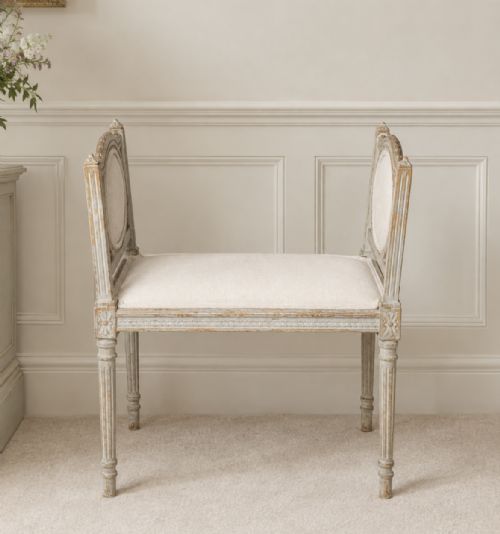


End of Bed Bench
An end of bed bench provides a practical seat and a finished look at the foot of a bed, drawing from centuries of long stool and window seat design.
End of Bed Bench
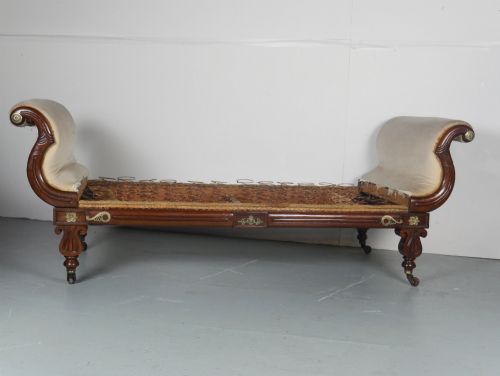
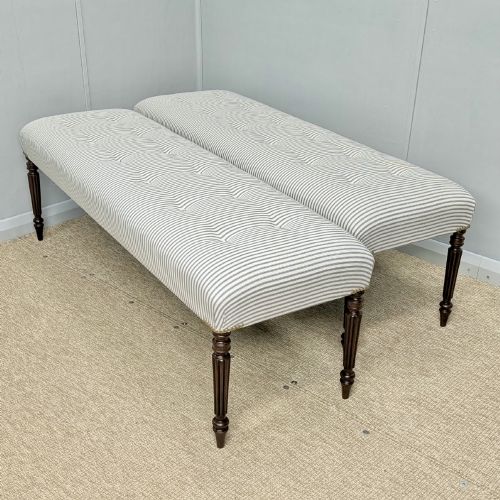
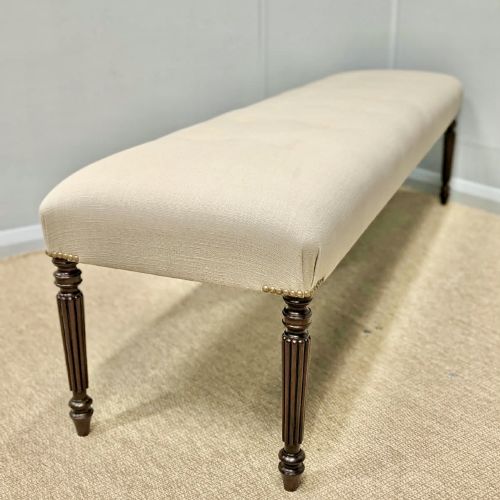
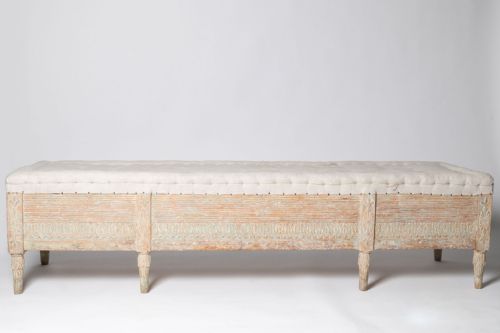
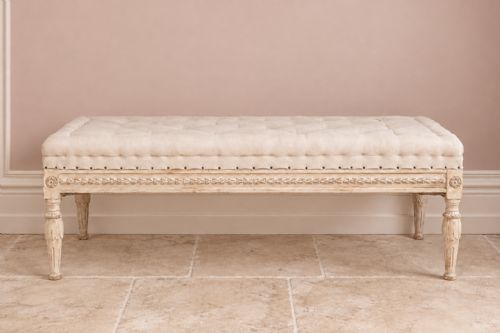
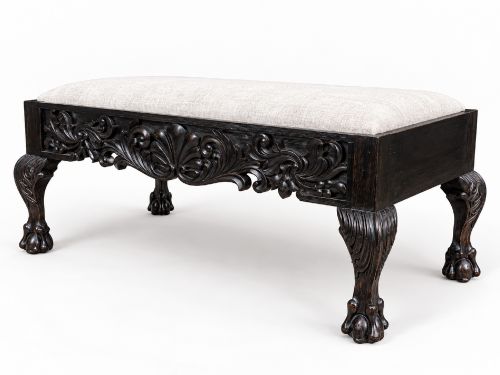
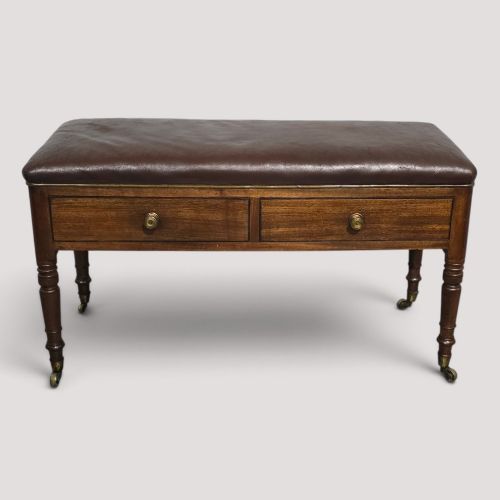
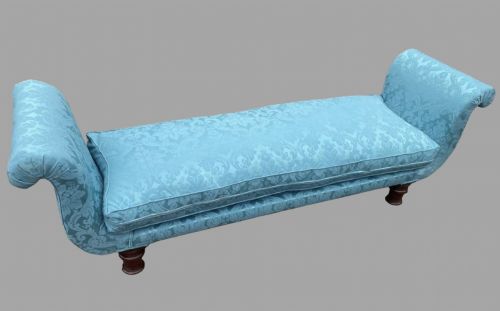
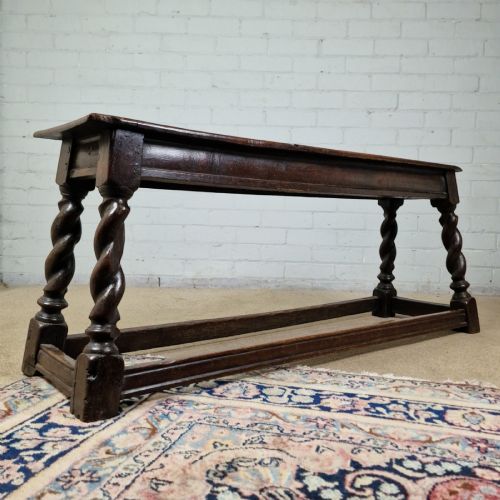
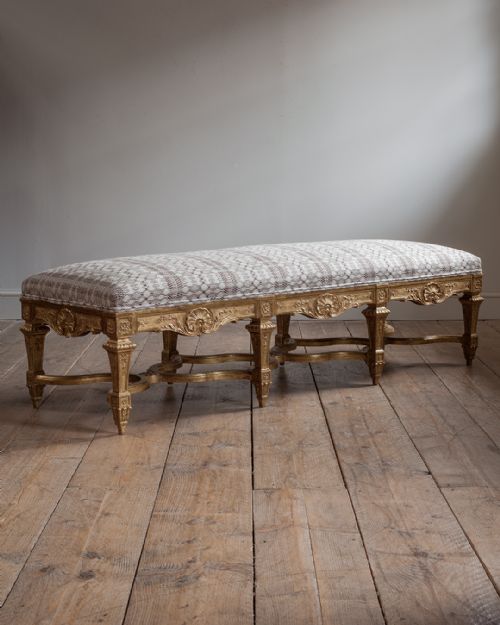
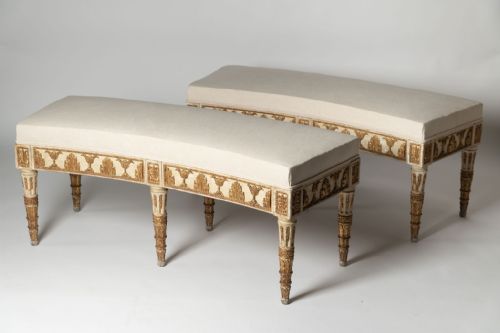
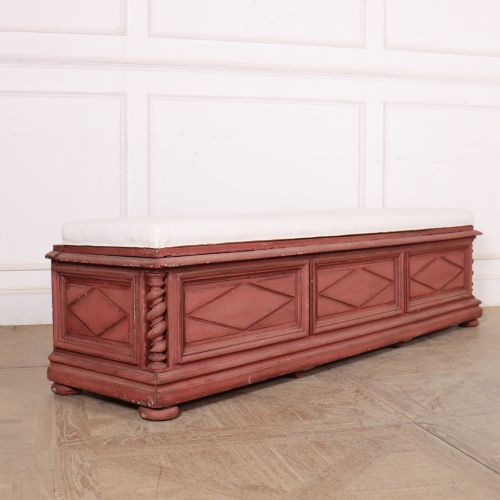
An end of bed bench brings proportion and seating to the foot of a bed, drawing on historical forms such as window seats, long stools, daybeds, and ottomans. These pieces range from walnut and mahogany frames to painted wood structures, often serving dual roles as footboards or dressing seats.
The selections available span the eighteenth century through to the Edwardian period and the early twentieth century. Buyers encounter styles from Regency and Italian Neoclassical to Arts and Crafts and French Provincial, reflecting diverse regional craftsmanship.
Most pieces seen here appear as window seats, long stools, or upholstered sofas designed specifically for bedroom placement. Their forms accommodate both compact rooms and expansive chambers, utilising traditional woodwork and textile coverings.
How they were made
Carpenters and cabinetmakers constructed these frames primarily from solid timbers like mahogany, walnut, oak, and birch. Structural details often involved carved ornamentation, fluted legs, or ball and claw feet.
Upholstery techniques combined traditional webbing and stuffing with diverse textile coverings, including velvet, linen, and patterned fabrics. Decorative elements frequently incorporated satinwood inlay, bone detailing, or giltwood finishes.
End of Bed Bench Retail Price Guide 2026
Typical asking prices for end of bed bench among the pieces listed under this phrase on Sellingantiques today, from the lower quarter to the upper quarter. They describe what is for sale here now, not the wider market.
Periods represented stretch from the 18th century through the Victorian and Edwardian eras into the early 20th century.
What varies in quality
The distinction between ordinary and superior pieces rests on the precision of the woodwork and the integrity of the frame. Hand-carved details, robust joinery, and timber selection determine the baseline durability and aesthetic weight of each stool or bench.
Upholstery choices and fabric pedigree influence the overall refinement of the piece. Period-appropriate textiles or work by notable design houses elevate the finish, while the harmony between the wooden structure and its upholstery defines the success of the design.
The End of Bed Bench Glossary
- Window seat
- A long, narrow bench traditionally designed to fit within the recess of a window. These pieces frequently double as bedroom seating at the foot of a bed.
- Daybed
- A couch or long seat that allows a person to recline without full back support. These items often feature wooden frames and integrated head or foot boards.
- Ottoman
- A low, upholstered seat or footstool without arms or a back. Larger examples offer substantial seating capacity at the end of a bed.
- Giltwood
- Wood that has been coated with gold leaf or a gold-coloured finish. This technique highlights decorative carvings on formal eighteenth and nineteenth-century frames.
- Satinwood
- A durable, hard timber with a natural golden sheen and satin-like texture. Makers used it frequently for contrasting inlay work on Edwardian furniture.
End of Bed Bench: Frequently Asked Questions
What is an end of bed bench used for?
These pieces provide a convenient spot for sitting while dressing or removing shoes at the end of the day. They also anchor the visual composition of a bedroom.
Historically, variations like window seats and long stools served multiple rooms before finding a permanent home in the sleeping chamber.
How do I choose the right size bench?
Measure the width of your mattress and bed frame to ensure the bench matches or sits slightly within the overall footprint. A balanced proportion prevents the piece from obstructing pathway space.
Consider the height of the bed as well, ensuring the seat allows comfortable access without appearing awkwardly tall or low.
Can I use a window seat at the foot of a bed?
Window seats function exceptionally well as bedroom benches due to their elongated proportions and narrow depth. Their finished backs and sides look presentable from any angle in an open room.
Many antique examples originally served dual purposes in halls, parlours, or window recesses.
How do I identify an Edwardian bench?
Edwardian pieces often feature lighter woods like mahogany, sometimes accented with satinwood inlay or bone details. The silhouettes tend to favour refined proportions inspired by earlier Georgian styles.
Construction from this era frequently incorporates machine-assisted precision alongside traditional hand assembly.