



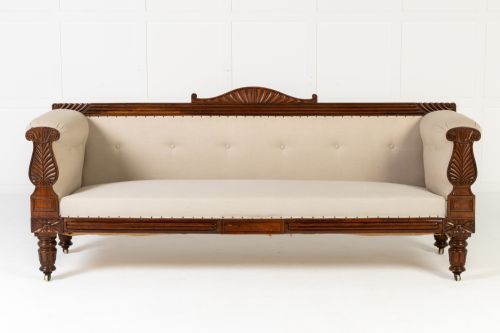


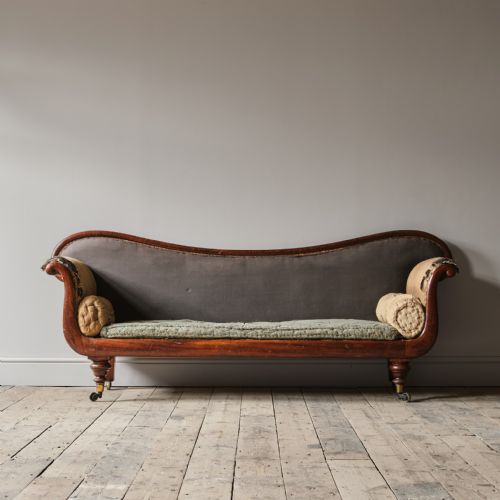


Scrolled Arm Bench
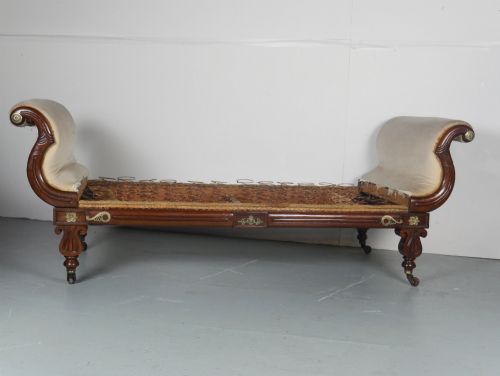
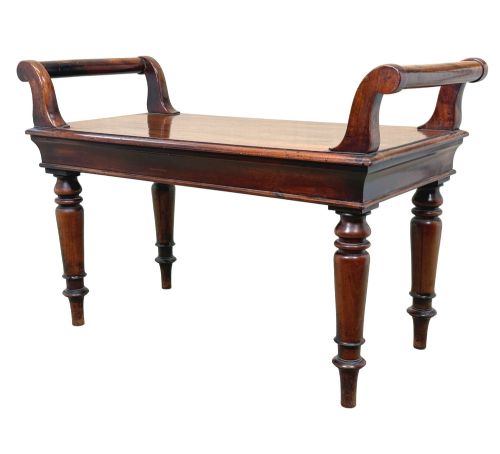
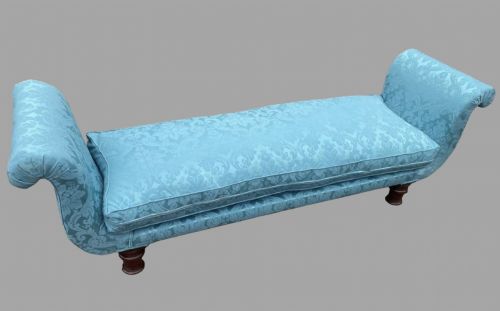
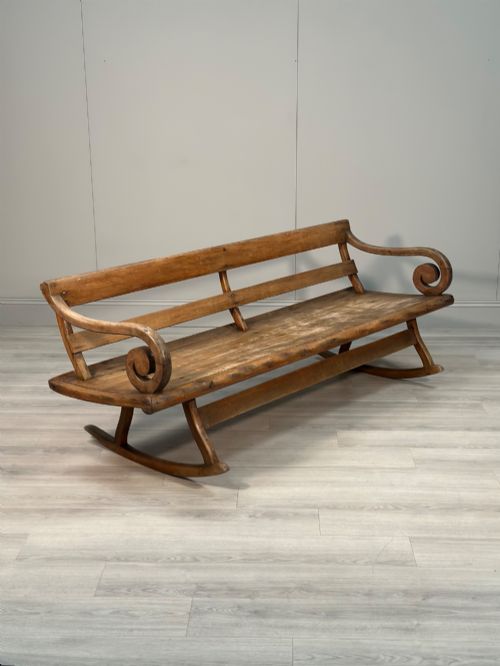
A scrolled arm bench offers a distinctive seating form defined by sweeping timber terminals, appearing across Regency, Victorian and Edwardian periods.
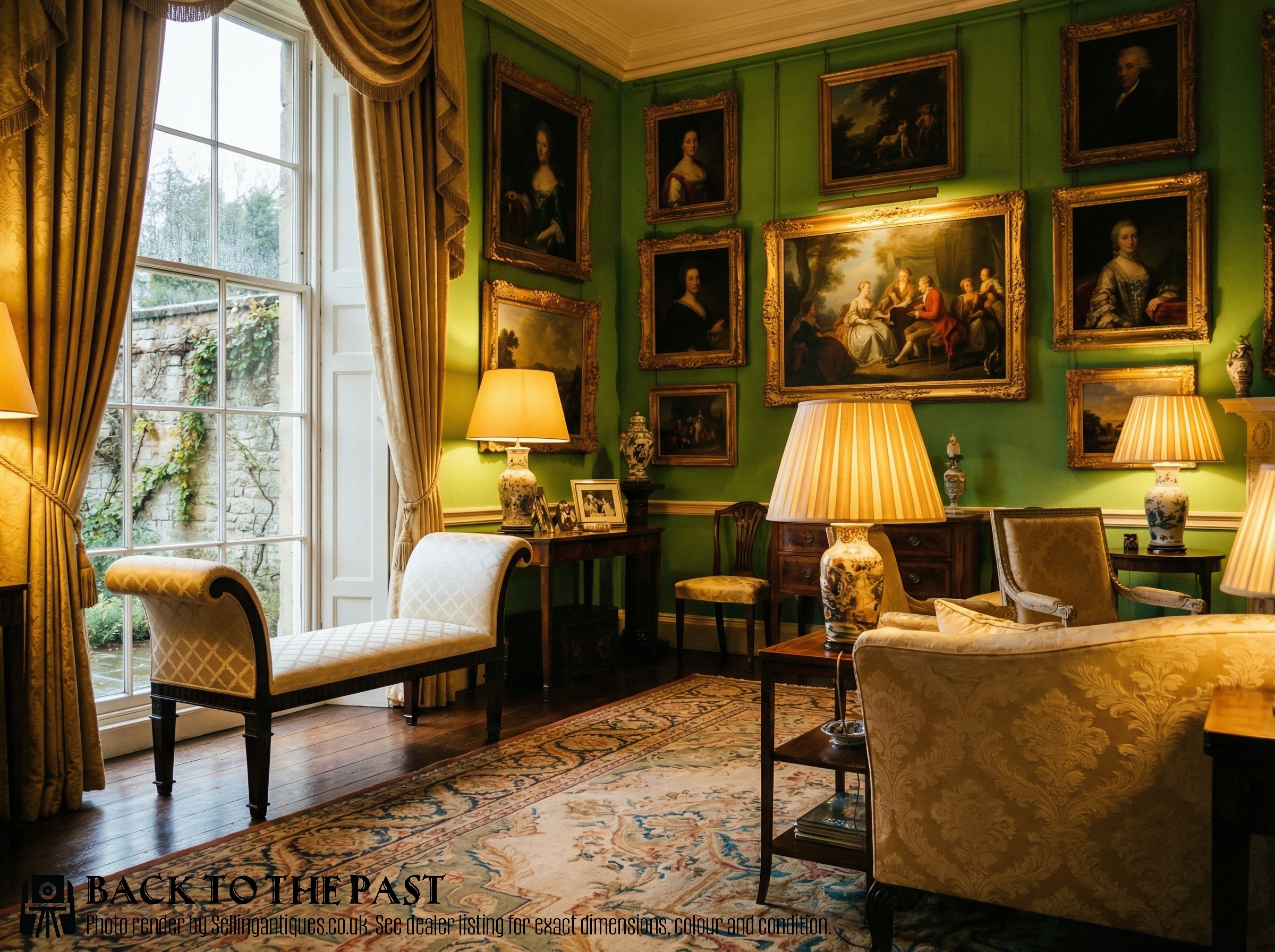
Scrolled Arm Bench
A scrolled arm bench encompasses forms ranging from compact window seats and dressing stools to large country house sofas and double-ended settees. When exploring a scrolled arm bench, the selection spans nineteenth-century mahogany window seats, rosewood chaise longues, and Edwardian upholstered examples. These items serve primarily as architectural furniture for placement beneath windows, in halls, or within principal reception rooms.
The prevalent iterations on this page draw heavily from Regency and Victorian design vocabularies, often integrating substantial scroll ends with turned or cabriole legs. Examples such as William IV mahogany double-ended settees and French walnut window seats illustrate the recurring emphasis on flowing terminal curves. Buyers encounter both wood-framed seating with drop-in cushions and fully upholstered variations covered in damask, velvet, or contemporary fabric.
How they were made
Cabinetmakers constructed the structural frames of a scrolled arm bench using dense hardwoods such as mahogany, rosewood, walnut, and oak. These timbers were carved, turned, and polished to highlight natural grain patterns, occasionally accented with ebonised details or gilt finishes. Frames frequently incorporate structural joinery designed to support both rigid wooden seats and heavy sprung upholstery.
Upholstered versions rely on traditional stuffing and webbing techniques enclosed within textiles like red damask, velvet, and various upholstery fabrics. Brass hardware appears in specific structural or decorative applications, while structural carving defines the decorative vocabulary of styles ranging from Neoclassical to Rustic Country.
Scrolled Arm Bench Retail Price Guide 2026
Typical asking prices for scrolled arm bench among the pieces listed under this phrase on Sellingantiques today, from the lower quarter to the upper quarter. They describe what is for sale here now, not the wider market.
Listings feature scrolled arm bench forms executed in mahogany, rosewood, walnut, and oak across Regency, Victorian, and Edwardian periods.
What varies in quality
The calibre of a scrolled arm bench rests upon the crispness of its timber carving and the architectural proportion of its scroll ends. Superior examples display fluid, uninterrupted curves in the wood and balanced symmetry across double-ended forms, whereas lesser pieces exhibit rigid transitions or heavy-handed proportions.
Material selection and execution drive the distinction between standard room furniture and high-status pieces. Finely figured rosewood or richly patinated mahogany paired with sophisticated upholstery styling denotes superior workshop output compared to simpler utility benches.
The Scrolled Arm Bench Glossary
- Window seat
- A long, narrow bench specifically designed in length and height to fit within the architectural recess of a domestic window.
- Chaise longue
- An upholstered seating form combining a chair with a long seat, featuring one or two scrolled ends for reclining.
- Settee
- A medium-sized upholstered bench with a backrest and arms, built to accommodate multiple sitters in a formal interior.
- Damask
- A reversible figured fabric traditionally woven on a jacquard loom, frequently utilised for historical upholstery.
- Cabriole leg
- A furniture leg that curves outward in a convex arc and then bends inward in a concave arc, terminating in a foot.
Scrolled Arm Bench: Frequently Asked Questions
Where should I place a scrolled arm bench?
These pieces suit placement beneath large windows, at the foot of a bed, or along an entrance hall wall where their architectural profile remains visible.
Their elongated forms function effectively to divide open living spaces or provide supplementary seating in drawing rooms.
How do I identify a Regency scrolled arm bench?
Regency examples frequently display classical restraint, utilising figured rosewood or mahogany with distinct scroll ends and sabre or turned legs.
Look for neoclassical influences, clean structural lines, and decorative elements derived from ancient Greek and Roman furniture.
Are these benches comfortable for daily sitting?
Upholstered versions featuring sprung seats and padded scrolled ends offer substantial support for extended periods of reading or resting.
Wooden window seats without upholstery rely on loose cushions to achieve comfort while maintaining a streamlined profile.
What is the difference between a window seat and a settee?
A window seat typically lacks a full backrest, allowing it to sit low beneath window sills without obstructing external light or views.
A settee incorporates a defined backrest and structured arms designed for freestanding placement against a primary wall.