
Antique Entryway Seat
An antique entryway seat brings timber gravity and hall utility to a threshold, grounding the space with centuries of domestic traffic.
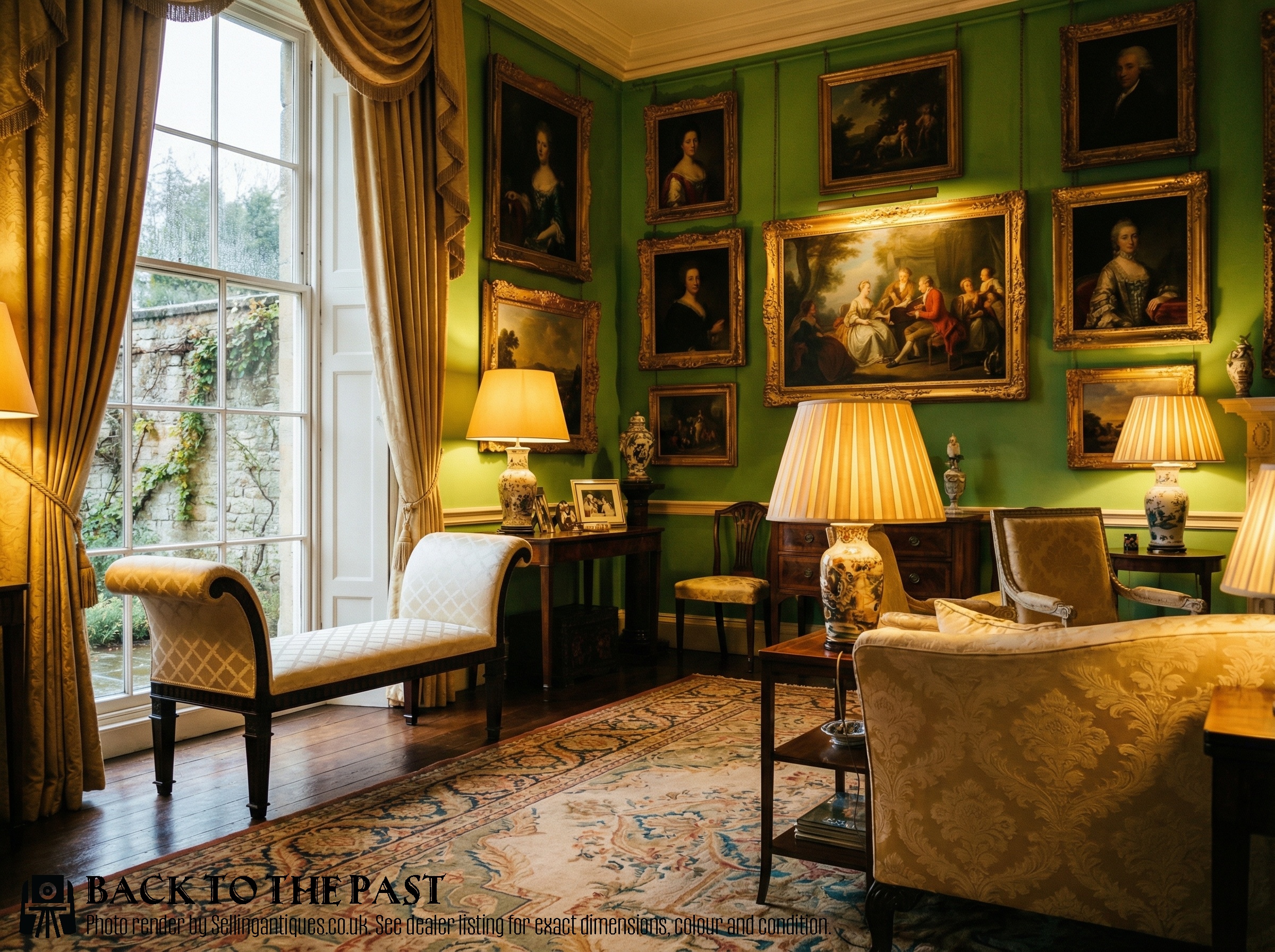
Antique Entryway Seat
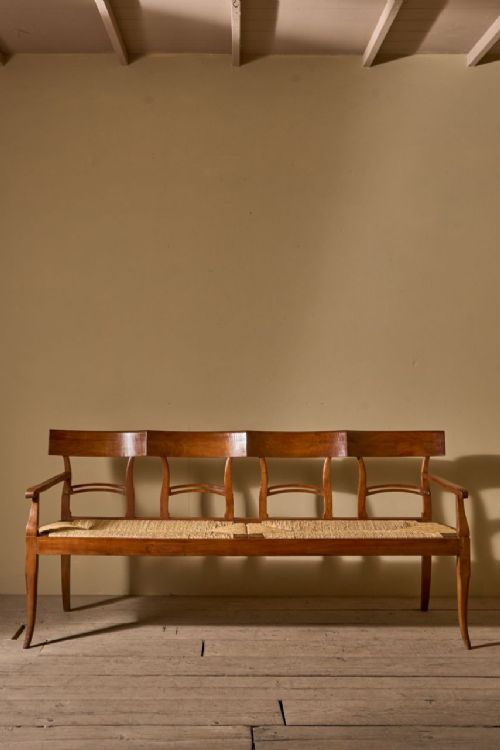
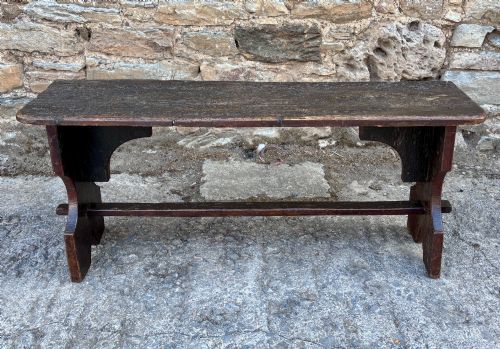
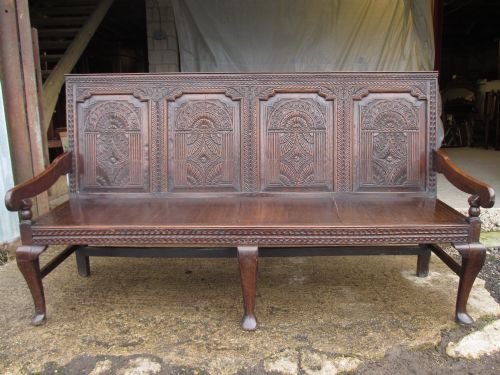
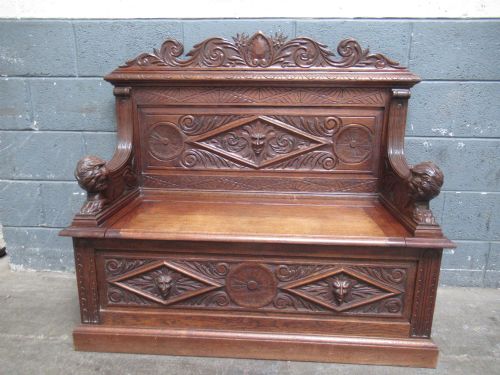
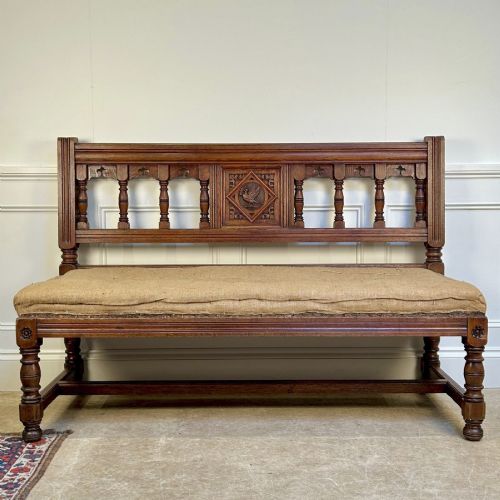
An antique entryway seat encompasses hall chairs, settles, benches, and hall seats that furnish passage spaces in period properties. These objects serve transitional rooms by providing a place to pause while removing outerwear or waiting in a hallway.
The selections span 17th century pieces through to Edwardian and later 20th century examples, drawing upon Georgian, Regency, Victorian, and Arts and Crafts design idioms. Oak dominates the earlier centuries, whilst mahogany and pine appear across various periods alongside painted finishes.
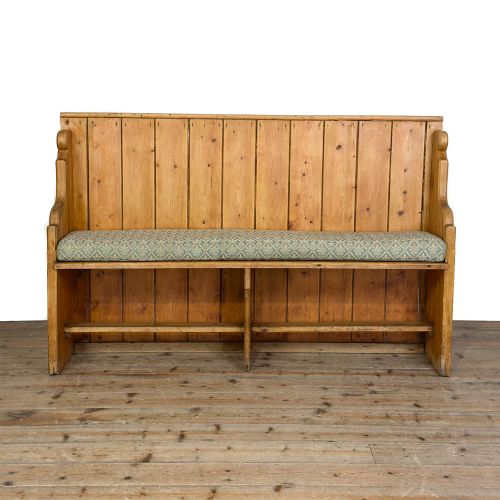
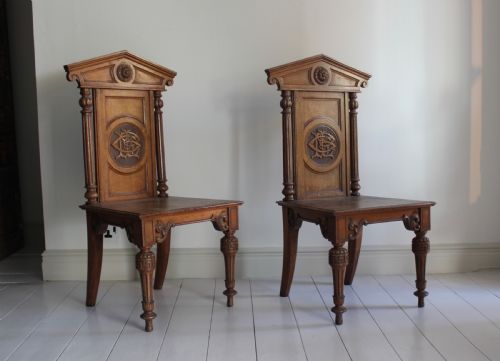
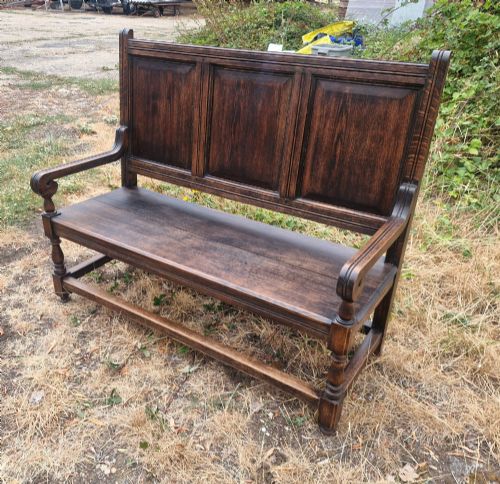
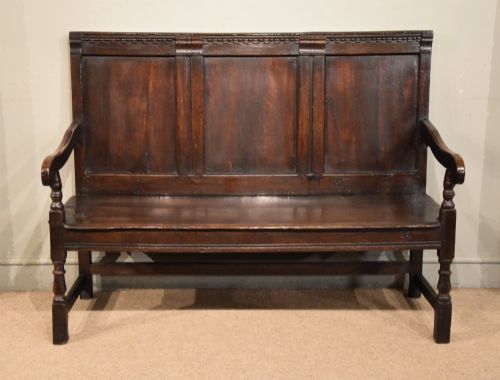
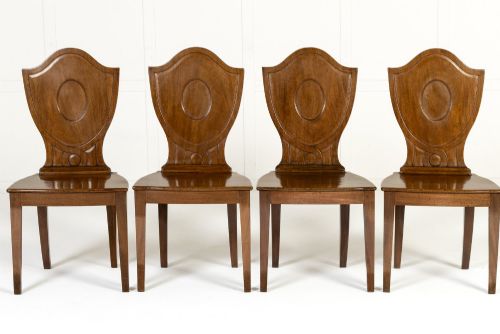
Buyers most frequently encounter 19th century and Victorian oak hall benches, church pews, and panelled box settles on this page. Pairs of mahogany hall chairs also recur regularly, reflecting the formal seating arrangements of period entrance halls.
Design and execution
Depth of carving and clarity of detail distinguish standard production from exceptional work, particularly on shield backs and panelled box settles where crisp execution elevates the piece. The choice of timber also dictates tier, with dense, figured oak and well-grained mahogany commanding greater visual presence than utilitarian pine.
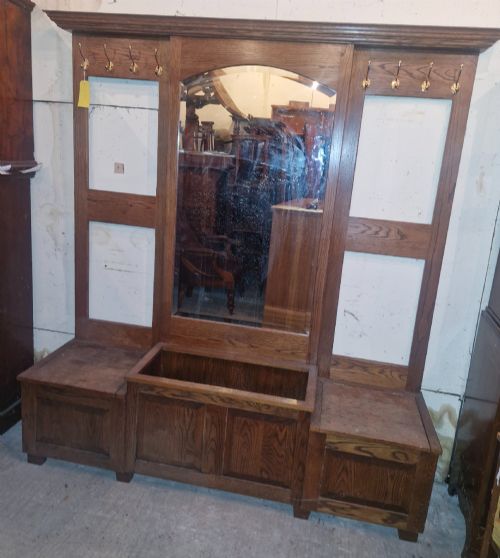
Proportion and structural integrity separate fine examples from lesser items, notably in pieces combining multi-functional elements like stick stands, lockers, or canopy tops. Makers who balanced heavy timber mass with refined architectural lines achieved a harmony missing in simpler workshop builds.
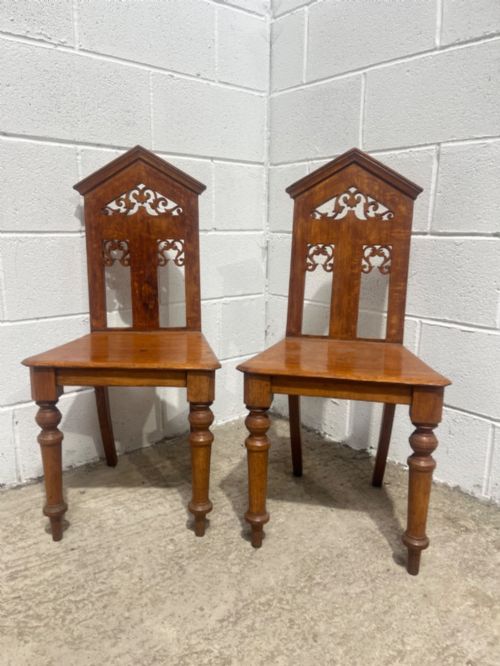
Listings feature oak, mahogany, and pine across styles ranging from Gothic Revival and Jacobean Revival to Arts and Crafts.
GIllows·James Shoolbred & Co.·Liberty
The Antique Entryway Seat Glossary
- Settle
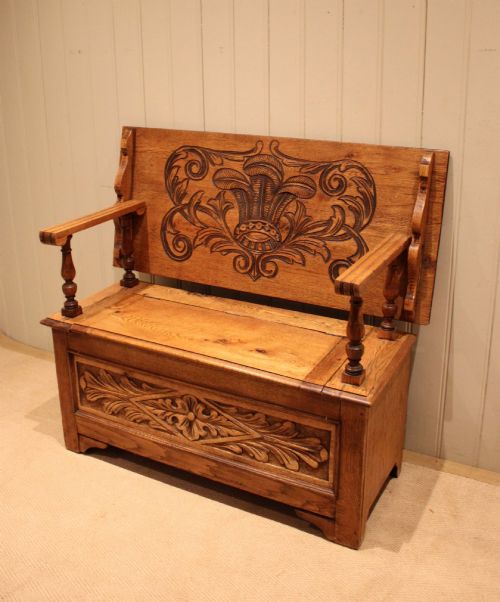
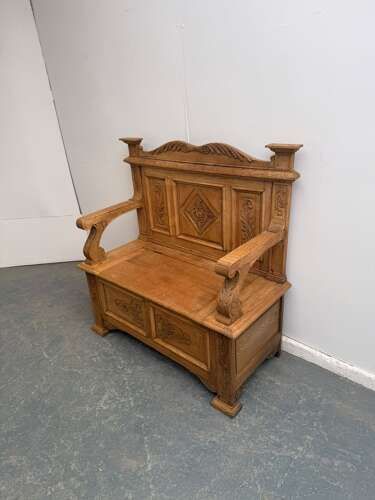
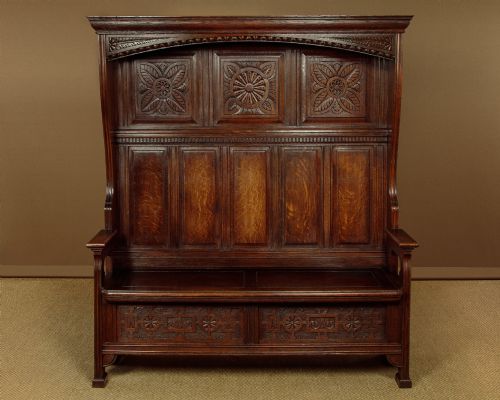
- A wooden bench with a high back, solid arms, and often a storage box beneath the seat. This form protected occupants from drafts in entrance halls and large rooms.
- Box settle
- A variation of the settle featuring a hinged seat lid opening to a deep storage compartment. Families utilised the interior cavity for blankets, boots, and outdoor gear.
- Hall chair
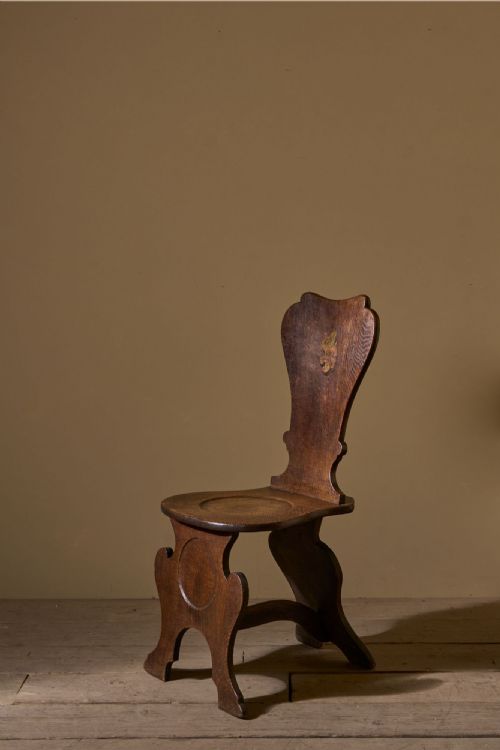
- A rigid wooden seat with a solid or carved back, designed for an entrance hall rather than prolonged sitting. These often display heraldic crests or family shields.
- Church pew
- A long wooden bench historically used in ecclesiastical settings but repurposed for domestic hallways. Pine and oak variants provide linear seating with simple panelled backs.
- Shield back
- A chair back shaped like a heraldic shield, popular in mahogany dining and hall seating during the Georgian and Regency periods. Carvers frequently embellished these with painted or carved crests.
Antique Entryway Seat: Frequently Asked Questions
What is an antique entryway seat used for?
These furnishings provide practical seating in hallways, porches, and vestibules for putting on or taking off footwear. Many variants also incorporate hidden storage boxes or integrated umbrella stands to keep passageways tidy.
Historically, they offered a firm resting place for visitors waiting to be announced in grand homes or country houses. Today, they serve a similar organizational and decorative role in modern residential properties.
How do I date an oak hall bench?
Dating relies upon examining construction methods, timber selection, and stylistic details such as carved panels or mouldings. Earlier pieces from the 17th and 18th centuries exhibit hand-planed surfaces, pegged joinery, and heavier proportions.
Later Victorian and Edwardian revivals often incorporate machine-cut elements, lighter pine carcases, or factory stamps. Comparing the patina and wear patterns to known period styles clarifies the manufacturing era.
Are hall chairs comfortable for daily use?
Hall chairs were constructed primarily for formal effect and brief seating rather than extended lounging. Their upright wooden backs and solid seats encourage an erect posture suitable for entryways.
Adding a loose fabric pad or cushion can increase comfort if the seat sees frequent daily use. Most owners prioritize their sculptural silhouette and historical character over ergonomic lounging.