





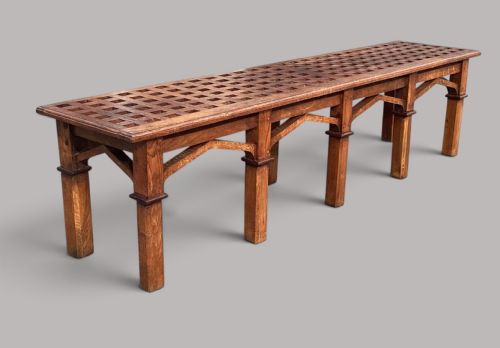
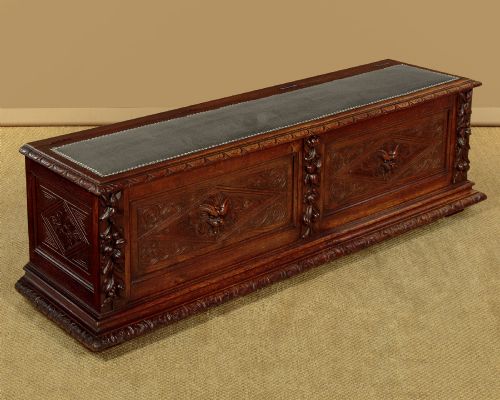
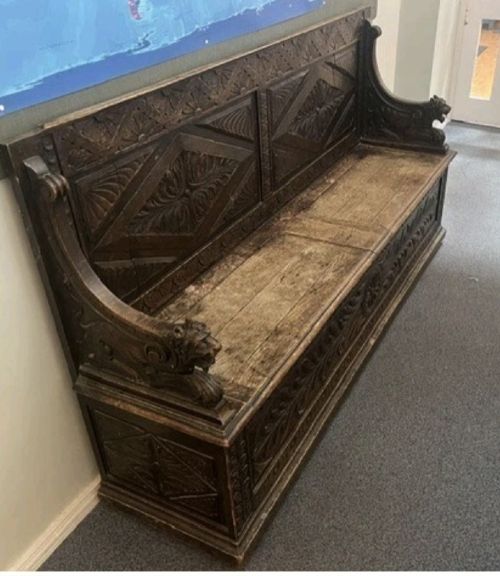
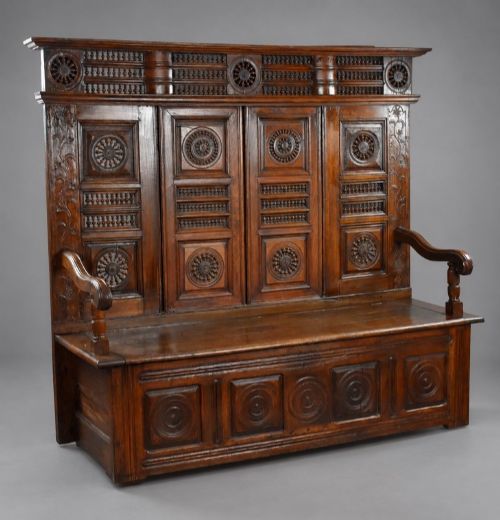
Victorian Carved Oak Bench
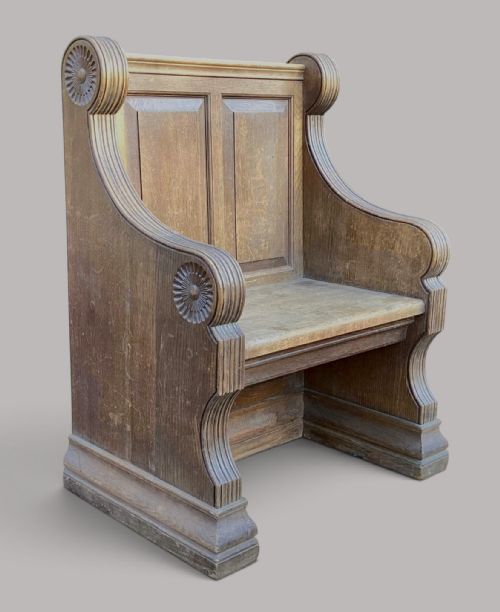
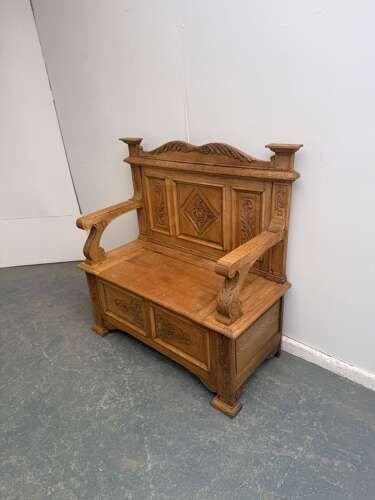
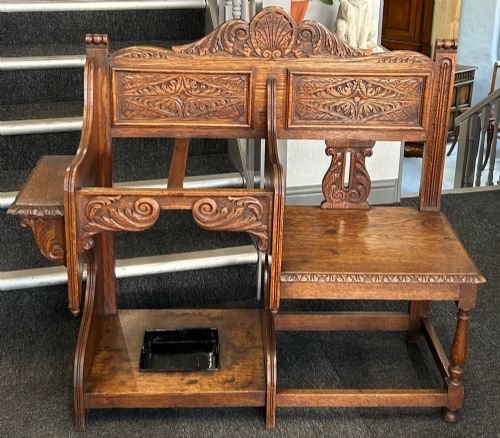
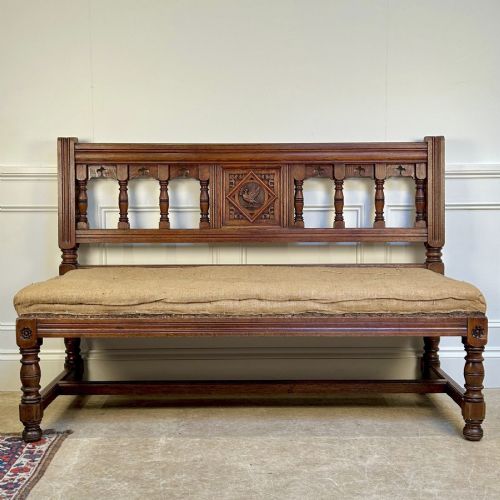
When you select a victorian carved oak bench, you bring home a heavy, figured piece built to anchor a grand hallway or reception room.
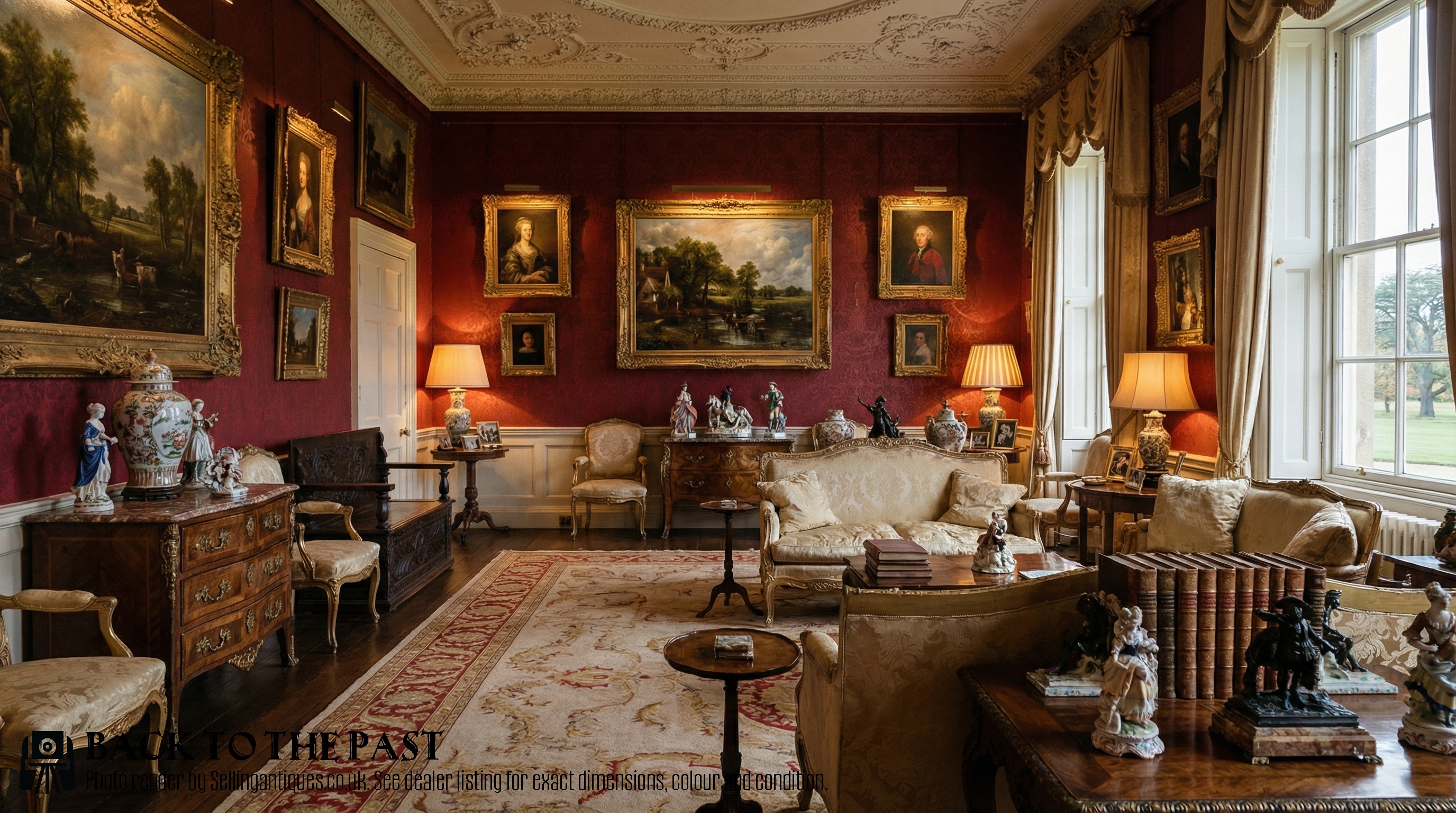
Victorian Carved Oak Bench
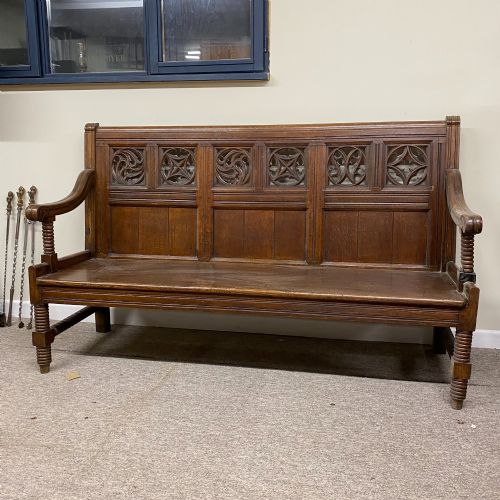
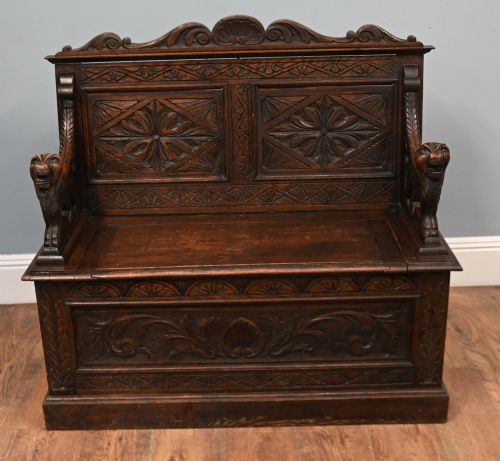
A victorian carved oak bench usually takes the form of a hall seat, a high-backed settle, or a convertible monk's bench designed for nineteenth-century entrance halls. These sturdy items often incorporate hinged lift-up seats or compartment boxes intended for hats, boots, and walking sticks.
Makers drew heavily upon Gothic Revival, Jacobean, and Renaissance Revival vocabularies, applying deep strapwork, linenfold panels, and grotesque Green Man carvings to dense timber. Most examples seen here date from the middle decades of the nineteenth century up to 1900, reflecting an era obsessed with historicist interior decoration.
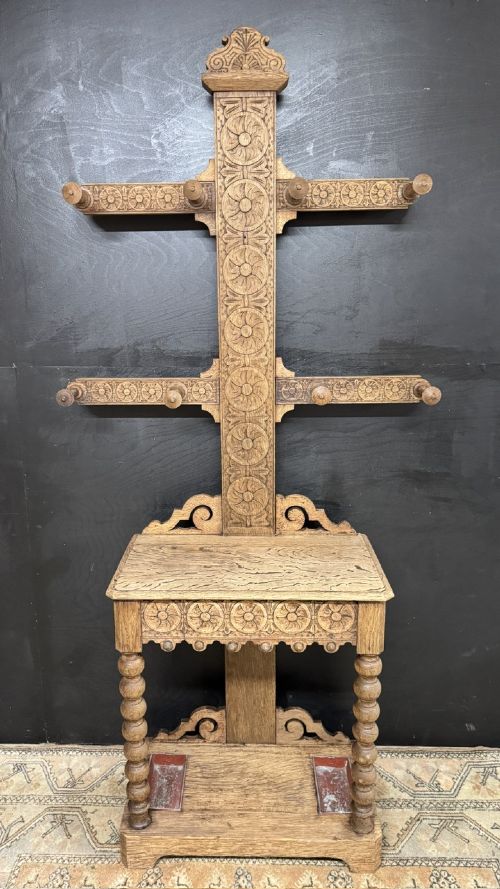
Architectural proportions dominate the category, with high paneled backs, carved arm supports, and structural framing that mimics ecclesiastical woodwork. Whether configured as a simple settle, a window seat, or an elaborate hall stand with integrated mirror and coat hooks, every piece serves a practical domestic function rooted in Victorian hospitality.
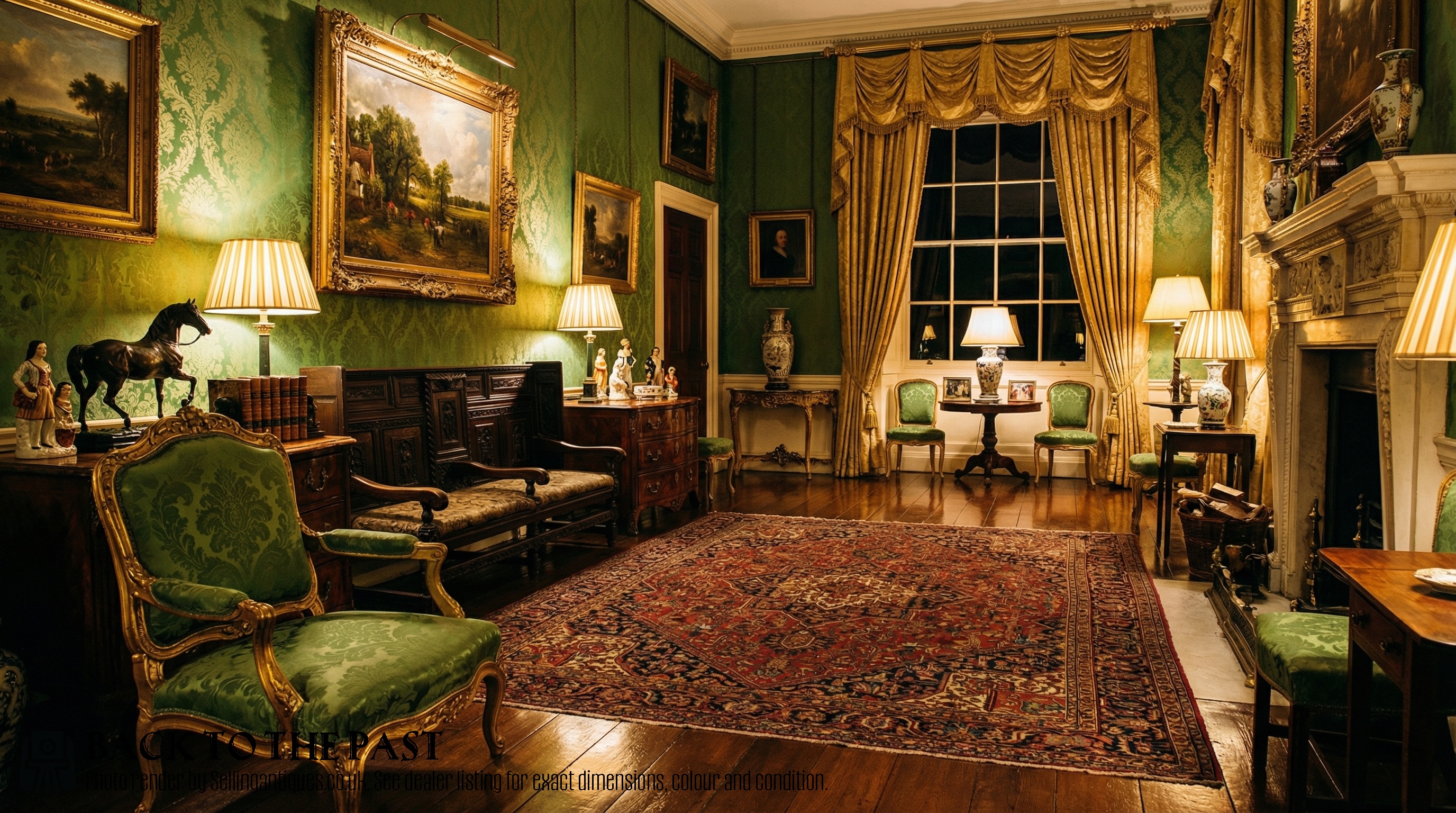
What varies in quality
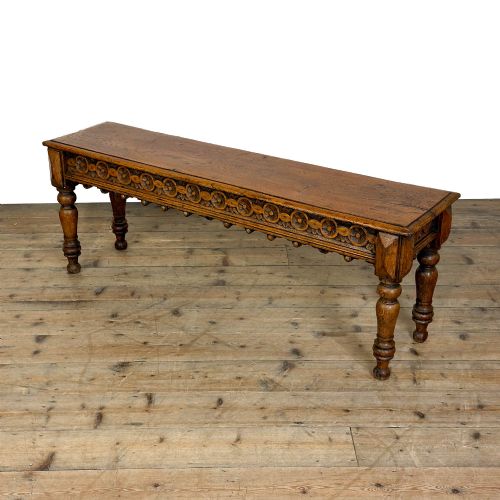
The distinction between standard commercial output and exceptional workshop production lies in the crispness and depth of the timber carving. Superior examples display undercut details, balanced spatial composition, and careful integration of structural joints rather than mechanical stamping or shallow surface scoring.
Timber selection and board width dictate the visual weight of the piece, with wide, richly figured oak planks commanding greater presence than narrow, patched boards. Maker attribution also separates standard country joinery from documented workshop pieces bearing specific structural signatures or bespoke architectural elements.
Victorian Carved Oak Bench Retail Price Guide 2026
Typical asking prices for victorian carved oak bench among the pieces listed under this phrase on Sellingantiques today, from the lower quarter to the upper quarter. They describe what is for sale here now, not the wider market.
Listings feature periods spanning the 1860s through the 1920s, dominated by Victorian Gothic Revival and English Country styles.

GIllows·James Shoolbred & Co.
The Victorian Carved Oak Bench Glossary
- Settle
- A wooden bench with a high back, solid arms, and a closed base that often doubles as a storage chest. This form kept draughts away from people sitting near cold hallway doors.
- Monk's bench
- A versatile convertible furniture piece featuring a pivoting back that folds down flat over the seat arms to transform the bench into a table. Victorian iterations frequently featured carved panels and hidden storage compartments.
- Green Man
- A sculptural architectural motif representing a human face surrounded by or sprouting from foliage, vines, or branches. Cabinetmakers carved these expressive green man masks onto the crest rails of revivalist hall furniture.
- Gothic Revival
- An architectural and decorative style drawing inspiration from medieval design, featuring pointed arches, tracery, and quatrefoil motifs. Victorian furniture makers translated these ecclesiastical elements into domestic seating.
- Box settle
- A heavy oak bench featuring a hinged seat lid that opens to reveal a deep storage well for blankets or boots. These utilitarian objects grounded the perimeter of nineteenth-century reception rooms.
Victorian Carved Oak Bench: Frequently Asked Questions
What is a monk's bench?
A monk's bench is a dual-purpose piece of furniture with a pivoting wooden back that flips forward to transform the seat into a small table. Victorian cabinetmakers revived this historic form to save space in smaller reception rooms.
These pieces typically include a hinged seat opening to a storage compartment beneath. The dual functionality made them popular for hallways where residents needed both a resting place and a temporary surface.
Where were these benches placed?
Victorian households positioned these heavy oak benches primarily in entrance halls, vestibules, and grand corridors. They provided a sturdy seat for guests to remove boots and heavy outerwear.
Many examples incorporate integrated coat hooks, umbrella stands, or hinged boxes for accessories. This arrangement kept outerwear organised near the front door of nineteenth-century homes.
How do I care for oak furniture?
Maintaining nineteenth-century oak involves keeping the timber away from direct heat sources and sudden humidity shifts. Regular dusting with a dry cloth prevents particle buildup in the deep carved recesses.
Applying a traditional beeswax polish periodically nourishes the dry grain and maintains the surface sheen. Avoid silicone-based sprays, which can penetrate porous historic finishes and attract dust.
How do I date a carved oak bench?
Dating relies on examining the construction methods, tool marks, and stylistic revival motifs present in the woodwork. Pieces from the middle of the nineteenth century often display hand-planed surfaces and dense, dark patination.
Later Victorian and 1920s examples sometimes show the influence of machine-assisted joining alongside revivalist decorative carving. Hardware styles, such as brass coat hooks or iron strap hinges, provide additional chronological clues.