






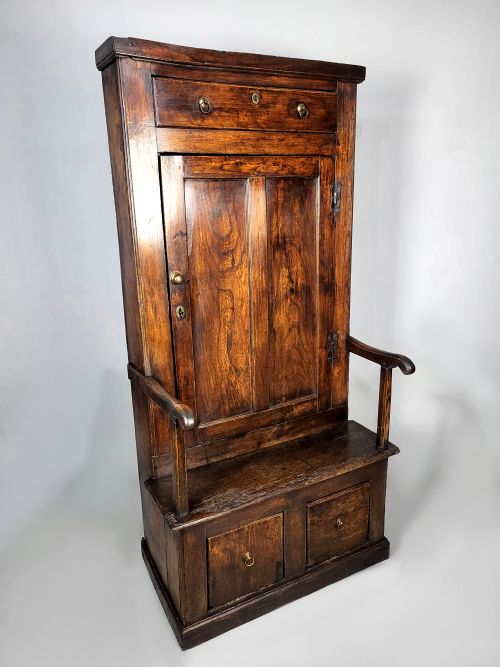


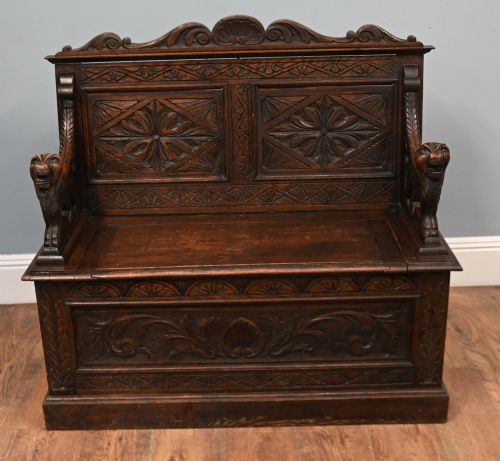

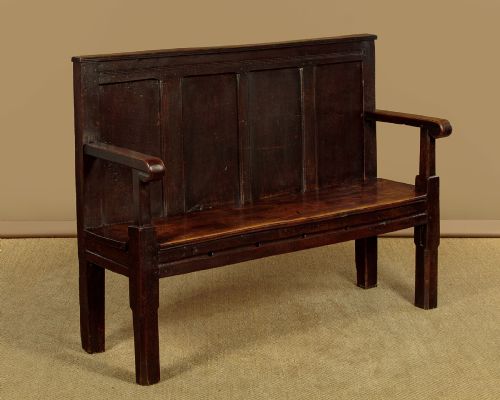

Antique Monks Bench
When you search for an antique monks bench, you are looking at dual-purpose seating that transforms into a table.
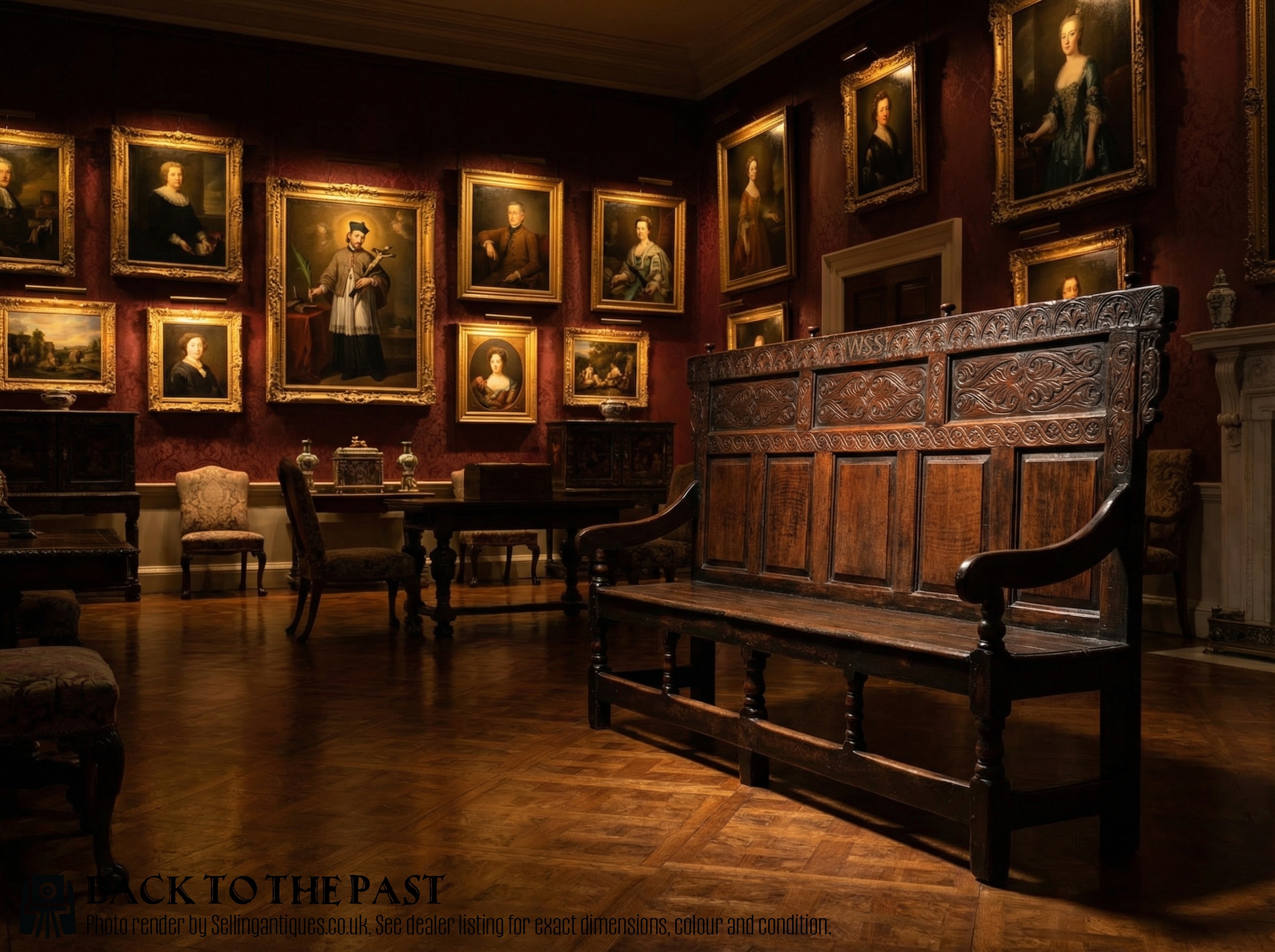
Antique Monks Bench
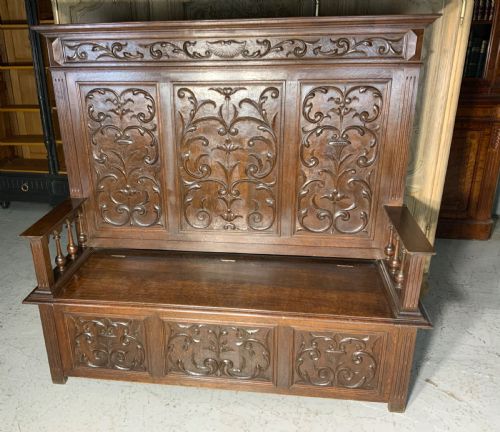
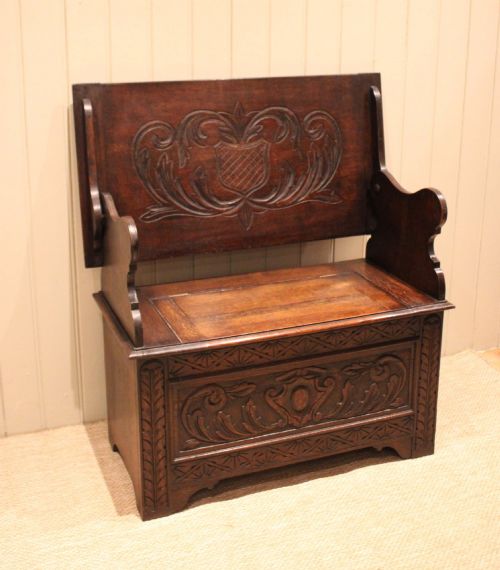
An antique monks bench combines a seat with a hinged back that folds down to create a table surface. You will frequently encounter heavy oak examples from the Victorian period and the early twentieth century, alongside eighteenth-century box settles.
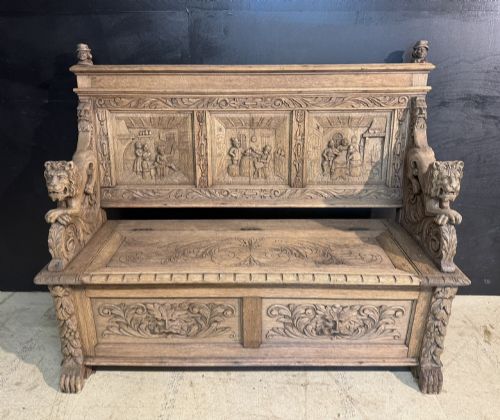
The form functions primarily as a hall seat or settle, offering concealed storage beneath the lift-up bench seat. Pieces range from plain country farmhouse forms to elaborately carved Jacobean revival designs featuring panelled backs.
Originating as practical furniture for draughty historical interiors, these dual-purpose items served multiple domestic roles in the hallway or kitchen. Surviving examples reflect regional British and European country workshop traditions.
What Varies in Quality
The crispness and depth of hand-carved panels, linen fold details, and figurative elements such as green man motifs separate standard production from superior examples. Timber selection also matters, with densely grained solid oak commanding greater attention than plain pine.
Structural integrity depends on the original pivoting mechanism operating smoothly without excessive play in the joints. The presence of untouched historical surfaces, original hardware, and undisturbed timber patination elevates an individual piece.
Antique Monks Bench Retail Price Guide 2026
Typical asking prices for monks bench among the pieces listed under this phrase on Sellingantiques today, from the lower quarter to the upper quarter. They describe what is for sale here now, not the wider market.
Listings feature solid oak and pine construction spanning the seventeenth century through to the 1920s.
Liberty·Shapland and Petter
The Antique Monks Bench Glossary
- Settle
- A wooden bench featuring a high back, solid arms, and a closed box base for storage. This form kept draughts away from the sitter in historical hallways.
- Box Settle
- A seating unit incorporating a lidded compartment beneath the seat boards. It provides concealed storage for household blankets and heavy garments.
- Jacobean Revival
- A nineteenth-century stylistic movement imitating seventeenth-century British furniture design. Pieces typically display geometric panelling, strapwork, and deep mouldings.
- Panel-Back
- A construction method where timber panels fit within a grooved frame to form a solid backrest. This technique accommodates seasonal wood movement without splitting.
Antique Monks Bench: Frequently Asked Questions
What is an antique monks bench?
An antique monks bench is a traditional dual-purpose item of furniture that functions as both a storage box settle and a table. By pivoting the hinged backrest forward over the armrests, the seat transforms into a flat table surface.
Historically used in hallways and kitchens, these pieces maximised space in smaller rooms. They survive most commonly in solid oak and pine dating from the eighteenth to the early twentieth century.
How do you use a monks bench table?
To use the table function, you lift the high wooden backrest and rotate it forward until it rests flat upon the carved arm supports. This creates a sturdy surface suitable for writing or dining before converting back into a high-backed seat.
The enclosed box beneath the seat remains accessible for storage regardless of whether the top is positioned as a backrest or a table.
How do you date an antique monks bench?
Dating relies upon examining the timber species, joinery methods, and decorative carving styles present on the piece. Eighteenth-century examples often feature hand- cleft boards and pegged mortise and tenon joints, while Victorian iterations frequently display revival motifs like linen fold or green man carvings.
Later twentieth-century versions tend to exhibit more uniform machine-sawn timber and standardised hardware hinges. Comparing the patination and wear patterns around the pivot points also helps determine age.
Where should you place a monks bench?
These benches suit narrow entrance halls, boot rooms, or large country kitchens where their dual functionality can be appreciated. Placing them against a solid wall allows the high backrest to be supported securely without obstructing room flow.
Keep them away from direct heat sources and strong sunlight to protect the aged wax finishes and prevent the solid timber from warping over time.