







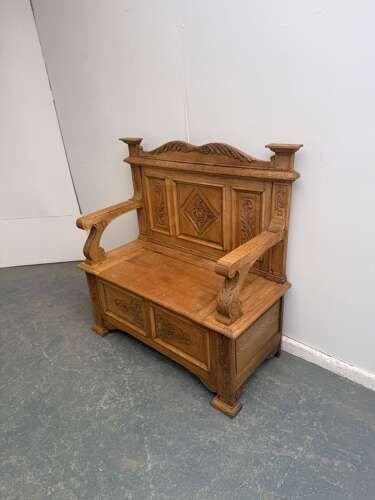
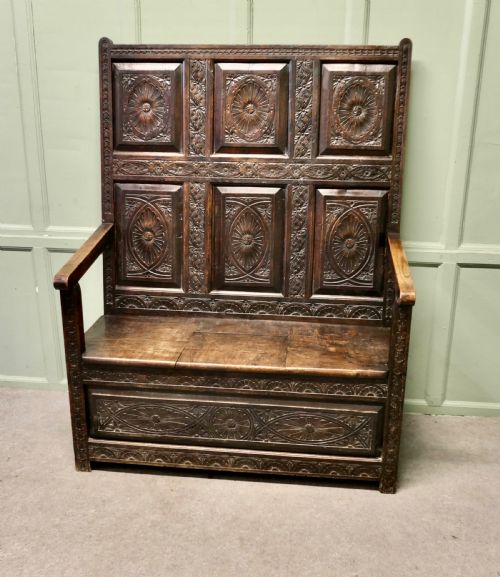
Carved Oak Monks Bench
A carved oak monks bench combines a practical seat with a convertible table top, offering historical utility for modern hallways.
Carved Oak Monks Bench
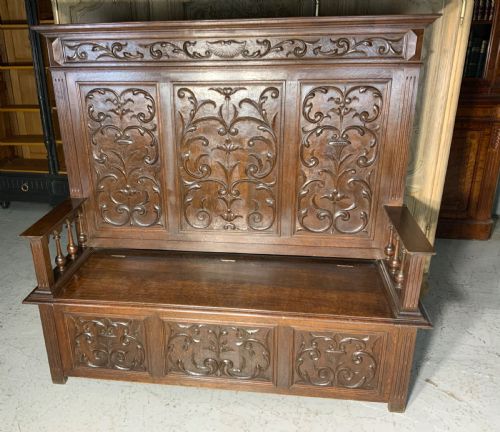
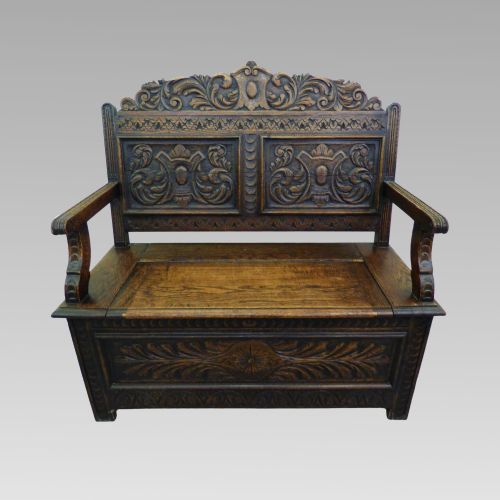
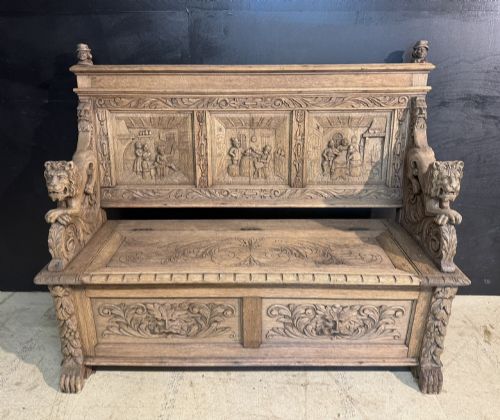
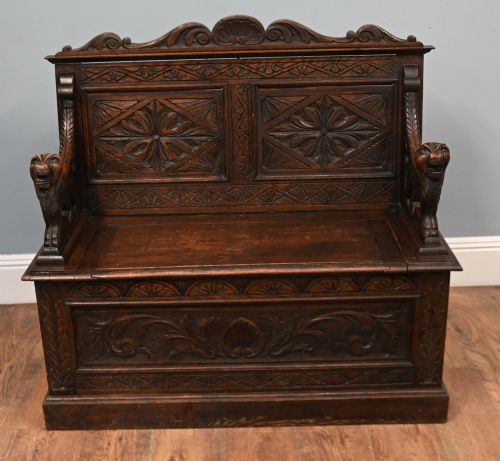
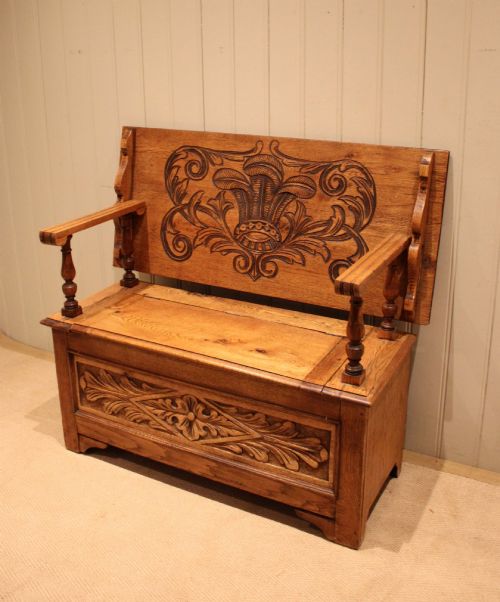
A carved oak monks bench functions primarily as an entrance hall seat, often featuring a clever folding back that pivots down to form a table top. The evidence shows these versatile pieces appearing across centuries, from seventeenth-century originals to Victorian revivals and later twentieth-century interpretations.
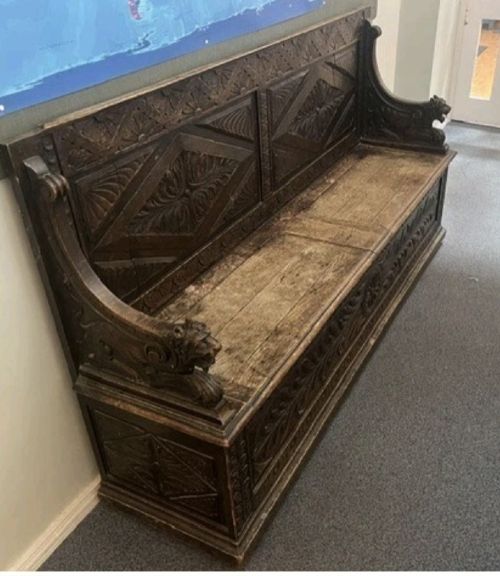
Most examples encountered on this page date from the Victorian period through to the nineteen-twenties, frequently adopting Jacobean or Elizabethan revival styles. These items bridge the gap between traditional settle seating and domestic furniture designed for compact spaces.
Materials and Technique
Makers relied principally on solid oak, utilising its density and strength to support both heavy seating loads and the stress of a pivoting top mechanism. Iron, brass and wrought iron hardware commonly secure the joints and hinges.
Surface ornamentation relies on deep hand carving, panel construction and occasional wax or golden finishes to highlight the natural grain of the timber. Upholstery or leather appears sparingly, keeping the focus on structural woodwork.
Carved Oak Monks Bench Retail Price Guide 2026
Typical asking prices for carved oak monks bench among the pieces listed under this phrase on Sellingantiques today, from the lower quarter to the upper quarter. They describe what is for sale here now, not the wider market.
Materials recorded across these items include solid oak, pine, leather, fabric and iron hardware.
Judging the Standard
Quality rests upon the crispness of the timber carving and the structural integrity of the pivoting mechanism that converts the seat into a table. Pieces with deep relief work, such as detailed Green Man motifs or crisp panelling, stand apart from simpler vernacular items.
The integrity of the original timber framing also dictates merit, separating honest period examples from pieces heavily altered or assembled from disparate salvaged elements over time.
The Carved Oak Monks Bench Glossary
- Settle
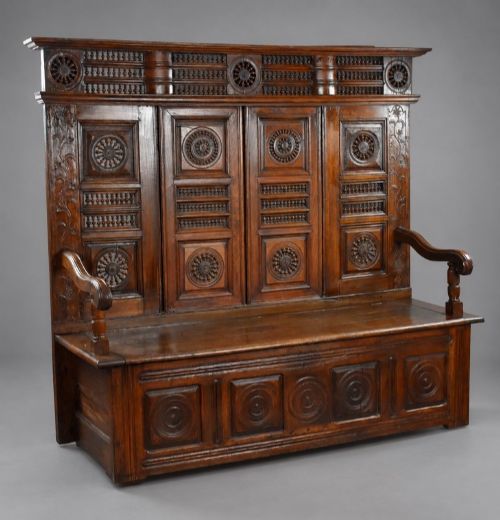
- A wooden bench with a high back, solid arms and frequently a box compartment beneath the seat. This form provides a draught-proof seat in historical interiors.
- Jacobean Revival
- A nineteenth-century stylistic movement copying the dark wood and geometric panel carving of the early seventeenth century. It explains the heavy aesthetic found on many Victorian pieces.
- Green Man
- A sculptural architectural ornament depicting a human face emerging from or entwined with foliage. It is a frequent and expressive carved detail on these seats.
- Box Settle
- A traditional bench incorporating a lidded storage chest under the seat squab. This design served to keep halls tidy and stores secure.
Carved Oak Monks Bench: Frequently Asked Questions
How does the table function work?
The high back of the bench pivots forward on wooden or iron pegs, resting upon the broad armrests to create a flat table surface.
This clever dual-purpose design allowed domestic spaces to serve multiple functions throughout the day.
Where should I place a monks bench?
These pieces suit entrance halls, boot rooms or wide corridors where their storage and seating capabilities can be utilised daily.
Ensure sufficient clearance behind the piece if you intend to pivot the back into a table position.
How do I spot a reproduction?
Examine the joints, wear patterns and the type of fixings holding the pivoting mechanism together to determine the true age of the timber.
Revival pieces from the Victorian era often show machine-sawn marks hidden behind hand-finished decorative carving.
What is the box seat used for?
The hinged seat lifts to reveal a concealed storage well designed for holding boots, blankets or everyday household items.
This compartment adds significant structural weight to the base, helping to steady the piece when the back is used as a table.