
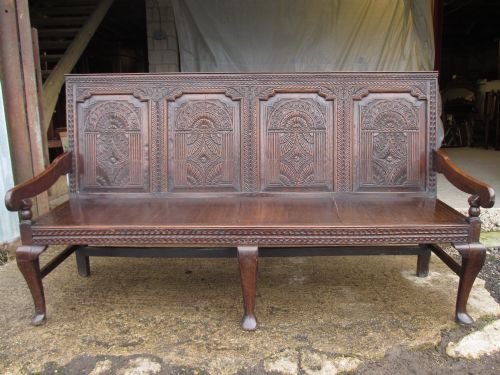
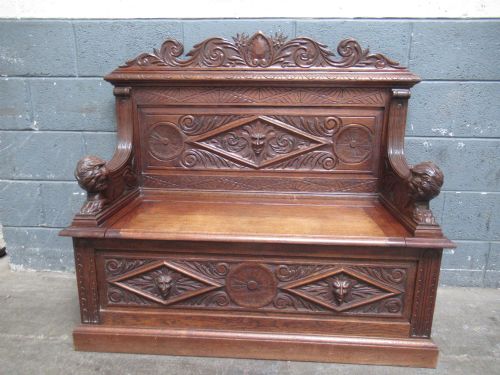
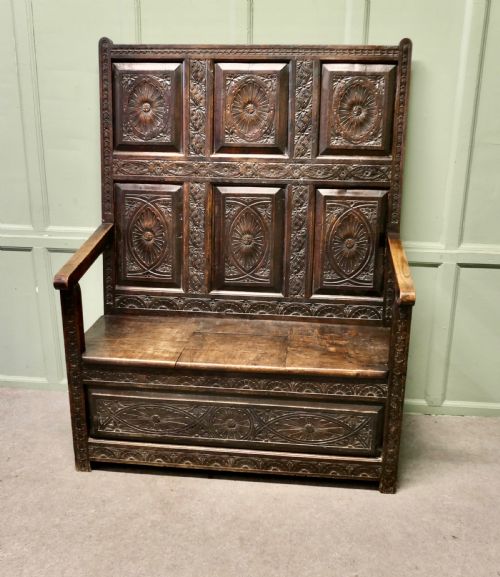
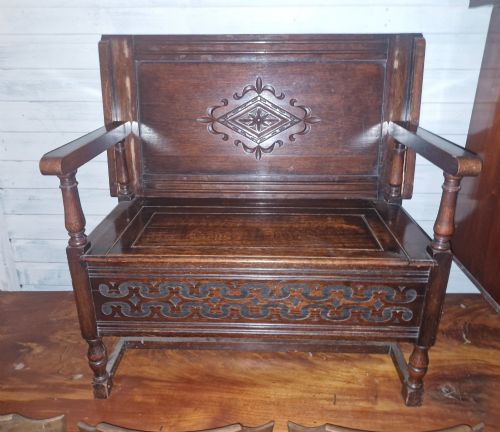
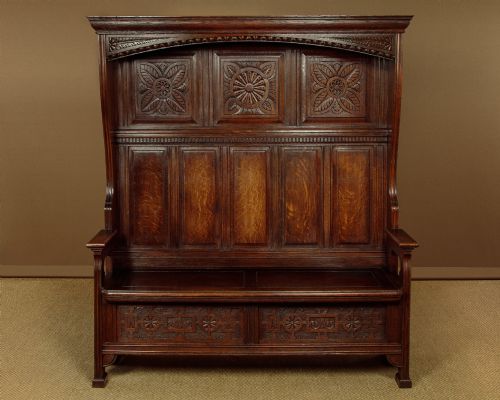
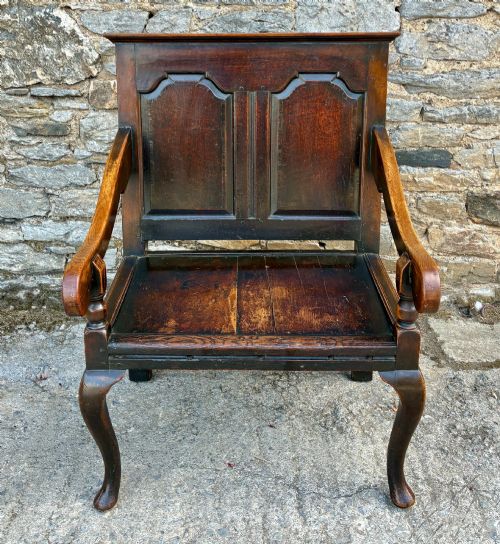
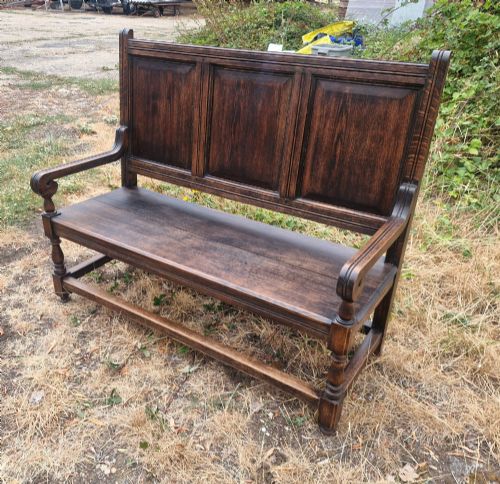
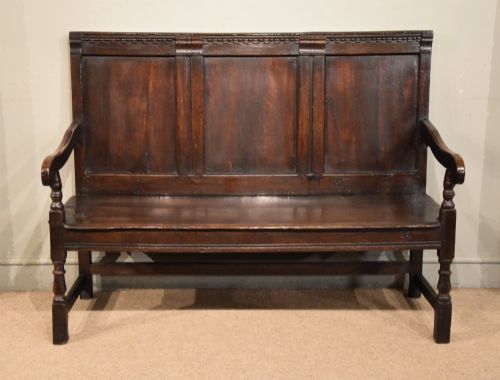
Dark Oak Hall Settle
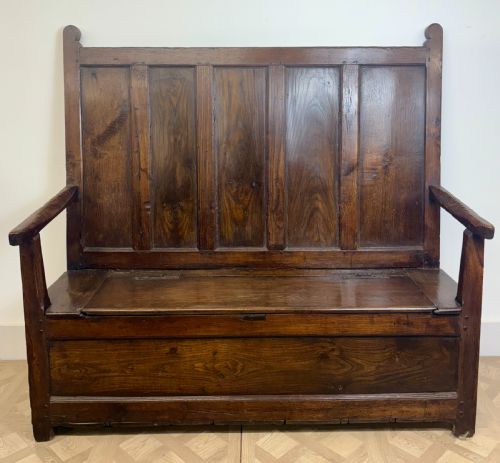
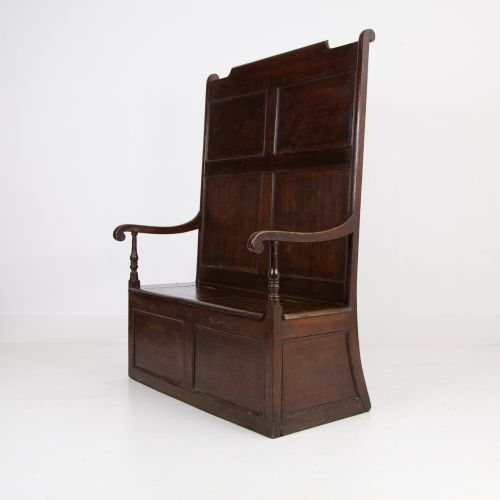
A dark oak hall settle provides a substantial seat for an entranceway, combining heavy timber construction with practical storage.
Dark Oak Hall Settle
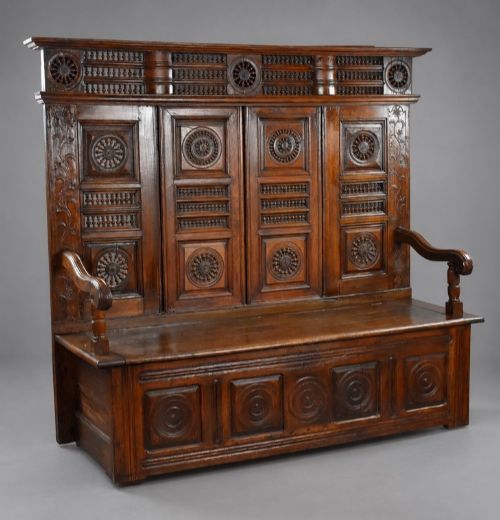
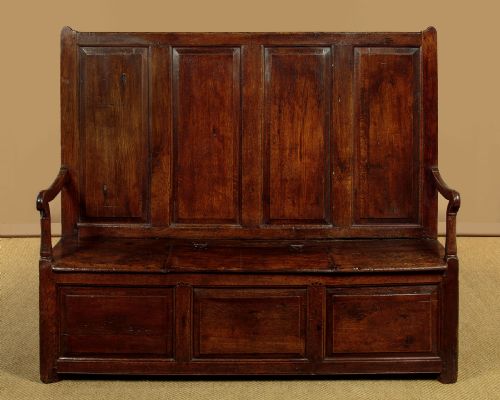
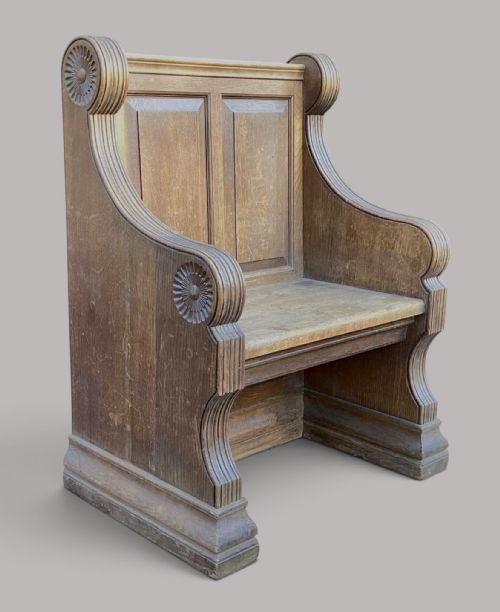
A dark oak hall settle is a wooden bench designed for entryways, frequently featuring a high panelled back to block draughts from doors. These pieces appear across multiple periods, with many examples originating in the eighteenth and nineteenth centuries, alongside revival and Arts and Crafts interpretations.
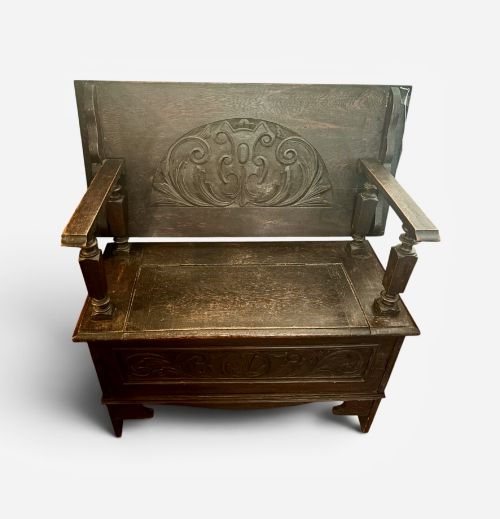
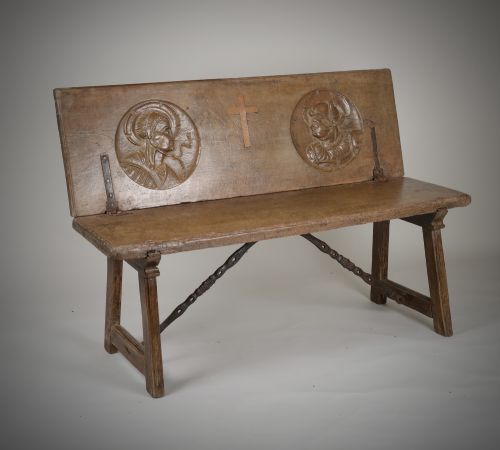
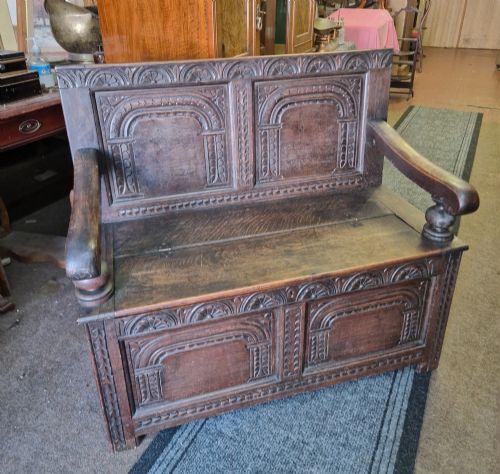
The most common forms on this page include box settles with lift-up seats or fold-over tops, alongside architectural benches, high-back panelled seats, and monk's benches. Regional variations such as Welsh and North Country pieces also occur alongside continental examples.
Makers and regional workshops utilised native hardwoods to build robust seating that served households for generations. Buyers encounter everything from plain country vernacular designs to heavily carved Victorian Gothic and Renaissance revival pieces.
Materials and Construction
Makers built these settles primarily from solid oak, sometimes combining it with ash for structural internal components. Iron and brass fittings such as hinges and brackets secure moving parts like lift-up box seats and fold-over tabletops.
Joinery methods rely on traditional frame and panel construction, pegged joints, and hand-carved ornamentation. Surfaces finished with wax or polish over time develop a dark patina that accentuates the grain of the timber.
Listings feature oak combined with iron, brass, leather, and ash across periods from the seventeenth century to the twentieth.
Assessing Quality and Build
Quality rests in the integrity of the timber, the crispness of hand-carved panels, and the originality of the box construction. Pieces retaining their original hinges, boards, and structural pegging command greater interest than heavily restored examples.
Proportion and scale distinguish finer country and regional workshops from later mass-produced revival items. The depth of the dark patination and the tightness of the joinery reveal how well the timber has weathered centuries of use.
Shapland and Petter·Liberty
The Dark Oak Hall Settle Glossary
- Box settle
- A bench featuring a built-in storage compartment beneath a lift-up seat. This design kept items contained and seated occupants away from cold stone floors.
- Monk's bench
- A convertible piece of furniture with a hinged back that folds down onto the arms to form a table top. These items serve dual functions for seating and dining.
- Panel-back
- A wooden seat back constructed from multiple framed wooden panels. This design provides structural rigidity and insulation against draughts.
- Vernacular
- Furniture built by local tradesmen using regional traditions rather than following formal metropolitan design patterns. These pieces reflect the specific materials and habits of their origin.
- Canopy top
- A projecting wooden hood positioned above the high back of a settle. This architectural feature trapped heat around the seated person.
Dark Oak Hall Settle: Frequently Asked Questions
What is a dark oak hall settle?
A dark oak hall settle is a heavy wooden bench with a high back, placed in hallways to provide seating and sometimes storage.
These pieces use solid timber construction to withstand heavy daily use in busy entrance spaces.
How were box settles used historically?
Box settles provided both a place to sit near the entrance and a secure compartment for boots, blankets, or household goods.
The high back also protected occupants from cold draughts coming through exterior doors.
How do I date an antique oak settle?
Dating relies on examining the joinery methods, tool marks, timber selection, and style of the carving. Eighteenth-century examples often show hand-planed surfaces and pegged tenons, whereas Victorian pieces display machine-sawn elements and revival motifs.
Comparing panel thickness and hardware styles also helps place a piece within its correct century.
How should I care for an oak hall settle?
Maintain the timber by applying a traditional beeswax polish occasionally to nourish the dry wood.
Keep the settle away from direct heat sources and drastic humidity changes to prevent the oak from splitting.