





Victorian Carved Settle
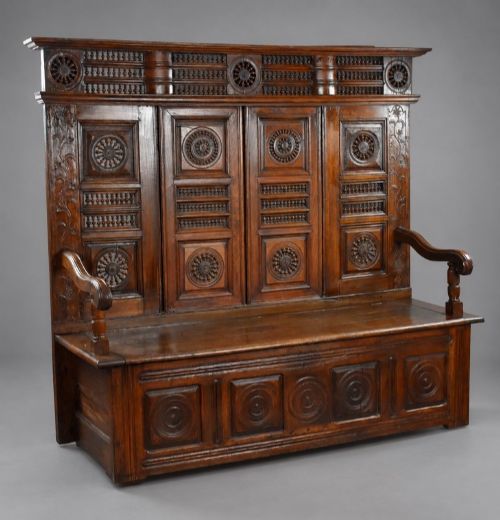
A victorian carved settle brings heavy timber architecture and deep historical theatre into an entrance hall or living space.
Victorian Carved Settle
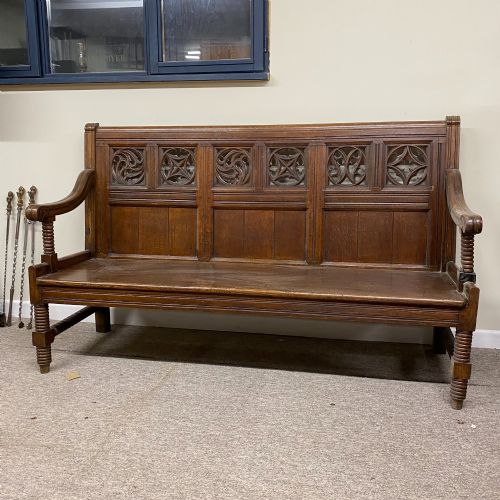
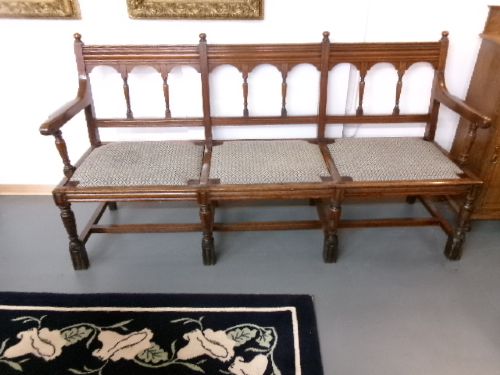
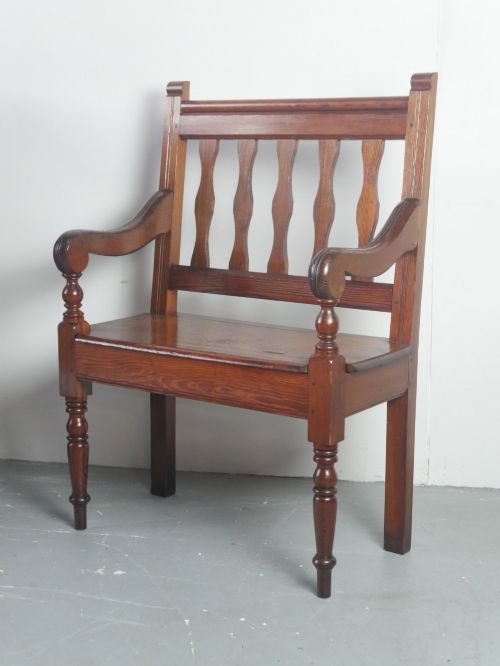
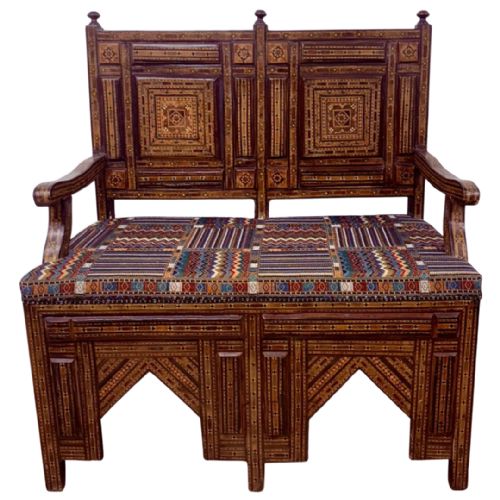
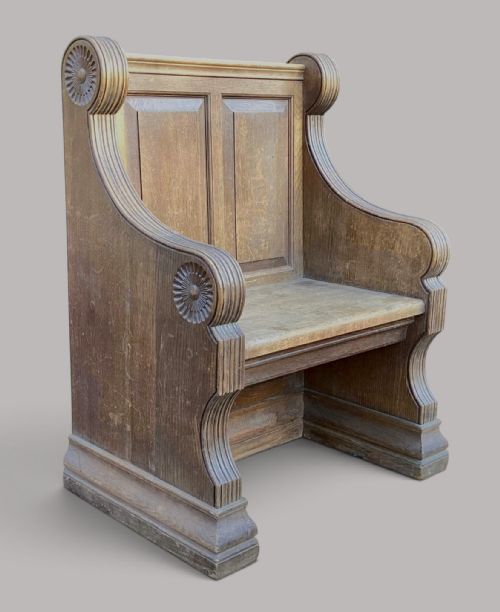
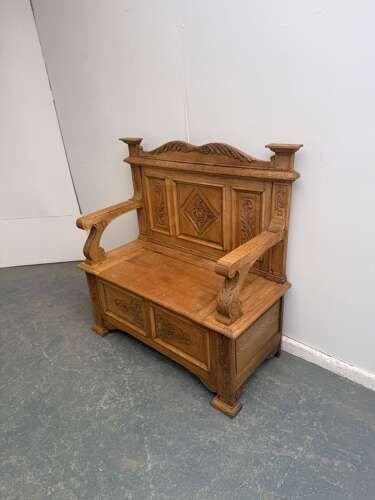
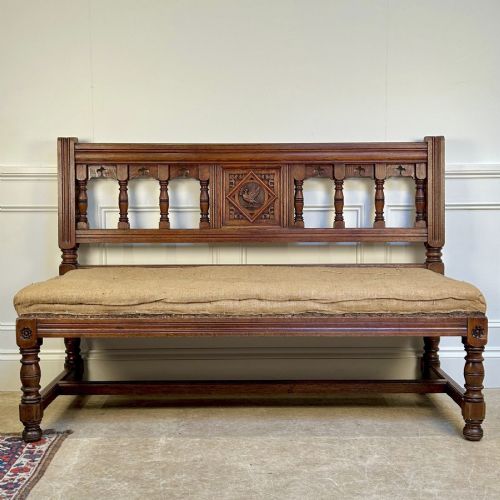
A victorian carved settle functions primarily as an imposing hallway seat, often incorporating high panelled backs and substantial arm supports designed to block draughts. These heavy wooden benches appear frequently alongside related forms such as monk benches, box settles with lift-up storage lids, and architectural hall pews.
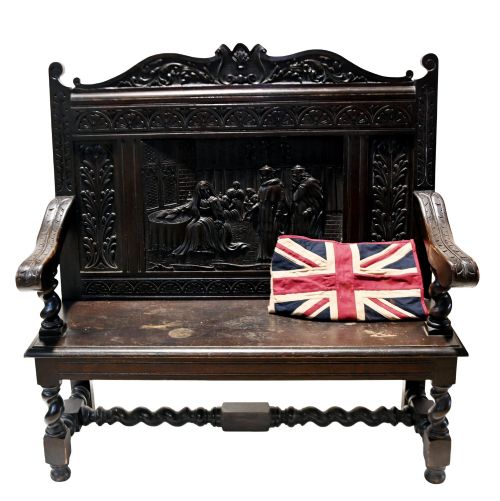
The prevailing style relies heavily on dark timbers decorated with deep relief carving, drawing inspiration from earlier Jacobean, Gothic Revival, and Renaissance aesthetic movements. Most examples met here date from the nineteenth century, spanning from mid-Victorian decades through to the late nineteenth century revival periods.
Distinguishing quality across examples
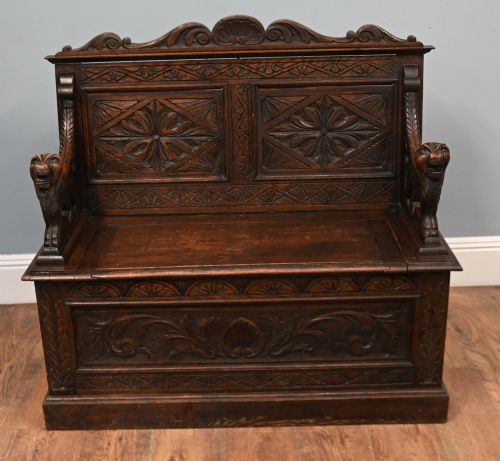
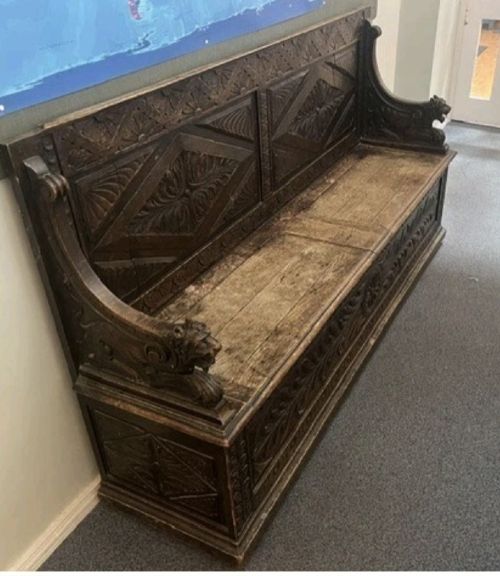
Quality separates ordinary utilitarian hall benches from masterworks through the depth, crispness, and artistic ambition of the woodwork. Superior pieces display sculptural fluency in figural elements like lions or Green Man faces, whereas lesser examples feature shallow, mechanical stamp-carving.
Proportion and structural integrity also dictate worth, as finer settles maintain balanced architectural scale without heavy-handed later alterations or mismatched timber replacements. The integration of functional storage compartments, sound hinged seats, and uncompromised original floor timbers marks the upper tier of the range.
Victorian Carved Settle Retail Price Guide 2026
Typical asking prices for victorian carved settle among the pieces listed under this phrase on Sellingantiques today, from the lower quarter to the upper quarter. They describe what is for sale here now, not the wider market.
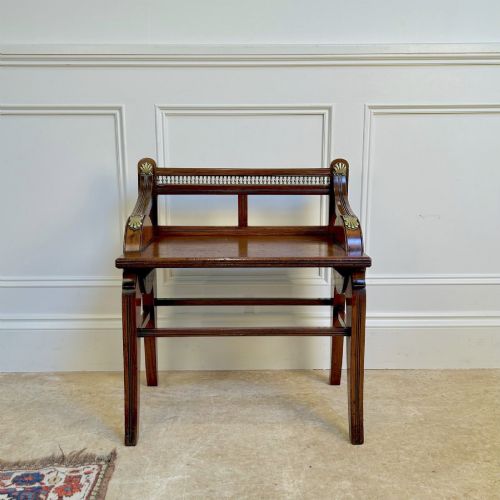
Object forms span from simple hall benches and window seats to architectural box settles and convertible monk benches.
GIllows·James Shoolbred & Co.
The Victorian Carved Settle Glossary
- Box settle
- A wooden bench featuring a concealed storage compartment beneath a hinged seat. This compartment historically kept rooms warm by containing turf or logs.
- Monk bench
- A convertible piece of furniture featuring a pivoting backrest that folds down flat to transform the high-backed seat into a table.
- Green Man
- A sculptural mask carved from foliage representing rebirth, commonly found peering from the woodwork of nineteenth century revival furniture.
- Gothic Revival
- An architectural and decorative style drawing inspiration from medieval design principles, characterised by pointed arches, tracery, and heavy mouldings.
- Panel framing
- A method of construction using vertical stiles and horizontal rails to enclose a floating central wooden panel, accommodating natural wood movement.
Victorian Carved Settle: Frequently Asked Questions
Where were settles placed in Victorian homes?
These pieces traditionally stood in grand entrance halls, vestibules, or corridors where guests arrived and waited. Their high backs and solid sides served a practical purpose in blocking cold draughts from front doors.
Over time, homeowners also positioned them in libraries, country kitchens, and reception rooms to act as primary seating and discreet storage units.
How do I tell an original Victorian settle from a later copy?
Examine the construction joints, timber oxidation, and tool marks visible on the reverse and interior surfaces of the woodwork. Genuine nineteenth-century pieces display consistent hand-cut joinery, period appropriate fastener types, and natural patina accumulated through decades of use.
Reproductions often betray their age through uniform machine sanding, overly bright chemical finishes, or poorly matched secondary woods inside the storage compartments.
What is the difference between a settle and a monk bench?
A standard settle is a fixed bench featuring a high panelled back, armrests, and sometimes a box base for storage. It remains strictly configured as a seat at all times.
A monk bench incorporates a clever hinged mechanism allowing the backrest to swing forward and rest horizontally across the arms, turning the seat into a table top.
How do I care for a heavy oak settle at home?
Maintain the wood by applying traditional beeswax periodically to nourish the dry grain and preserve the deep historic lustre. Avoid placing the timber directly against modern radiators or in strong direct sunlight, which can cause the large panels to split.
Dust intricate carvings gently with a soft bristle brush to prevent dirt accumulation in the deep recesses of the relief work.