





Antique Hall Settle
An antique hall settle offers a commanding architectural presence and practical storage, serving as a traditional anchor for entryways with high-backed timber construction.
Antique Hall Settle
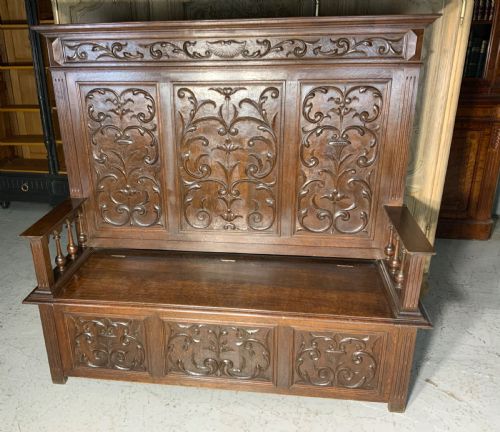
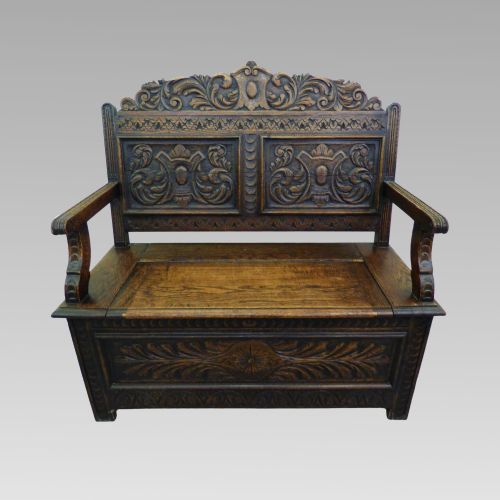
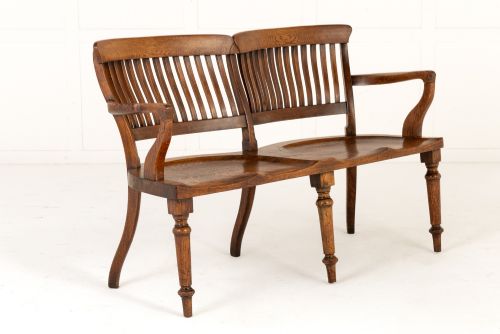
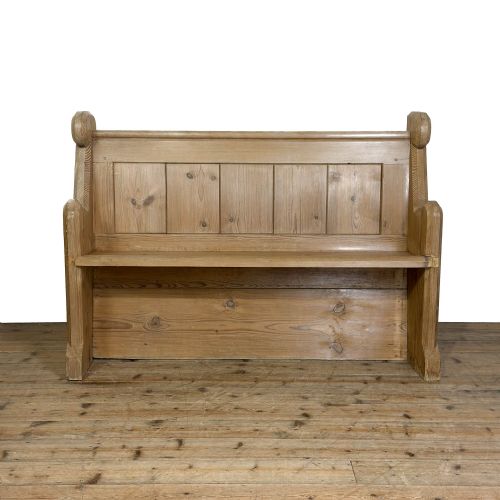
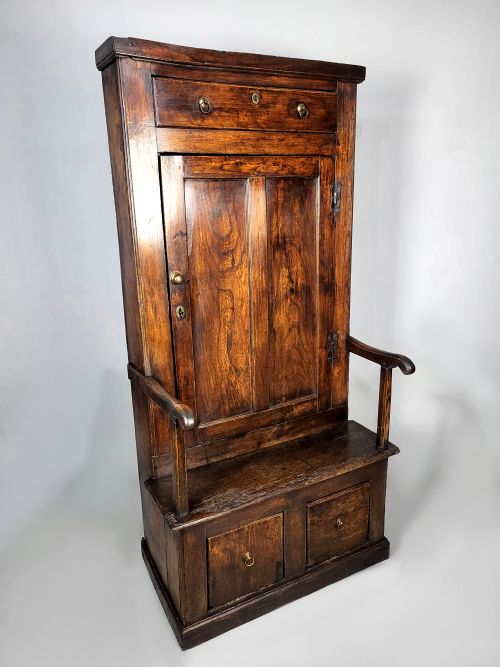
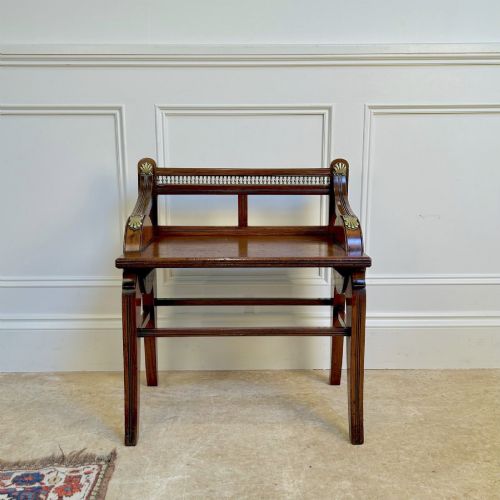
When searching for an antique hall settle, buyers encounter robust wooden benches designed to block draughts in historical entryways and corridors. These pieces frequently incorporate high panelled backs and enclosed seating compartments, serving both as functional seating and structural furniture.
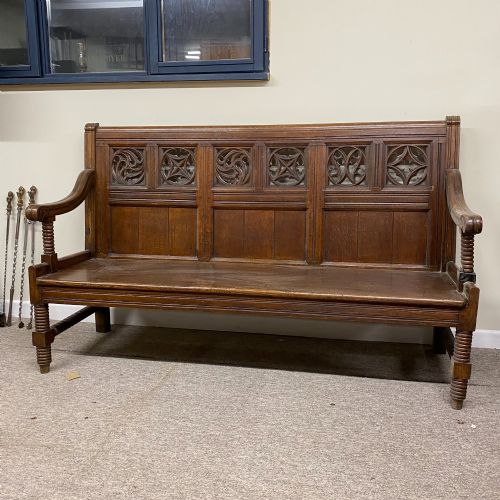
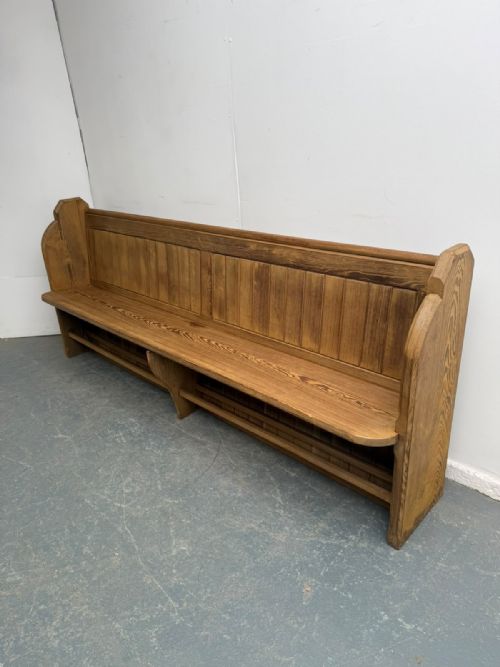
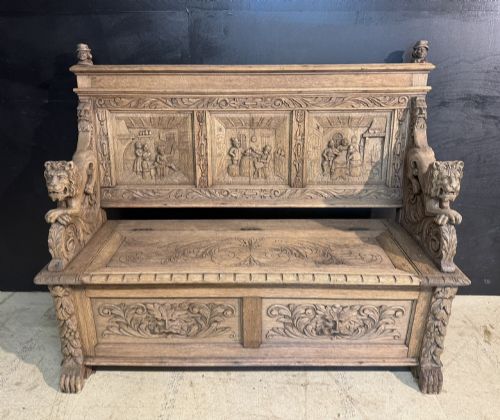
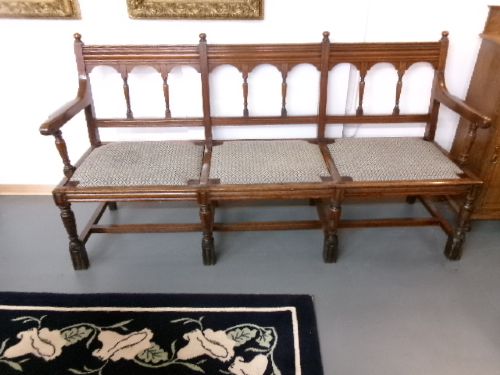
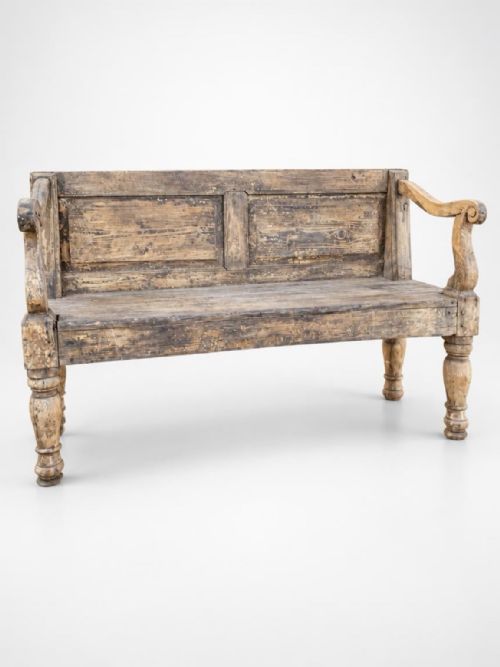
The selections available range from sturdy 18th-century oak box settles with lift-up lids to heavily carved Victorian revival designs and simpler Edwardian forms. Oak remains the predominant material across these periods, though examples in mahogany, walnut, and pine also appear.
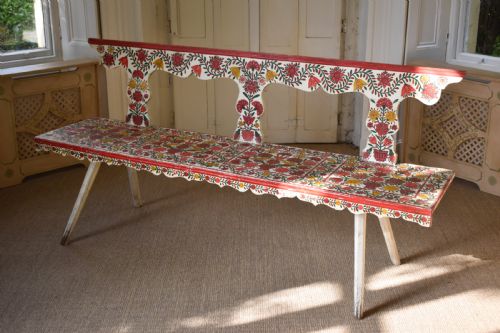
Many items combine multiple functions, operating as monks benches with fold-over table tops or serving as narrow benches tailored for restricted hallways. The forms span country workshops and grand architectural styles, reflecting domestic requirements across centuries of British and European craftsmanship.
How they were made
Makers constructed these settles primarily using solid timber frameworks joined by traditional mortise and tenon techniques, often secured with wooden pegs. Oak was heavily favored for its durability, supplemented by secondary woods like ash and pine in country variations.
Surface decoration relied on hand-carved panels featuring linenfold, geometric motifs, or elaborate figurative work, complemented by hardware forged from iron or brass. Wax and polish finishes were applied to protect the wood while accentuating the natural grain and colour.
Antique Hall Settle Retail Price Guide 2026
Typical asking prices for hall settle among the pieces listed under this phrase on Sellingantiques today, from the lower quarter to the upper quarter. They describe what is for sale here now, not the wider market.
Listings feature solid oak, mahogany, and walnut settles spanning the 17th to the 20th centuries, alongside regional variations from Britain, France, and Spain.
What varies in quality
The distinction between standard examples and superior pieces rests on the weight of the timber, the depth and crispness of the hand-carved details, and the integrity of the original construction. Earlier items often display thicker boards and more complex joinery that has survived centuries of daily use.
Proportion and architectural harmony also separate exceptional settles from routine utility pieces, with well-balanced high backs and integrated box compartments commanding greater appreciation. Alterations, replaced panels, and excessive later re-carving reduce the integrity of the piece compared to undisturbed surfaces.
GIllows·James Shoolbred & Co.
The Antique Hall Settle Glossary
- Box settle
- A form of wooden bench featuring an enclosed compartment beneath the seat, traditionally accessed via a lift-up lid. This storage space kept blankets and boots dry in cold, draughty halls.
- Monks bench
- A convertible piece of furniture featuring a hinged back that folds down over the arms to form a table top. This dual-purpose design conserved space in smaller historical dwellings.
- Panel-back
- A construction method where wooden panels are fitted within a grooved frame to prevent warping and allow for decorative carving. This technique provided structural rigidity to high-backed hall seating.
- Cassapanca
- An Italian wooden bench incorporating a large storage chest beneath the seat, often constructed in walnut and featuring elaborate carvings or marquetry. These grand seats served domestic and decorative functions in continental interiors.
- Gothic revival
- A design style inspired by medieval architecture, characterised by pointed arches, tracery, and heavy carved ornamentation. This aesthetic enjoyed renewed popularity during the Victorian period.
Antique Hall Settle: Frequently Asked Questions
What is an antique hall settle used for?
These benches provided seating in historical hallways while offering enclosed storage beneath the seat for boots and heavy garments. The tall wooden backs served to block cold draughts from entering doorways.
Over time, they transitioned from utilitarian farmhouse and hallway furniture into decorative focal points for period homes. Their sturdy build continues to suit modern entryways as functional seating and storage units.
How do I tell an 18th-century settle from a Victorian one?
Earlier 18th-century pieces typically display simpler, hand-planed surfaces, pegged joinery, and boards of varying widths with natural wear. They often rely on understated fielded panels rather than heavy decorative carving.
Victorian and later revival versions frequently feature deep, machine-assisted or elaborate hand-carvings, including motifs like the green man or Gothic tracery. The interior construction and the colour of the wax finish also help indicate the period of manufacture.
What is a monks bench settle?
A monks bench is a versatile variant where the solid wooden back is mounted on pivots to fold flat over the armrests, transforming the seat into a table. This dual purpose made them useful in smaller rooms where space was limited.
They combine the enclosed box storage of a standard settle with the practicality of a table surface. Most surviving examples found in these listings date from the Victorian and early 20th-century periods.
Will a hall settle fit in a narrow hallway?
Many hall settles were made in narrow proportions specifically to accommodate restricted entryways and corridors without blocking passage. Measuring the depth of the seat and the projection of the arms helps ensure adequate clearance.
Compact variants, including single-seater settles and slim oak hall benches, offer the architectural character of larger pieces while preserving floor space in modern homes.