
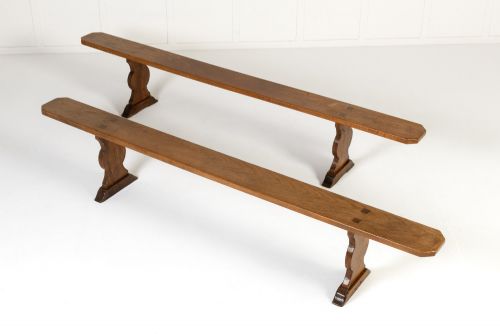
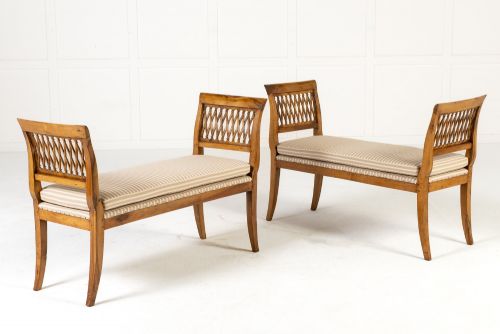
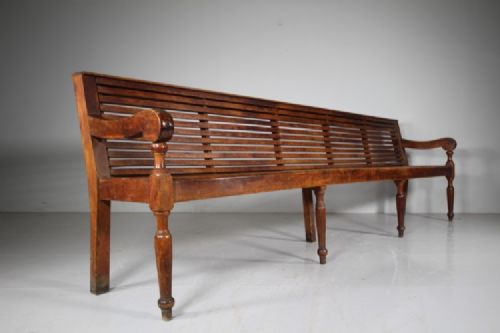
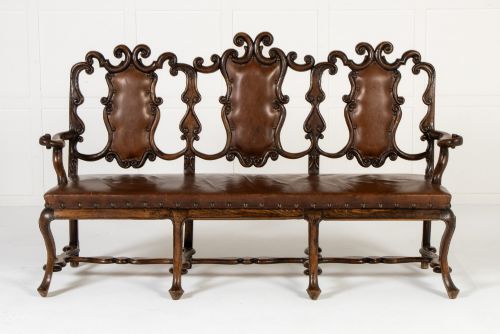



Walnut Hall Bench
A walnut hall bench brings warmth and practicality to an entrance, offering sturdy seating crafted in rich timber.
What a walnut hall bench is
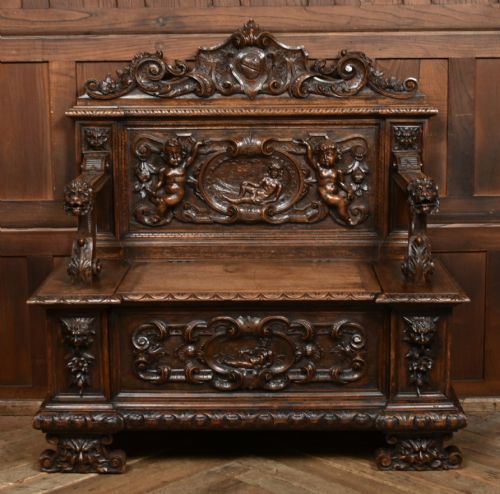
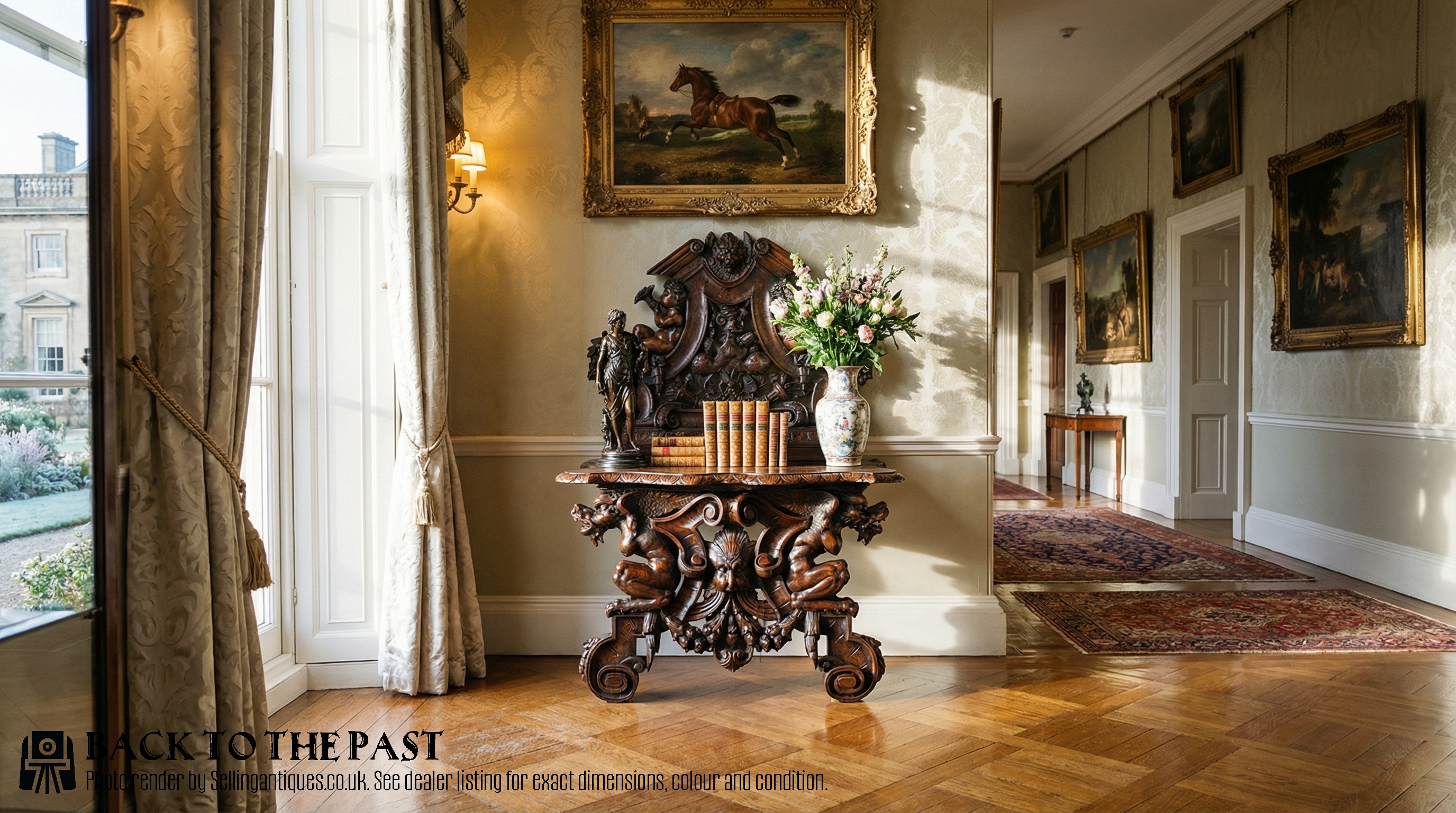
When you search for a walnut hall bench, you encounter a practical entrance seat designed to handle heavy daily use while displaying a rich grain. These pieces range from simple Victorian window seats to heavily carved Italian Renaissance revival settle forms and pieces bearing maker stamps.
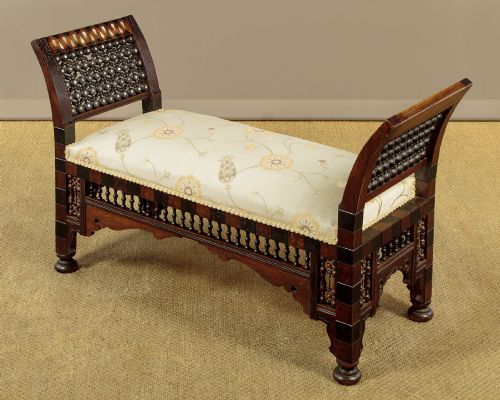
The most common versions on this page date from the nineteenth century, including English Victorian interpretations, French two-seater seats, and pieces shaped by the aesthetic movement or Arts and Crafts ideals. Many incorporate storage beneath the seat or integrated stick stands for walking canes and umbrellas.
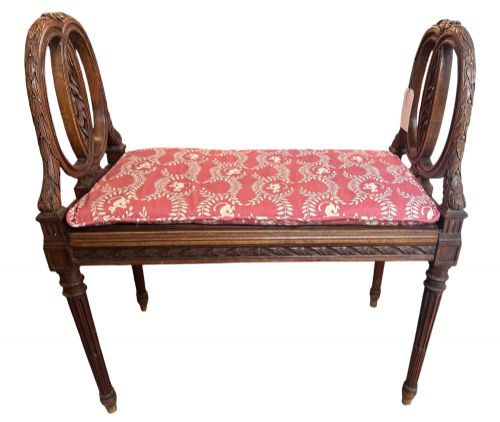
Origins span English country house workshops, French provincial centres, and Italian artisan studios, reflecting diverse regional tastes in domestic furniture. Some examples adopt specific revivals such as Carolean or Louis XVI styles, matching historical ornament with functional hallway requirements.
How they were made
Maker workshops built these benches using solid walnut timber, occasionally combining it with pine or oak for internal framing and structural stability. Joinery methods rely on traditional mortise and tenon construction, ensuring the frame withstands the rigours of an entranceway.
Surface decoration frequently involves hand carving, seen in relief panels, fluted legs, and scrolled bolster ends. Upholstered variants integrate linen, leather, or patterned fabric pads secured with brass tacks or studs.
Retail Price Guide 2026
Typical UK retail prices for walnut hall bench, calculated from the Sellingantiques database of over a million retail prices indexed since 2003. This retail price guide relies exclusively on Sellingantiques data; no external sources or auction records are used, so the figures do not describe the wider market.
Listings feature walnut alongside auxiliary materials including brass mounts, linen upholstery, leather pads, and structural pine.
What varies in quality
Quality rests primarily in the crispness of the timber carving and the selection of figured walnut veneers or solid planks. Finer examples display balanced proportions, integrated storage boxes, or documented maker attribution.
Simpler provincial variants rely on straightforward joinery and plain timber surfaces, whereas high-end interpretations feature elaborate Renaissance revival motifs, substantial scale, and architectural pediments.
James Shoolbred & Co·Shapland & Petter Of Barnstaple
The Walnut Hall Bench Glossary
- Settle
- A wooden bench with a high solid back, enclosed arms, and often a box seat for storage. It provides draught protection in historic hallways.
- Bolster end
- A rounded or cylindrical wooden support positioned at the arm of a seat. It offers cushioned support and mirrors classical architectural rolls.
- Fluted leg
- A column leg carved with vertical parallel grooves. This detail references classical antiquity, appearing frequently on nineteenth-century pieces.
- Aesthetic movement
- A late nineteenth-century design style prioritising visual beauty over narrative function. Pieces from this period often blend geometric lines with contrasting timbers.
Frequently Asked Questions
How do I style a walnut hall bench in a modern hallway?
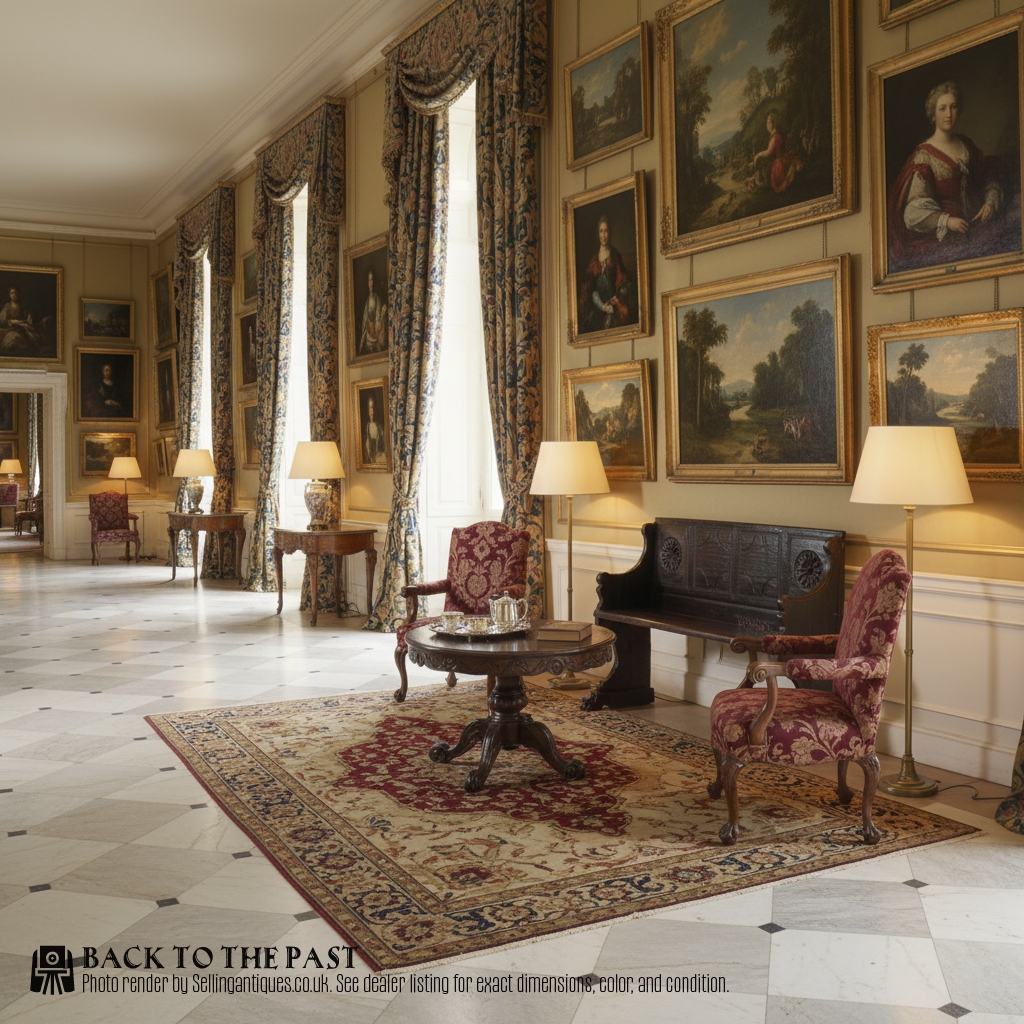
Place the bench against a neutral wall to let the dark grain and carved details command attention without visual clutter. Add a simple linen cushion or a single textile roll to complement the wooden frame.
Keep surrounding items minimal, perhaps pairing the seat with a complementary mirror or a modest umbrella stand. This lets the piece function as both a practical seat and a sculptural focal point.
Were these benches originally meant for sitting or storage?
Most pieces served both purposes, functioning primarily as transition seating while individuals removed outdoor boots. Many variants also incorporate hinged lids or open compartments beneath the seat for domestic storage.
In larger country houses, grander settles offered shelter from cold draughts near the entrance door. Smaller window seat versions prioritised light and comfortable seating over enclosed storage capacity.
How do I date a nineteenth-century walnut bench?
Examine the construction methods, tool marks on hidden interior surfaces, and the style of applied ornamentation. Victorian pieces often display eclectic revival motifs, while Arts and Crafts examples favour honest joinery.
Check for maker stamps or retail labels underneath the seat frame or along the rails. These marks frequently provide specific attribution to workshops or prominent retailers.
How do I care for antique walnut wood?
Maintain the timber by dusting regularly with a dry cloth and avoiding excessive moisture. Apply a quality beeswax periodically to nourish the grain and protect the surface finish.
Position the bench away from direct heat sources and strong sunlight to prevent timber shrinkage or fading. Proper humidity control keeps the joints stable and preserves the original polish.