
Rustic Wooden Settle
A rustic wooden settle offers heavy traditional seating with high backs and integrated storage or shelter, bringing authentic country character to any interior.
What these pieces are
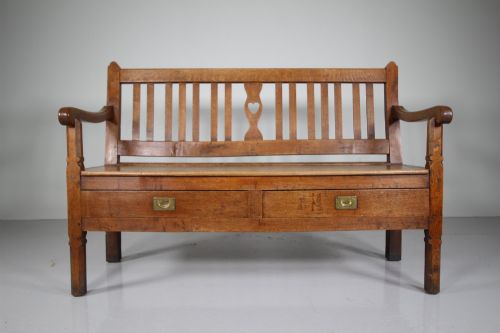
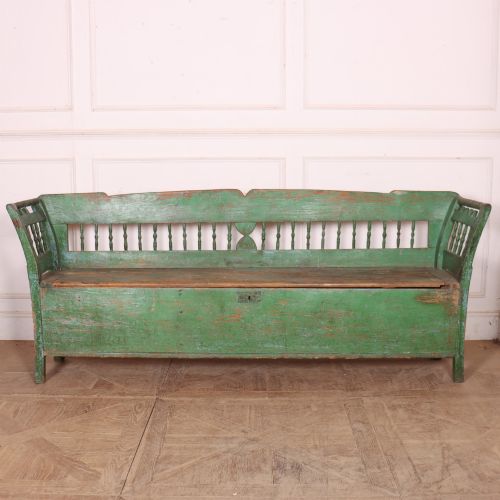
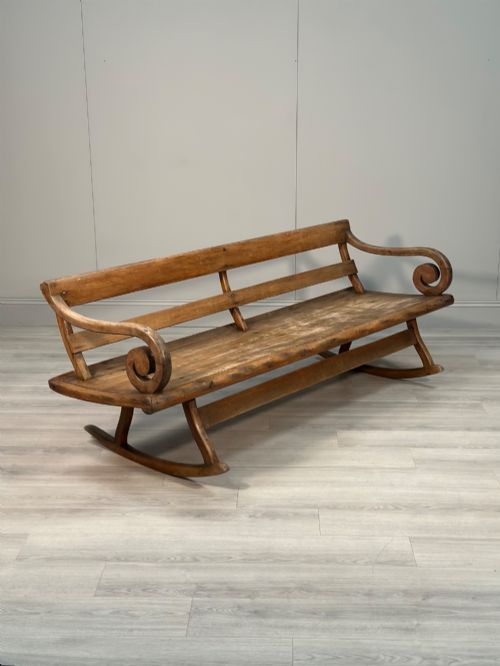
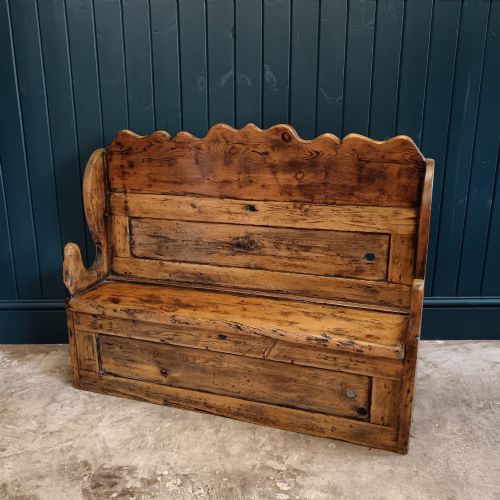
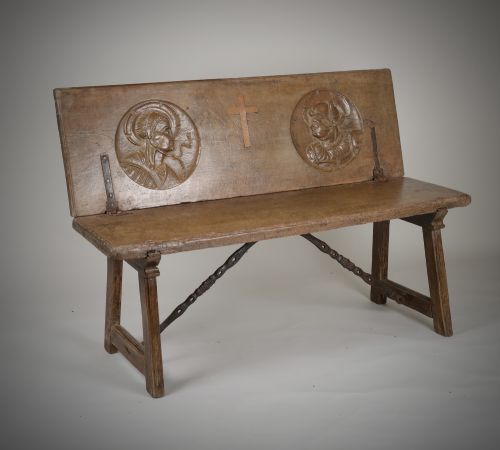
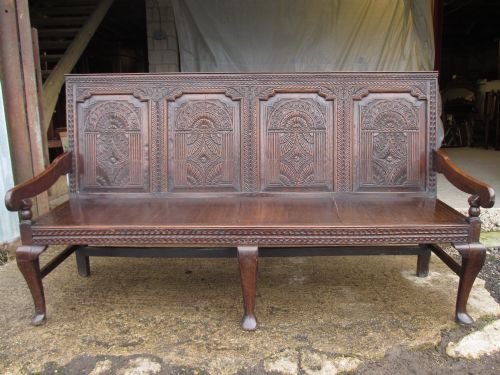
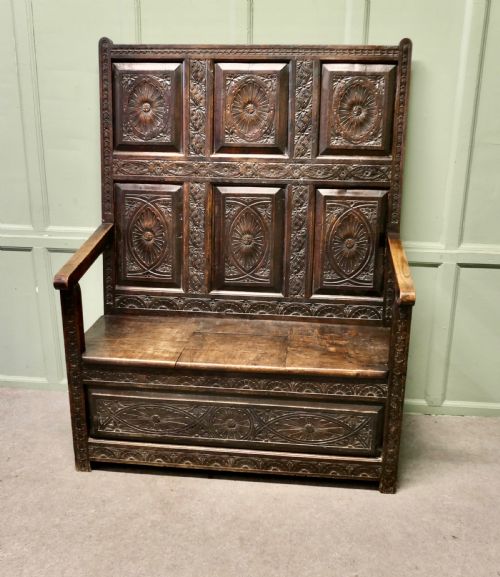
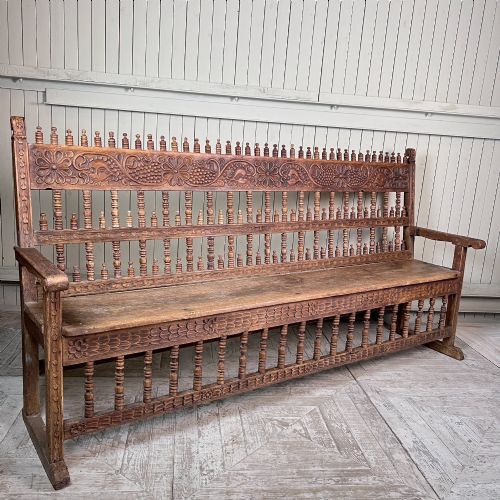
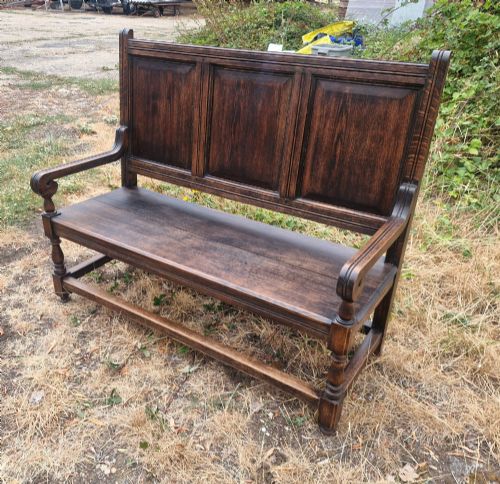
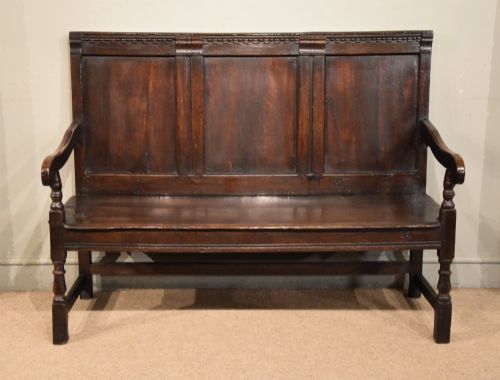
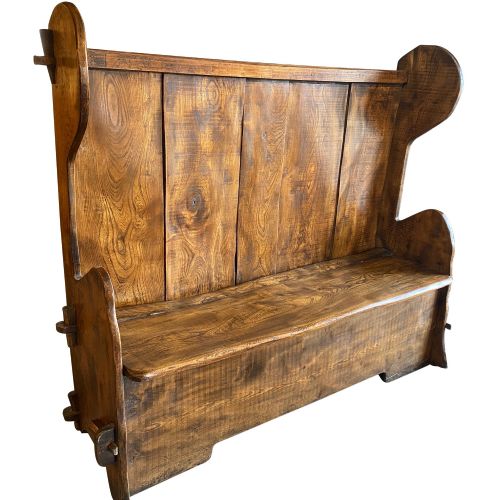
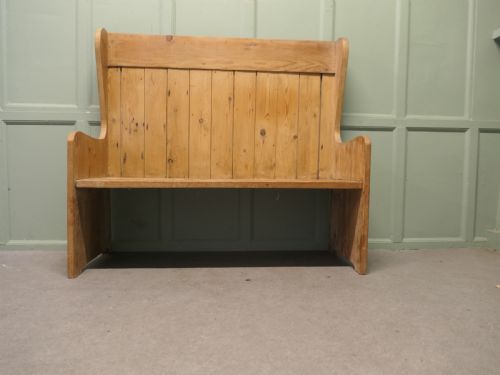
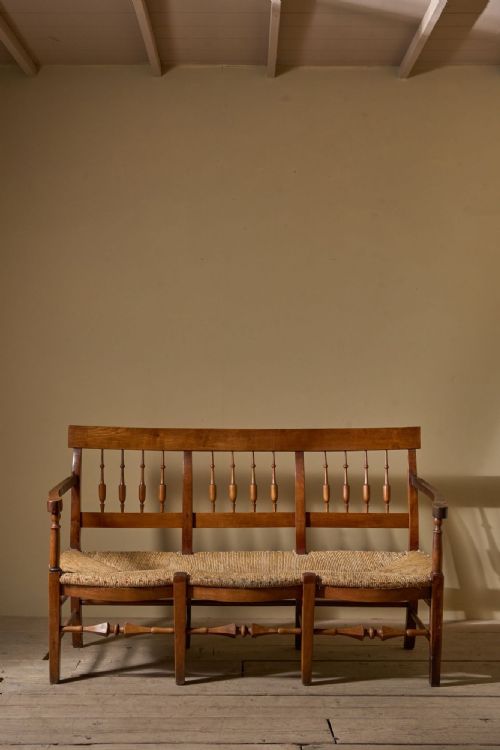
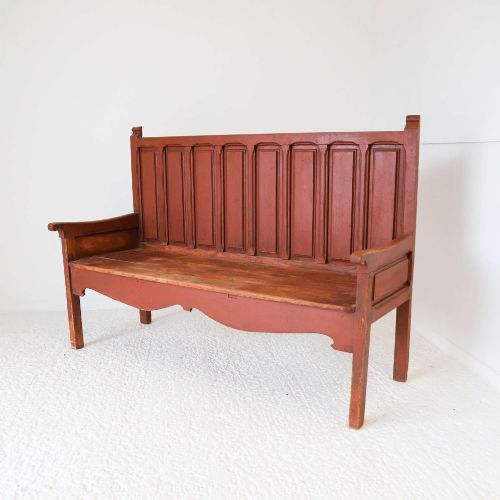
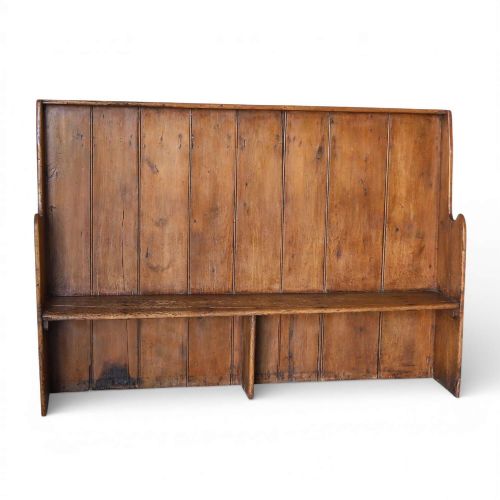
A rustic wooden settle stands as a traditional form of high-backed seating designed to block draughts in period interiors. The pieces on this page span the Victorian era and the nineteenth century, reflecting robust utilitarian origins.
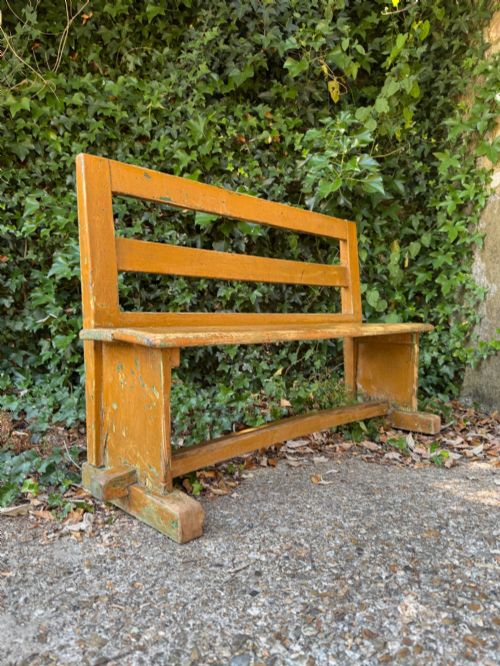
The selection includes decorative limed backed settles alongside smaller children's benches from Scandinavian country traditions. These variations demonstrate the range from domestic household seating to specialised regional forms.
How they were made
Construction relies on solid hardwoods such as beechwood and oak, selected for structural strength and long-term durability. Joinery methods reflect traditional carpentry, utilising pegged joints and sturdy framing to support heavy daily use.
Surface treatments range from natural timber patination to limed finishes that alter the visual texture of the grain. These finishes protect the wood while highlighting the natural characteristics acquired over decades of use.
What varies in quality
Quality rests in the integrity of the timber and the subtlety of regional handcrafting details rather than mass-produced uniformity. Earlier examples display honest tool marks and hand-shaped components that reveal the individual hand of the maker.
Proportion and decorative restraint dictate the desirability of each piece, distinguishing utilitarian items from more considered country furniture. The preservation of original surface finishes and structural soundness further elevates the standing of individual examples.
The Rustic Wooden Settle Glossary
- Settle
- A wooden bench featuring a high back and solid arms, originally designed to keep out cold draughts in unheated rooms. This form often incorporated a box base for storing household goods.
- Limed oak
- Timber treated with a specialised finish that leaves a white pigment in the open pores of the grain. This technique creates a distinctive frosted appearance while protecting the wood.
- Beechwood
- A dense, hard timber commonly utilised for traditional chair and bench making due to its bending strength. It takes a smooth finish and provides reliable structural support.
- Jacobean
- A decorative style associated with the early seventeenth century, characterised by robust forms and geometric carving. Later country pieces frequently borrow these heavy architectural motifs.
Frequently Asked Questions
What is a rustic wooden settle?
A rustic wooden settle is a traditional high-backed bench built from solid timbers like oak or beech. It served as primary seating in historic homes, designed to shield occupants from cold floor draughts.
These pieces often feature enclosed lower sections or simple panel construction. They bring enduring country utility and historic presence into modern spaces.
Where were settles placed historically?
Settles typically stood near hearths in the main living areas of farmhouses and cottages. Their high wooden backs trapped the warmth of the fire while blocking cold air from doors.
Today, they function effectively in hallways, dining spaces, or large kitchens. Their narrow footprint makes them practical for transitional areas.
How do I care for antique wood?
Maintain antique wood by keeping it away from direct heat sources and sudden temperature fluctuations. Regular dusting with a dry cloth preserves the finish without moisture damage.
Applying a traditional beeswax polish occasionally helps nourish the timber and maintain its natural lustre. Avoid synthetic sprays that can degrade historic surfaces over time.
How do I identify nineteenth-century pieces?
Nineteenth-century pieces show hand-tool marks and traditional joinery methods distinct from modern manufacturing. Variations in the timber grain and wear patterns reflect genuine age and usage.
Examining the construction reveals pegged joints and hand-planed boards. These physical characteristics confirm the period of manufacture without relying solely on documentation.