



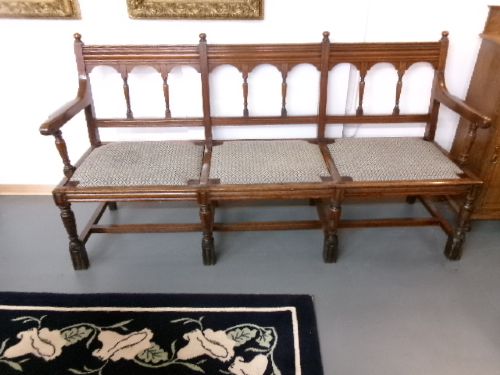


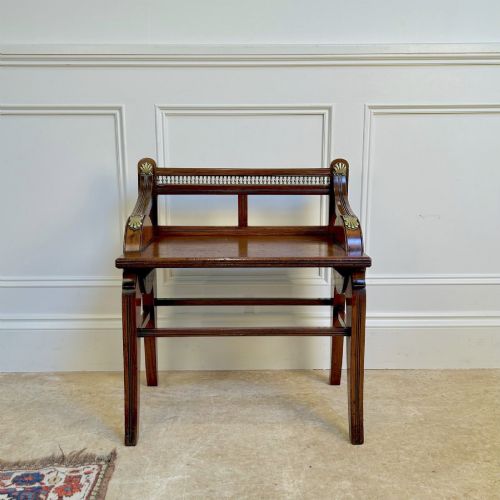

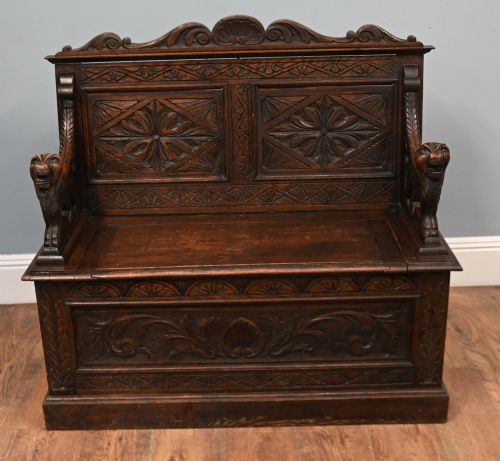

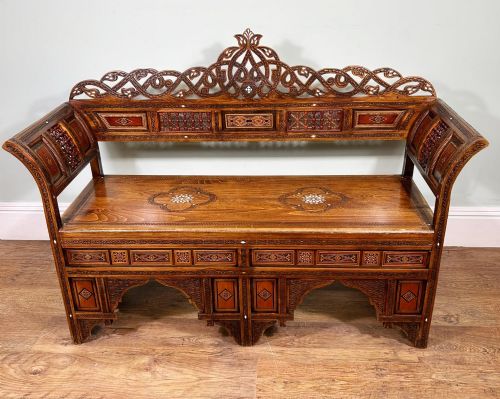
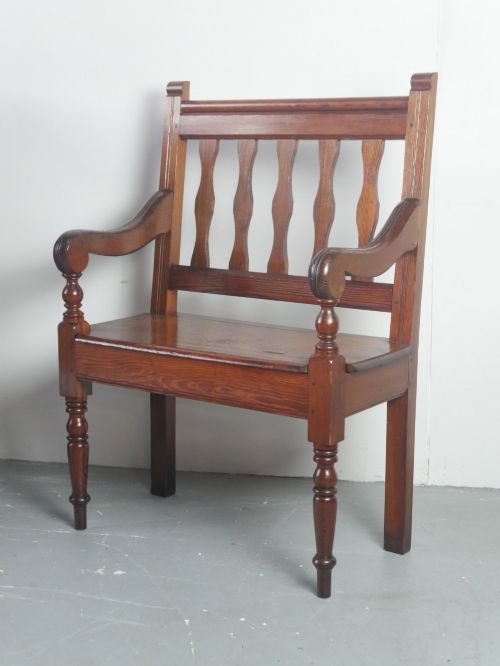
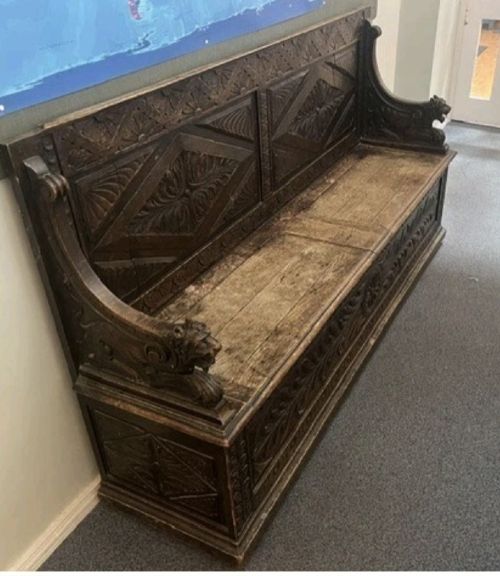
Carved Wooden Settle
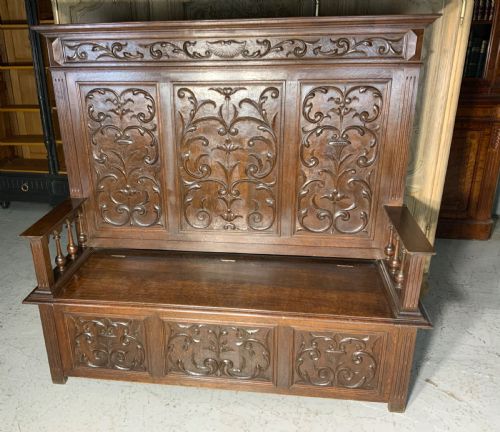
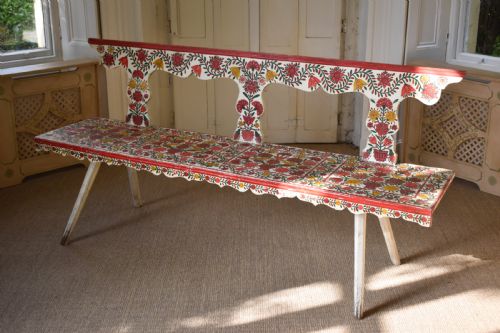
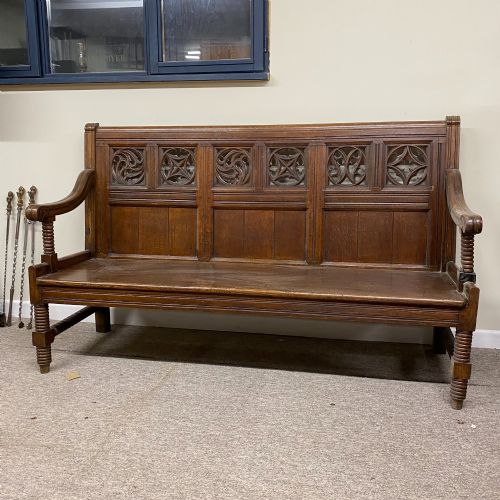
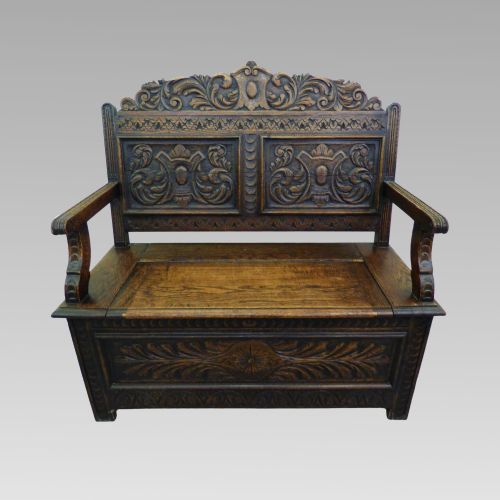
These carved wooden settle pieces are heavy seats with high backs, built to block draughts and provide storage.
Carved Wooden Settle
A carved wooden settle is a substantial seating form combining a bench with a high back, frequently incorporating a box base beneath the seat for storage. You will encounter these most often in solid oak, dating from the seventeenth, eighteenth, and nineteenth centuries.
The pieces listed here appear across various regional styles, including English country, Jacobean revival, and Gothic revival forms. Makers constructed them for hallways and domestic rooms to keep occupants warm by deflecting cold air currents away from the hearth.
Many examples function as hall benches, while others take the form of box settles with lift-up seats or architectural panelled constructions. You will also find variations originating from broader global traditions, such as Spanish colonial and Chinese dragon motifs.
What varies in quality
The depth and crispness of the hand carving separate standard items from finer examples, as does the selection of well-figured timber boards. Architectural proportion and the integrity of the original joints dictate structural success.
Originality of components, such as untampered box seats, untouched panel work, and honest surface patination, marks the distinction between altered pieces and preserved survivals.
Carved Wooden Settle Retail Price Guide 2026
Typical asking prices for carved wooden settle among the pieces listed under this phrase on Sellingantiques today, from the lower quarter to the upper quarter. They describe what is for sale here now, not the wider market.
Listings demonstrate materials spanning oak, mahogany, pine, and hardwood across periods from the 16th century through the 1930s.
GIllows·Shapland & Petter·Liberty
The Carved Wooden Settle Glossary
- Box settle
- A high-backed wooden bench featuring a compartment beneath the seat accessed by a lift-up lid. This design provided secure domestic storage while keeping drafts away from the sitter.
- Cassapanca
- An Italian wooden bench incorporating a large chest base and backrest, often constructed from walnut. These substantial seats served domestic and hall functions in continental households.
- Lambing chair
- An enclosed wooden armchair, frequently associated with the Lake District, designed with panelled wings to block cold air. They often included small under-seat compartments or pockets for equipment.
- Panelling
- Flat wooden sections fitted within a structural frame to form the backrest or sides of a seat. This method allowed timber to expand and contract naturally without splitting.
- Strapwork
- Carved flat ornamental bands arranged in geometric patterns resembling leather straps or ribbons. This decorative technique appears frequently on seventeenth-century woodwork.
Carved Wooden Settle: Frequently Asked Questions
Where were carved wooden settles placed?
These seats stood primarily in halls, passages, and principal living rooms against walls or near fireplaces.
Their high backs and solid sides served specifically to shield sitters from cold draughts in large, unheated rooms.
How do I date a wooden settle?
Dating relies on examining the construction methods, joint types, timber selection, and carved decorative motifs.
Seventeenth-century pieces typically display heavy pegged framing and strapwork, while Victorian examples often incorporate revival styles and machine-finished elements.
Are these seats comfortable?
Historic settles were designed for upright posture and draught exclusion rather than lounging.
Owners frequently added loose fabric cushions, wool squabs, or textiles to the wooden seat boards for comfort.