


High Back Hall Seat
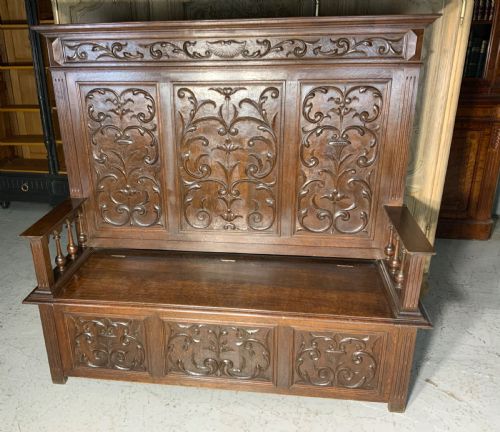
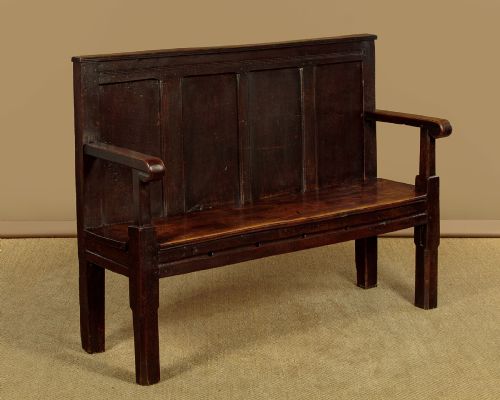
A high back hall seat offers an imposing architectural presence in an entryway, combining traditional seating with substantial vertical timber panels designed to block cold drafts.

High Back Hall Seat
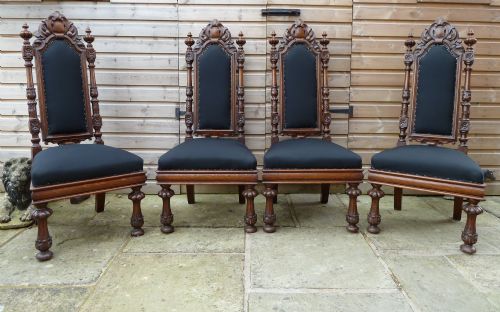
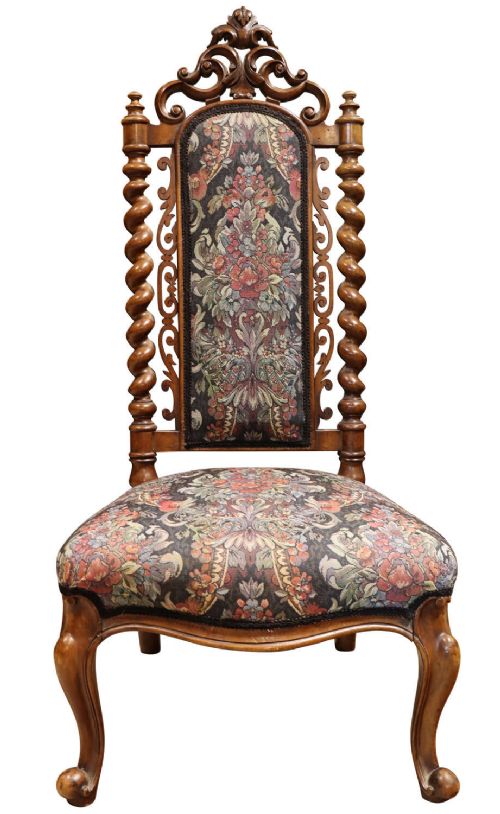
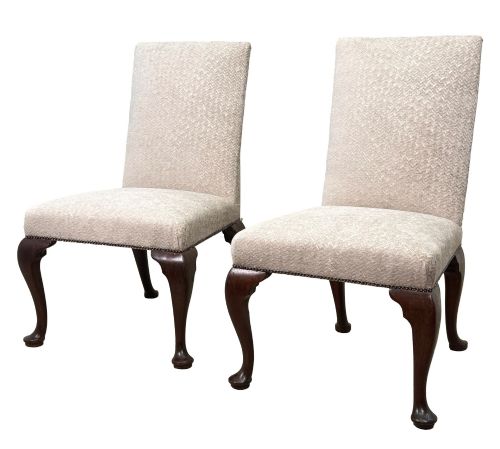
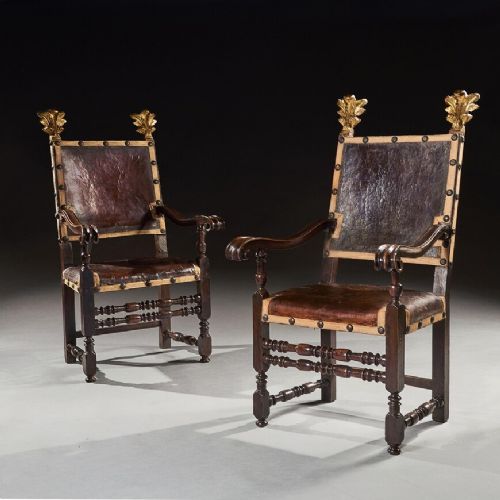
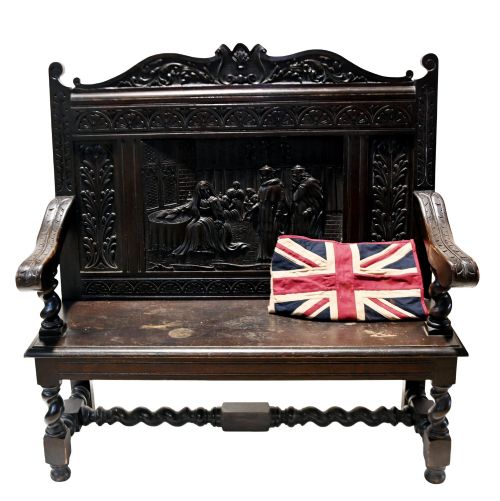
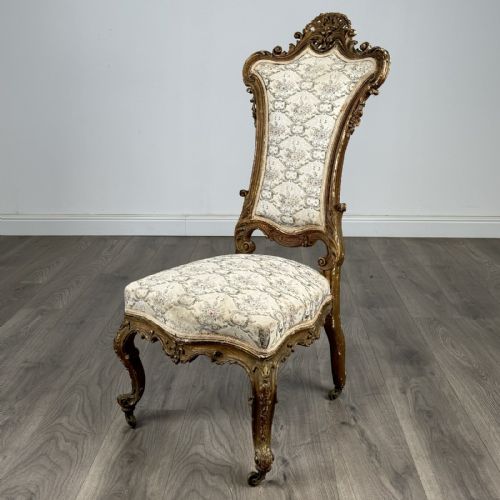
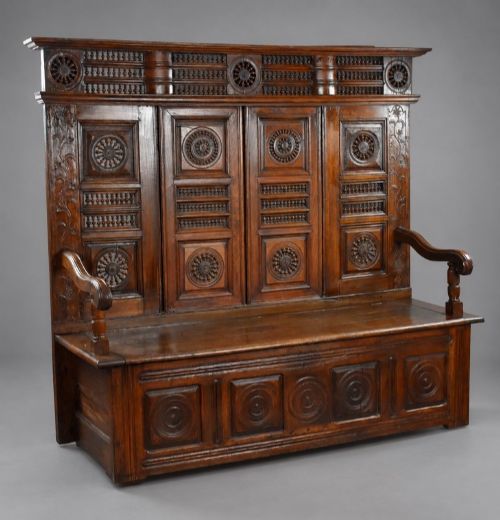
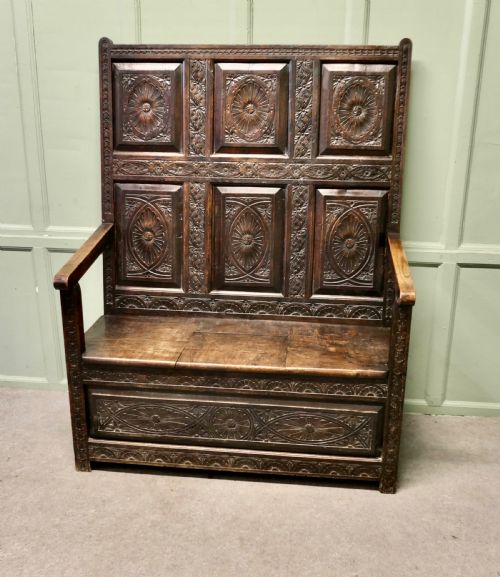
A high back hall seat typically takes the form of a heavy oak settle, panel-back bench, or tall-backed chair designed for entrance halls and corridors. These pieces derive from periods spanning the seventeenth century through to the Edwardian era, featuring regional British country examples alongside continental European variants.
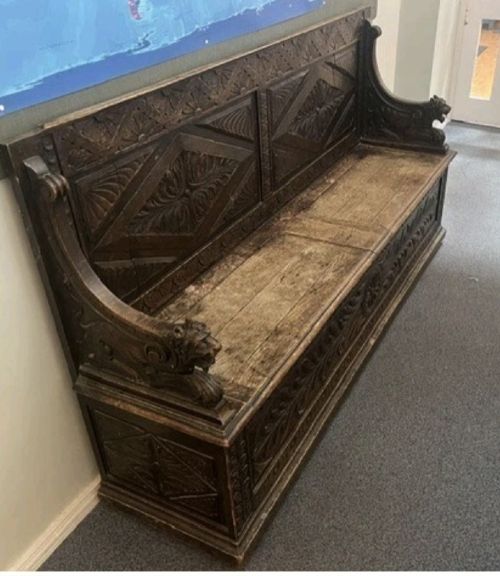
The dominant forms encountered on this page are sturdy box settles with lift-up seats and carved wooden benches. Makers utilised substantial timber framework to create high protective backs, sometimes incorporating canopies or armrests for daily domestic use.
What Varies in Quality
Quality rests upon the integrity of the timber framing and the depth of the original hand carving on the high back panels. Pieces retaining their primary structural elements without extensive timber replacement command greater attention from collectors.
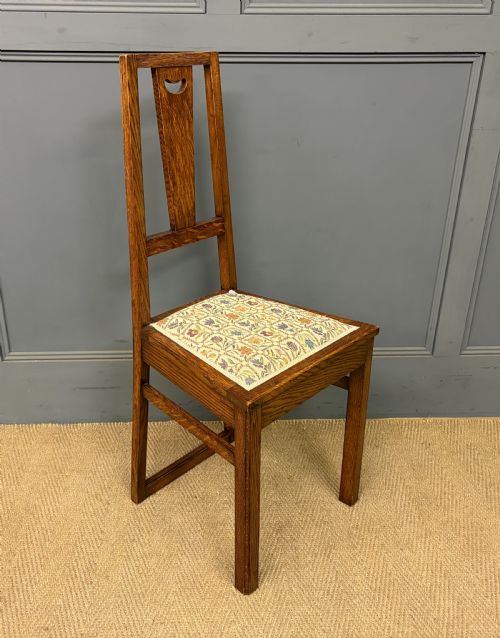
Proportion and decorative ambition separate standard regional utility furniture from sophisticated workshop pieces produced by known makers or specific design movements like Arts and Crafts. The crispness of the joinery and the harmonious grain of the wood dictate the overall visual weight.
High Back Hall Seat Retail Price Guide 2026
Typical asking prices for high back hall seat among the pieces listed under this phrase on Sellingantiques today, from the lower quarter to the upper quarter. They describe what is for sale here now, not the wider market.
Listings feature regional variations spanning English vernacular oak, Italian baroque walnut, and Spanish painted pine forms.
James Shoolbred & Co.·Liberty·Waring & Gillow
The High Back Hall Seat Glossary
- Settle
- A wooden bench with a high solid back, enclosed arms, and frequently a box compartment beneath the seat. This form provided essential insulation against draughts in historic hallways.
- Box Settle
- A variant featuring a hinged seat lid opening to reveal storage space underneath. This practical design served as both seating and a chest for blankets or outerwear.
- Barley Twist
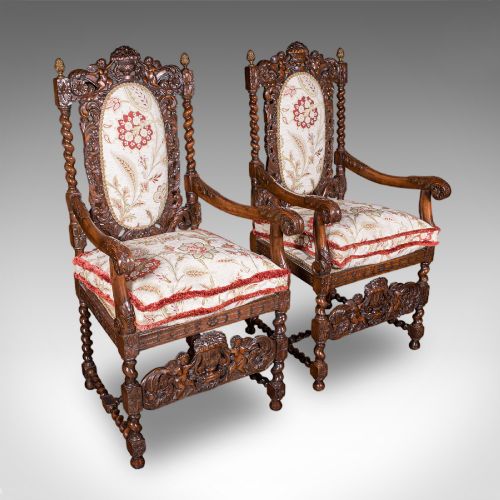
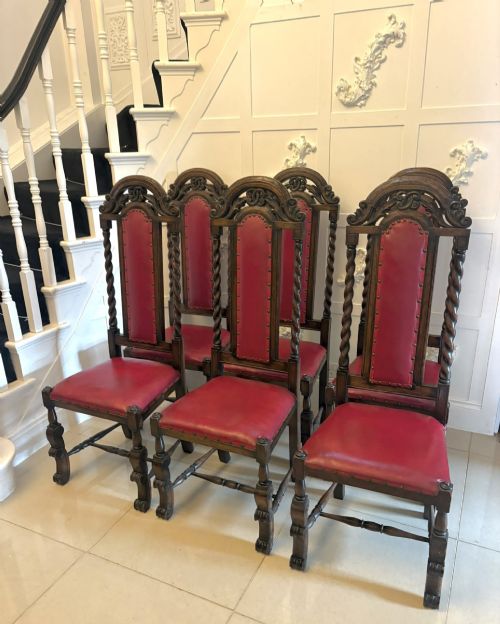
- A turned wooden furniture leg or support resembling a twisted rope. This decorative woodworking technique appears frequently on seventeenth-century and Victorian supports.
- Canopy Top
- An overhanging wooden roof structure integrated into the top of a tall hall seat. Such additions enhanced the draft-excluding function of the piece.
- Panel-back
- A furniture back constructed from inset wooden panels held within a grooved frame. This method allowed timber to expand and contract naturally with humidity changes.
High Back Hall Seat: Frequently Asked Questions
What is a high back hall seat used for?
These pieces functioned as functional hallway furniture in historic homes, providing a sturdy place to sit while putting on boots or waiting by the entrance. The tall wooden backboards served the practical purpose of blocking cold drafts from sweeping through open doors into the main living spaces.
Over time, variations with built-in storage boxes under the seat also held outdoor garments, walking sticks, and household textiles. Today, they serve a similar organising role in large modern boot rooms and spacious entrance corridors.
How do I care for antique wood furniture?
Maintaining wooden hall seats requires placing them away from direct heat sources and strong sunlight to prevent the timber from drying out or splitting. Applying a traditional beeswax finish periodically helps nourish the grain and protects the historic surface.
Dusting the carved panels gently with a soft, dry cloth prevents particulate buildup without harming the patina. Avoid using modern liquid silicones or harsh chemical polishes that can degrade aged surface finishes.
Where should I place a high back hall seat in my home?
These substantial pieces anchor large entrance halls, wide corridors, and open-plan boot rooms effectively due to their imposing vertical scale. Their enclosed backs also make them suitable for creating a distinct seating nook within a spacious living room or dining area.
Because of their depth and height, measuring ceiling clearance and walkway space beforehand ensures the piece fits comfortably without obstructing doors or passageways.