
Panelled Oak Bench
A panelled oak bench offers sturdy seating and storage, bringing centuries of robust English craftsmanship into a hallway or living space.
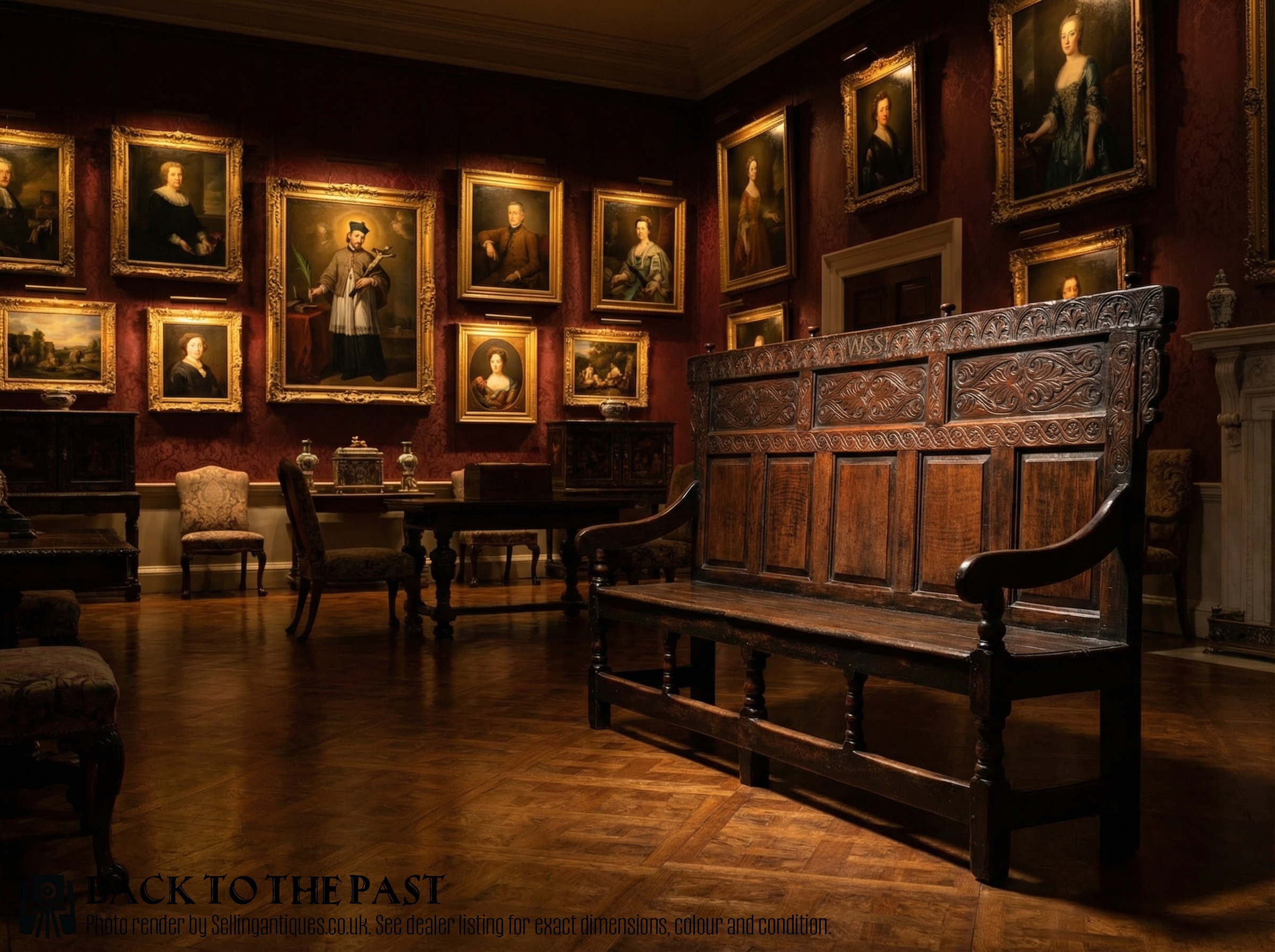
Panelled Oak Bench
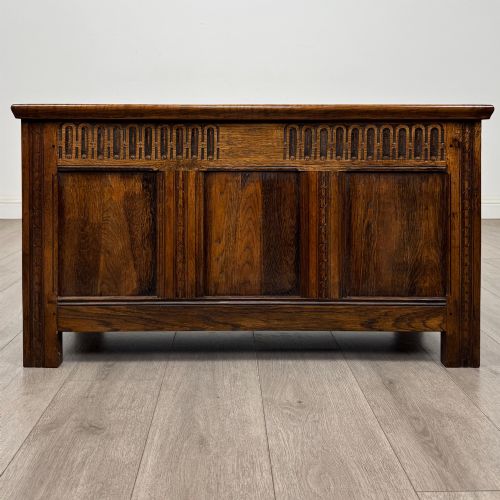
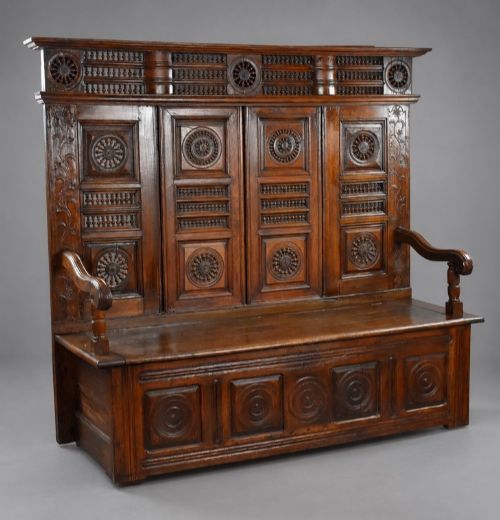
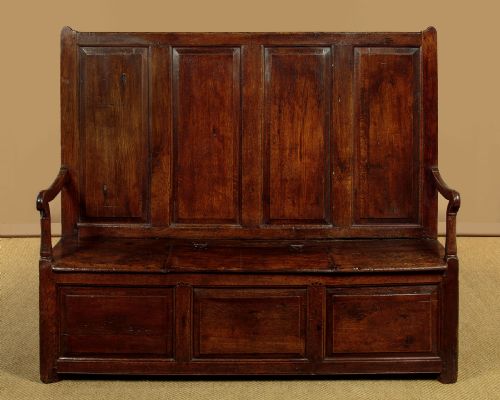
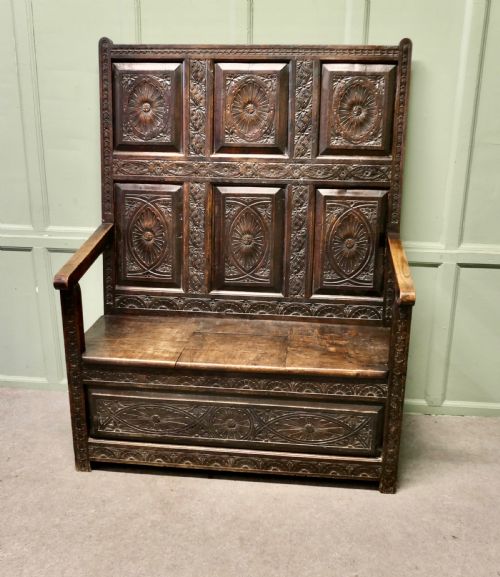
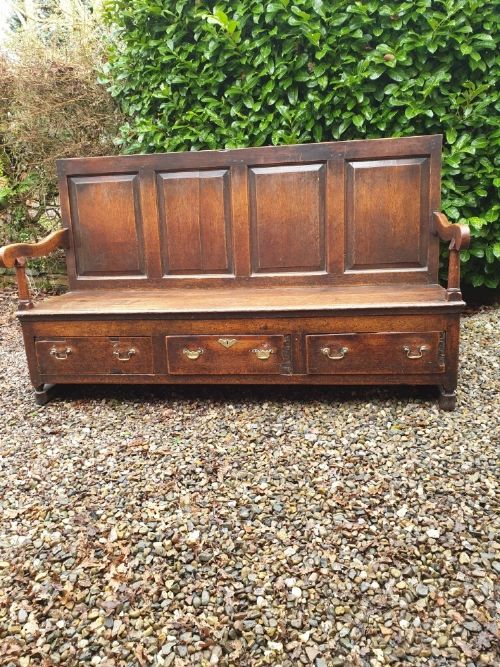
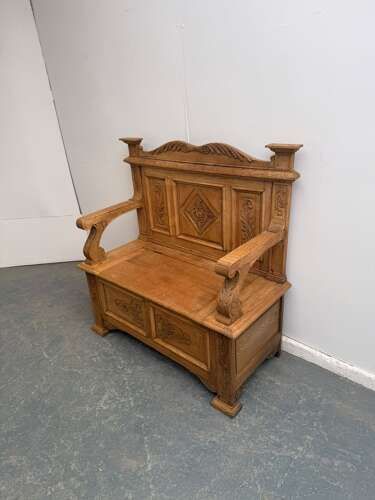
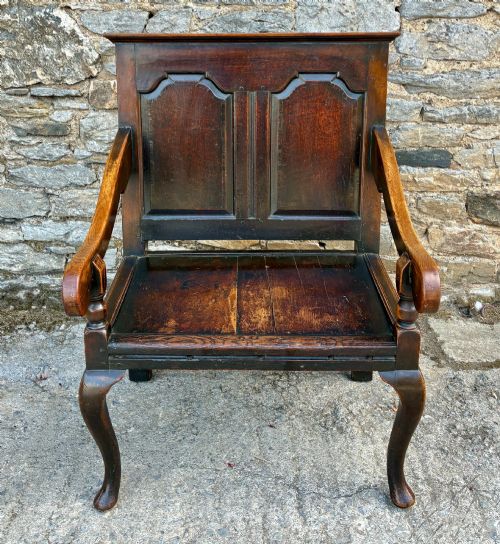
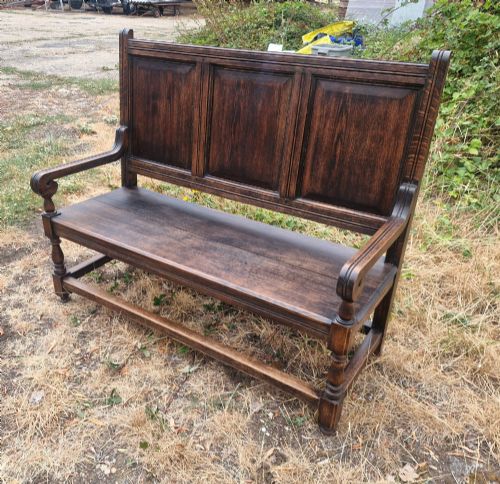
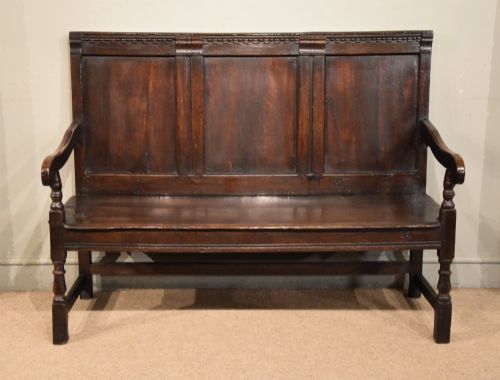
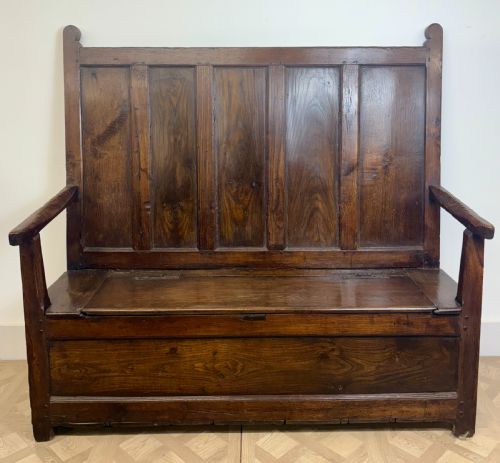
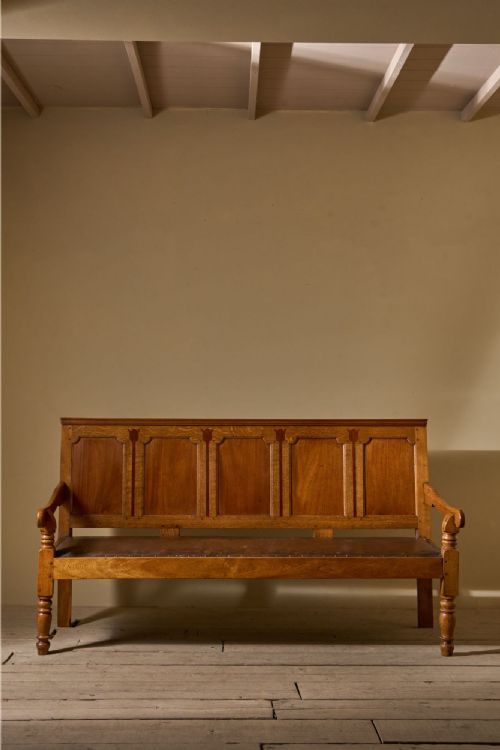
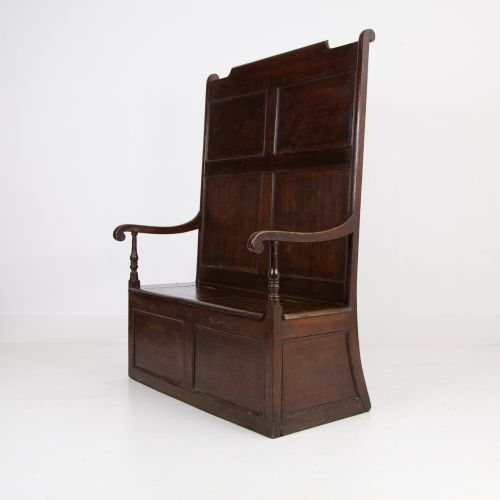
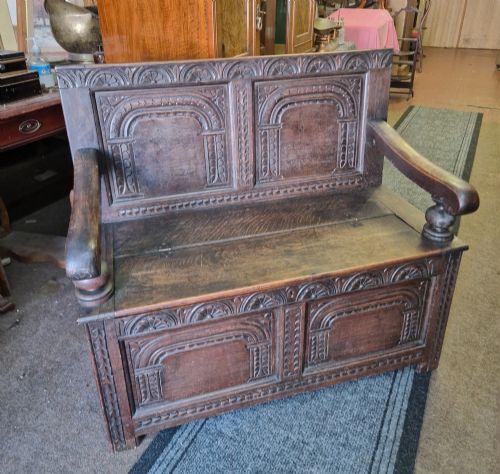
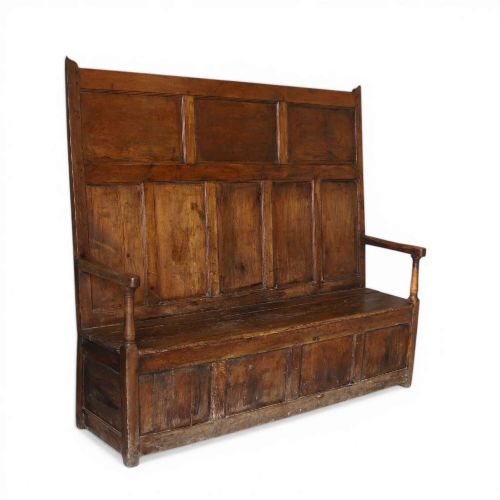
A panelled oak bench primarily takes the form of a high-backed settle, a box settle with integrated storage, or a monks bench that converts into a table surface. These pieces emerge across the seventeenth, eighteenth, and nineteenth centuries, spanning Georgian, Victorian, and Jacobean Revival styles.
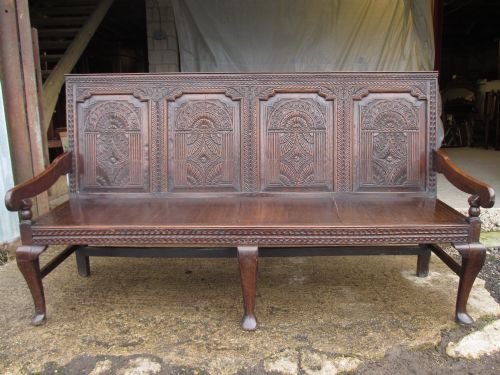
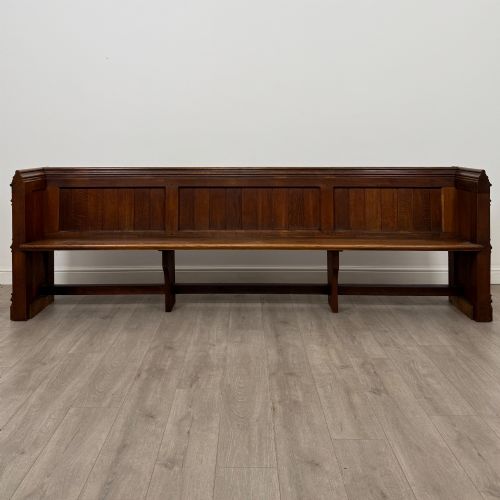
The evidence shows forms ranging from country house box settles to smaller hall benches and church pews. Many examples incorporate panelled backs, ranging from three to five panels, designed originally to block cold draughts in domestic interiors.
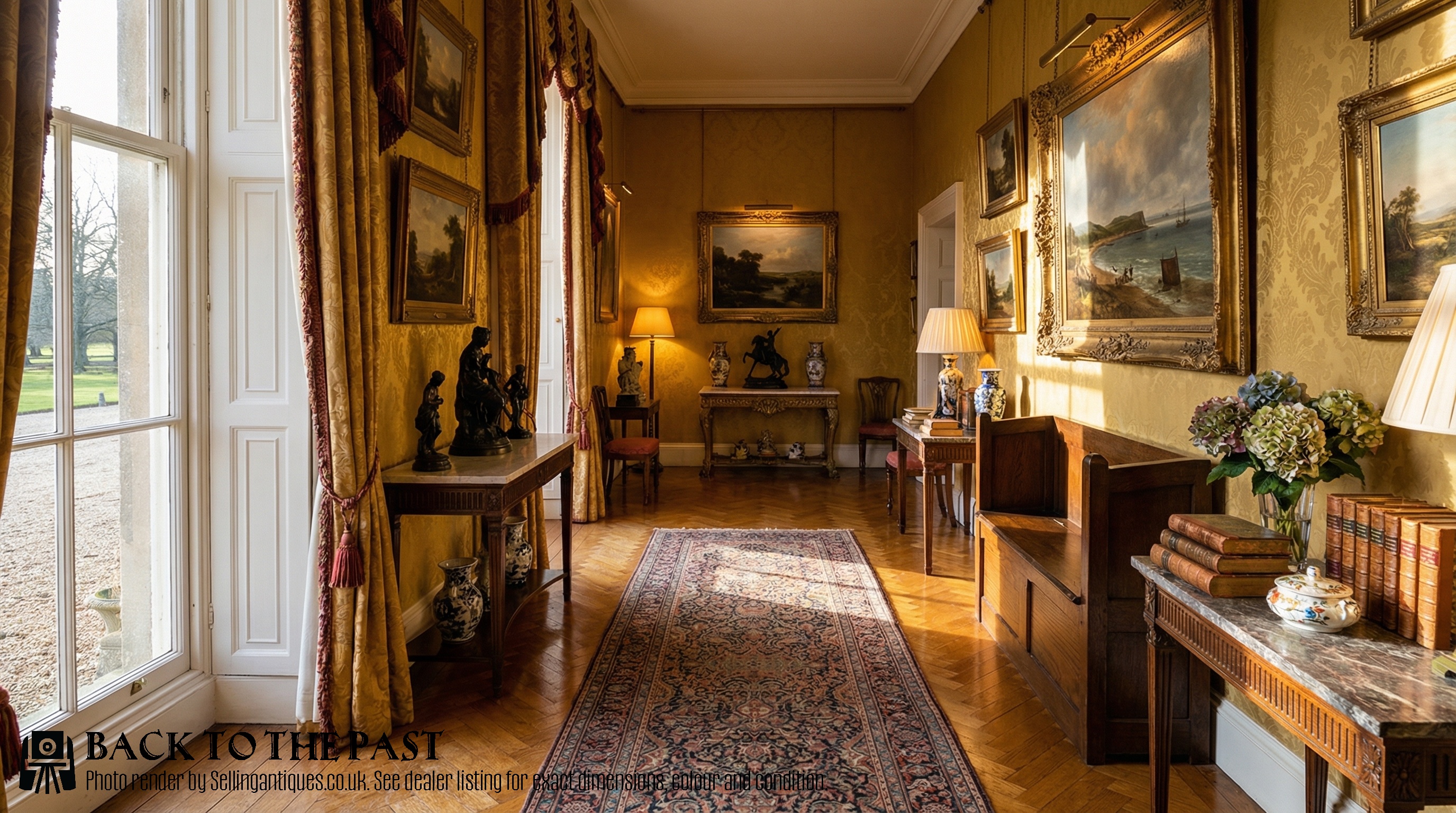
How they were made
Joiners built these items predominantly using solid oak, frequently supplemented by ash for structural framing and secondary timbers. Construction relied on traditional mortise and tenon joints held with wooden pegs.
Surfaces received finishes including beeswax, liming, or bleaching, while ornamentation often involved hand-carving, tulip decoration, or applied wood inlay.
Some night porters used sleeping benches to snatch a rest between shifts, proving that even hallway seating moonlighted as a bed.
What varies in quality
The standard of a panelled oak bench depends on the depth and crispness of the hand-carving on the back panels and crest rails. Early seventeenth-century and high-back examples generally display more intricate joinery and architectural proportion than later revival pieces.
Proportion and structural integrity separate simpler country pieces from refined examples. Elements such as original box bases, hinges, and untouched patinated timber finishes elevate the standing of a piece.
The Panelled Oak Bench Glossary
- Settle
- A wooden bench with a high back, solid arms, and frequently a box base for storage. It was designed to keep out draughts in domestic rooms.
- Monks bench
- A multifunctional piece of furniture featuring a hinged top that converts the backrest into a table surface. It often includes a box compartment beneath the seat.
- Box settle
- A settle featuring a enclosed compartment beneath the seat accessed by lifting the lid. This provided secure storage for household goods.
- Jacobean Revival
- A nineteenth-century historicist style copying the heavy, carved oak aesthetic of the early seventeenth century. It frequently appears on Victorian iterations of these benches.
- Mortise and tenon
- A traditional woodworking joint where a projecting tongue fits snugly into a corresponding cavity to lock timbers together securely.
Panelled Oak Bench: Frequently Asked Questions
Where were panelled oak benches used?
These benches sat in the draughty halls and kitchens of country houses, farmhouses, and cottages to provide communal seating near the hearth.
Their high backs deflected cold air, while the enclosed under-seat compartments stored blankets and household provisions.
How do I identify an 18th-century settle?
Eighteenth-century examples typically display pegged frame-and-panel construction with natural wax patination developed over generations of use.
Look for vernacular details such as tulip motifs, carved crest rails, and timber shrinkage that confirms age.
What is a monks bench?
A monks bench is a dual-purpose furniture form where the panelled back tilts forward on pivots to rest flat across the arms, forming a table.
This clever design saved space in smaller historic interiors by combining a dining surface with a hallway seat.
How do I care for antique oak?
Maintain antique oak furniture by applying occasional coats of traditional beeswax to nourish the dry timber and preserve its finish.
Keep pieces away from direct heat sources and sudden temperature fluctuations to prevent the oak from splitting.