




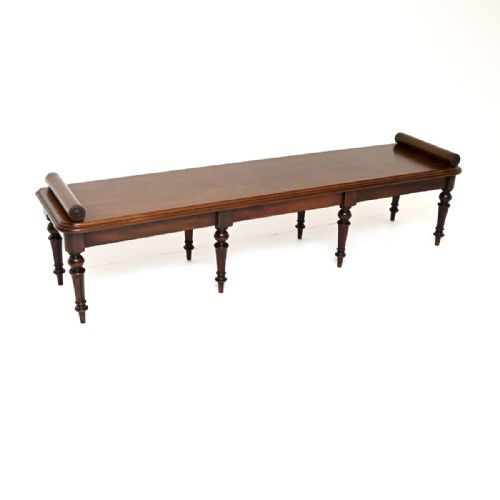
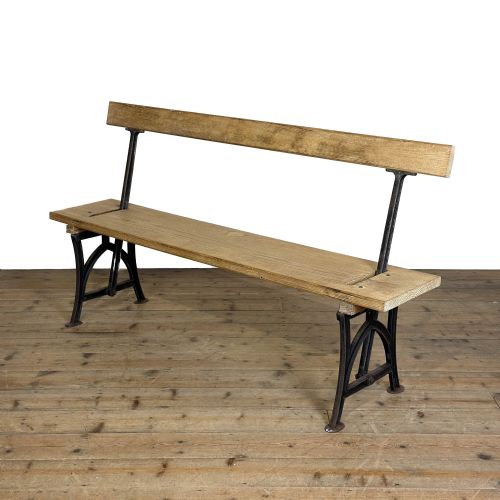
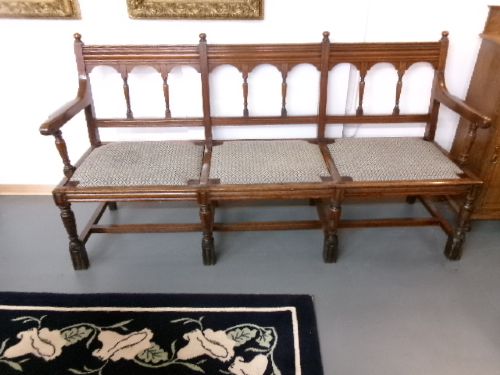


Antique Wooden Hall Seat
An antique wooden hall seat brings immediate architectural weight and practical utility to an entranceway, offering both firm seating and concealed storage.
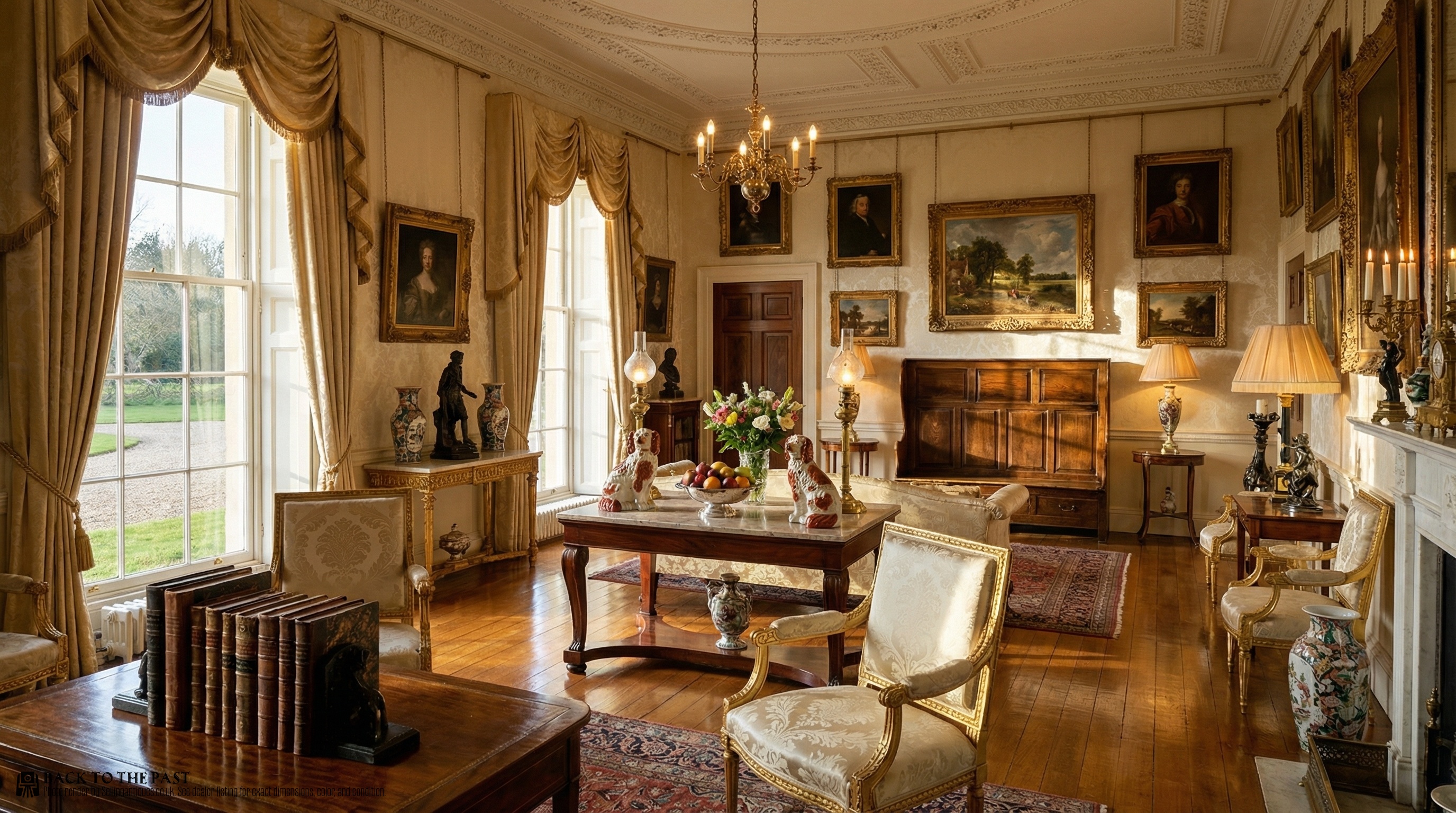
Antique Wooden Hall Seat
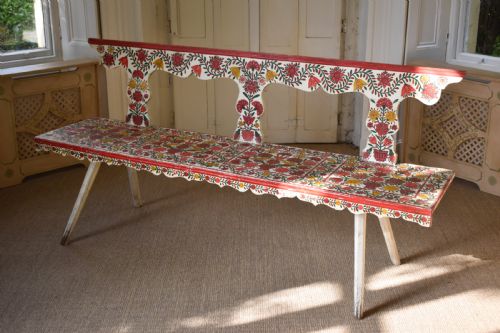
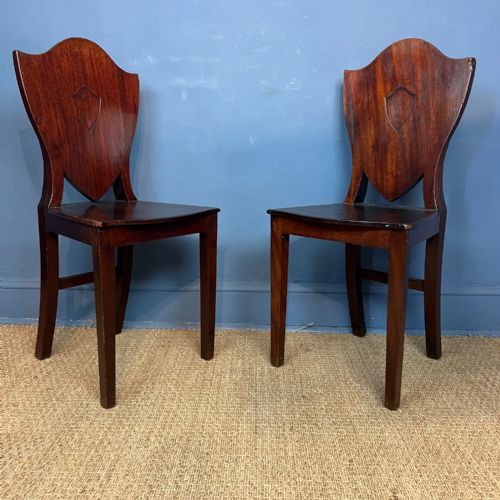
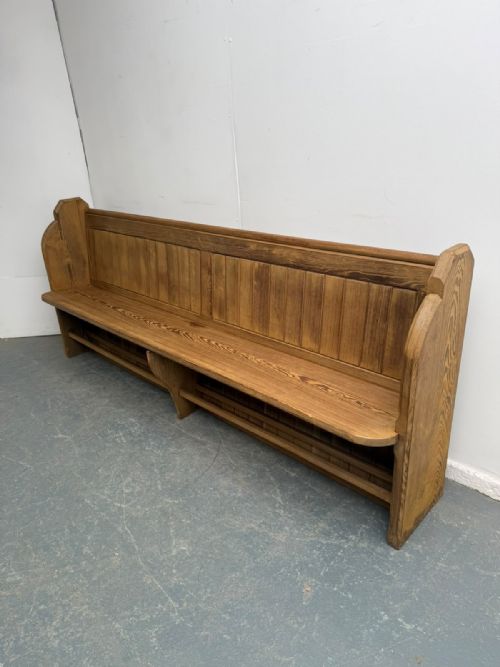
An antique wooden hall seat is a robust piece of hallway furniture designed to accommodate visitors while they removed or put on outdoor footwear. The examples appearing on this page span from the 18th century through the Victorian era and into the 1900s, encompassing both formal architectural forms and vernacular country pieces.
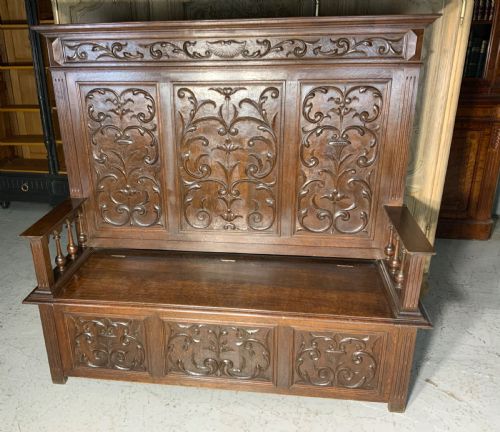
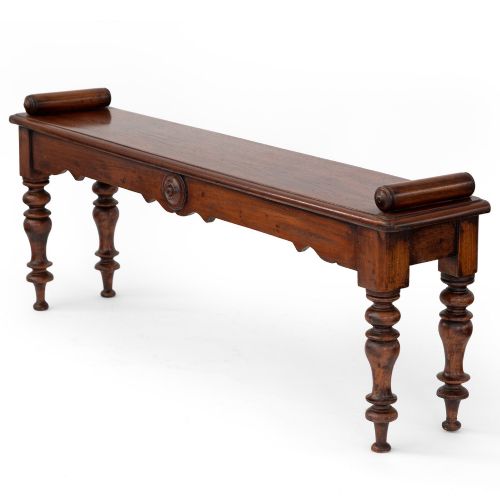
The primary forms found here include benches, settles, and window seats, often constructed with high panelled backs to block cold draughts near front doors. Makers adapted these communal seats in various regional interpretations, balancing heavy structural utility with period design movements such as Regency, Jacobean Revival, Arts and Crafts, and Georgian.
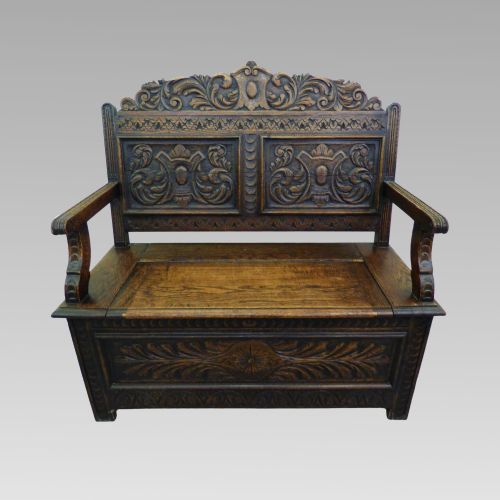
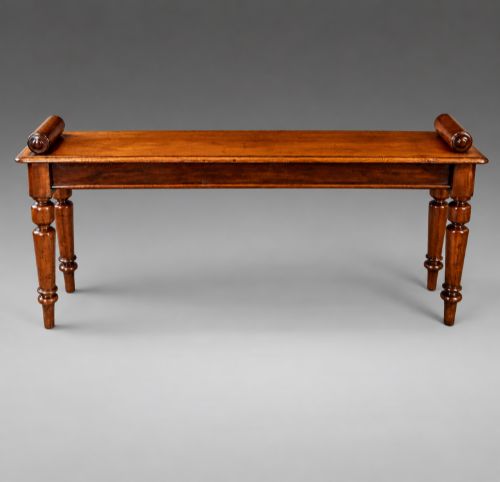
Among the variations, high-backed carved oak settles and large mahogany benches dominate the offerings, occasionally featuring enclosed box bases or curved barrel backs. These pieces reflect the architectural demands of historic British hallways, where durability took precedence over delicate comfort.
Construction and materials
Carpenters relied principally on dense native oak and imported mahogany to construct these substantial items, utilising traditional joinery methods that ensured long-term stability. Panels were frequently hand-carved with geometric or floral motifs, while structural framing relied on mortise and tenon joints secured with wooden pegs.
Detailing often included contrasting inlay work in boxwood, alongside functional hardware fashioned from brass for hinges, hooks, or carrying handles. These materials were selected for their resilience, ensuring the furniture could withstand heavy daily use in busy entrance halls.
Antique Wooden Hall Seat Retail Price Guide 2026
Typical asking prices for wooden hall seat among the pieces listed under this phrase on Sellingantiques today, from the lower quarter to the upper quarter. They describe what is for sale here now, not the wider market.
Barrel settles wrap around the sitter like wooden cocoons, engineered by clever historical carpenters to outwit the iciest hallway draughts.
Assessing quality and proportion
Quality in an antique wooden hall seat rests on the integrity of the timber, the depth and crispness of the hand-carving, and the preservation of original structural joinery. Finer pieces demonstrate thoughtful integration of decorative elements, such as intricate boxwood inlay or balanced panel proportions, rather than hasty assembly.
The distinction between standard utility items and superior examples lies in the maturity of the wood and the subtlety of regional ornamentation. Pieces retaining their original patination and uncompromised structural frames stand apart from those altered or excessively restored over centuries of domestic service.
James Shoolbred and Co
The Antique Wooden Hall Seat Glossary
- Settle
- A wooden bench with a high solid back, carved panel arms, and frequently a box compartment beneath the seat for storage. This form kept inhabitants warm by blocking cold air currents in medieval and post-medieval halls.
- Boxwood inlay
- The technique of inserting contrasting pale boxwood strips or geometric shapes into the primary dark timber surface. It creates ornamental borders and visual depth on panelled woodwork.
- Wingback
- A seating design featuring lateral extensions or wings flanking the upper backrest. Originally conceived to shield occupants from draughts near open hearths or entryways.
- Barrel settle
- A specialised seating form where the high back curves around in a continuous semi-circle or barrel shape. This construction provided maximum shelter against cold air in large, unheated rooms.
- Panelling
- Framework composed of vertical stiles and horizontal rails enclosing fitted wooden panels. It provides structural rigidity while offering flat surfaces for decorative carving.
Antique Wooden Hall Seat: Frequently Asked Questions
What is an antique wooden hall seat used for?
These pieces were traditionally placed in entrance halls to provide a practical place for putting on or removing outdoor boots and heavy outerwear.
Beyond simple seating, many incorporated enclosed storage boxes beneath the seat to hold gloves, umbrellas, and other accessories out of sight.
How do I date an oak settle?
Dating relies heavily on examining the construction methods, tool marks, and stylistic motifs carved into the oak panels. Earlier 18th-century examples often display simpler, heavier framing, whereas later Victorian revivals incorporate more elaborate, revivalist ornamentation.
Wood patination and the type of fixings used also offer reliable clues to a piece's age and manufacturing period.
Where should I place a hall seat?
An antique wooden hall seat functions best in a spacious entrance hall or boot room where its architectural presence can be fully appreciated. Because of its high panelled back, it also serves effectively as a room divider in open-plan living spaces.
Positioning the piece away from direct heat sources and strong sunlight preserves the natural oils in the historic timber.