





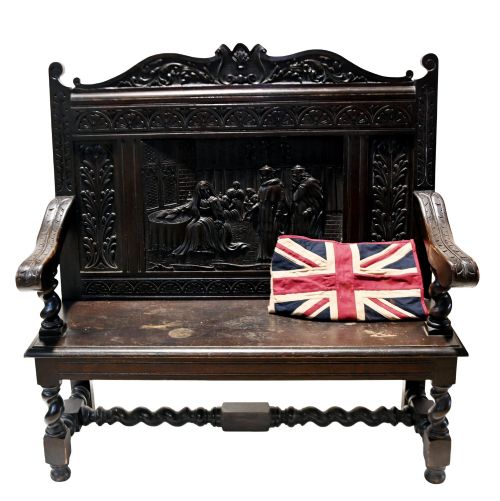
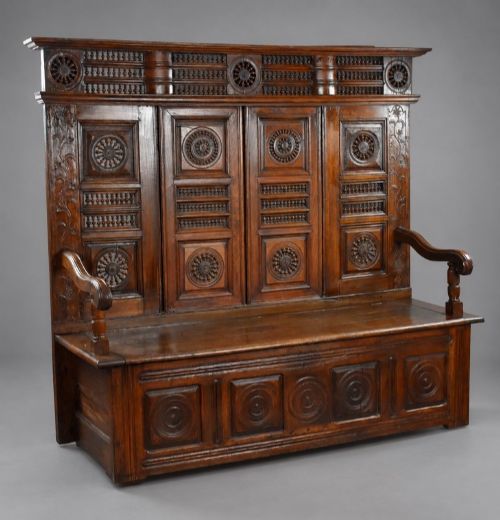
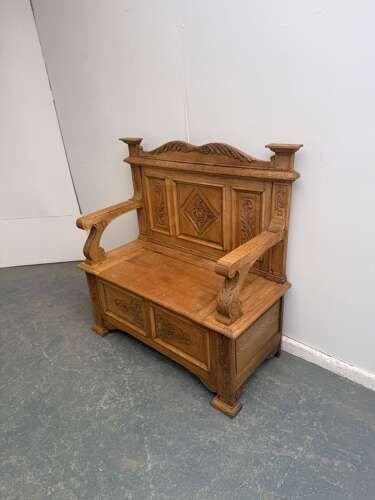
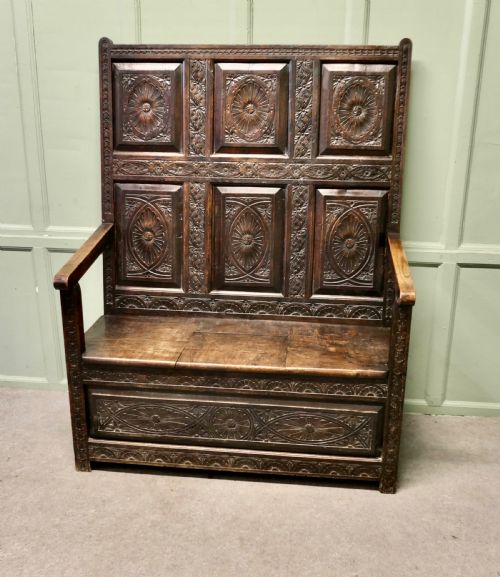
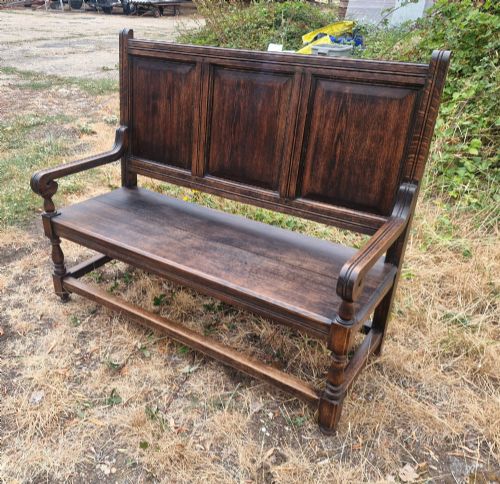
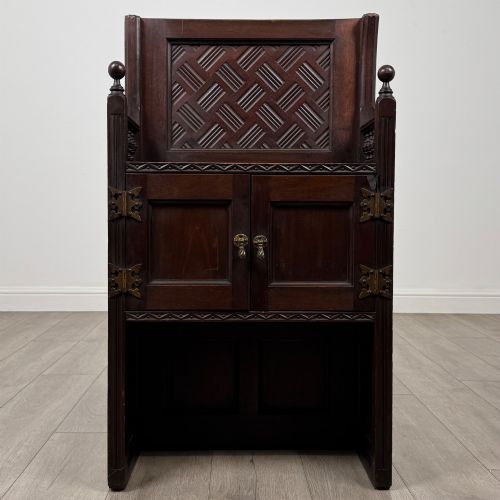
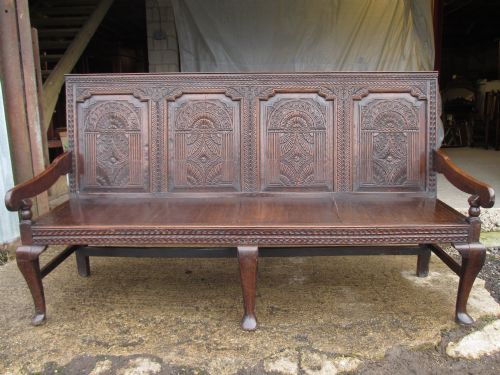
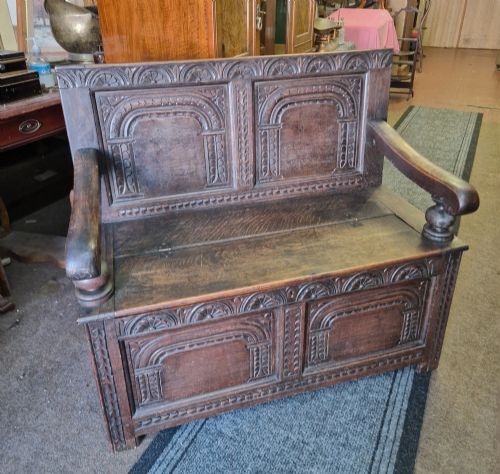
Carved Panel Bench
A carved panel bench brings centuries of craftsmanship into a hallway, offering sturdy seating built from honest timbers.
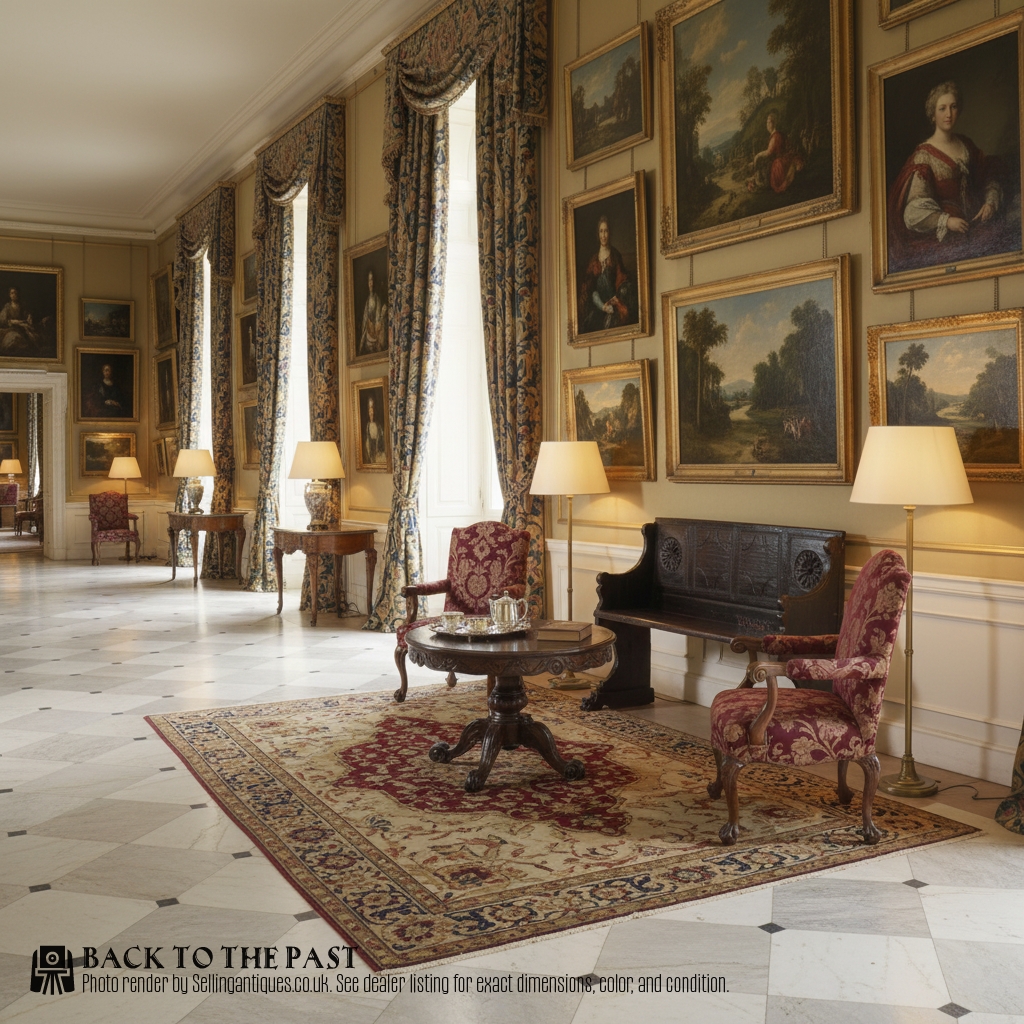
Carved Panel Bench
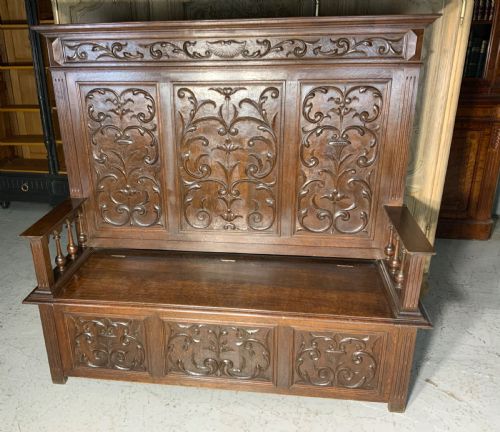
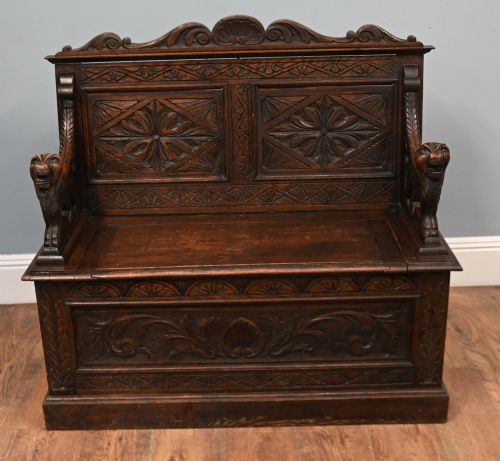
A carved panel bench serves as a substantial seat for an entrance hall, mudroom or living space, often combining storage with seating. When you search for a carved panel bench, you encounter forms that span several centuries, from early oak box settles to later Victorian interpretations.
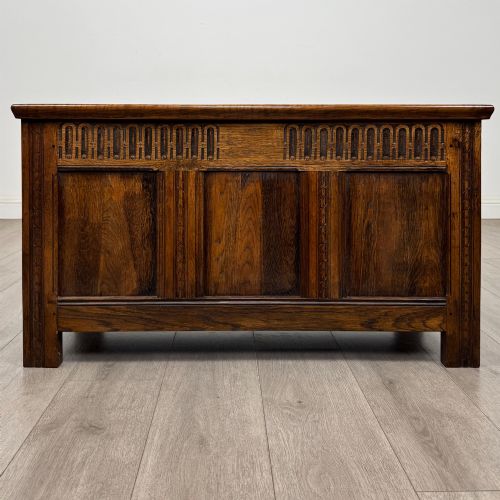
The most common examples on this page are fashioned from oak, frequently featuring high panelled backs and hinged seats that reveal storage compartments beneath. These pieces originate across the seventeenth, eighteenth and nineteenth centuries, alongside revival styles that mirror earlier periods.
Makers designed these items for communal spaces, resulting in sturdy proportions and high backs intended to block cold drafts in older homes. Variants range from straightforward hall benches to high back box settles and monastic styles.
Materials and Construction
Carpenters relied predominantly on oak as the primary timber, complemented occasionally by mahogany, walnut, fruitwood and pine. Panels were typically held within mortise and tenon frames, allowing the solid wood to expand and contract naturally with seasonal humidity changes.
Carving was executed by hand using gouges and chisels, producing geometric strapwork, floral motifs and panelled reliefs directly onto the timber surface. Iron and brass hardware, including hinges and latches, secured the storage lids on box settles and pews.
Carved Panel Bench Retail Price Guide 2026
Typical asking prices for carved panel bench among the pieces listed under this phrase on Sellingantiques today, from the lower quarter to the upper quarter. They describe what is for sale here now, not the wider market.
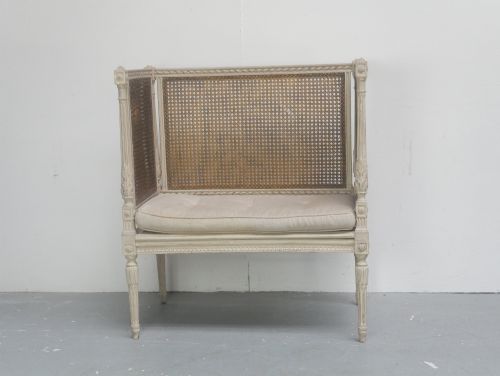
Listings feature timbers spanning oak, mahogany, walnut, fruitwood, pine and cane, alongside iron and brass hardware.
Assessing Quality and Character
Quality rests in the crispness of the hand carving and the integrity of the structural timber. Superior examples display deeply cut ornamentation that remains sharp and well-defined, rather than soft or shallow machine tooling.
The proportion and balance of the back panels relative to the seat reveal the maker's skill. Original timber patination, achieved through decades of waxing and handling, separates untouched period pieces from heavily restored or later constructed items.
The Carved Panel Bench Glossary
- Settle
- A wooden bench with a high back, solid arms and often a box base for storage. It was traditionally placed near the hearth to keep out drafts.
- Box Settle
- A bench featuring a compartment beneath the hinged seat lid. This design provided practical storage for blankets, boots or household items.
- Panelling
- Framework constructed from vertical stiles and rails holding flat or raised wooden panels. It forms the rigid structure of the bench back.
- Monk's Bench
- A convertible piece of furniture with a hinged back that folds down over the arms to form a table top. It maximised space in smaller historical rooms.
- Strapwork
- A carved decorative motif resembling intertwined leather bands or ribbons. It frequently appears on seventeenth-century woodwork.
Carved Panel Bench: Frequently Asked Questions
Where should I place a carved panel bench?
These benches suit entrance halls, boot rooms and wide corridors where their high backs create a strong architectural focal point. They also function well in large kitchens or living areas against plain walls.
Ensure you measure the depth and height of the space, as high-back settles require adequate wall clearance and can dominate small rooms.
How do I care for antique oak furniture?
Maintain the wood by applying a quality beeswax polish sparingly every few months to nourish the grain. Avoid placing the bench near direct heat sources or radiators to prevent the timber from splitting.
Dust regularly with a soft, dry cloth and lift the piece rather than dragging it to protect the joints and feet.
Are these benches comfortable to sit on?
Historical benches were built with upright wooden backs and firm seats designed for posture rather than lounging. They encourage an upright seating position suitable for pulling on boots in a hallway.
Many owners add a custom squab cushion or loose fabric pad to the seat base for added comfort during longer periods of sitting.
How can I tell an older settle from a later revival?
Examine the construction methods, tool marks on the timber, and the nature of the wood's surface wear and colour. Genuine early pieces display hand-pegged joints and deep patination accumulated over centuries of use.
Revival pieces, such as those from the Victorian era or later, often feature machine-sawn components and cleaner, less uniform wear patterns.