

19th Century Oak Bench
A 19th century oak bench brings solid timber architecture and enduring utility to an interior.
19th Century Oak Bench
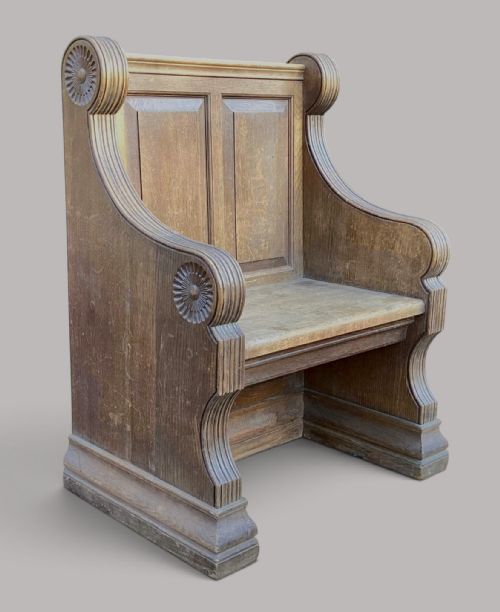
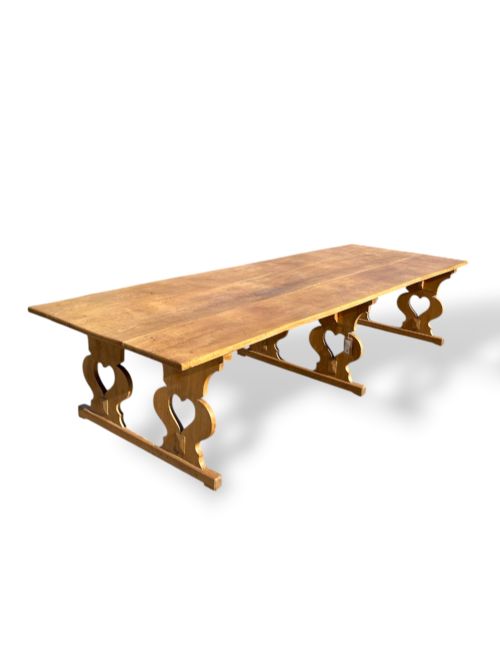
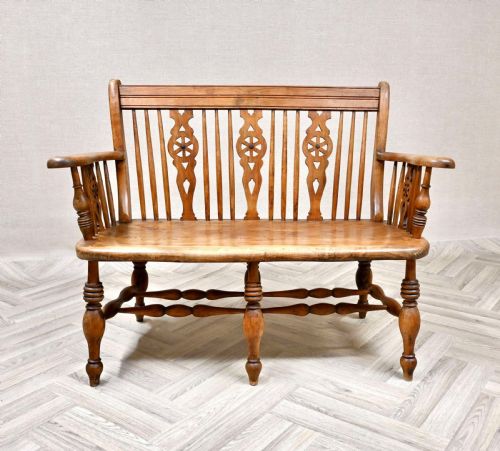
A 19th century oak bench encompasses robust forms ranging from simple slab pig benches and hall seats to elaborate box settles and church pews. Pieces emerge from English, Welsh, French, and Cotswold traditions, reflecting varied domestic and ecclesiastical origins.
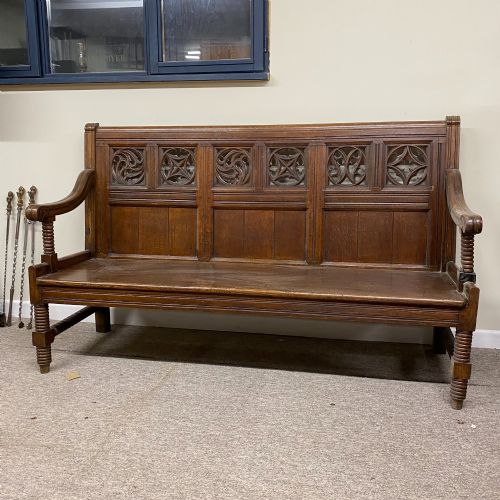
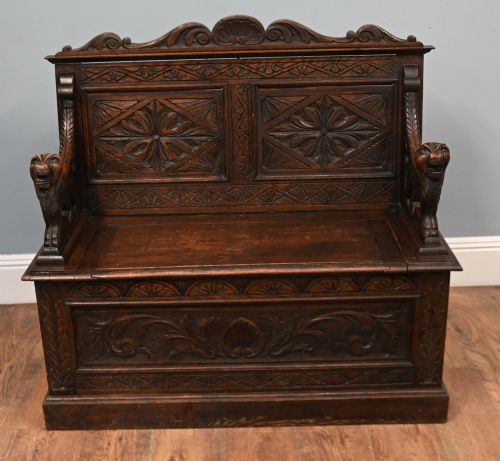
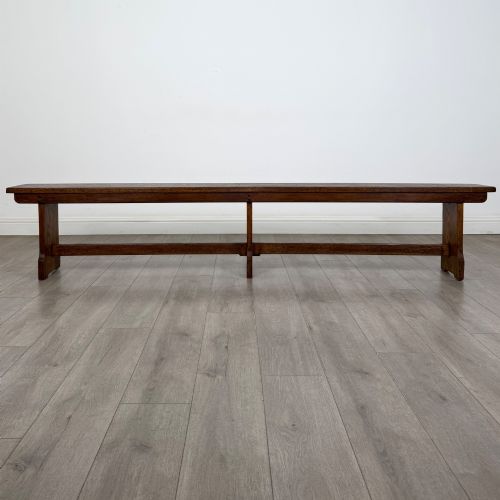
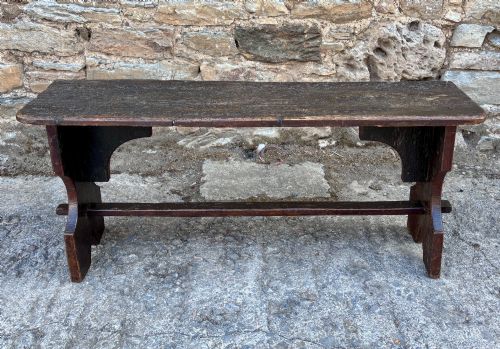
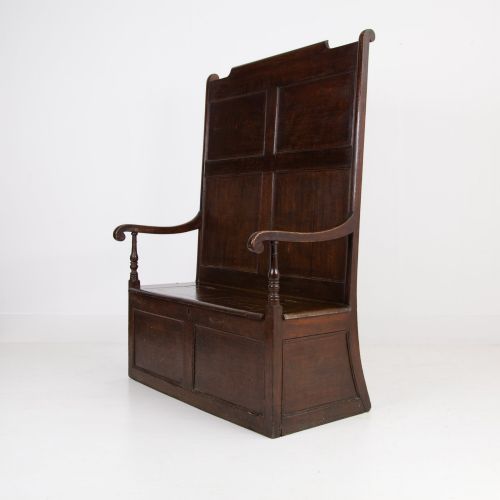
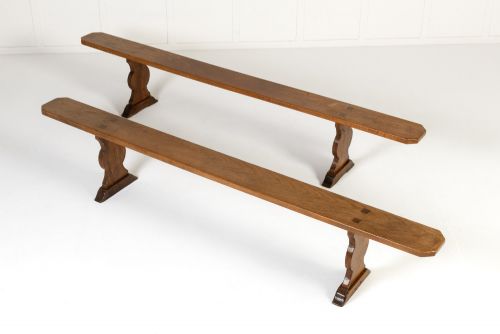
The hall bench and settle dominate the selection, often featuring carved panels, high backs, and storage compartments beneath the seat. Simpler vernacular pieces, such as long benches and window seats, demonstrate the practical carpentry of the era.
Styles span plain Victorian utilities to ornate Gothic Revival designs with carved dragons, linenfold panels, and Green Man motifs. Regional variations highlight local preferences for turning, slab construction, and applied ornamentation.
Materials and Construction
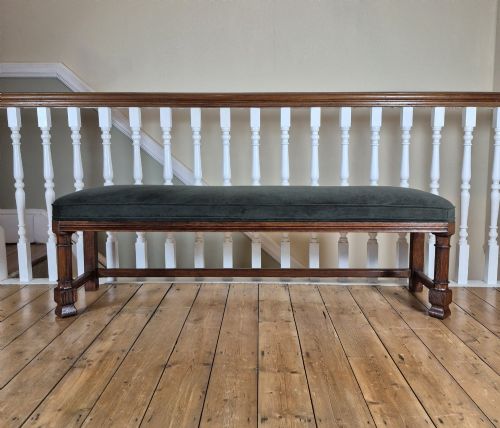
Construction relies heavily on solid oak, selected for durability and pronounced grain, sometimes complemented by leather upholstery or simulated paint finishes. Joinery typically employs traditional pegged mortise and tenon joints to withstand heavy domestic use.
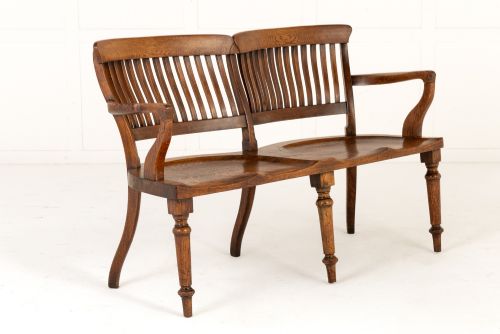
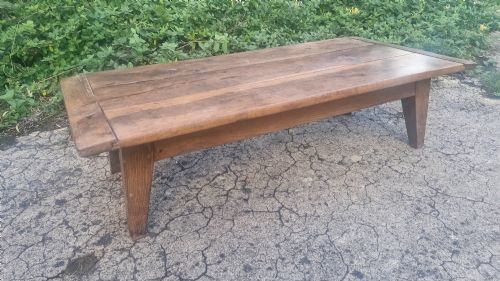
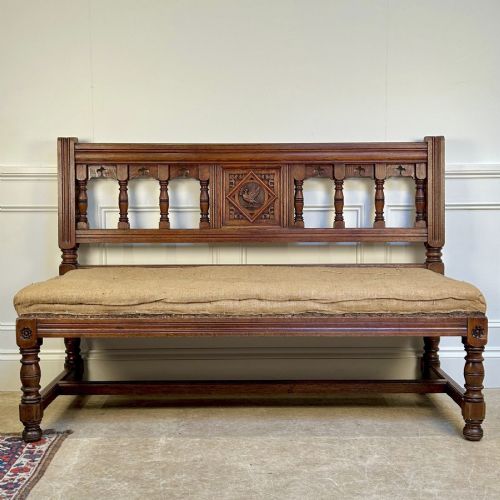
Carving is executed directly into the timber, ranging from deep relief work depicting mythical beasts and foliage to geometric tracery. Turned elements such as barley twist legs and supports appear on formal hall benches, contrasting with the primitive slab construction of rustic work.
19th Century Oak Bench Retail Price Guide 2026
Typical asking prices for 19th century oak bench among the pieces listed under this phrase on Sellingantiques today, from the lower quarter to the upper quarter. They describe what is for sale here now, not the wider market.
Recorded object forms include benches, settle benches, window seats, pig benches, and church pews.
Evaluating Quality
Quality rests in the selection of the timber, the depth and crispness of the hand carving, and the integrity of the original construction. Superior examples display thick oak boards with rich natural patination built up over decades of handling.
Finer pieces exhibit balanced proportions and thoughtful detailing, such as integrated box storage or well-executed Gothic tracery, rather than heavy-handed later alterations. The relationship between structural timber and decorative carving distinguishes standard workshop output from exceptional commissions.
Gillow's·Bruce Talbert
The 19th Century Oak Bench Glossary
- Settle
- A wooden bench with a high back, solid arms, and often a storage box beneath the seat. It was designed to keep draughts away from the sitter in older hallways and kitchens.
- Pig bench
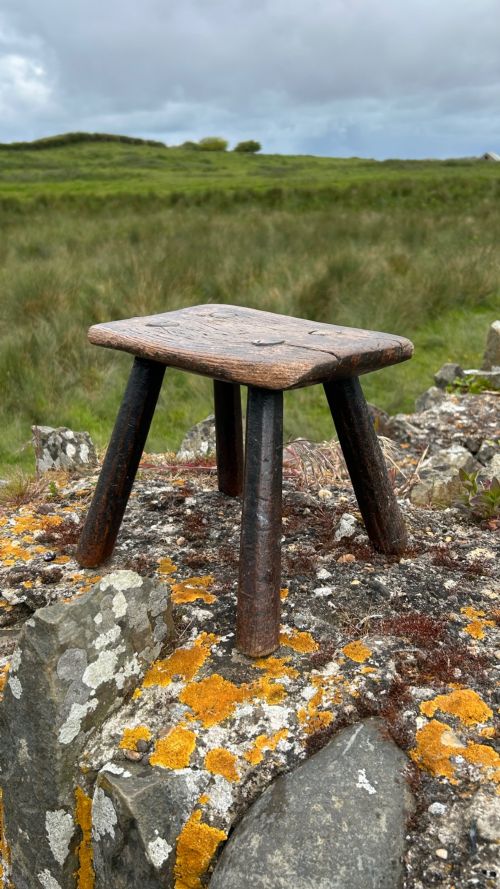
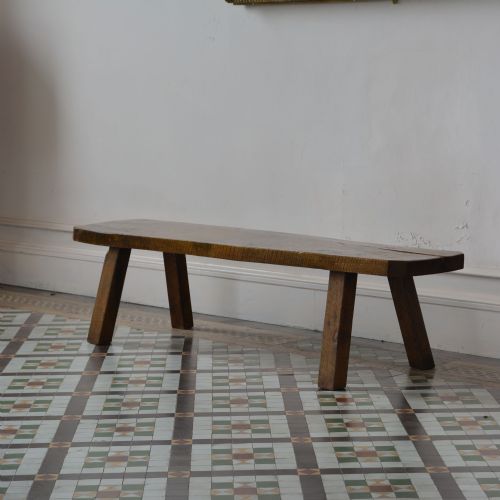
- A low, rustic wooden bench originally utilised for butchery or farm work. These vernacular pieces feature thick slab tops and simple legs.
- Monks bench
- A convertible furniture form featuring a hinged back that folds down over the seat to create a small table. They are frequently decorated with 19th century carved panels.
- Gothic Revival
- An architectural and decorative style popular during the Victorian period. It incorporates pointed arches, tracery, and medieval motifs into furniture design.
- Barley twist
- A type of woodturning shaped like a spiral rope. It is commonly found on the legs and stretchers of 19th century seating.
19th Century Oak Bench: Frequently Asked Questions
Where should I place a hall bench?
A 19th century oak bench suits an entrance hall, landing, or kitchen where its structural presence anchors the space. High-backed settles work well against large wall surfaces to create a defined seating area.
Shorter window seats or small benches fit neatly into alcoves or beneath windows. Their solid timber construction handles everyday placement while providing practical seating.
How do I care for antique oak?
Maintain antique oak by applying a traditional beeswax polish to nourish the timber and preserve the surface sheen. Avoid placing the furniture near direct heat sources or in fluctuating humidity to prevent splitting.
Regular dusting with a soft, dry cloth protects the carved details and patina. Treat the wood gently to maintain the natural finish developed over generations.
What is the difference between a settle and a bench?
A settle incorporates a high back, solid wooden arms, and frequently an enclosed box base designed to block cold drafts. Standard benches offer open seating without the enclosed back and arm structure.
Settles provide a more enclosed, architectural feel within a room. Benches tend to offer a lighter profile suitable for circulation spaces.