





Brown Oak Bench
A brown oak bench brings warm, rich timber tones and enduring utility into a hallway or living space.
Brown Oak Bench
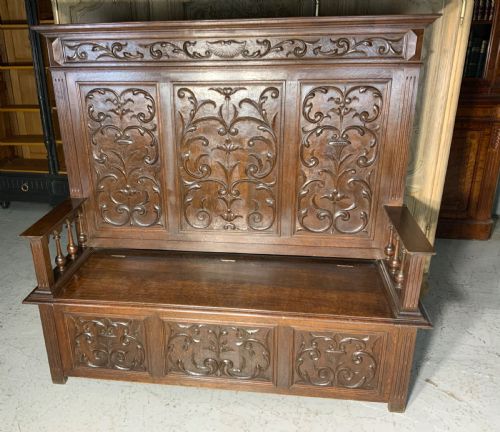
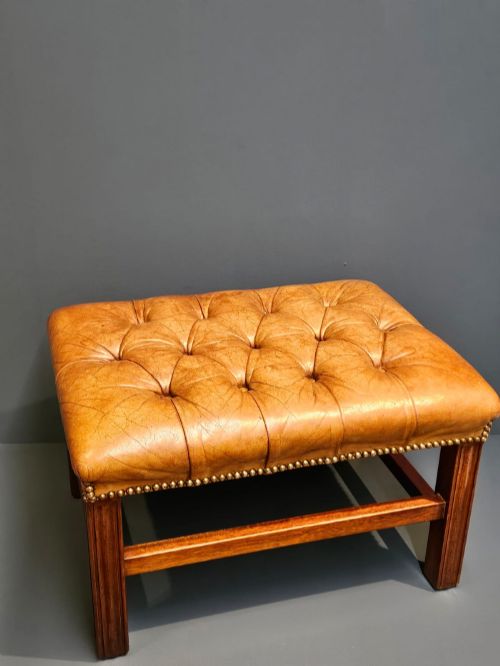
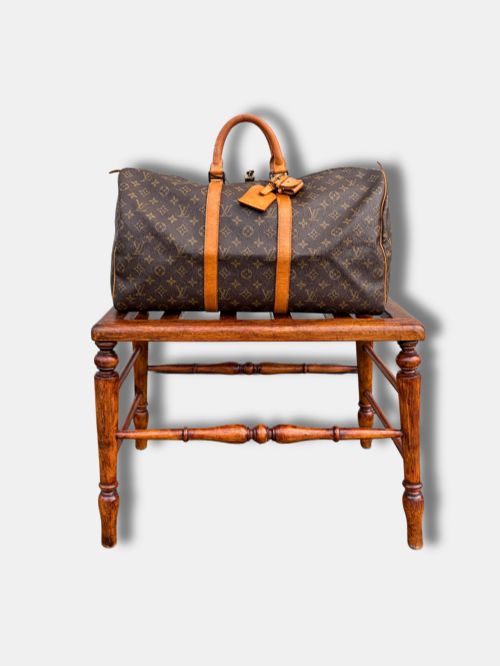
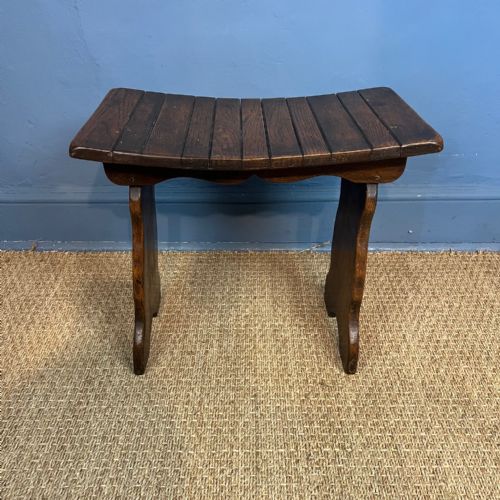
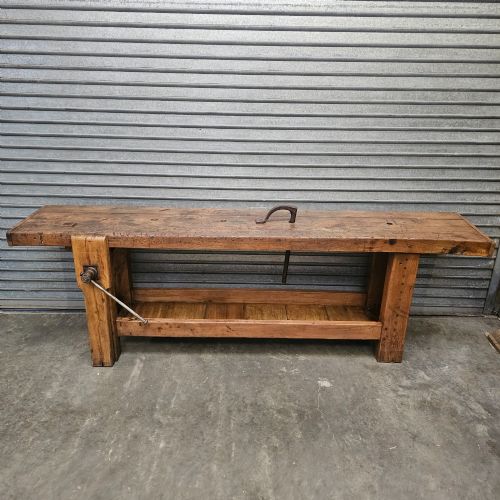
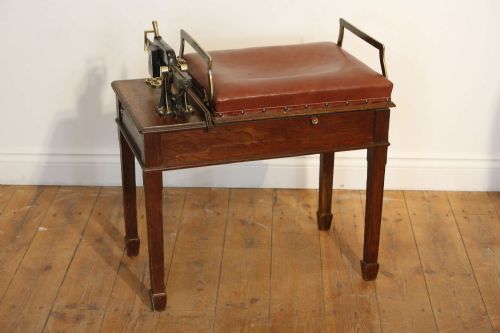
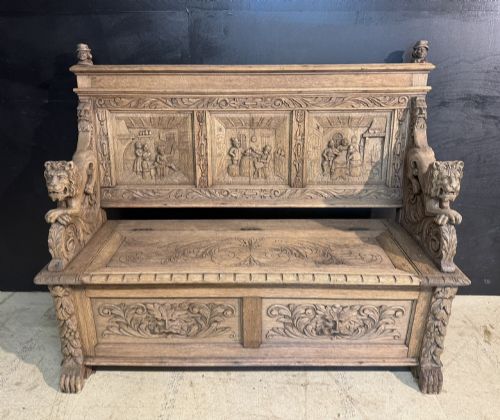
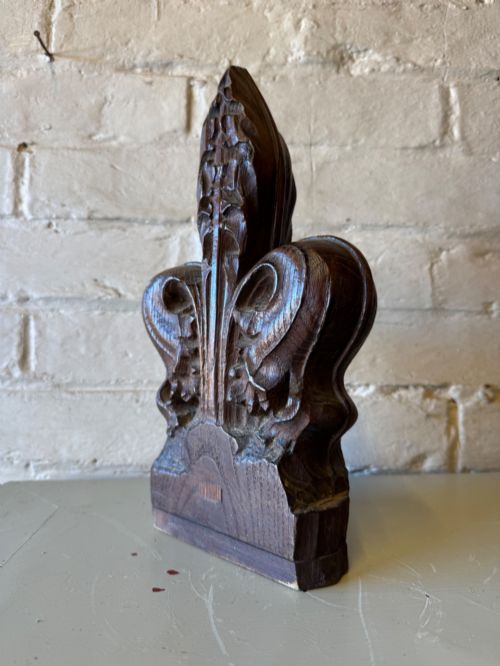
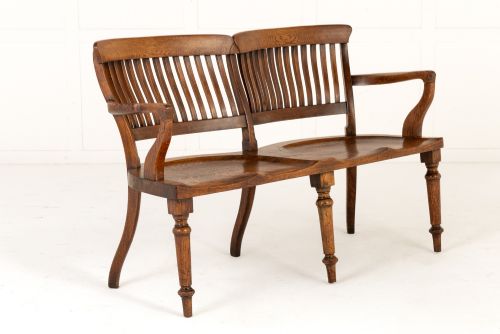
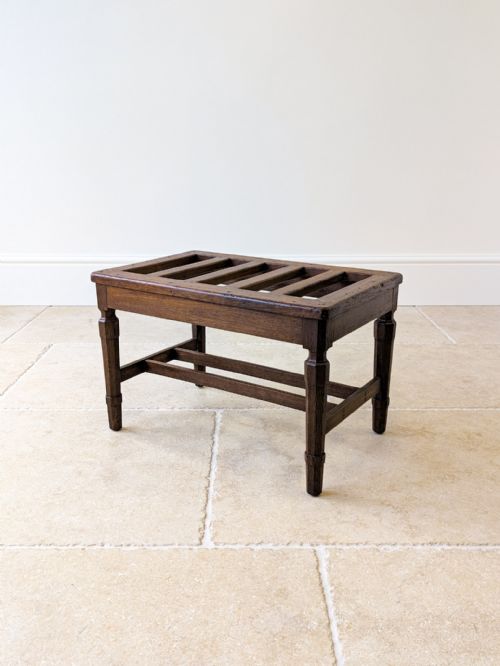
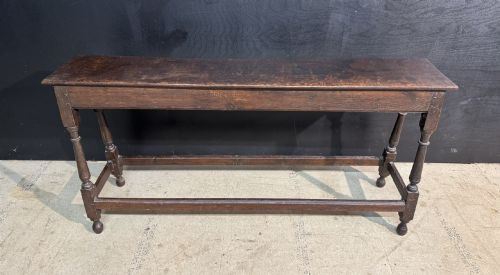
The most common examples on this page date from the nineteenth century and the Victorian period, often retaining a rich, polished surface patina. Pieces range from simple utilitarian country forms to more elaborate designs incorporating trefoil carved supports or tulip decoration. Alongside traditional benches, related seating variations such as settles, joint stools, and luggage stands appear within the selection, all sharing the characteristic oak timber construction.
Assessing quality in construction
Quality in these pieces is dictated by the integrity of the timber selection and the retention of original structural components. Superior examples display dense, well-figured oak with a deep, natural patina, whereas lower tiers may show extensive timber replacement or unsympathetic modern repairs to the seat boards and legs.
The sophistication of the carving and joinery separates standard vernacular pieces from masterworks of periods like the Arts and Crafts movement or the Georgian era. Crisp hand-carving on panel backs and sturdy, uncompromised frame joints distinguish finer workshop production from basic utilitarian furniture.
Brown Oak Bench Retail Price Guide 2026
Typical asking prices for brown oak bench among the pieces listed under this phrase on Sellingantiques today, from the lower quarter to the upper quarter. They describe what is for sale here now, not the wider market.
Listings feature oak furniture spanning from the sixteenth century through the Georgian and Victorian eras up to the nineteen-twenties.
GIllows·Liberty
The Brown Oak Bench Glossary
- Settle
- A wooden bench with a high back, solid arms, and frequently a box seat for storage. This form kept draughts away from people sitting near fires in older houses.
- Joint stool
- A sturdy wooden stool constructed with mortise and tenon joints by a joiner rather than a turner. These early seats often served varied household functions.
- Box settle
- A settle featuring a hinged seat lifting to reveal a storage compartment beneath. This dual-purpose design conserved space in traditional interiors.
- Panel-back
- A wooden chair or bench back constructed from framed panels rather than solid boards or spindles. This method allowed the timber to expand and contract safely.
- Gothic Revival
- An architectural and decorative style drawing inspiration from medieval design. Pieces often incorporate pointed arches, trefoils, and heavy carved tracery.
Brown Oak Bench: Frequently Asked Questions
Where should I place a brown oak bench?
These benches suit narrow hallways, boot rooms, or living spaces where their practical seating and storage capabilities prove useful. Their deep timber tones anchor a room visually.
Ensure the piece fits the proportions of your wall space, particularly if you are considering longer tavern styles or high-backed settles that command significant visual presence.
How do I care for antique oak furniture?
Maintain the timber by applying traditional beeswax periodically to nourish the wood and preserve its deep, polished surface. Avoid placing the bench near direct heat sources.
Keep humidity levels stable in the room to prevent the solid oak panels from splitting or warping as seasons change.
What is the difference between a bench and a settle?
A standard bench generally provides open seating without high sides or an enclosed back. It focuses purely on utilitarian support.
By contrast, a settle incorporates a high panelled back and solid arms designed to shield the sitter from cold draughts in older, open-plan rooms.
How can I tell a Victorian bench from an 18th-century one?
Eighteenth-century examples often exhibit vernacular construction quirks, hand-split boards, and simpler, heavier proportions developed for rural domestic life. The patination is typically deeper.
Victorian pieces frequently reflect stylistic revivals like Gothic or Jacobean influences, displaying more machine-assisted precision in their joinery and carving.