





Vernacular Oak Bench
These vernacular oak bench examples offer honest domestic utility, shaped by regional hands and practical traditions.
Vernacular Oak Bench
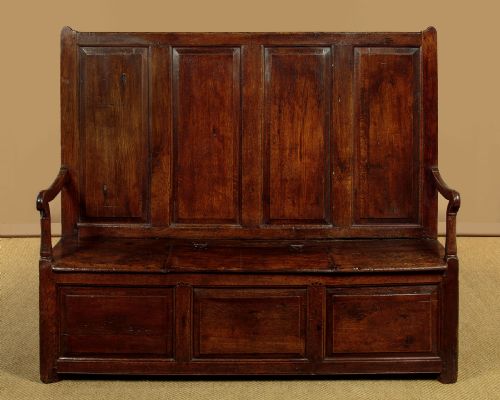
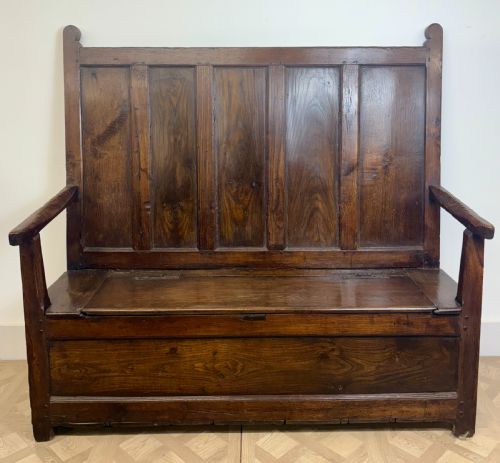
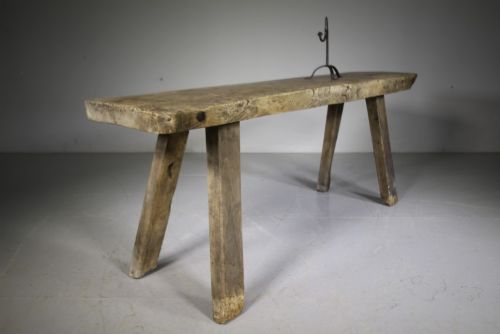
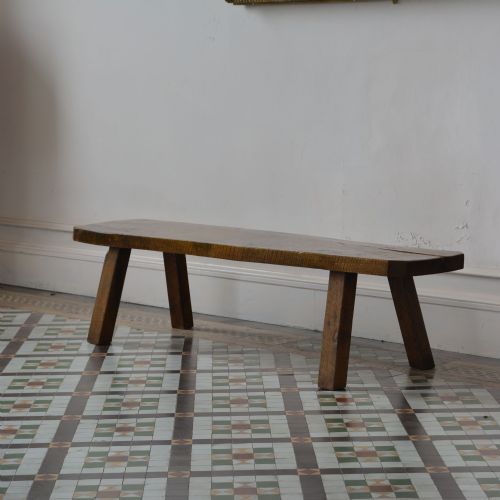
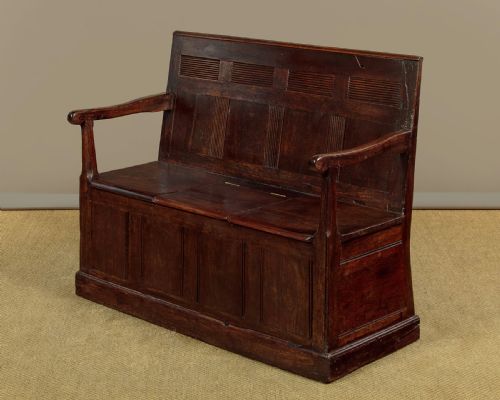
A vernacular oak bench represents unpretentious domestic seating built by regional makers rather than urban workshops. These pieces range from simple low stools and pig benches to high-backed box settles designed to keep draughts away from the hearth. Buyers inspecting this selection encounter forms rooted in everyday rural life rather than formal court furniture.
The materials and styles span centuries of local craft, drawing on eighteenth-century Welsh designs, nineteenth-century utilitarian seating, and rustic European traditions. Oak forms the primary structure in many examples, often paired with ash or elm for seats and spindles. Each surviving piece shows the marks of long use in farmhouses, cottages, and workshops.
How they were made
Maker-joiners utilised solid timber boards joined with pegged mortise and tenon joints, dowels, and simple box construction. Box settles incorporate panelled backs and enclosed bases that double as storage chests. Surfaces show the tool marks of adzes, drawknives, and hand saws rather than factory machinery.
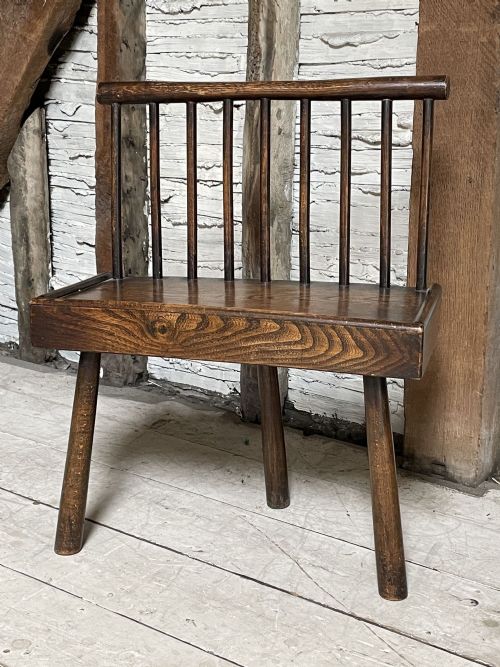
Secondary timbers such as elm and ash frequently provide contrasting grain and tough resistance to splitting on seats. Natural forms and solid blocks of hardwood serve for rustic stools and low pig benches. Iron fixings appear selectively where structural reinforcement is necessary.
Cobbler's stools carry the permanent indentation of generations of seated tradesmen shaping leather by the workshop window.
What varies in quality
Proportion and structural integrity distinguish finer examples from basic utilitarian survivors. Pieces retain their original timber surfaces and unaltered proportions without excessive replacement of parts. The balance between sturdy construction and functional simplicity dictates the overall standard.
Subtle details in the shaping of seats, arm rests, and high panelled backs reveal the skill of the original maker. The character of the timber grain and the depth of patina developed through generations of handling add significant visual weight to individual pieces.
The Vernacular Oak Bench Glossary
- Box settle
- A high-backed wooden bench featuring an enclosed box base beneath the seat. This design provided storage space and shielded occupants from cold draughts in unheated rooms.
- Vernacular
- Furniture built by local tradesmen or country joiners using regional traditions and readily available materials. These objects prioritise practical function over academic architectural styles.
- Pig bench
- A low wooden bench originally utilised for farm tasks or butchery work. Today these sturdy low forms function well as occasional coffee tables.
- Stickback
- A seating form where turned spindles or shaped sticks are tenoned directly into a solid wooden seat. This construction method draws on Windsor chair traditions.
- Patina
- The surface sheen and colour acquired by wood over decades of exposure to light, wax, and handling. A deep patina indicates age and continuous use.
Vernacular Oak Bench: Frequently Asked Questions
What is a vernacular oak bench?
A vernacular oak bench is a piece of regional seating built by local country craftsmen for domestic or agricultural use. These objects include low stools, pig benches, and high-backed box settles made from solid hardwoods.
Unlike formal court furniture, these benches reflect the practical needs of rural households and workshops. They rely on straightforward joinery and durable local timbers.
How were box settles used?
Box settles served as primary seating beside the household hearth in traditional cottages and farmhouses. The high wooden back and enclosed sides protected occupants from cold floor drafts.
The enclosed box beneath the seat provided secure storage for blankets, dry goods, or household items. This dual function made the settle a central piece of furniture in the main living room.
How do I care for antique oak furniture?
Antique oak benefits from stable indoor humidity and protection from direct sunlight and heat sources. Maintaining a consistent environment prevents timber from drying out or splitting.
Apply a traditional beeswax polish occasionally to nourish the wood and maintain the surface sheen. Buff gently with a soft cloth to preserve the historic patina.
How can I tell the age of a country bench?
Dating relies on examining construction methods, tool marks, timber selection, and overall wear patterns. Hand-sawn boards, pegged joints, and adged surfaces indicate earlier periods of manufacture.
Comparison with documented examples helps establish the likely period of origin. Regional variations in style also provide clues to when and where a piece was built.