





Wooden Monks Bench
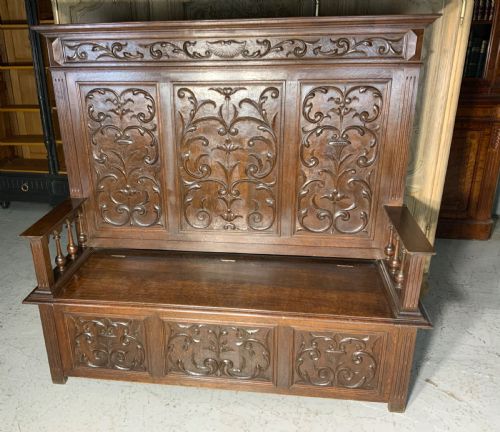
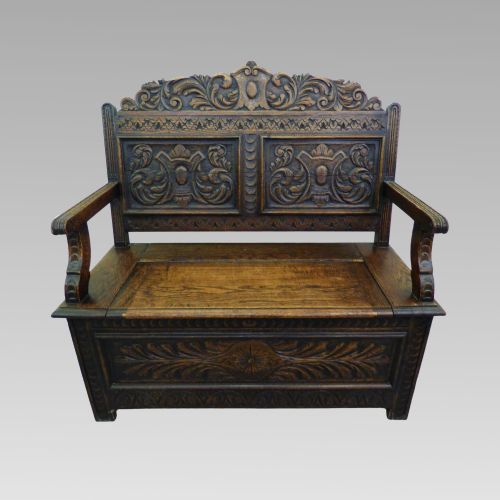
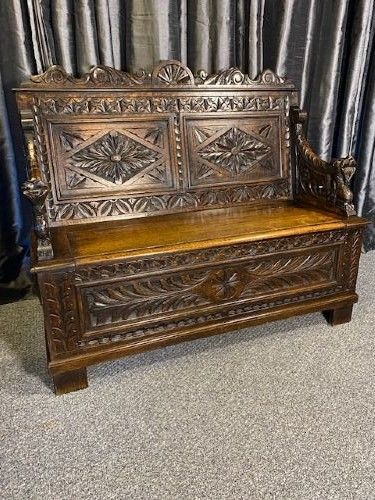
A wooden monks bench provides sturdy seating with concealed box storage, bringing centuries of practical craftsmanship and panelled character directly into a hallway or living space.
Wooden Monks Bench
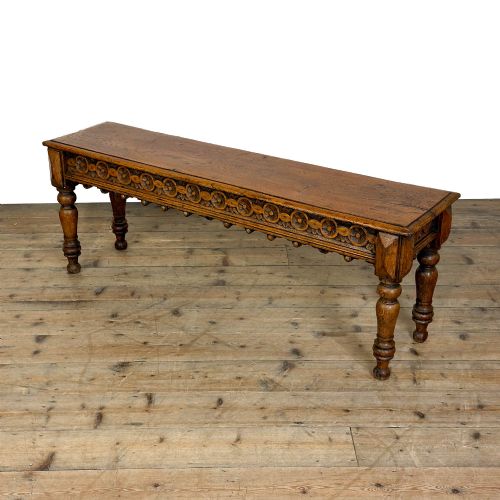
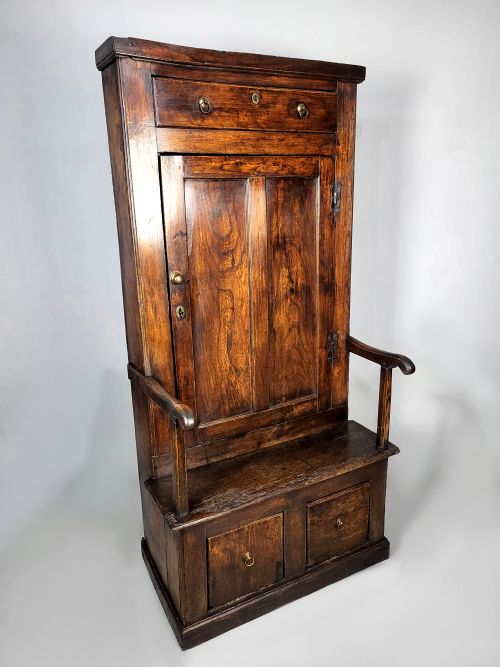
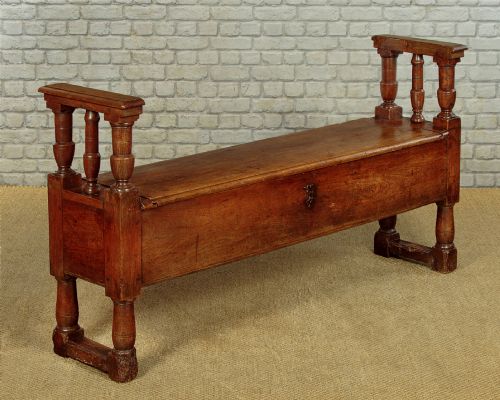
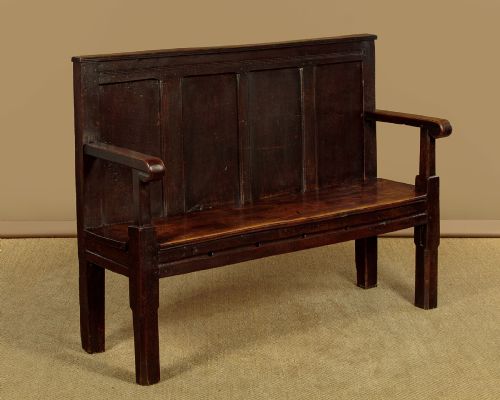
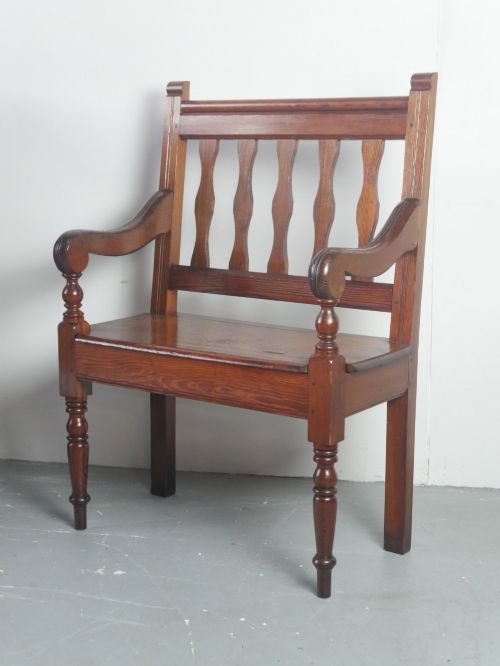
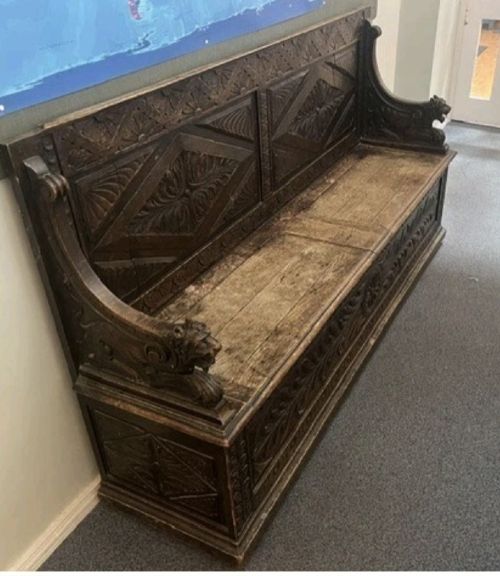
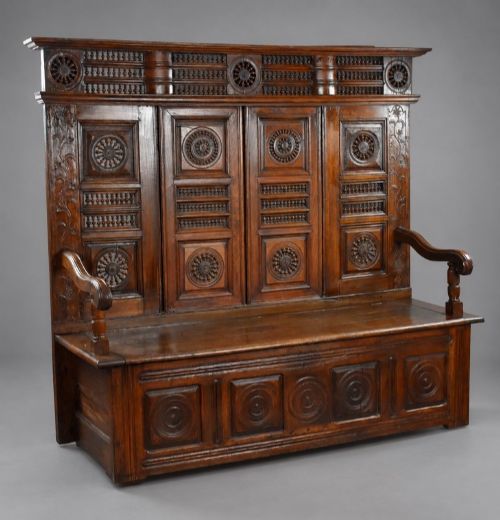
When searching for a wooden monks bench, buyers encounter a variety of settles, hall benches, and box seats spanning multiple centuries. These practical forms range from simple country pine examples to elaborately carved oak pieces designed for draughty halls.
The versions most commonly met on this page include 18th century oak box settles and Victorian pine hall seats. Many feature lift-up seats or fold-over tops that disguise useful storage compartments beneath the main bench.
Origins vary from English country workshops to Hungarian rural households, offering both high-back panelled designs and more compact single-seater configurations. Each piece reflects the functional seating needs of its original domestic environment.
How they were made
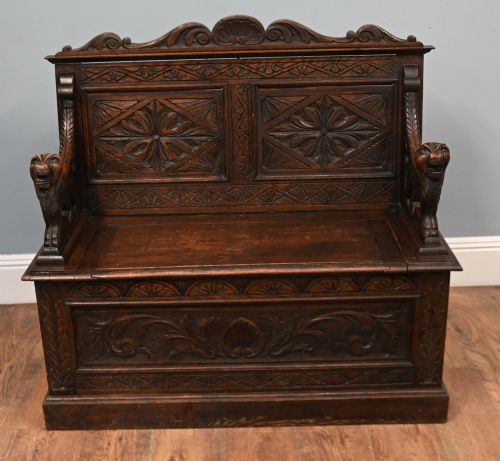
Traditional construction relies heavily on solid oak, ash, elm, and pine, joined using standard period woodworking techniques such as panel and frame construction. Many examples incorporate hand-carved ornamentation, high panel-backs, and hinged box lids designed for daily domestic use.
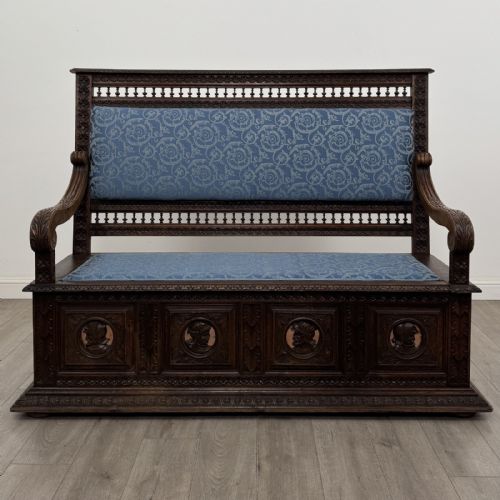
Surfaces show various finishes including traditional wax, applied paint in colours such as grey, black, cream, and blue, or stripped golden oak. Occasional details introduce iron and brass hardware or leatherette upholstery to enhance the seating.
Cabinet makers and country joiners built these items to withstand heavy use, utilising thick timber boards for seats and storage boxes. Structural integrity often depends on the quality of the original pegged joints and boarded backs.
Wooden Monks Bench Retail Price Guide 2026
Typical asking prices for wooden monks bench among the pieces listed under this phrase on Sellingantiques today, from the lower quarter to the upper quarter. They describe what is for sale here now, not the wider market.
Listings span periods from the 17th century through the Victorian era, utilising oak, pine, elm, and ash.
What varies in quality
Depth of carving and refinement of panel work distinguish simpler utility seating from the finest country house commissions. The crispness of geometric mouldings and the balance of high backs show the maker's hand.
The choice and integrity of the primary timber dictate the longevity and appearance of the frame. Heavy, well-figured oak with original waxed surfaces holds a different presence compared to softer pine alternatives.
Proportion and scale affect desirability, particularly in smaller hall seats where retaining the original balance of arms, box base, and backrest requires precise joinery.
Liberty·Shapland and Petter
The Wooden Monks Bench Glossary
- Box settle
- A wooden bench featuring a high back and a concealed storage compartment beneath a lift-up seat. This dual-purpose form kept draughts away while holding household goods.
- Hall bench
- A narrow seating form placed in entryways and corridors for temporary use. These pieces often incorporate storage for garments or boots.
- Panel-back
- A construction method using thin wooden boards fitted within a grooved frame. This technique prevents warping while offering a decorated flat surface.
- Jacobean Revival
- A later 19th or early 20th century style copying 17th century motifs. Pieces in this style frequently display heavy carving and dark wax finishes.
- Box-seated
- A description for furniture where the base forms a hollow chest with a lid. It provides substantial internal capacity beneath the seating area.
Wooden Monks Bench: Frequently Asked Questions
How were these benches used?
These benches were placed in hallways and living spaces to provide family seating while blocking cold draughts from exterior doors. The integrated box compartment underneath the seat held blankets, linen, or household items.
In daily life, they acted as primary seats near the hearth or near the entrance of a home. Their robust construction allowed them to endure generations of constant domestic use.
How do I live with one?
Placing a wooden monks bench in a hallway or kitchen creates an immediate focal point while offering functional storage for everyday items. Ensure the piece sits away from direct heat sources to protect the historic timber.
Keep the wood conditioned with traditional wax to maintain the finish of the oak or pine. The internal storage box remains as useful today for blankets and shoes as it was centuries ago.
How can I tell the periods apart?
Earlier pieces from the 17th and 18th centuries typically feature heavy oak construction, pegged joints, and deep panel carving. Victorian and later examples often introduce softer pine, painted finishes, or lighter proportions.
Stylistic cues such as Jacobean Revival motifs or Arts and Crafts lines help anchor pieces to the 19th or early 20th centuries. Examining the construction of the box base and the wear on the seat surface also aids in dating.