
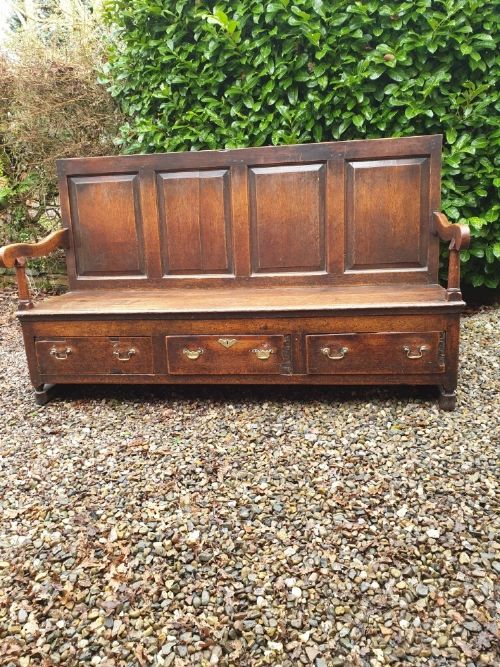
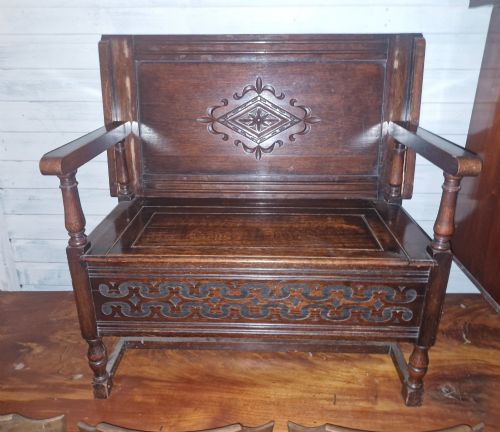
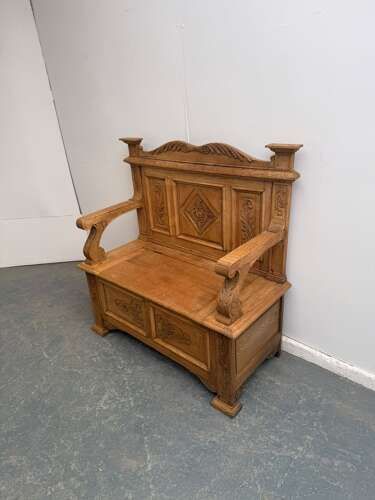
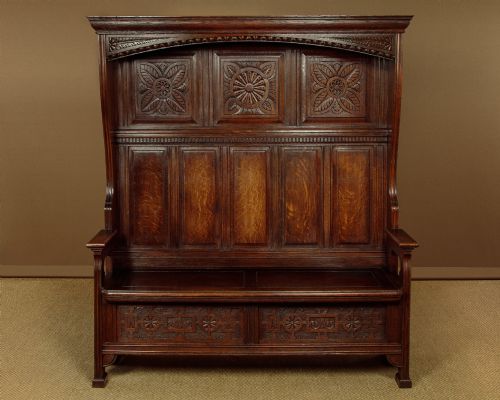
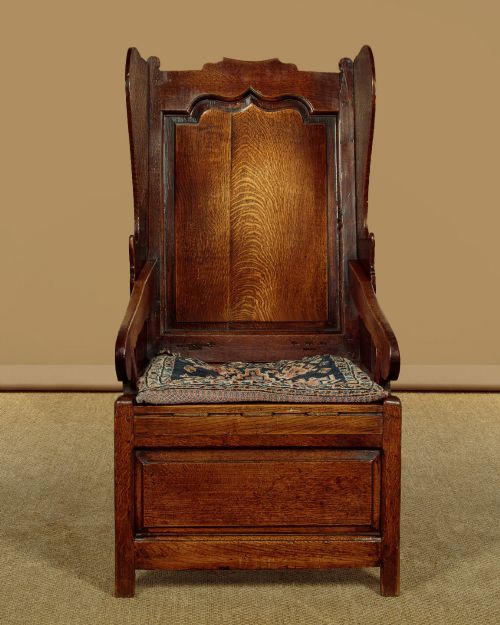
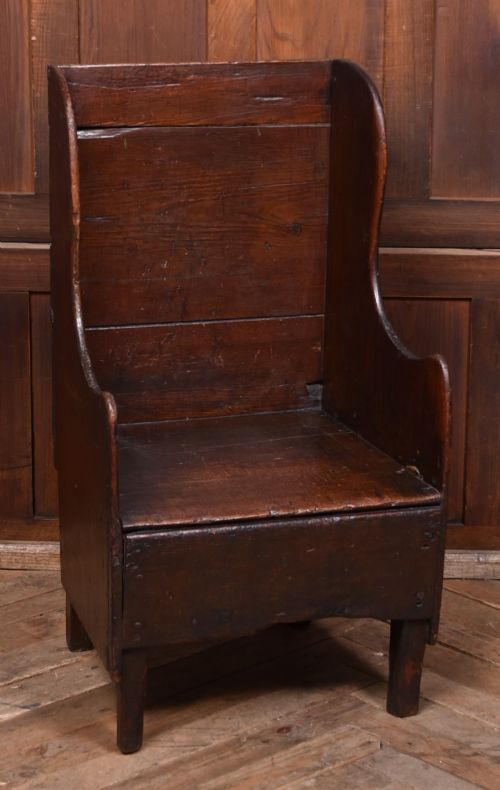
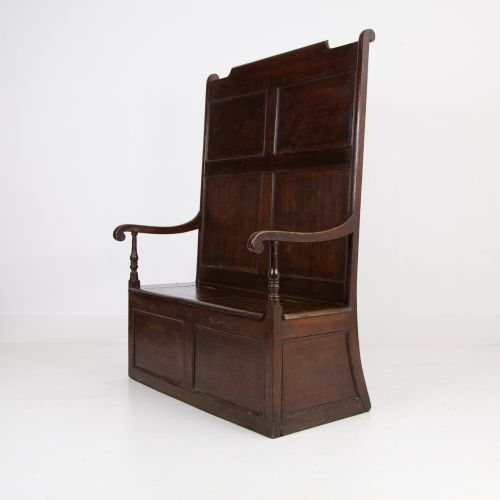
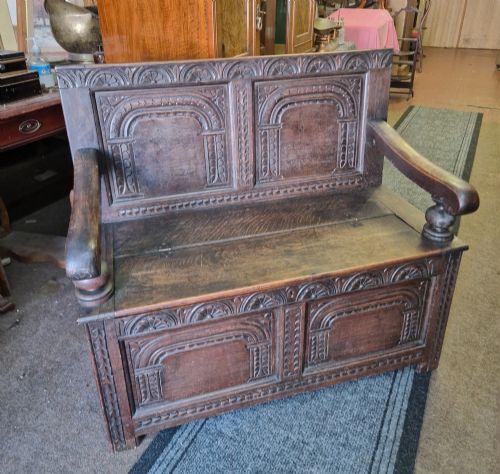
Oak Box Settle
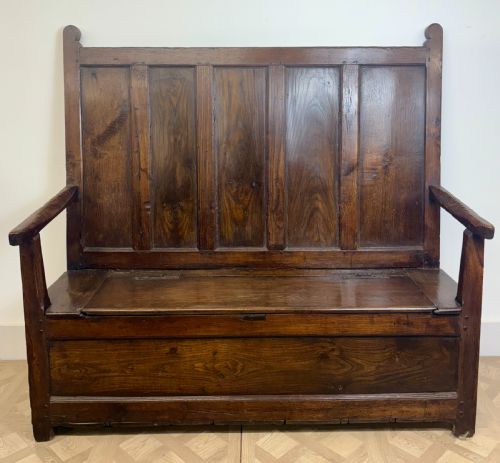
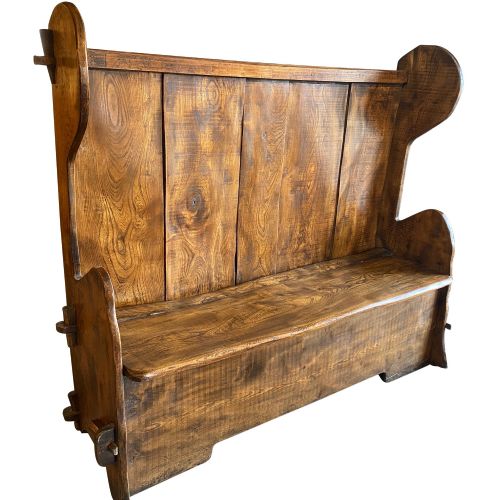
An oak box settle combines a high-backed wooden seat with a concealed storage compartment beneath, offering both a draught-excluding hall bench and a sturdy chest.
Oak Box Settle
Most examples encountered on this page date from the 17th, 18th, and 19th centuries, alongside later revival pieces from the Edwardian period and the early 20th century. Regional forms, such as those from Wales or the North Country, often display distinct structural proportions and panel arrangements.
How they were made
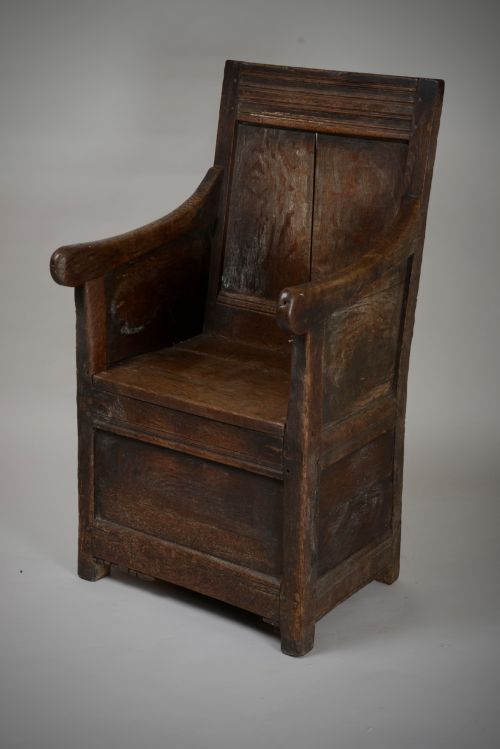
Makers constructed these settles primarily from solid native hardwoods, utilising sturdy oak for the main frame, panels, and structural box base. Secondary timbers such as elm, ash, and fruitwood appear frequently in regional vernacular pieces and chair-form variants.
Traditional joinery techniques relied heavily on mortise and tenon joints secured with wooden pegs, ensuring the framework could withstand heavy daily use. Panels were typically held within grooved frames to allow for natural wood movement as humidity and temperature fluctuated.
Oak Box Settle Retail Price Guide 2026
Typical asking prices for oak box settle among the pieces listed under this phrase on Sellingantiques today, from the lower quarter to the upper quarter. They describe what is for sale here now, not the wider market.
Some country examples include lift-up lids and fold-over tops designed to confuse anyone looking for a simple place to sit.
What varies in quality
The integrity of the structural timber and the degree of original patination heavily influence the distinction between standard utilitarian items and finer examples. Pieces retaining their original board seats, hinges, and unblemished box bases command greater appreciation among collectors.
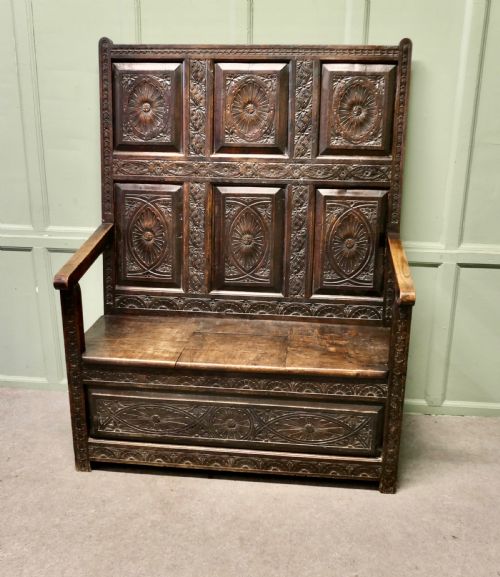
Carving depth, detail, and proportion set individual pieces apart, ranging from simple geometric panel work to elaborate Jacobean revival motifs or Arts and Crafts ornamentation. The balance between the height of the backrest and the scale of the base dictates the overall visual harmony.
The Oak Box Settle Glossary
- Settle
- A wooden bench with a high back and solid arms, designed to shield occupants from cold draughts in early homes.
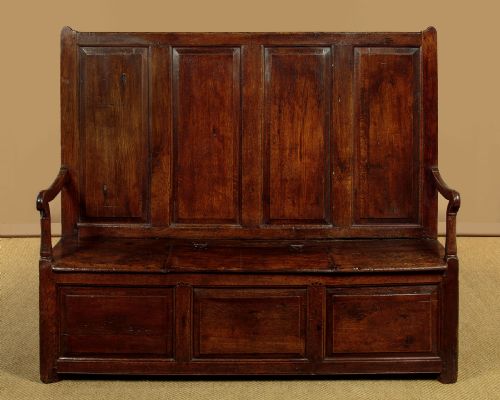
- Box settle
- A variation featuring a concealed storage compartment beneath the lift-up seat, combining a chest with a bench.
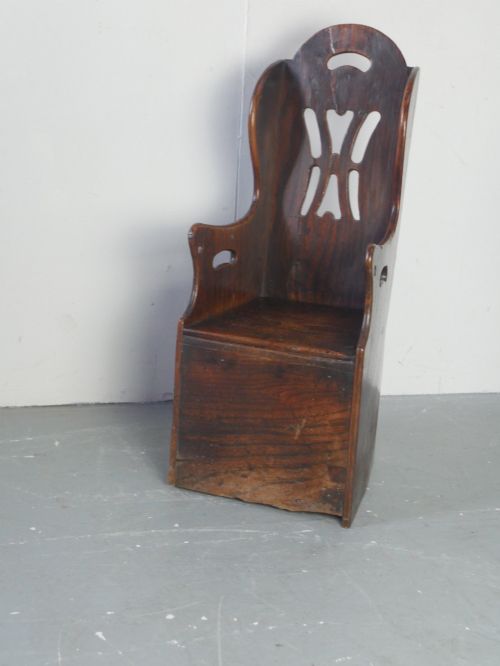
- Lambing chair
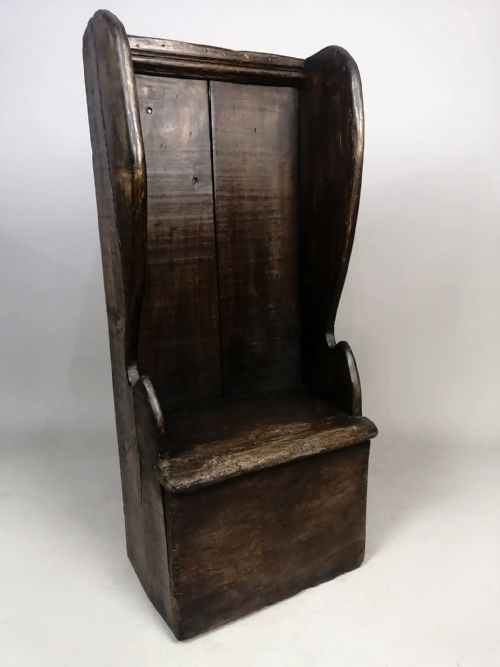
- An enclosed wooden armchair, often featuring wings and a solid base, traditionally used by shepherds or placed near hearths.
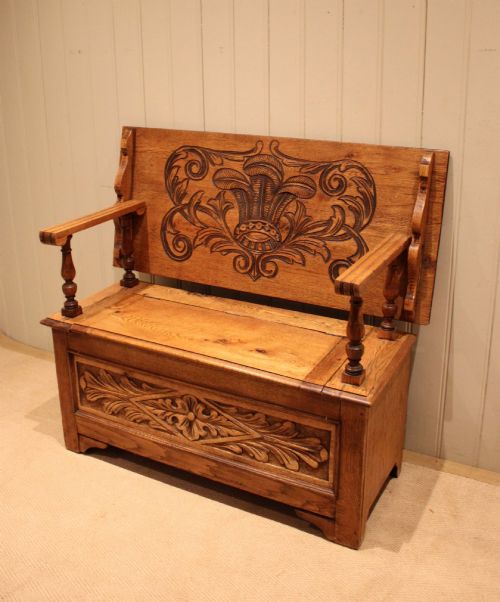
- Monks bench
- A convertible piece of furniture featuring a hinged back that folds down over the arms to form a table top.
- Vernacular furniture
- Domestic items built by local craftsmen using regional traditions and readily available native timbers rather than following strict classical academic designs.
Oak Box Settle: Frequently Asked Questions
How were box settles used originally?
These pieces served multiple domestic purposes in early kitchens, halls, and farmhouses. The high back shielded occupants from cold air circulating through drafty rooms.
The enclosed box beneath the seat stored household textiles, dry goods, or winter clothing while keeping items free from dust and pests.
How do I date an antique oak settle?
Dating relies on observing construction methods, joinery types, and the style of surface carving. Early 17th-century pieces often show hand-split panels and pegged mortise and tenon joints.
Later Victorian and Edwardian revival items frequently incorporate machine-sawn timber, lighter hardware, and standardised decorative motifs like the Green Man.
Where should I place a settle in my home?
A box settle fits well in spacious hallways, large kitchens, or living rooms where its high back creates a distinct architectural focal point. The internal storage remains practical for stowing shoes or blankets.
Ensuring adequate clearance for the hinged seat lid to open fully is the main consideration when positioning the piece.