




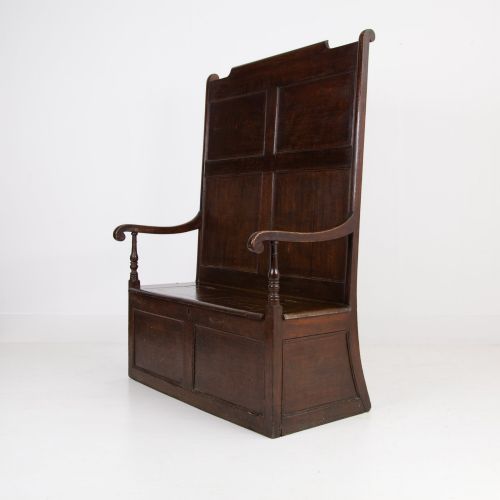
Panelled Oak Settle
A panelled oak settle is a heavy, high-backed wooden seat that anchored domestic life before the arrival of upholstered sofas.
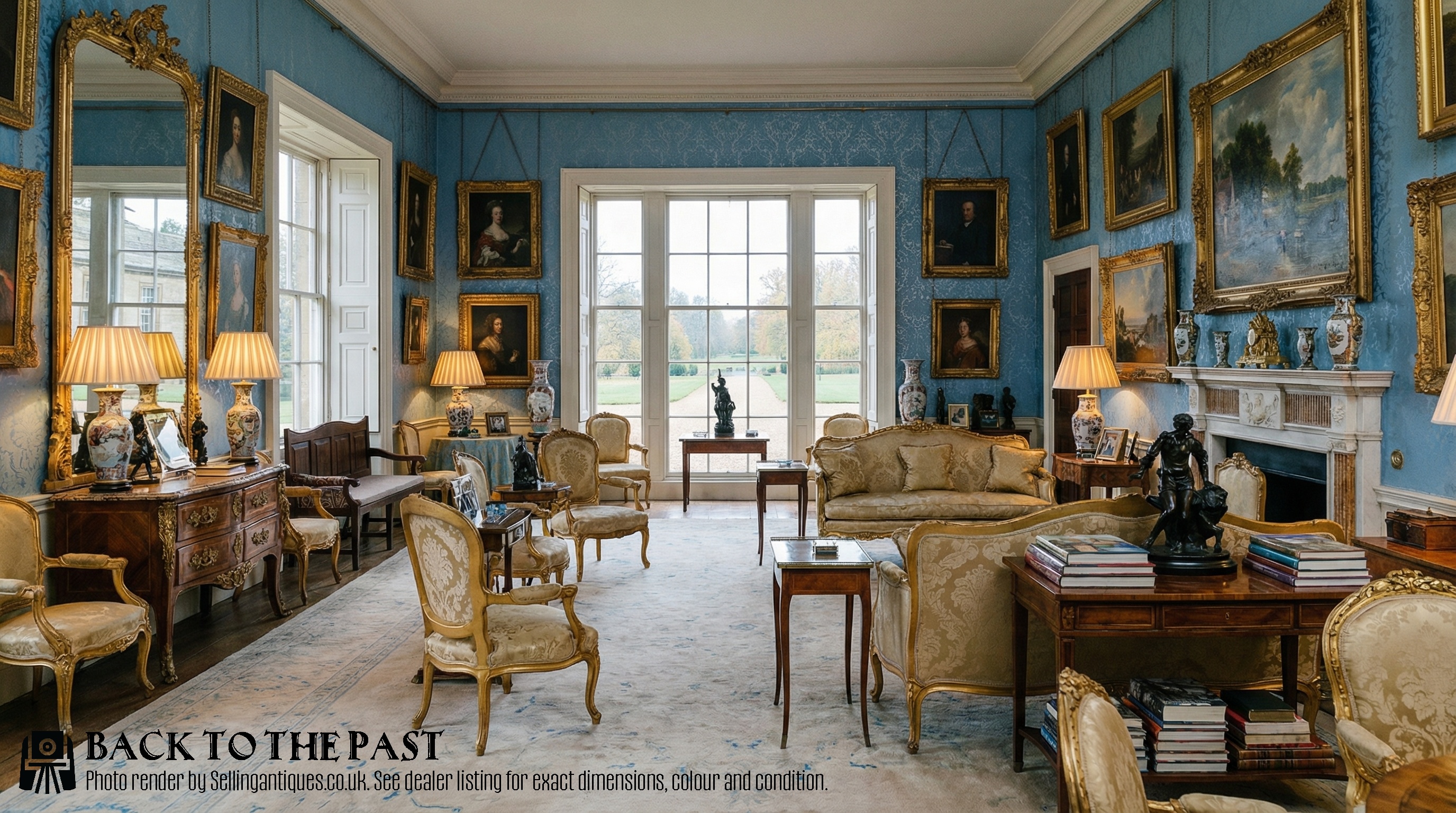
Panelled Oak Settle
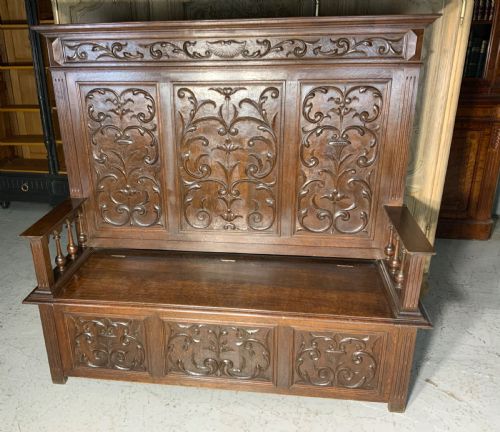
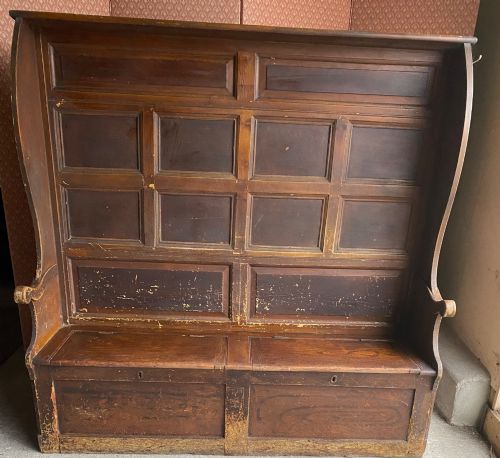
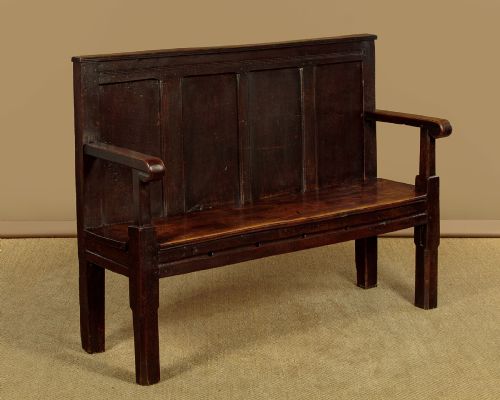
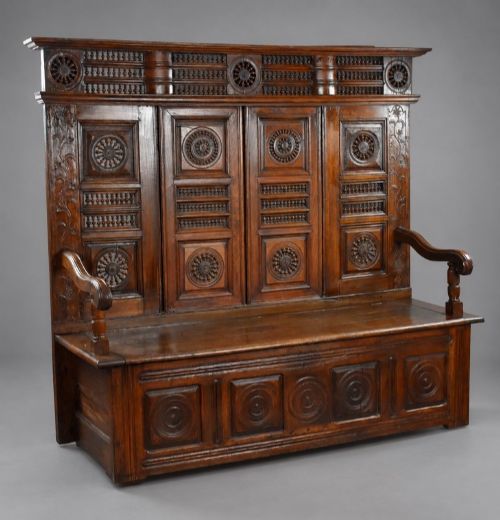
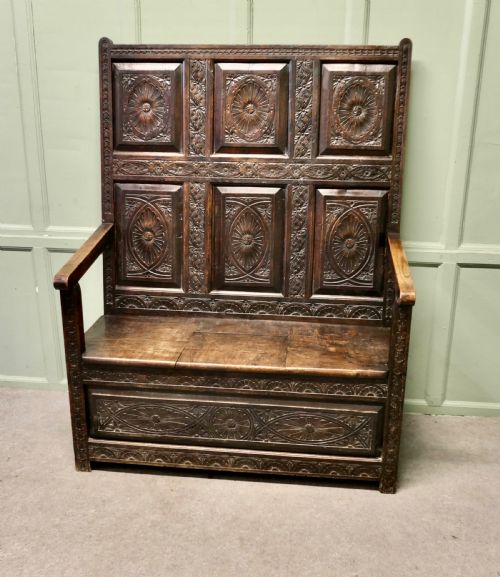
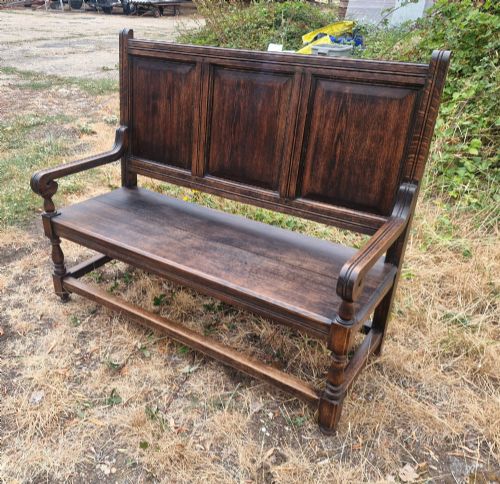
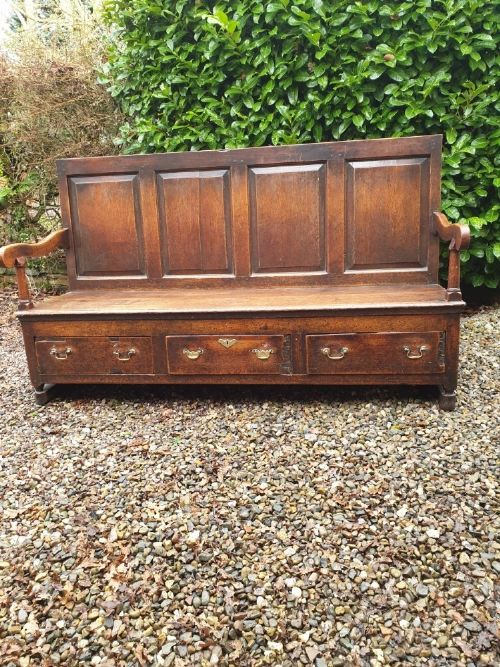
A panelled oak settle is a substantial wooden bench defined by a rigid back composed of fitted timber boards, designed to keep draughts away from the hearth. These seats appear most frequently in 18th-century country and Georgian vernacular forms, often featuring high panel-backs and enclosed box bases.
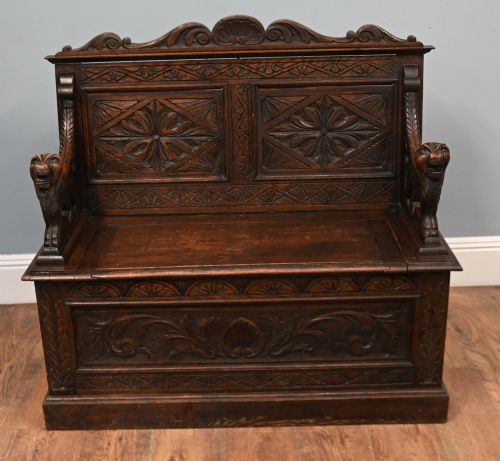
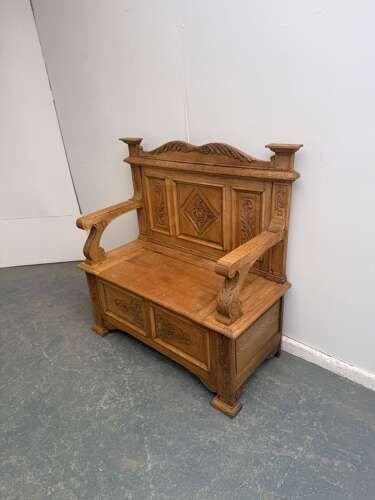
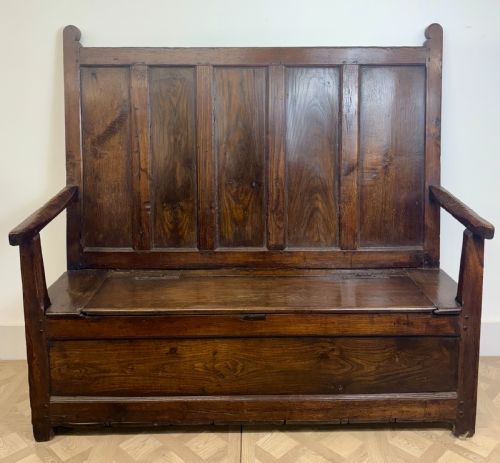
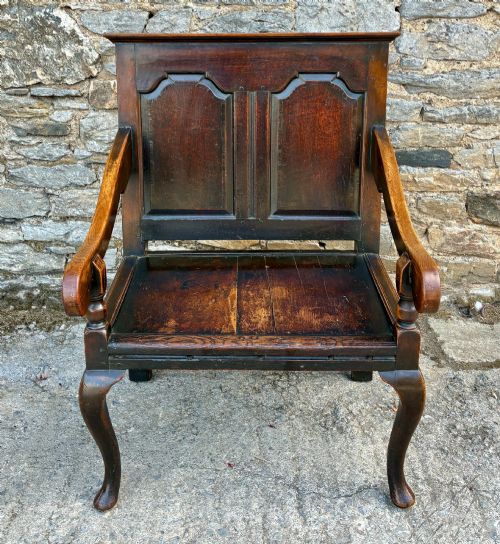
The selections available here range from early 17th-century North Country pieces to later Victorian revivals and country variations. Buyers encounter everything from simple five-panelled high-back designs to smaller hall benches and regional lambing chairs with integrated storage compartments.
Regional diversity shapes these forms, with Welsh and northern English examples frequently incorporating enclosed box bases beneath the seat for domestic storage. Shorter hall benches and narrow variations also emerge, serving functional seating roles in entranceways and corridors.
Materials and construction methods
Makers relied primarily on solid oak, supplemented occasionally by secondary timbers like ash, utilising traditional peg-joined frame and panel construction. This time-tested technique allowed the wood to expand and contract with seasonal changes in temperature without splitting the primary panels.
Joiners shaped the timber using hand tools, assembling the backboards within grooved frames and frequently securing structural joints with wooden pegs rather than metal nails. Surfaces often display the subtle tool marks of adzes and hand planes, which give the wood its distinctive tactile quality.
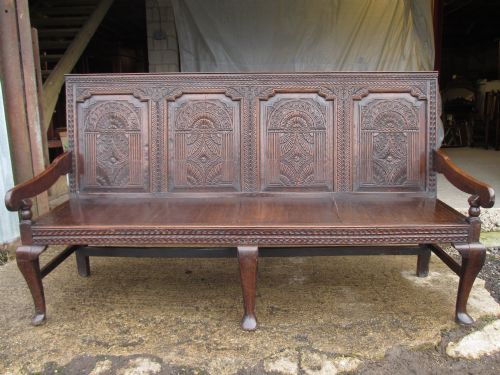
Carving, scrolling, and wood inlay appear on selected examples, ranging from simple geometric punched decoration to elaborate floral motifs and Flemish-influenced relief work. Secondary materials such as brass hinges, iron fittings, leather studs, and occasional fabric or textile additions appear on specific variants.
Panelled Oak Settle Retail Price Guide 2026
Typical asking prices for panelled oak settle among the pieces listed under this phrase on Sellingantiques today, from the lower quarter to the upper quarter. They describe what is for sale here now, not the wider market.
Some regional box settles doubled as makeshift beds by the fire, keeping weary travellers warm beneath the watchful gaze of the kitchen cat.
Assessing quality and craftsmanship
Quality rests heavily on the integrity of the timber, the crispness of any hand-carved details, and the survival of original structural components like peg joints and seat bases. Pieces that retain their unaltered proportions and deep, patinated waxed surfaces command greater appreciation than those with replaced panels or modern timber repairs.
The architectural ambition of the back panel arrangement distinguishes simpler utilitarian forms from high-status country house commissions. Five-panel configurations with balanced proportions and well-executed stile-and-rail construction demonstrate the highest level of period joinery skill.
The Panelled Oak Settle Glossary
- Box settle
- A heavy wooden bench featuring an enclosed storage compartment beneath the seat, accessed by lifting the lid or via doors in the front plinth. This form kept household blankets and dry goods safe from damp stone floors.
- Lambing chair
- An enclosed wooden armchair or settle featuring high solid wings designed to shield the occupant from cold draughts near the hearth. These regional pieces frequently incorporate small side pockets or candle shelves.
- Peg joined
- A traditional method of securing mortise and tenon joints using cylindrical wooden pegs instead of metal fasteners. This allowed early furniture to flex naturally without fracturing the wood.
- Fielded panel
- A wooden panel with bevelled edges that thin out toward the perimeter to fit neatly into the surrounding frame groove. This technique reduced central weight while adding decorative depth to the backrest.
- Vernacular furniture
- Practical domestic items made by regional joiners using local materials rather than following rigid metropolitan fashion trends. These pieces reflect the specific daily needs and timber supplies of their local area.
Panelled Oak Settle: Frequently Asked Questions
What is a panelled oak settle?
A panelled oak settle is a traditional wooden bench with a high panelled back, designed to block cold air and provide sturdy seating in old houses. They were essential pieces of furniture before modern heating became common.
Most examples feature solid oak construction with box storage beneath the seat or high armrests. They served multiple purposes in communal rooms, combining seating with practical household storage.
Where were settles used?
Settles were traditionally placed close to the hearth in farmhouse kitchens, taverns, and country cottages to trap warmth from the fire. Their high backs and solid sides created a micro-climate against winter draughts.
Over time, smaller versions migrated to hallways and entrance passages for day-to-day use. They provided a convenient place to sit while removing boots or waiting for guests.
How do I date a wooden settle?
Dating relies on examining construction techniques, timber characteristics, tool marks, and stylistic clues within the panels. 17th-century examples often feature heavier framing, geometric mouldings, and peg-joined construction.
18th-century and Georgian pieces generally show lighter proportions, fielded panels, and regional stylistic flourishes. Later Victorian and Edwardian items often imitate these earlier periods through decorative machine carving and altered patination.
How do I care for antique oak?
Antique oak benefits from stable indoor humidity and protection from direct sunlight and modern heat sources. Sudden temperature changes can cause old timber and historic joints to warp or split.
Applying a traditional beeswax polish occasionally helps nourish the dry wood and maintain its surface sheen. Avoid harsh chemical cleaners that strip the historic wax and natural patina accumulated over centuries.