
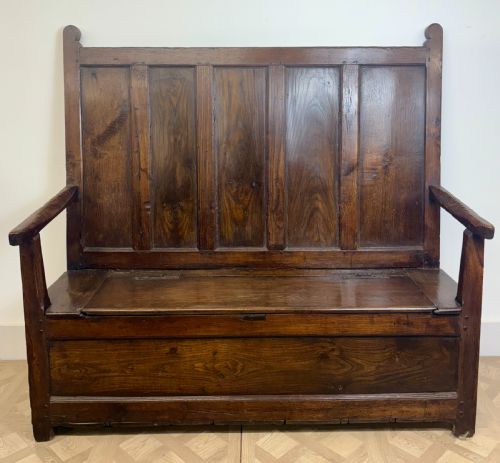
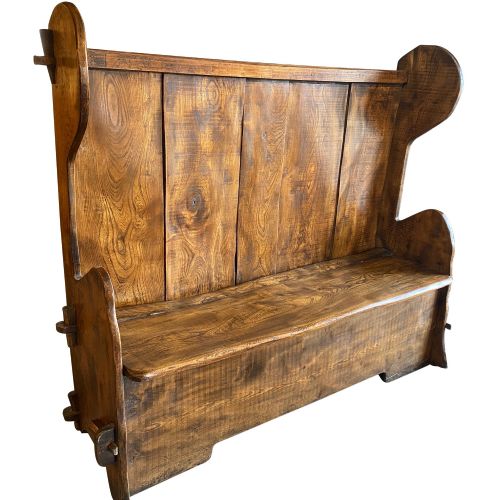
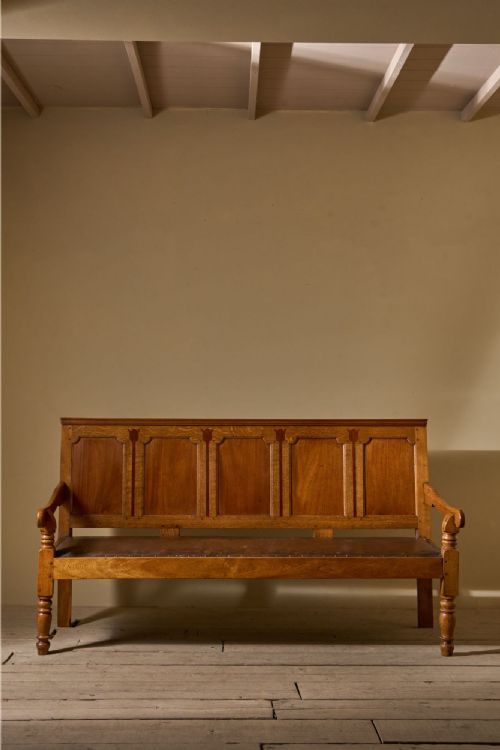
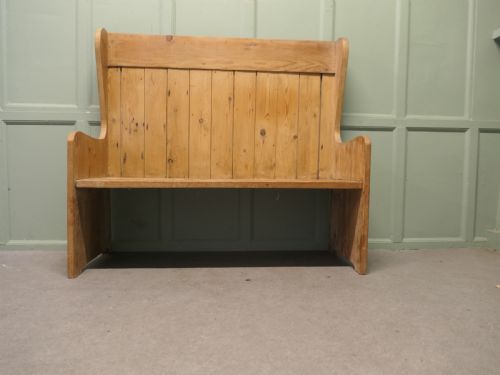
High Back Bench
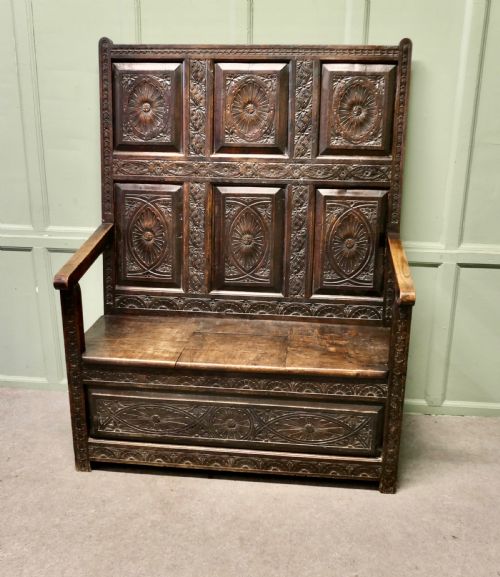
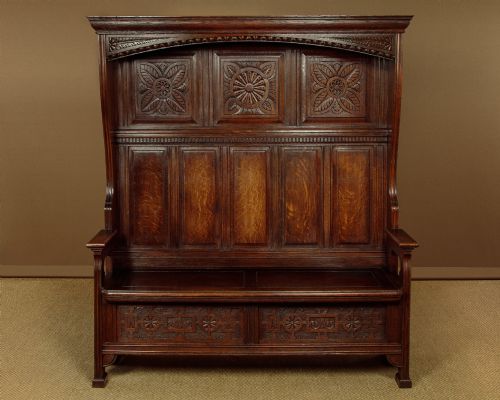
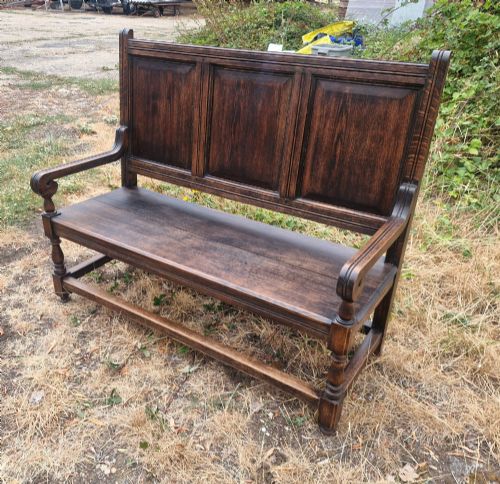
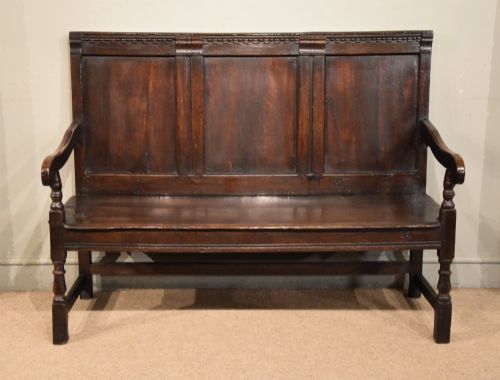
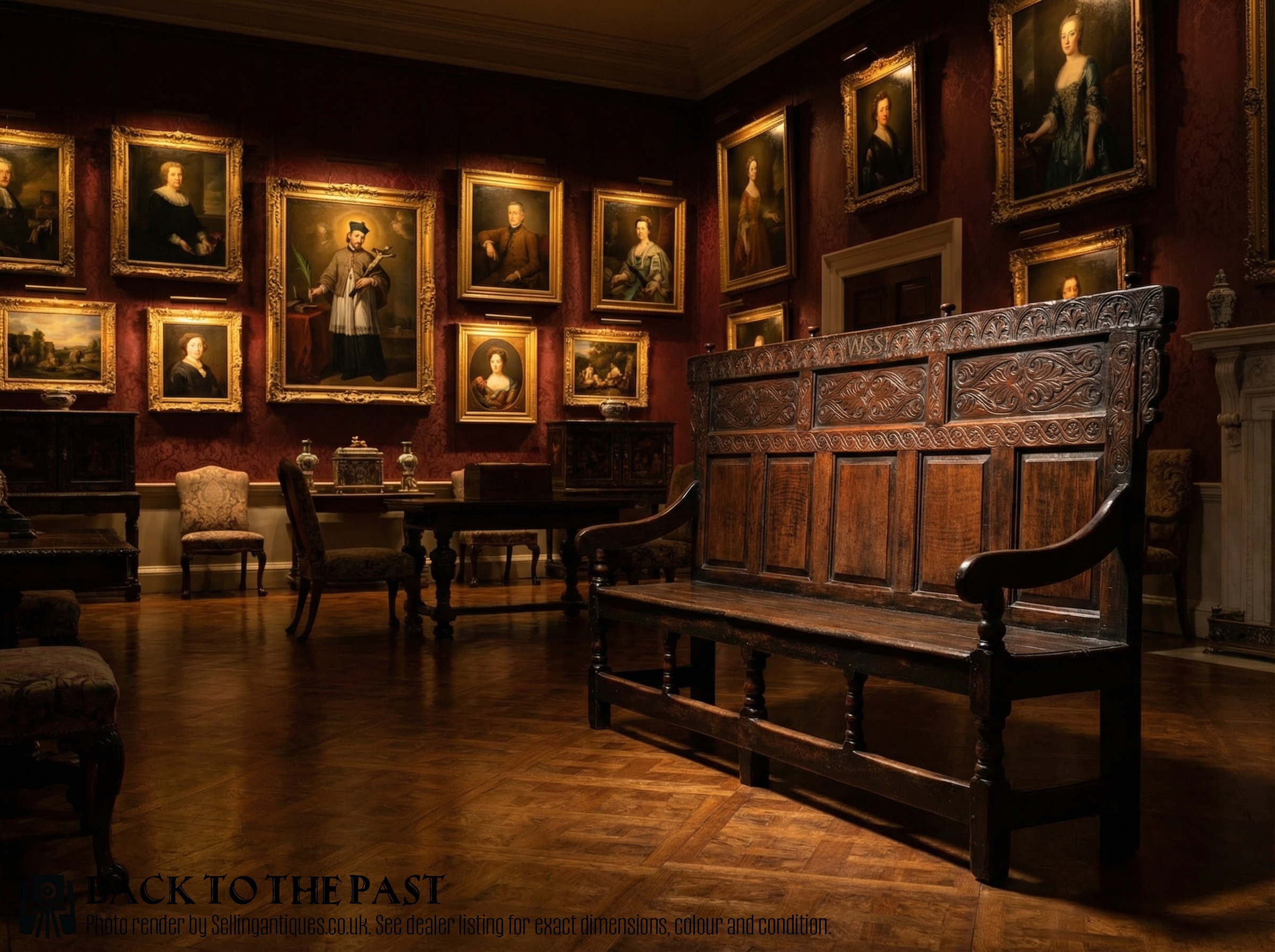
A high back bench provides solid historic seating, offering substantial timber frames and enclosed seats designed to block draughts by the hearth.
What they are
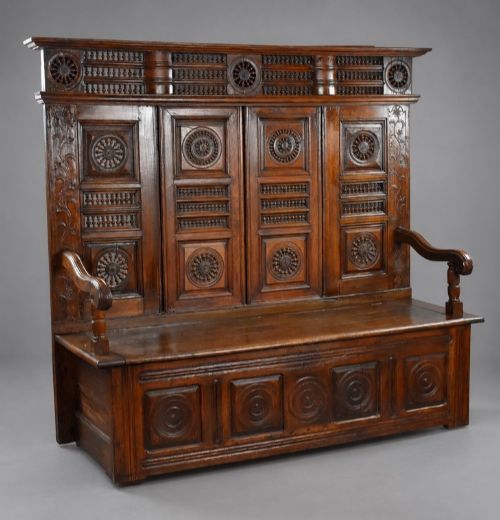
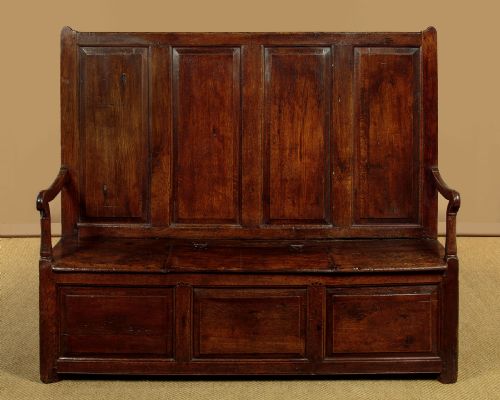
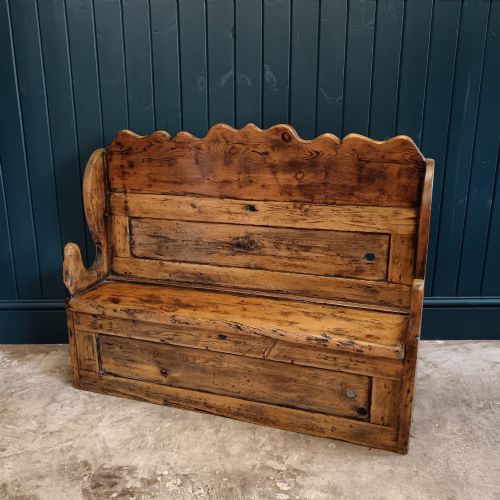
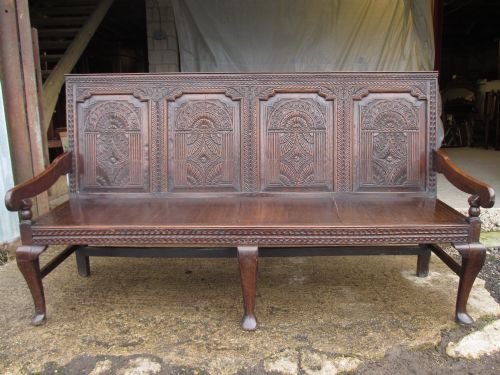
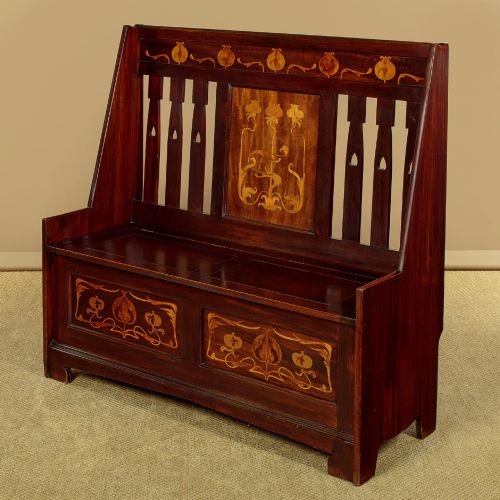
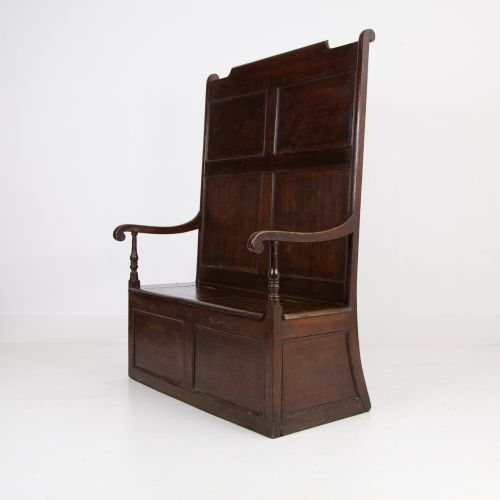
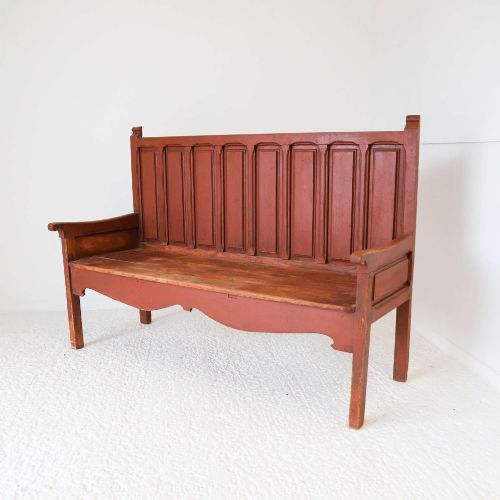
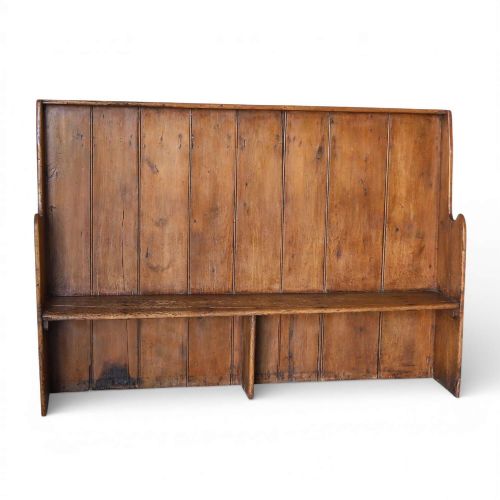
A high back bench is primarily represented on this page by settles and hall benches originating from periods spanning the seventeenth century through to the nineteenth century. These sturdy wooden seats frequently incorporate box compartments beneath the seating area for storage.
Makers designed these robust items for communal spaces like kitchens and halls, utilising architectural forms suited to British, French, Italian and Welsh vernacular traditions. Examples range from plain panels to heavily carved surfaces reflecting Gothic Revival and Victorian tastes.
How they were made
Carpenters constructed these seats predominantly from solid hardwoods and softwoods including oak, walnut, pine and pitch pine. Panels were typically joined using traditional techniques to form the tall protective backs and enclosed bases.
Surface decoration relies on hand carving, featuring recessed panels and figural details like the green man motif. Later or modified examples introduce upholstered elements using cotton, linen and fabric.
Retail Price Guide 2026
Typical UK retail prices for high back bench, calculated from the Sellingantiques database of over a million retail prices indexed since 2003. This retail price guide relies exclusively on Sellingantiques data; no external sources or auction records are used, so the figures do not describe the wider market.
Listings feature oak, walnut, pine, and pitch pine across centuries ranging from the seventeenth to the twentieth.
What varies in quality
The degree of articulation in the timber carving distinguishes simpler utility items from more elaborate parlour or hall pieces. Crisp depth in relief panels and original joined construction rather than later adaptation determine the integrity of the piece.
The choice and thickness of primary timbers, such as dense seventeenth century oak versus later pine or pitch pine, alter the visual weight and structural presence of the bench.
Emma Grant
The High Back Bench Glossary
- Settle
- A wooden bench with a high back and solid arms, often featuring a box compartment beneath the seat for storage. This form served to keep occupants warm by blocking cold air drafts in traditional dwellings.
- Box settle
- A variant of the bench incorporating a hinged seat lid that opens to reveal a deep storage well. It combines seating with domestic containment.
- Vernacular
- Architecture and furniture built by local craftsmen using regional traditions and readily available materials rather than high style academic designs. This approach defines much of the country furniture found here.
- Green man
- A sculptural motif representing a human face surrounded by or sprouting from foliage. It appears carved into the woodwork of Victorian and earlier revival pieces.
Frequently Asked Questions
What is a high back bench used for?
These pieces functioned historically as seating near hearths in kitchens and halls, where the tall barrier shielded occupants from cold draughts. The enclosed base also provided secure household storage.
Today, they serve as substantial hallway furniture or statement seating in large rooms, maintaining their original dual purpose of shelter and utility.
How do I date a high back bench?
Dating relies on timber selection, construction methods and carved decorative motifs. Seventeenth and eighteenth century examples typically feature joined oak with pegged mortise and tenon joints.
Later Victorian and Gothic Revival pieces often display machine assisted elements, softer pines, or decorative flourishes like green man carvings that reflect nineteenth century historicism.
Are high back benches comfortable?
Their wooden seats and upright backs reflect utility design rather than modern ergonomic standards. They encourage an upright posture suited to dining or brief periods of rest.
Some examples include upholstered cushions or fabric elements, while others accept loose squabs to add softness to the firm wooden base.
Where were these benches made?
The pieces originate from various European traditions, with particular representation from British, Welsh, French and Italian workshops. Regional vernacular styles dictate the local woods and carving patterns used.
English and Welsh items often utilise native oak, whereas continental examples introduce regional woods and distinct panel proportions.