







Antique Oak Coffer Bench
These heavy timber seats with lift lids combine storage and seating, spanning from seventeenth-century provincial pieces to later revival furniture.
Antique Oak Coffer Bench
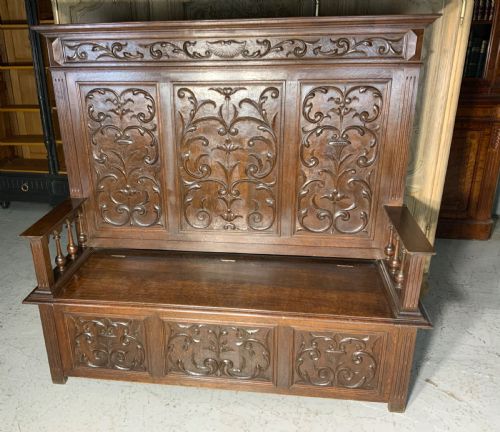
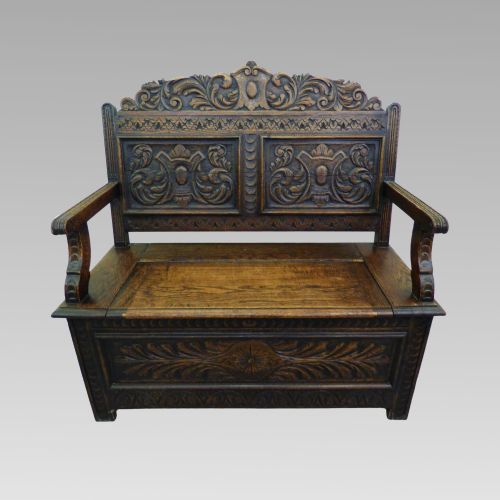
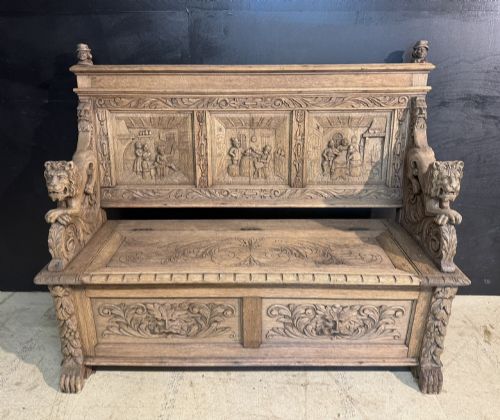
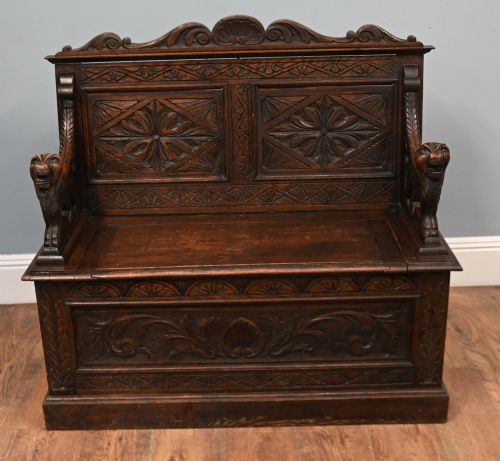
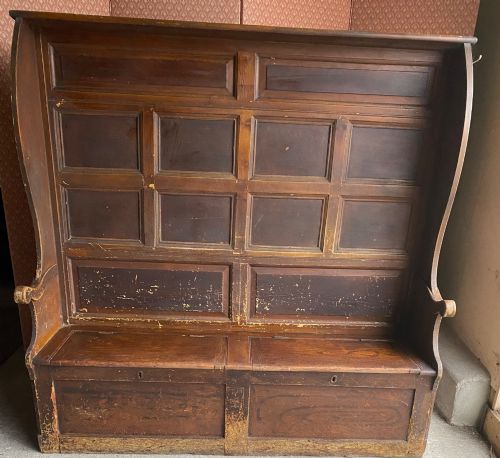
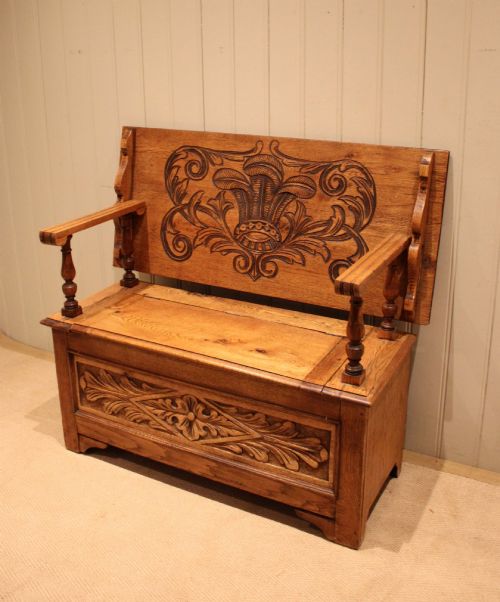
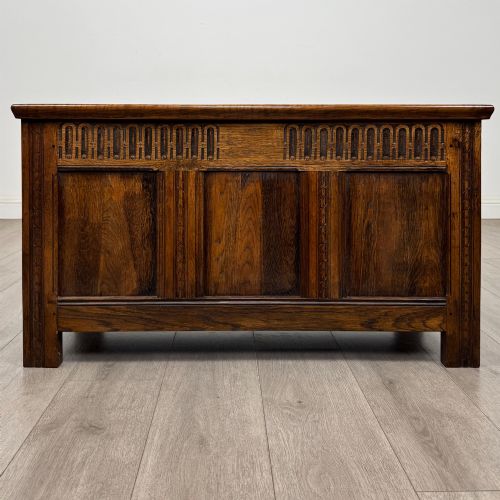
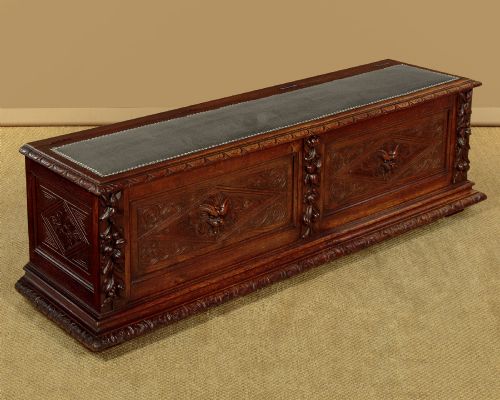
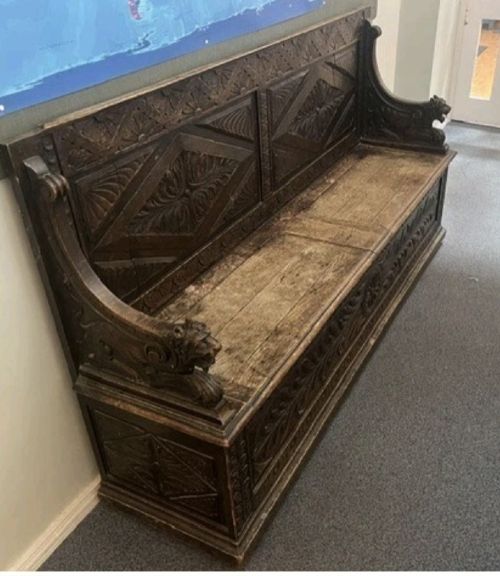
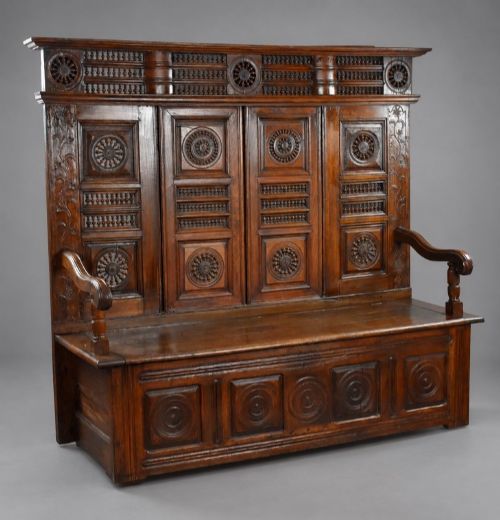
When searching for an antique oak coffer bench, buyers encounter a utilitarian domestic form that merges a storage box with a high or low seat. These hybrid objects take various names across the evidence, including box settles, hall benches, monks benches, and sword chests.
The pieces appearing on this page range from seventeenth-century provincial examples to Victorian and Edwardian revivals. High-back settles from the eighteenth century sit alongside compact twentieth-century hall seats with fold-over tops and storage compartments beneath.
Regional variations appear frequently, including Welsh and North Country pieces alongside continental European examples. Construction styles span from simple country vernacular to elaborate carved baronial and Renaissance revival designs.
Materials and construction methods
Timber selection centres firmly on solid oak, frequently paired with secondary woods such as ash in eighteenth-century pieces. Iron and brass hardware, including hinges, latches, and occasional mounts, provide functional reinforcement to the heavy timber frames.
Joinery relies on traditional methods suited to heavy wood, including panelled construction and pegged mortise and tenon joints. Carved ornamentation, where present, employs chip carving, panel moulding, and relief work depicting motifs such as the Green Man.
Antique Oak Coffer Bench Retail Price Guide 2026
Typical asking prices for oak coffer bench among the pieces listed under this phrase on Sellingantiques today, from the lower quarter to the upper quarter. They describe what is for sale here now, not the wider market.
Solid oak serves as the primary material across the inventory, occasionally supplemented by ash and secured with iron or brass hardware.
Factors separating standards of craftsmanship
Quality reveals itself in the weight and selection of the solid timber, alongside the crispness and depth of hand-carved relief work. Early seventeenth and eighteenth-century examples demonstrate tight joinery and proportional balance that distinguish them from mass-produced revival pieces.
The integrity of the lift-up seat mechanism and the survival of original iron or brass fittings influence the overall standard. Richness of surface tone, developed through centuries of waxing and handling, separates untouched vernacular surfaces from heavily restored timber.
Shapland & Petter·Liberty
The Antique Oak Coffer Bench Glossary
- Settle
- A wooden bench with a high back, solid arms, and a box seat designed to block draughts in older halls. The integrated storage compartment beneath the seat distinguishes a box settle from a standard bench.
- Monks bench
- A multifunctional hall seat featuring a hinged back that folds down to convert the piece into a table. This form appears across nineteenth and twentieth-century revival periods.
- Coffer
- A large wooden chest traditionally used for storing valuables, textiles, or documents. When fitted with arms and a back, it functions as a seat.
- Green Man
- A decorative architectural and furniture motif depicting a human face carved from or entwined with leaves and vines. This motif recurs frequently on carved Victorian and Edwardian oak seating.
- Vernacular
- Furniture built by local country joiners using regional traditions rather than metropolitan pattern books. These pieces prioritise functional utility over courtly style.
Antique Oak Coffer Bench: Frequently Asked Questions
What is an antique oak coffer bench used for?
These dual-purpose items provide both a hall seat and a concealed storage box for blankets, boots, or household goods. In historic settings, high-backed versions protected occupants from cold draughts near doors.
Today, they serve as practical entryway furniture that keeps hallways tidy while offering an immediate place to sit.
How do I date an antique oak coffer bench?
Dating relies on examining construction techniques, joinery marks, and the style of any carved ornamentation. Seventeenth-century examples typically show hand-split timber and pegged frame-and-panel construction.
Later Victorian and Edwardian revival pieces often display machine-sawn elements and softer pine secondary woods inside the storage boxes.
Are these benches comfortable to sit on?
Most historic box settles and hall benches feature rigid wooden seats designed for utility rather than lounging. Adding a loose fabric pad or cushion provides a softer seat for modern daily use.
The upright backs encourage good posture when sitting in an entrance hall or reception room.
Where should I place a coffer bench at home?
An entrance hall or boot room serves as the traditional and most practical location for storage seating. The lift lid allows easy access for footwear and accessories as you enter the house.
They also work well in large living rooms or dining spaces where extra seating and hidden storage are required.