

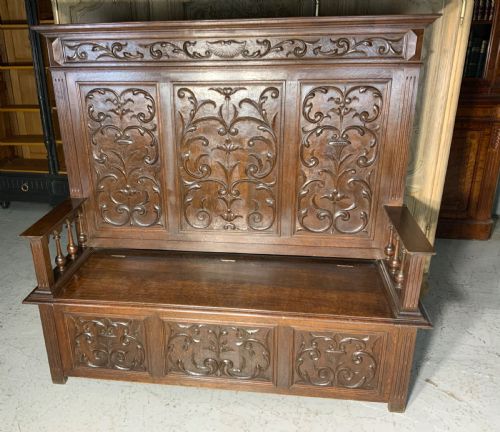

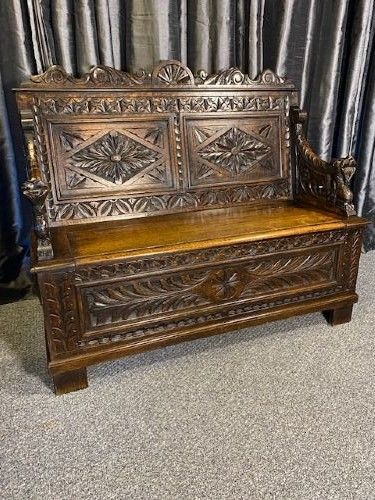
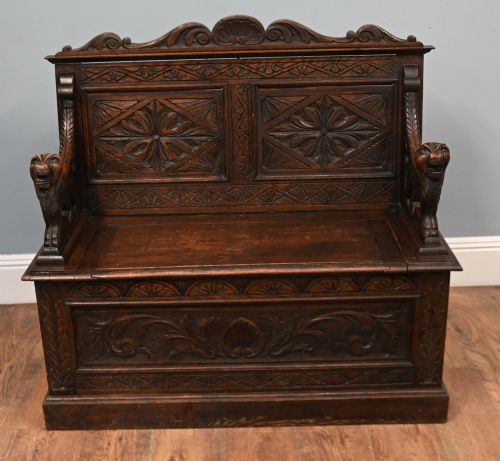
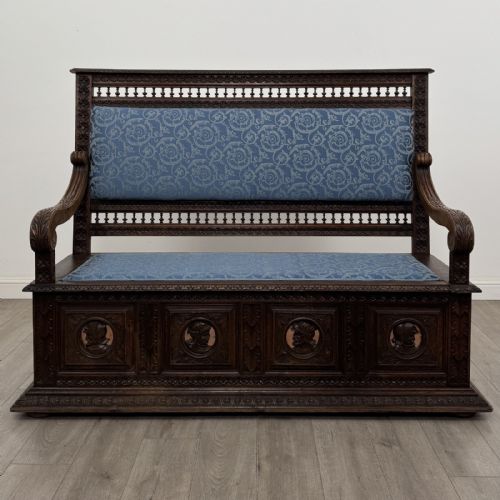
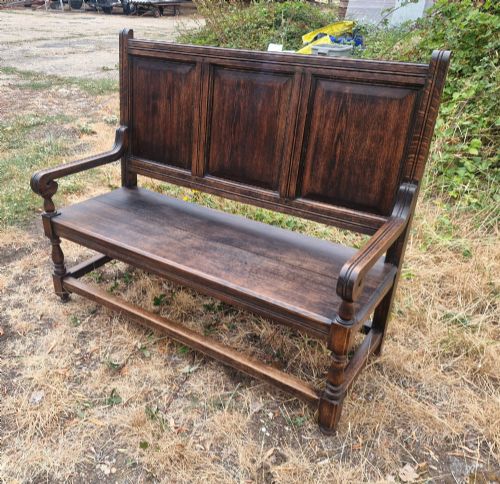
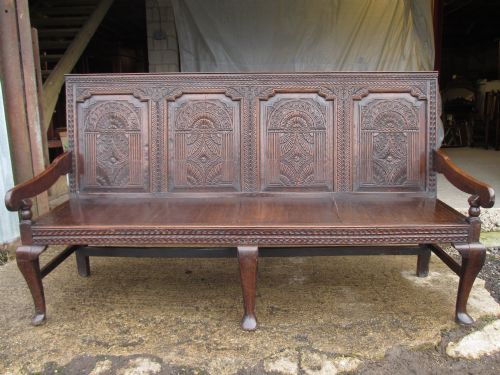
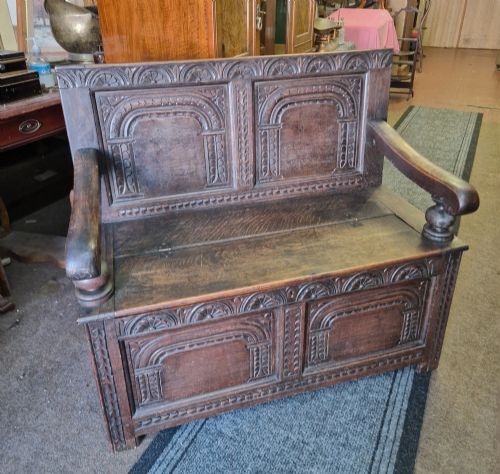
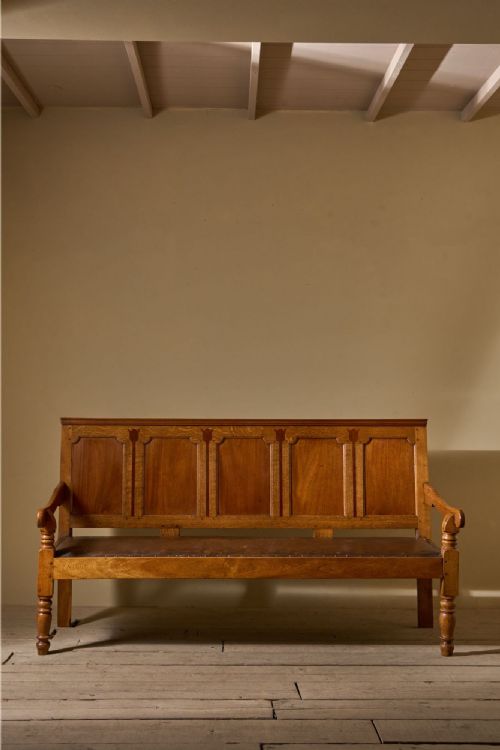


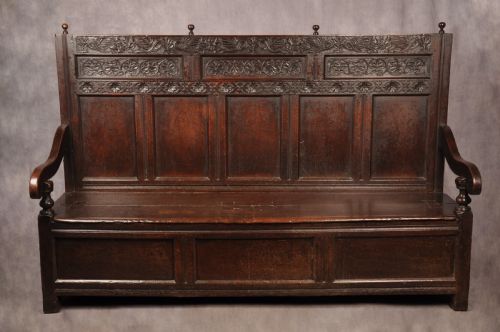
Carved Panel Oak Bench
A carved panel oak bench brings weight and enduring timber grain to an interior, offering practical seating paired with centuries of historical character.
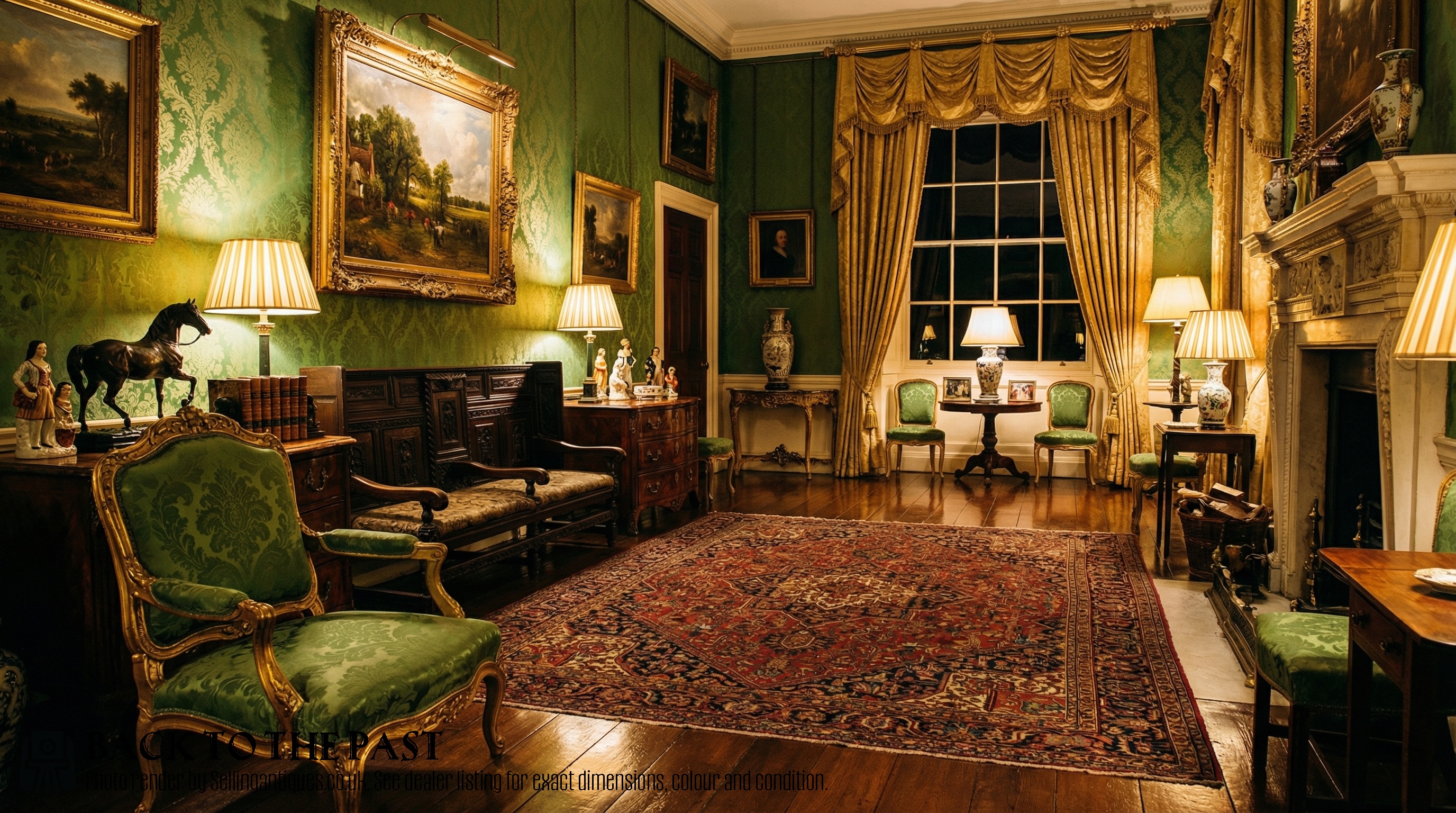
Carved Panel Oak Bench
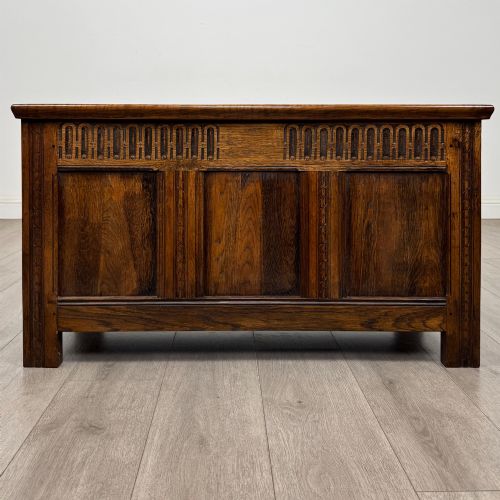
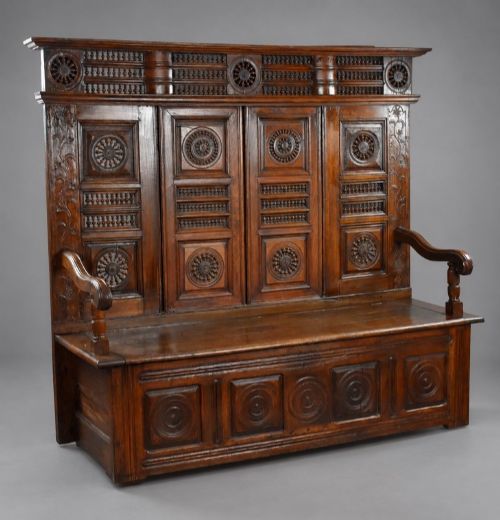
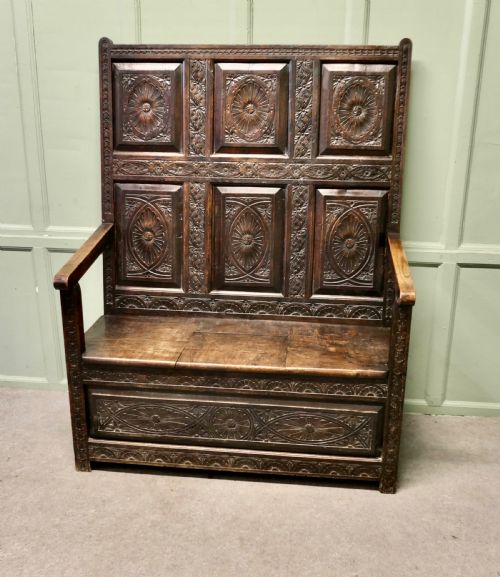
A carved panel oak bench spans several centuries of domestic and institutional furniture design, appearing as high back settles, hall seats, and box settles. These pieces combine substantial timber construction with recessed panels decorated with carved motifs, serving as both seating and storage within entrance halls and living spaces.
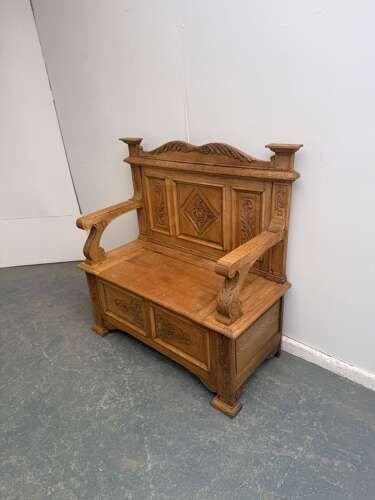
The versions most frequently met on this page date from the seventeenth, eighteenth, and nineteenth centuries, alongside revival pieces from the Edwardian era. These encompass regional styles such as country furniture and Gothic Revival designs, often featuring hinged seats that lift to reveal storage compartments beneath.
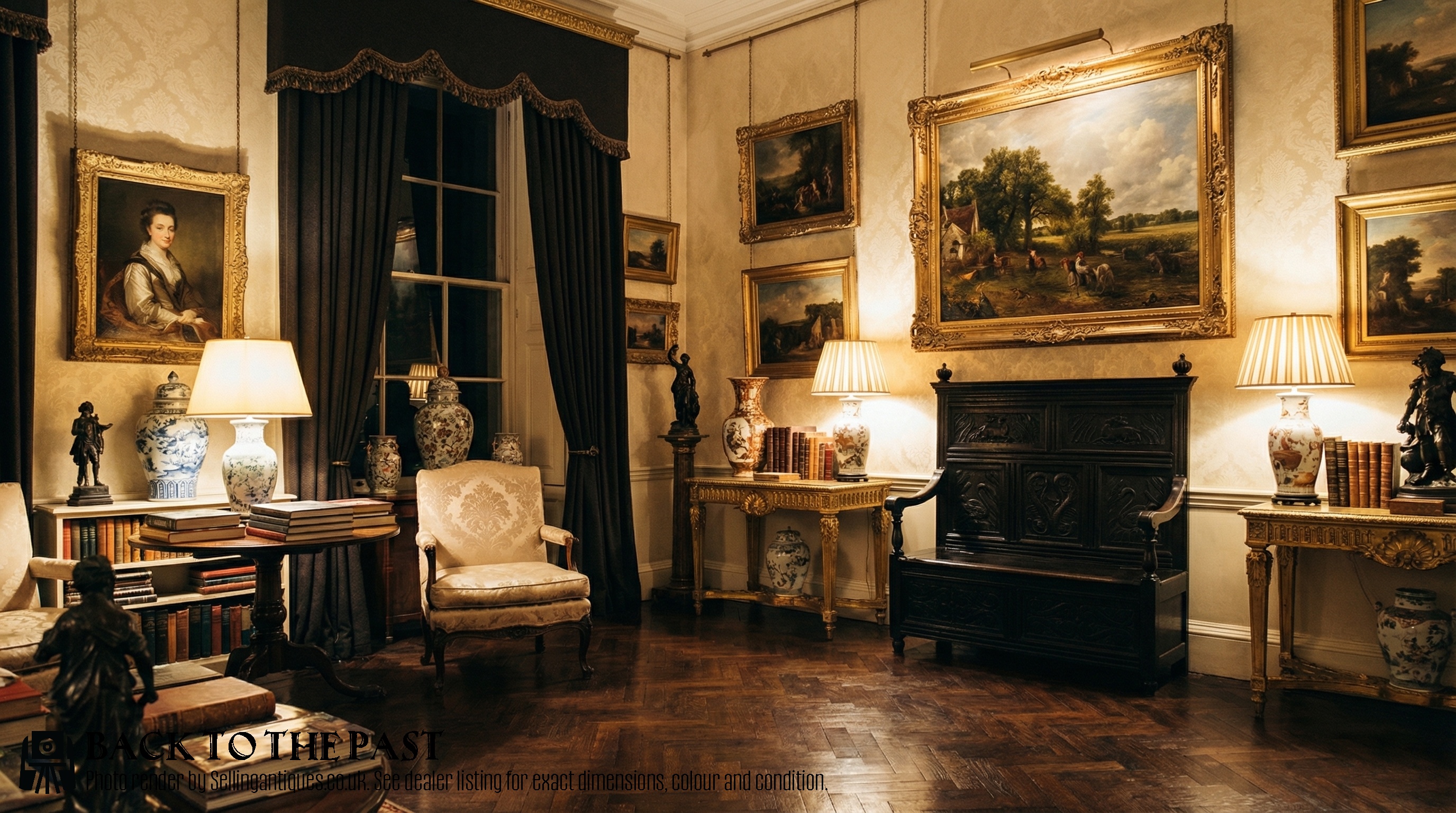
How they were made
Makers constructed these benches primarily using solid oak, employing traditional frame and panel joinery to accommodate the natural expansion and contraction of the timber. Secondary woods and materials such as fruitwood, iron hardware, and brass accents appear occasionally in the construction and fittings.
Surface decoration relies on hand chiselling and gouging to create relief panels, scrollwork, and geometric patterns. Finish is typically achieved through traditional waxing or polishing, which highlights the medullary rays and deep grain of the oak over decades of handling.
Carved Panel Oak Bench Retail Price Guide 2026
Typical asking prices for carved panel oak bench among the pieces listed under this phrase on Sellingantiques today, from the lower quarter to the upper quarter. They describe what is for sale here now, not the wider market.
The inventory encompasses regional vernacular forms, Gothic Revival styles, and Edwardian country seating.
What varies in quality
Quality rests primarily on the depth and crispness of the carving, where confident chisel work distinguishes master craftsmanship from simpler provincial output. The choice of timber grain and the integrity of the original joints also separate superior examples from heavily restored or later constructed pieces.
Proportion and scale dictate the visual success of the bench, with well-balanced arm supports and harmonious panel divisions holding greater interest than awkward proportions. The survival of original structural elements, such as hinges, floor feet, and seat boards, marks the difference between an intact survivor and a heavily altered hybrid.
The Carved Panel Oak Bench Glossary
- Settle
- A wooden bench with a high back, solid wooden seat, and arms, designed to keep draughts away from the sitter. They frequently incorporate a storage box beneath the seat.
- Box settle
- A variant of the settle featuring a enclosed storage compartment beneath the hinged seat. This form served a dual purpose in early homes for both seating and linen or blanket storage.
- Medullary ray
- A ribbon-shaped cellular structure radiating outward from the centre of a tree trunk. When oak is quarter-sawn, these rays create a distinctive silver-flecked figure across the timber surface.
- Gothic Revival
- An architectural and decorative style drawing inspiration from medieval forms. In furniture, this manifests in pointed arches, tracery, and heavy carved panelling.
- Frame and panel
- A method of construction where a central floating panel fits into a grooved outer frame. This technique allows the wood to expand and contract with humidity changes without splitting.
Carved Panel Oak Bench: Frequently Asked Questions
Where were settles placed?
These benches were traditionally positioned near the entrance door or beside the fireplace in the main hall of a dwelling. Their high backs and solid sides acted as windbreaks against draughts in large, cold rooms.
Over time, they transitioned into decorative hallway furniture or practical seating within country houses and ecclesiastical settings.
How do I date a settle?
Dating relies upon examining the construction methods, tool marks, and style of carving present on the frame. Seventeenth-century examples often display simpler joined construction with pegged tenons and deep, geometric chip carving.
Later Victorian and Edwardian revival pieces generally exhibit machine assistance, softer timber seasoning, or more eclectic decorative influences drawn from earlier periods.
Can I use one daily?
These benches are robustly constructed from solid hardwood and withstand regular daily use in modern hallways or kitchens. Adding a loose squab cushion improves comfort for extended sitting since the wooden seats are firm.
Care should be taken to place them away from direct heat sources to prevent the dry oak from splitting or warping over time.
What is a monk's bench?
A monk's bench is a multi-functional piece of furniture featuring a hinged back that folds down flat over the arms to form a table top. When upright, the piece functions as a traditional panelled seat with storage beneath.
Despite the romantic folklore surrounding the name, most surviving examples date from the nineteenth-century revival periods rather than medieval monasteries.