




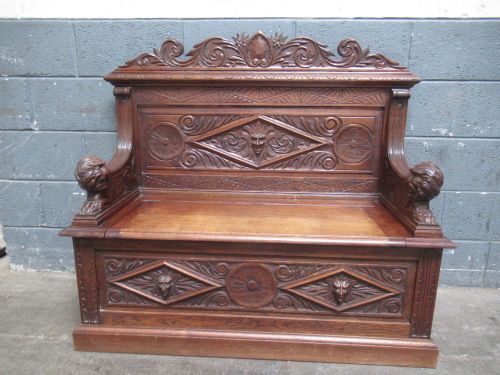
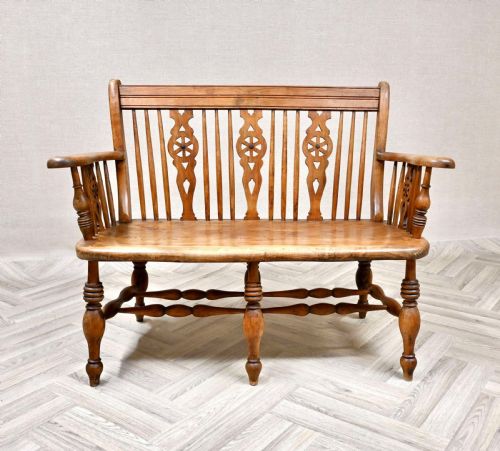
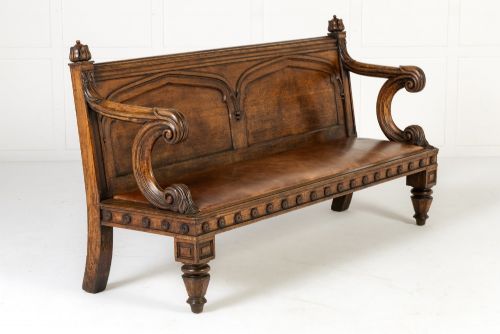

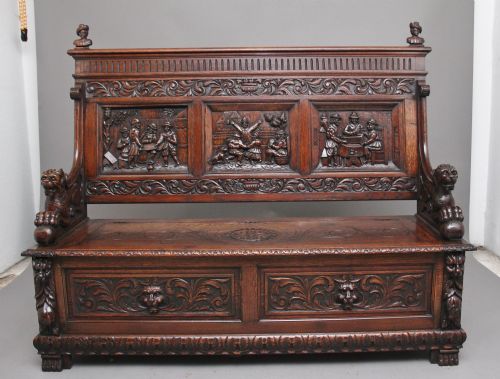
Victorian Carved Oak Settle
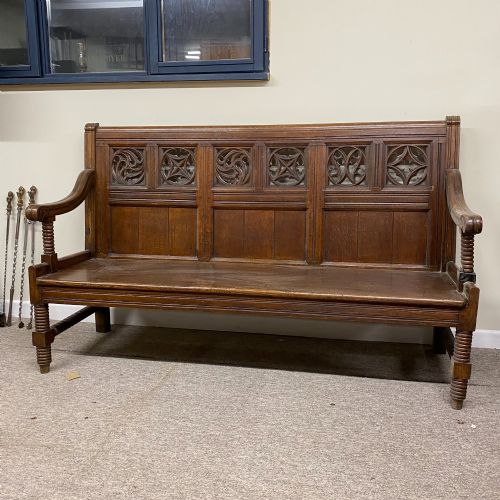
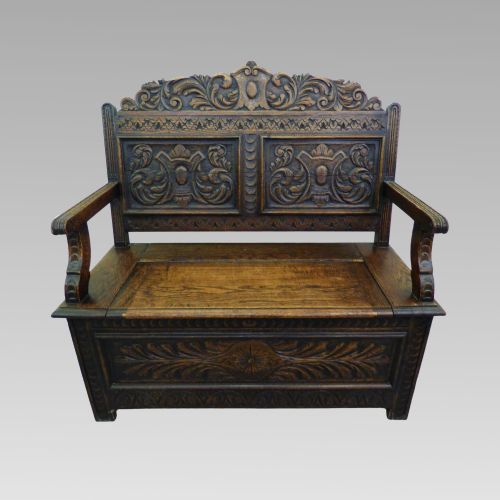
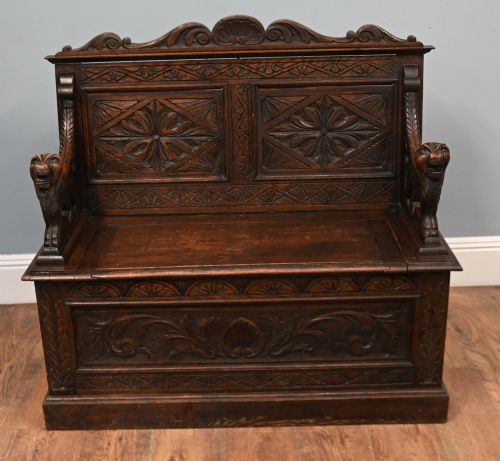
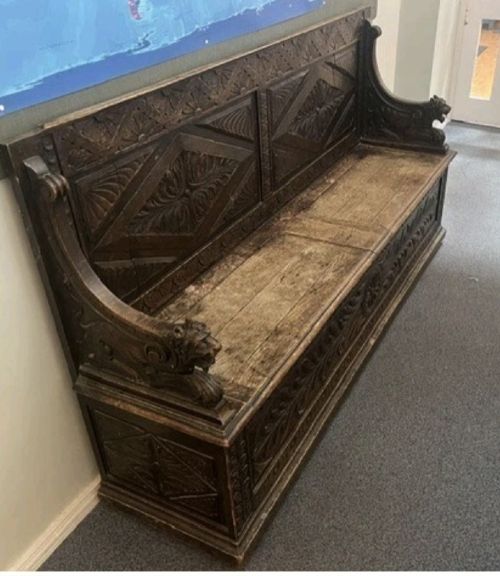
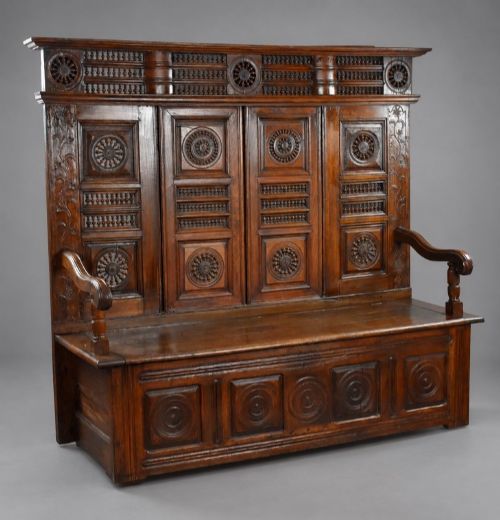
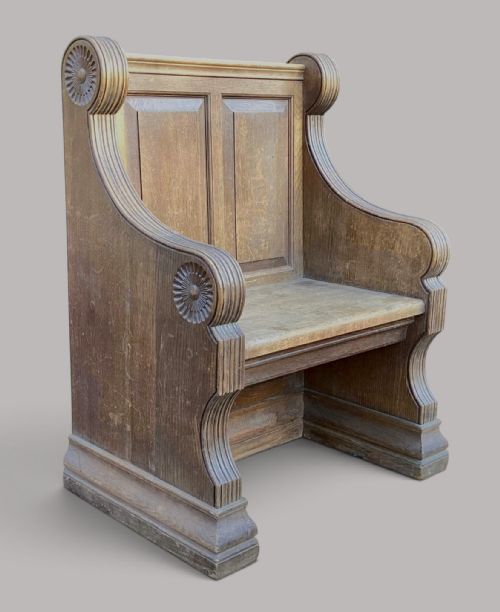
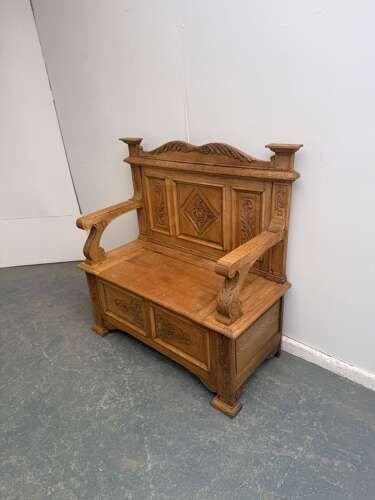
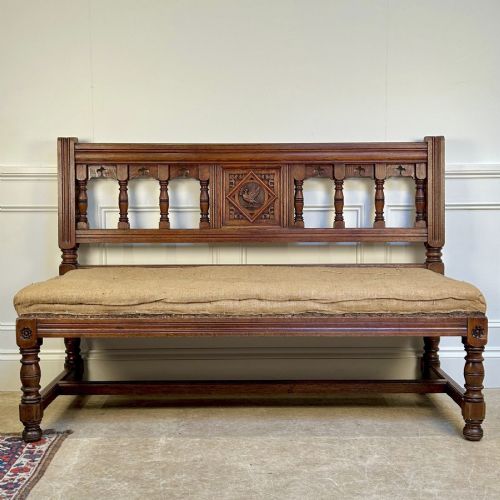
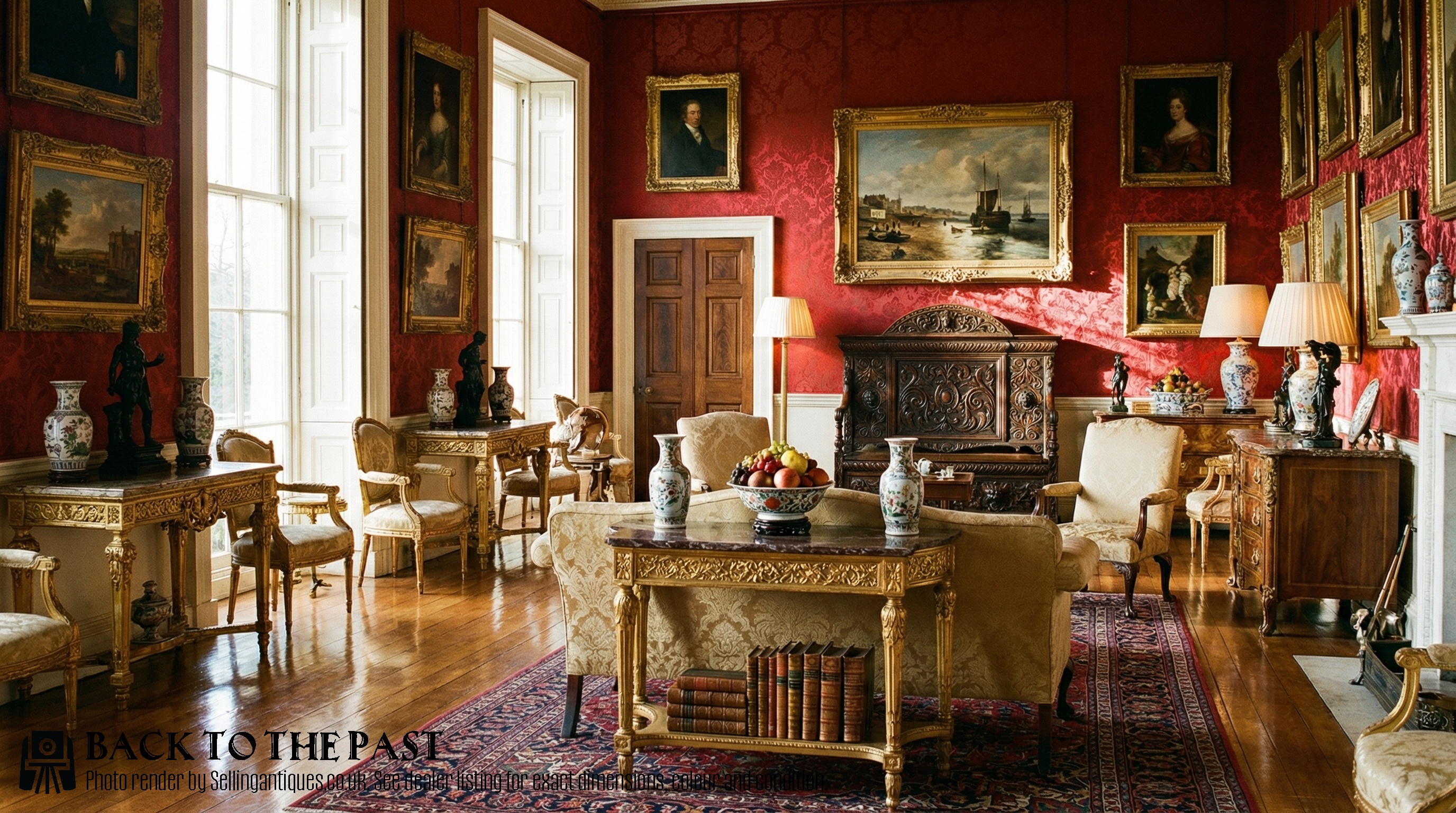
A victorian carved oak settle brings architectural presence and utilitarian storage to an entrance hall, offering high-backed seating shaped by historic revivals.
Victorian Carved Oak Settle
When searching for a victorian carved oak settle, buyers encounter robust wooden seats designed primarily for grand entrance halls and reception spaces. These pieces frequently double as monk's benches with folding table tops or box settles featuring lift-up lids for hidden storage.
The examples most commonly met on this page date from the nineteenth century, spanning from the mid-Victorian era through to later decades marked by revivalist movements. Makers drew heavily on earlier historical vocabularies, producing architectural forms that incorporate high panelled backs and substantial arm supports.
Object types on offer range from simpler country benches to imposing high-backed seats adorned with figural carvings and tracery. Regional English variations and Scottish baronial interpretations appear alongside pieces influenced by Gothic, Jacobean, and Renaissance revivals.
Materials and Construction
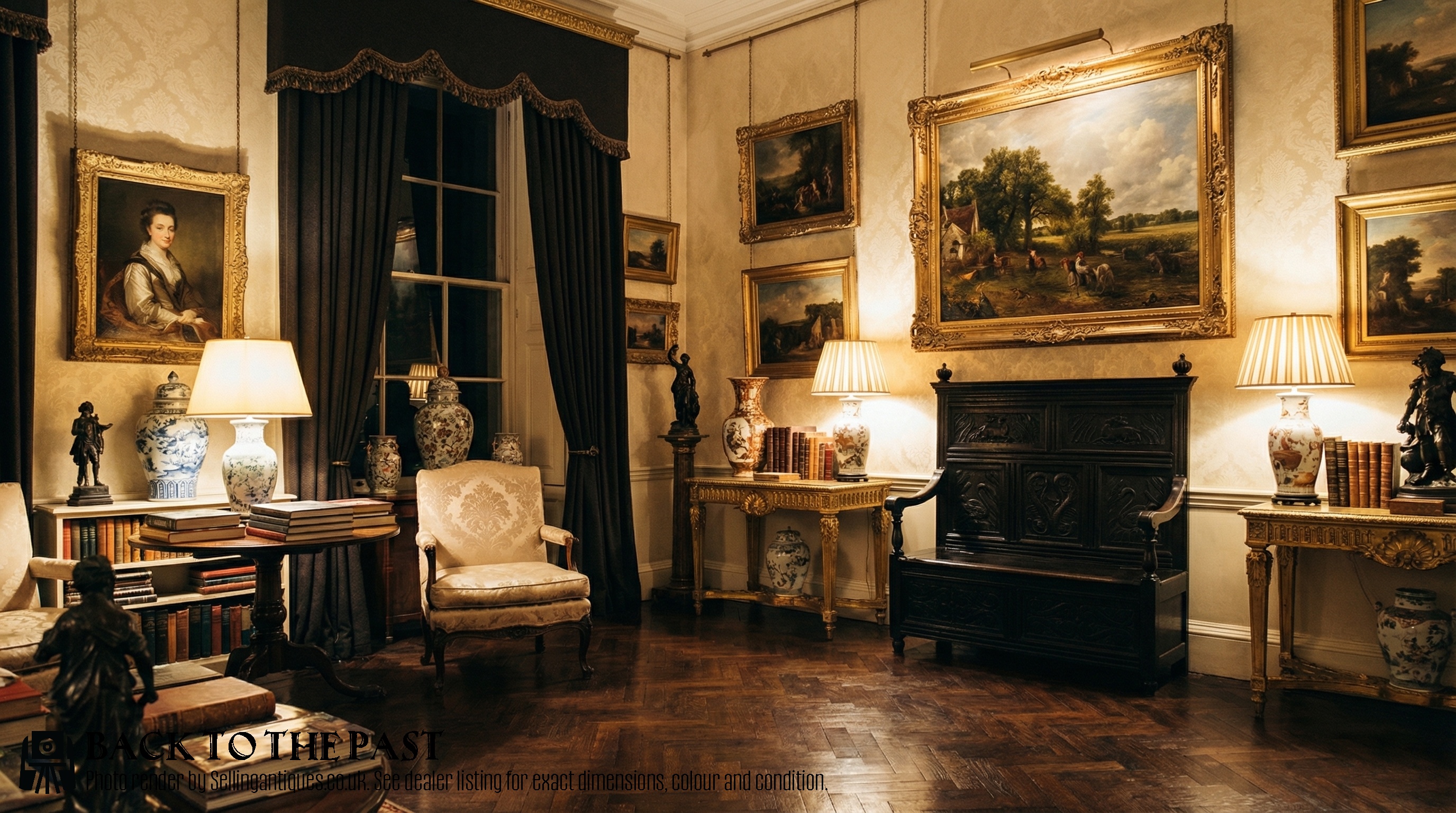
Makers relied principally upon solid oak, selected for its durability and suitability for deep relief carving. Subsidiary timber components occasionally include walnut or burr elm, while secondary structural elements make use of iron, brass fittings, and occasional fabric or leather upholstery.
Construction techniques combine traditional joinery such as panelled framing and pegged mortise and tenon joints with exuberant hand-carving. Surfaces were frequently waxed or polished to accentuate the grain and the intricate detailing of the woodwork.
Victorian Carved Oak Settle Retail Price Guide 2026
Typical asking prices for victorian carved oak settle among the pieces listed under this phrase on Sellingantiques today, from the lower quarter to the upper quarter. They describe what is for sale here now, not the wider market.
Watch for watchful Green Man faces peering out from the foliage on nineteenth-century oak backs.
Judging Quality
Quality rests in the depth, crispness, and artistic ambition of the hand-carved ornamentation, distinguishing lively sculptural motifs like Green Man masks from mechanical factory work. The architectural integrity of the frame, the thickness of the timber, and the balance of proportions dictate the stature of the piece.
The integration of functional elements, such as smoothly operating lift-up lids on box settles or sturdy pivoting mechanisms on monk's benches, separates superior examples from lesser utilitarian output. Original patination and the honest retention of historic hardware further elevate a piece above later adaptations.
GIllows·James Shoolbred & Co·Hampton & Son's
The Victorian Carved Oak Settle Glossary
- Settle
- A wooden bench with a high back, solid arms, and frequently a box seat for storage. These pieces were traditionally placed near hearths or in entrance halls to block draughts.
- Monk's bench
- A convertible form featuring a hinged back that folds down over the arms to transform the seat into a table. This versatile dual-purpose furniture became particularly popular during revival periods.
- Box settle
- A variation incorporating a storage compartment beneath the hinged seat. The compartment allowed households to store blankets, boots, or hall paraphernalia out of sight.
- Green Man
- A sculptural architectural motif representing a human face surrounded by or sprouting from foliage. It appears frequently as a carved detail on nineteenth-century revival woodwork.
- Gothic Revival
- A design style inspired by medieval architecture, characterised by pointed arches, tracery, and quatrefoil motifs. This aesthetic heavily influenced nineteenth-century seating design.
Victorian Carved Oak Settle: Frequently Asked Questions
Where should I place a settle in my home?
These pieces traditionally anchor a large entrance hall, reception room, or boot room where their architectural backs and storage utility shine.
Ensure the floor space accommodates the high back and deep footprint without overwhelming smaller corridors.
How do I use a monk's bench?
The hinged back tilts forward to rest upon the arm supports, converting the high-backed seat into a flat-topped table.
This dual function was originally designed for multi-purpose rooms where surface space was at a premium.
How do I care for antique oak furniture?
Maintain the timber by applying a quality beeswax periodically to nourish the wood and preserve the natural sheen.
Keep the piece away from direct heat sources and drastic humidity fluctuations to prevent splitting.
How can I tell a genuine nineteenth-century piece apart?
Examine the construction joints, timber weight, and the hand-carved details for tool marks consistent with period craftsmanship.
Revival pieces often utilise historic styles while exhibiting the specific joinery methods and patina of the Victorian era.