

High Back Hall Bench
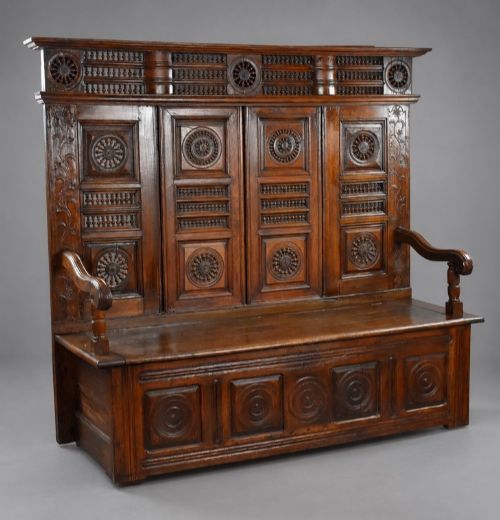
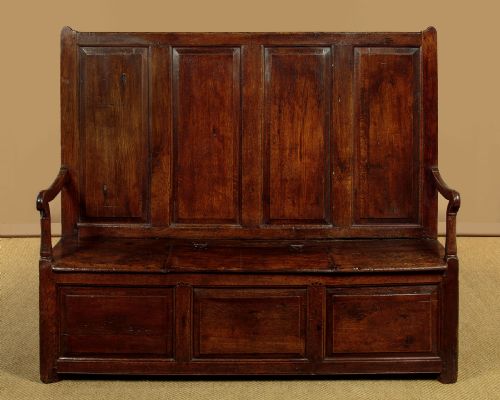
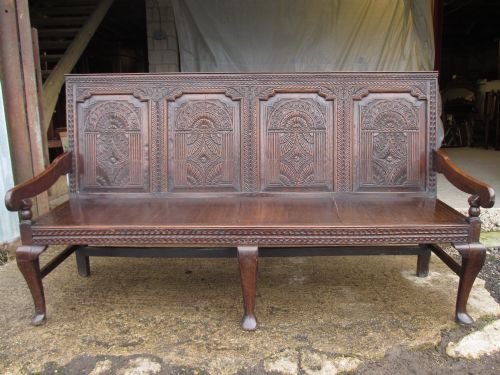
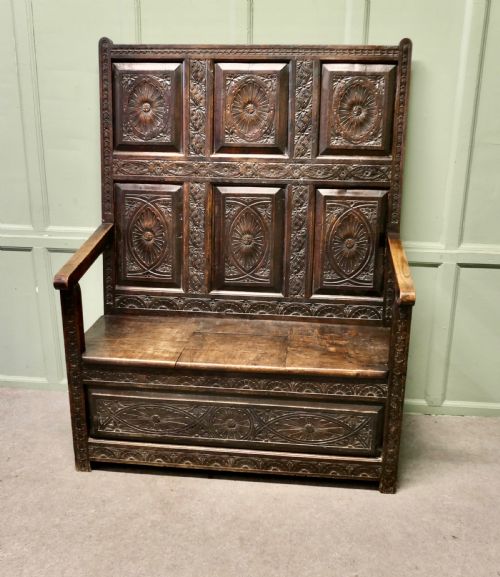
A high back hall bench is a commanding seat designed for an entryway, offering shelter from drafts and storage for household gear.
Understanding the high back hall bench
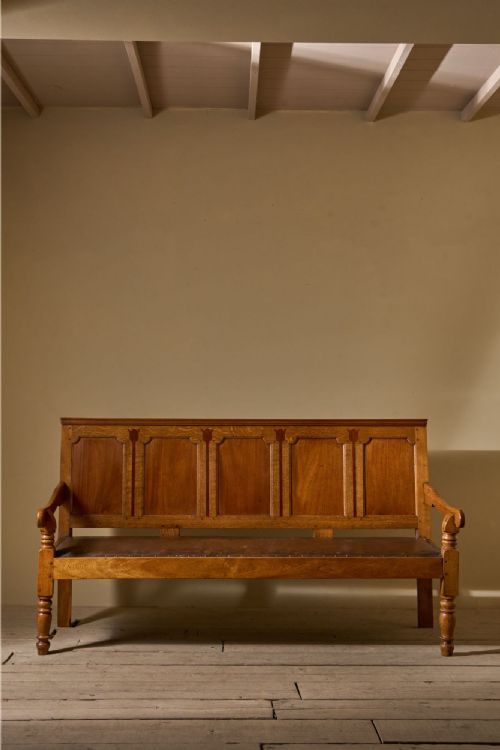
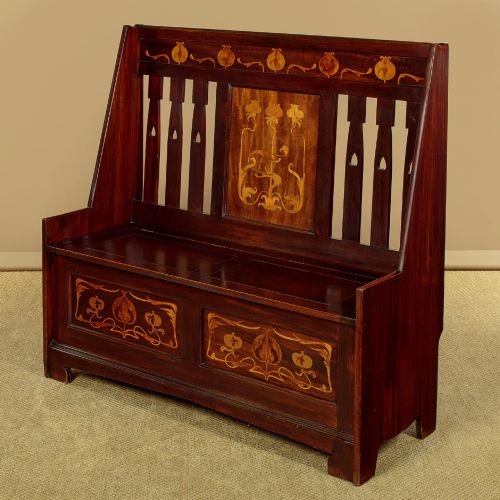
A high back hall bench grounds an entrance with architectural presence, originating as practical seating for draughty hallways and farmhouse kitchens. These pieces span from the seventeenth century through to the Victorian era and the Arts and Crafts movement, utilising substantial timber construction.
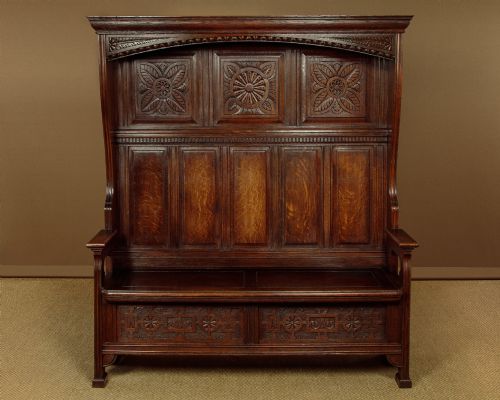
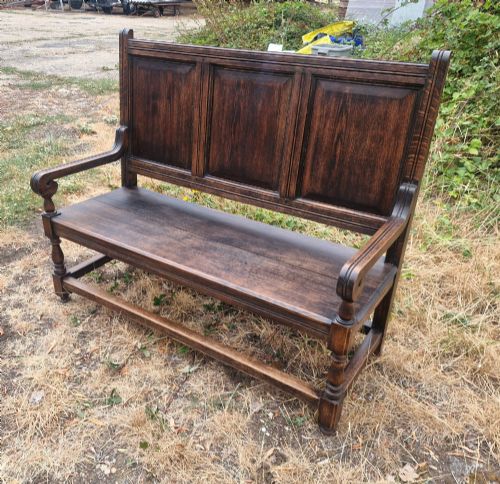
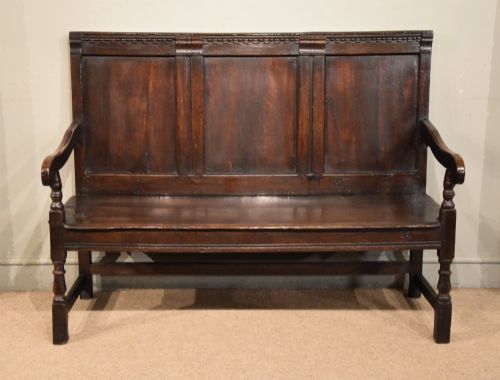
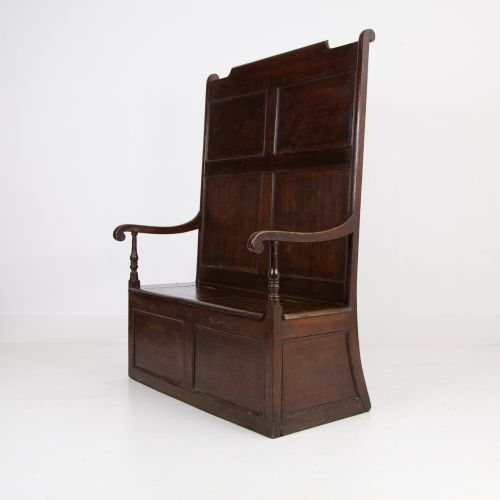
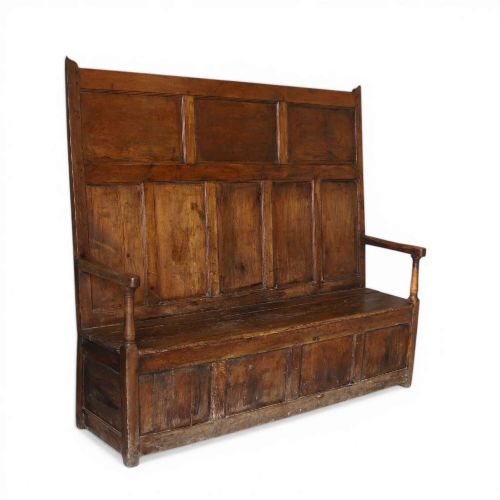
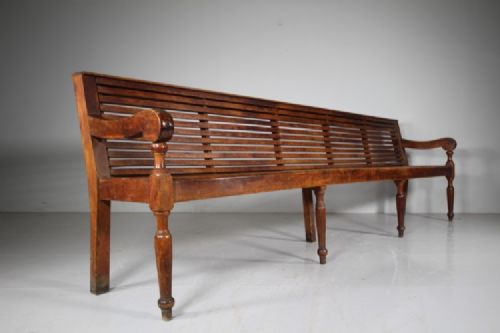
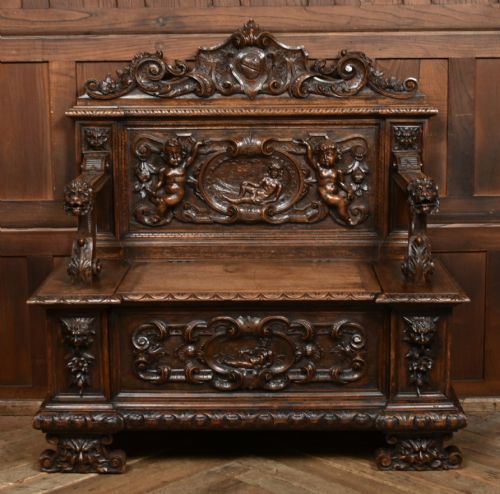
The most common examples you will encounter on this page are oak settles and hall benches, often featuring carved panels, box seats, or high straight backs. Regional variations include Italian Lombardy hall benches, Spanish pine pieces, and English country examples.
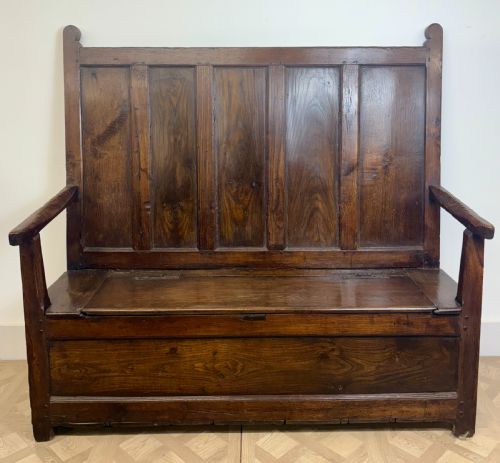
Forms range from simple rustic farmhouse seating to elaborate Victorian walnut bacon settles and Italian Renaissance Revival designs. Many incorporate hinged seats concealing storage boxes, functioning as both seats and receptacles for boots and blankets.
Materials and construction
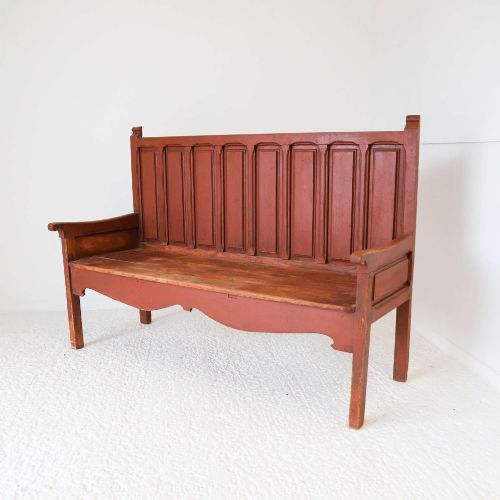
Joiners relied heavily on native hardwoods, predominantly oak, pine, walnut, and fruitwood, sometimes incorporating mixed wood inlay or paint. Surfaces might be found in their natural waxed state, limed, or treated with historic paint finishes.
Construction techniques involve traditional panel and frame joinery, pegged mortise and tenon joints, and hand carving. Benches designed as box settles feature boarded lids and panelled backs built to withstand daily domestic use.
Retail Price Guide 2026
Typical UK retail prices for high back hall bench, calculated from the Sellingantiques database of over a million retail prices indexed since 2003. This retail price guide relies exclusively on Sellingantiques data; no external sources or auction records are used, so the figures do not describe the wider market.
Distinctions in quality
Quality reveals itself in the choice of timber, the crispness of hand carving, and the structural integrity of the frame. Pieces featuring dense oak boards, sophisticated figuration in walnut, or intricate figural carving such as Green Man motifs sit at the upper end of the range.
Proportion and regional character also dictate distinction, as seen in the sweeping lines of an Italian Lombardy bench or the restrained elegance of an eighteenth century Georgian settle. Alterations, replaced hinges, or heavy timber shrinkage distinguish everyday utility items from finer cabinetwork.
Hampton and Sons
The High Back Hall Bench Glossary
- Settle
- A wooden bench with a high back, solid arms, and often a box base for storage. It was historically placed near the hearth to block cold draughts.
- Box settle
- A settle incorporating a lidded chest beneath the seat, serving dual purposes as a bench and a trunk. This design maximises storage in historic hallways.
- Limed oak
- Timber treated with a lime solution to highlight the open grain, creating a pale, textured finish. This treatment gained popularity during the Victorian and Arts and Crafts periods.
- Green Man
- A sculptural architectural motif depicting a face carved from or entwined with leaves and vines. It appears frequently on carved Victorian oak furniture.
Frequently Asked Questions
Where were high back hall benches placed?
These benches traditionally stood in draughty entrance halls, corridors, or farmhouse kitchens where high wooden backs provided shelter from cold air currents.
They also served as a secure spot for guests to wait or for household members to pull off muddy boots.
How do I tell an 18th century settle apart from a Victorian one?
Earlier pieces from the seventeenth and eighteenth centuries tend to rely on straightforward panel construction, peg joinery, and simpler rustic or Georgian proportions. Victorian examples often showcase heavier, deep relief carving, walnut veneers, or historic revival styles like Jacobean and Renaissance.
Examining the underside, hinges, and tool marks helps confirm the age of the timber and construction methods used.
What is a monks bench?
A monks bench is a multifunctional furniture form where the high back pivots or folds down to transform the seat into a table. This compact design suited smaller historic interiors.
They appear in nineteenth century iterations featuring carved oak and box storage beneath the seat.
How do I care for a historic wooden bench?
Maintain the timber by applying a microcrystalline wax periodically to nourish the dry wood and protect the historic patina. Avoid placing the bench near direct heat sources or in fluctuating humidity to prevent wood splitting.
Dust regularly with a soft cloth rather than using silicone based polishes.