
Oak Entryway Bench
These oak entryway bench pieces offer sturdy seating and storage for the hall, bringing honest timber character right to the front door.
What an oak entryway bench is
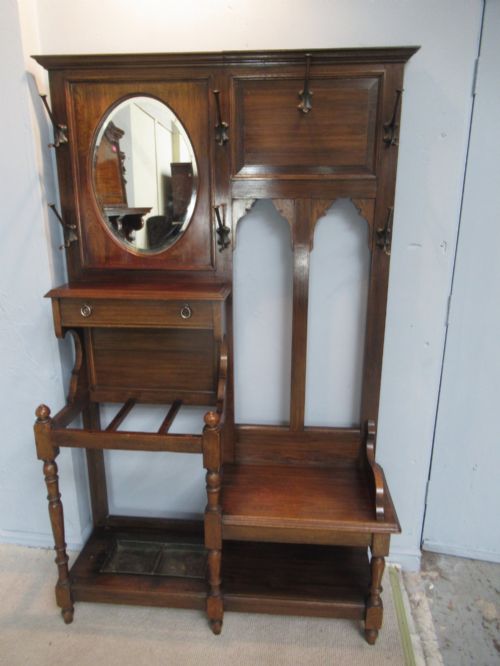
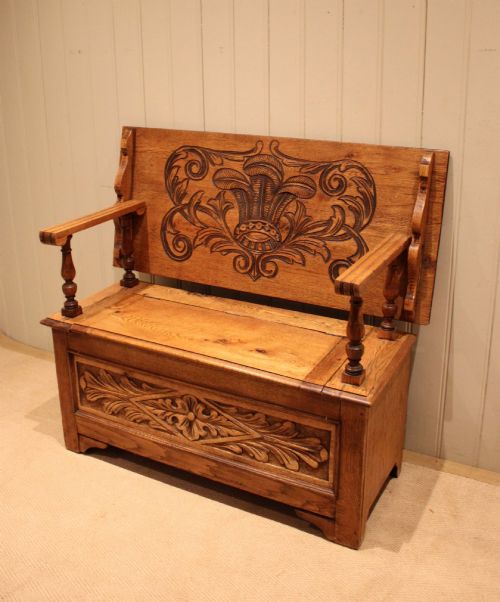
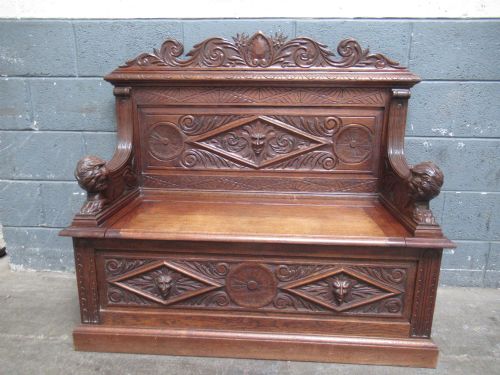
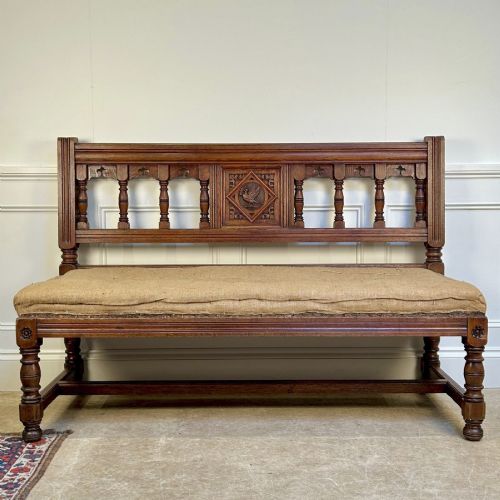
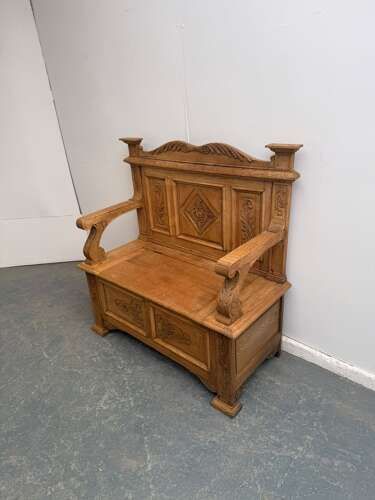
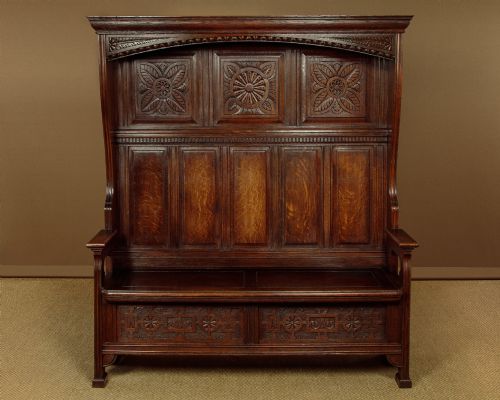
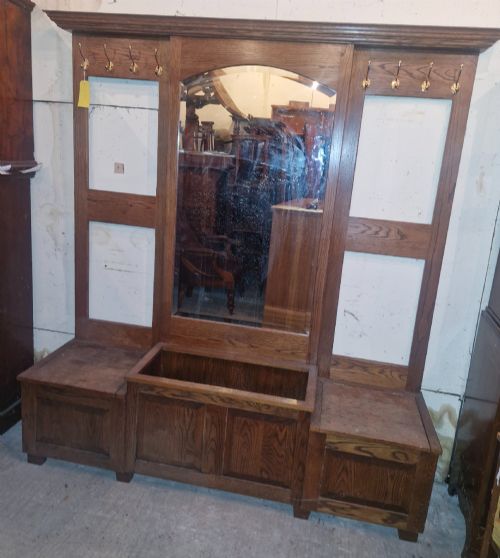
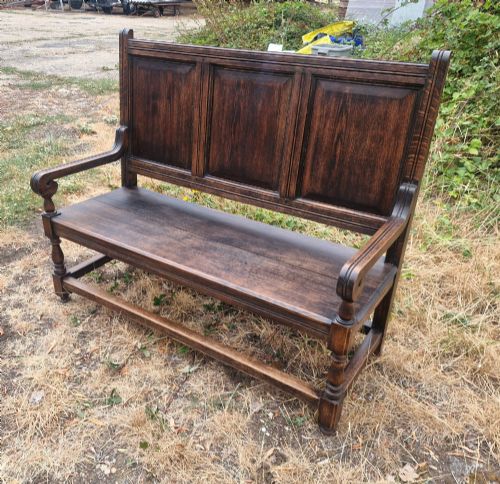
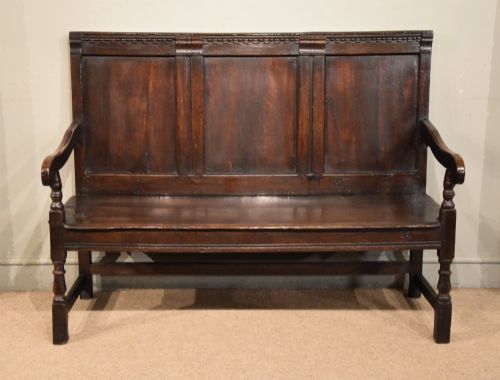
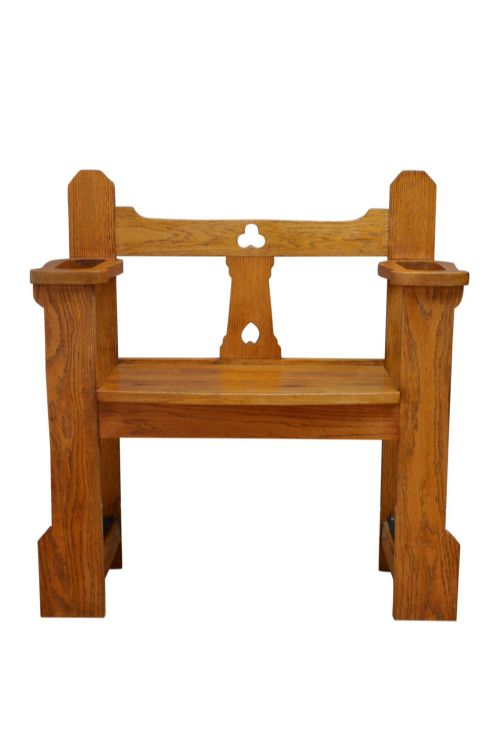
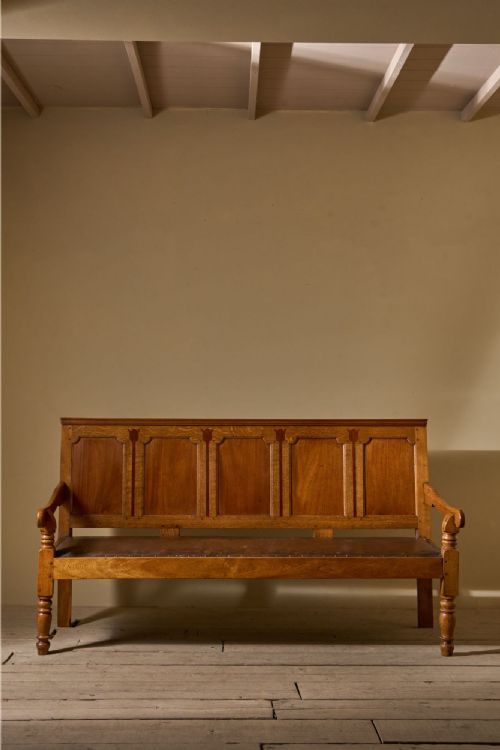
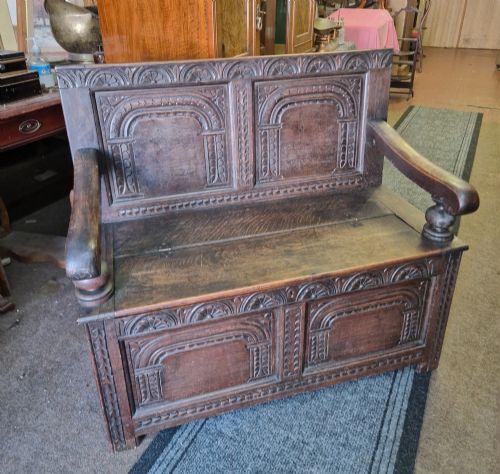
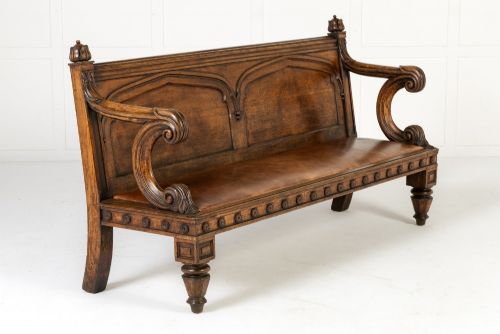
An oak entryway bench is a functional hall seat designed for narrow spaces, drawing on forms from the eighteenth century, the Victorian era, and the Arts and Crafts movement. The selection here spans compact hall seats, carved settles with storage boxes, and Regency variations.
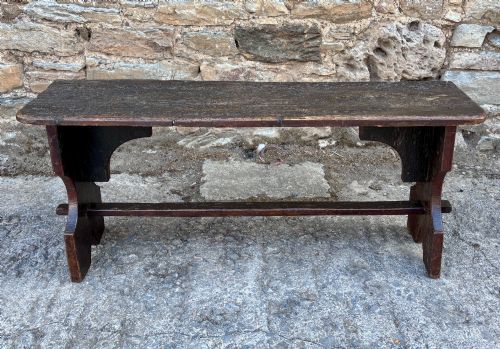
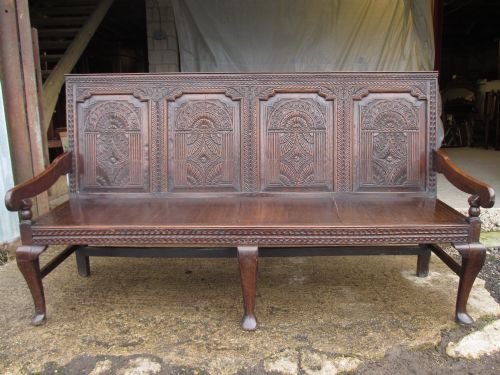
Makers ranged from large firms like Liberty to regional country workshops, producing both high-style revival pieces and plain utilitarian seating. Buyers encounter everything from tall back settles with hinged lids to streamlined narrow benches intended for tight corridors.
How they were made
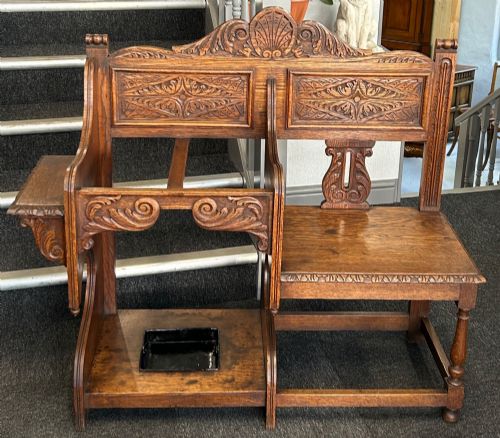
Makers relied primarily on solid oak, often chosen for its pronounced grain and durability, sometimes combined with iron for structural reinforcement or hardware. Surfaces were shaped by hand and machine carving, producing relief work, panelled backs, and moulded edges.
Construction techniques involve traditional joinery suited to heavy use in busy hallways, ensuring the timber endures daily sitting and storage demands.
Retail Price Guide 2026
Typical UK retail prices for oak entryway bench, calculated from the Sellingantiques database of over a million retail prices indexed since 2003. This retail price guide relies exclusively on Sellingantiques data; no external sources or auction records are used, so the figures do not describe the wider market.
The listings span multiple historical periods, covering eighteenth-century country pieces, Regency designs, Victorian styles, and Arts and Crafts examples.
What varies in quality
Quality rests on the depth and crispness of the carved details, the choice of well-figured timber, and the balance of proportions suited to a narrow hall. Early examples show hand-tool marks and considered joinery that elevate them above later, simpler revival iterations.
The finish also dictates value, with period surfaces or sympathetic restoration preserving the natural warmth of the golden oak better than heavy modern varnishes.
Liberty
The Oak Entryway Bench Glossary
- Settle
- A wooden bench with a high back, solid arms, and often a box seat for storage. These were traditionally placed near hearths or in hallways to block drafts.
- Arts and Crafts
- A design movement valuing honest construction, simple forms, and visible hand-craftsmanship. Pieces from this tradition often feature minimal ornamentation that highlights the natural grain of the oak.
- Jacobean Revival
- A nineteenth-century style imitating seventeenth-century English furniture. It is characterised by heavy proportions, geometric moulding, and deep relief carving.
- Hall Seat
- A narrow bench designed specifically for hallways and corridors. They often incorporate umbrella stands or hinged storage compartments for convenience.
Frequently Asked Questions
Where should I place an oak hall bench?
These benches fit best in entryways, boot rooms, and wide corridors where guests remove outerwear. Their narrow proportions allow them to sit flush against hallway walls without blocking passage.
Positioning them near the front door provides a convenient spot for putting on shoes while adding traditional character to the threshold.
Did all historical hall benches have storage?
Not all pieces include internal storage, though box settles and specific hall box seats feature hinged lids for blankets or boots. Simpler open-frame benches prioritize narrow seating over enclosed compartments.
Buyers should check individual listings to see whether a particular model includes under-seat space.
How do I clean and maintain solid oak furniture?
Solid oak requires minimal intervention beyond dusting with a dry or slightly damp cloth. Avoid harsh chemical polishes that can build up on historical surfaces and dull the grain.
Applying natural beeswax occasionally helps nourish the timber and maintains a soft, protective sheen.
How do I distinguish between an 18th-century settle and a later revival piece?
Eighteenth-century examples typically display wear patterns, pegged joinery, and hand-cut timber variations consistent with period tools. Revival pieces from the Victorian era or later often feature machine-sawn components and crisper, more uniform ornamentation.
Examining the underside and interior reveals the construction methods used by the maker.