






18th Century Oak Bench
An 18th century oak bench brings centuries of solid vernacular craftsmanship into a modern interior.
18th Century Oak Bench
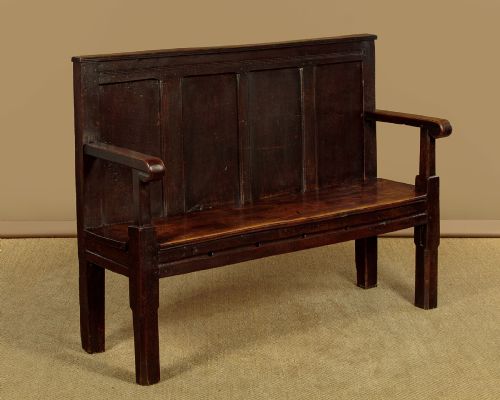
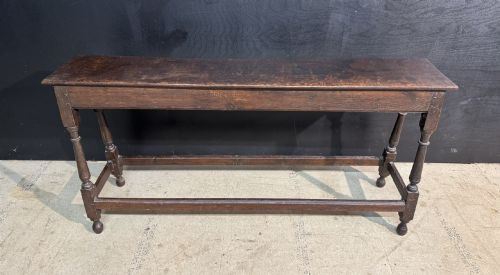
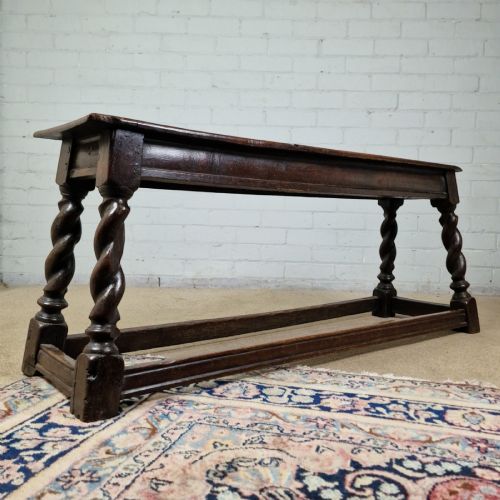
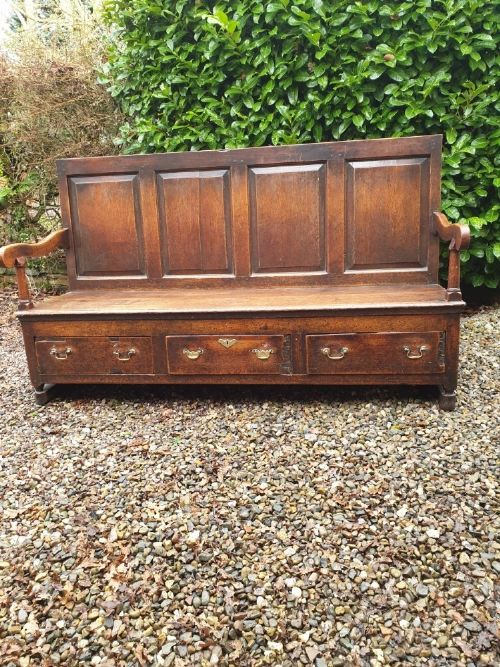
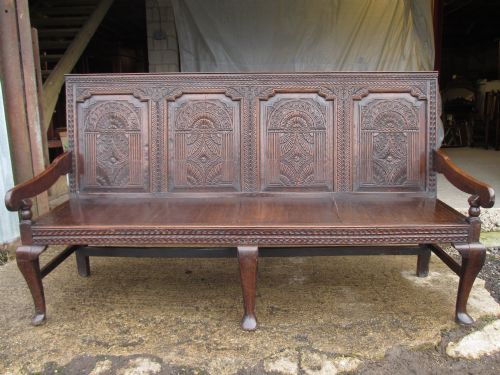
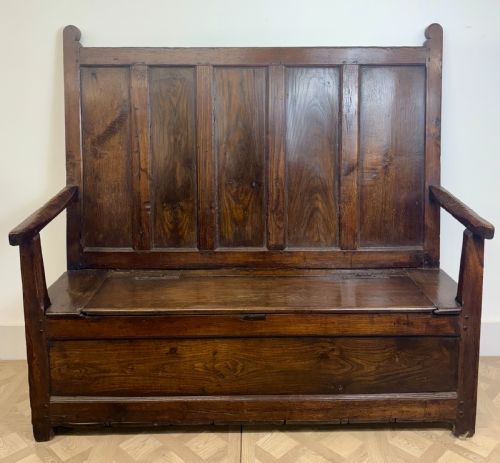
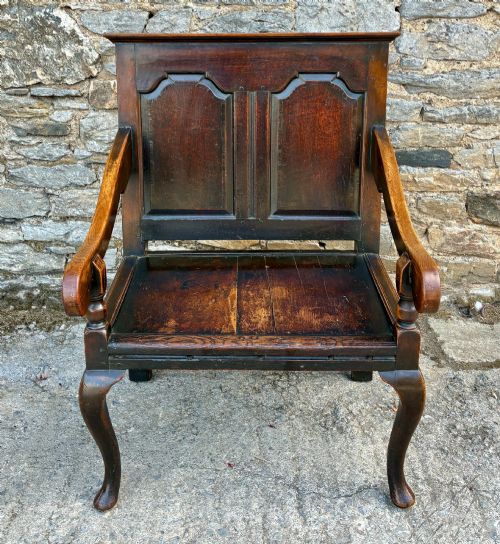
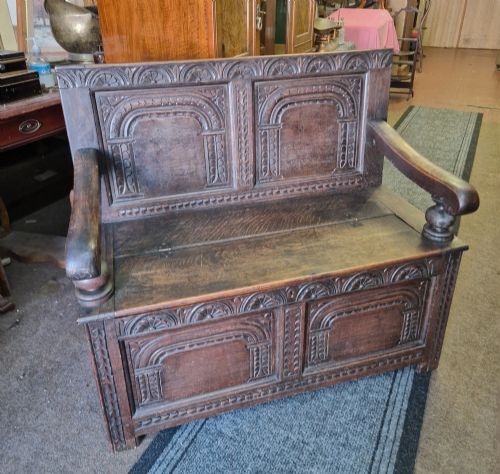
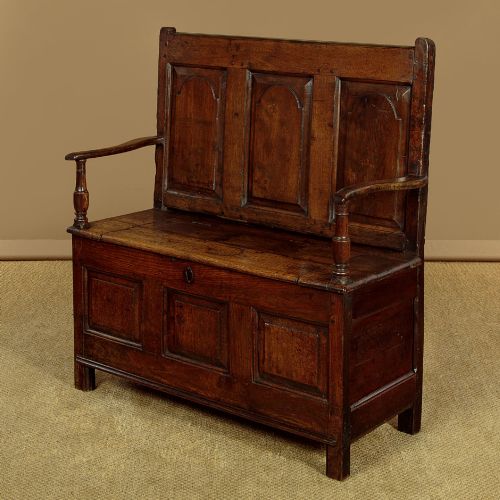
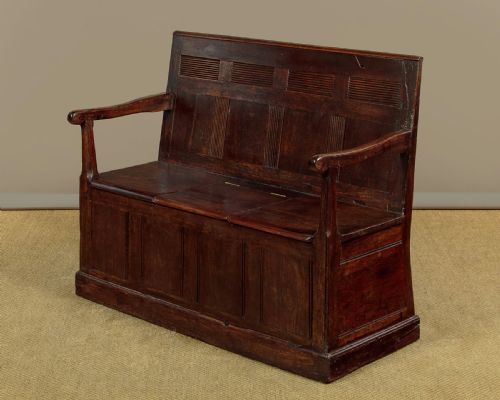
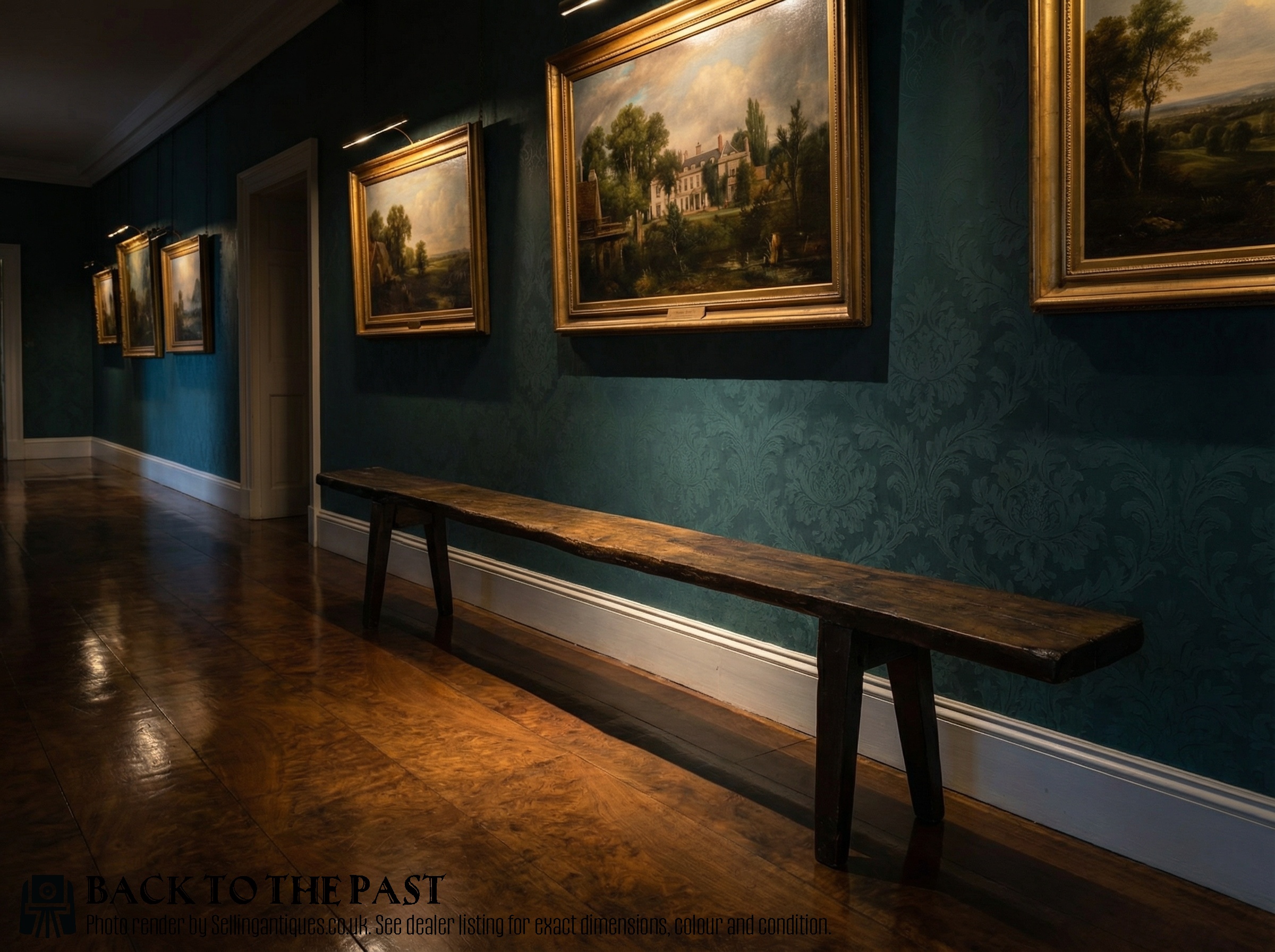
When searching for an 18th century oak bench, buyers encounter robust domestic seating designed for utilitarian service in farmhouses, halls, and taverns. The selections span open long forms, joint stools, and high-backed settles fitted with enclosed box seats or barrel backs to block cold draughts.
The most common variations on this page include tall five-panelled Welsh and English settles alongside simple long benches and occasional pig benches. These pieces reflect regional vernacular traditions originating from Georgian country workshops and continental makers.
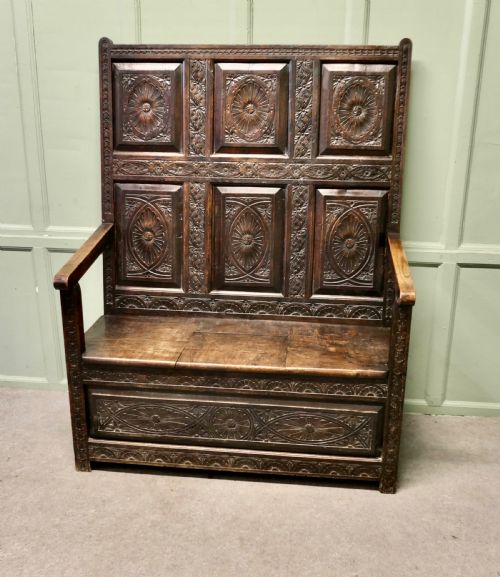
Many examples double as storage furniture, featuring lidded box bases or hinged seats designed to hold household goods. Their enduring utility lies in the heavy timbers and straightforward joinery that allowed them to withstand generations of daily use.
How they were made
Construction relies heavily on native British hardwoods, predominantly solid oak supplemented by secondary timbers such as elm, ash, and occasional brass or iron fixings. Joiners utilised traditional mortise and tenon joints secured with wooden pegs, creating rigid frames without the need for modern adhesives.
Surface ornamentation on finer examples involves hand carving, panel moulding, and crossbanding, while utilitarian pieces display plain boarded construction smoothed by hand planes. Over decades of use and waxing, the timber develops a deep natural patina across the grain.
18th Century Oak Bench Retail Price Guide 2026
Typical asking prices for 18th century oak bench among the pieces listed under this phrase on Sellingantiques today, from the lower quarter to the upper quarter. They describe what is for sale here now, not the wider market.
Listings feature oak, elm, ash, and iron across periods spanning the early 18th century through to 1860.
What varies in quality
Quality in these benches depends largely on the integrity of the original timber and the depth of the hand carving. Heavy, unwarped oak planks and tight, original joinery distinguish superior workshop output from simpler vernacular items.
The presence of early panel work, untouched box compartments, and retained structural pegs elevates a piece. Proportion and regional character also dictate distinction, with balanced proportions and intact high backs commanding greater interest among collectors.
The 18th Century Oak Bench Glossary
- Settle
- A wooden bench with a high back, solid arms, and frequently a box base for storage. They were positioned near hearths to keep seated occupants warm.
- Box settle
- A variation featuring an integrated storage compartment beneath the hinged seat. This design doubled as a chest for household linens or provisions.
- Joint stool
- A sturdy wooden stool constructed with mortise and tenon joints rather than turned legs. These served as precursors to longer bench seating.
- Vernacular
- Everyday furniture built by local craftsmen using regional styles and materials rather than following formal metropolitan design rules.
- Patina
- The surface sheen and darkening developed by wood over centuries through handling, waxing, and exposure to light. It serves as an indicator of age.
18th Century Oak Bench: Frequently Asked Questions
Where were these benches used?
These benches originally stood in farmhouse kitchens, draughty hallways, and tavern taprooms where durable seating was essential. Their high backs and enclosed bases shielded occupants from cold air currents before central heating existed.
Over time, homeowners moved them into reception rooms and boot rooms as decorative yet functional furniture. Their sturdy proportions suit modern hallways and dining spaces equally well today.
What is a box settle?
A box settle incorporates a lidded compartment beneath the seat for storing household goods. This dual purpose made them valuable space-saving items in early homes.
The enclosed base also prevented drafts from sweeping underneath the seat in large, cold rooms.
How do I identify regional styles?
Regional traits appear in the carving motifs, panel construction, and timber combinations chosen by local makers. Welsh examples often display distinct high back panels and proportions tailored to rural domestic settings.
English country pieces show variations in arm shapes and foot styles depending on whether they originated in northern workshops or West Country farms.
How should I care for old oak?
Maintain the timber by applying traditional beeswax sparingly to nourish the dry grain. Avoid placing antique oak near direct heat sources or strong sunlight, which can cause wood to split.
Dust regularly with a soft, dry cloth to protect the accumulated patina.