
Rustic Timber Bench
A rustic timber bench brings honest grain and centuries of character straight into an interior, grounding a room with utilitarian charm.
What these pieces are
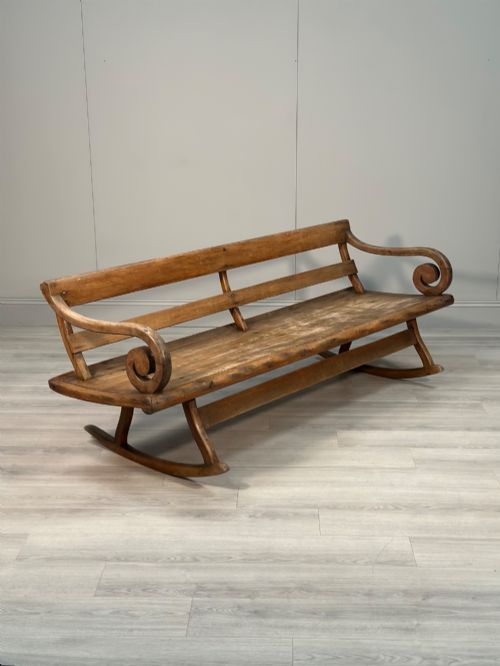
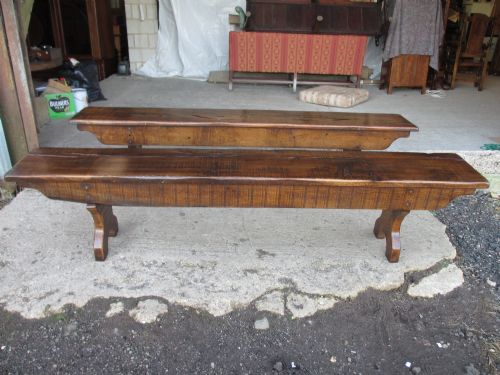
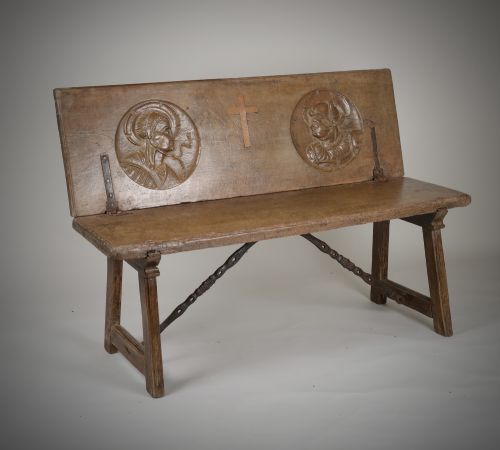
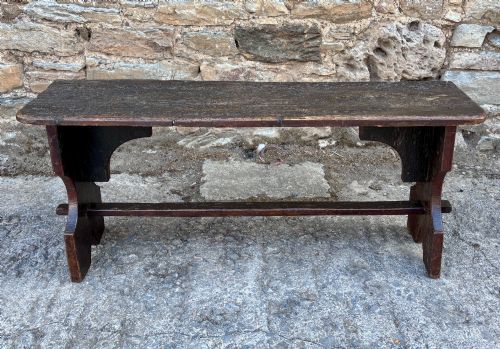
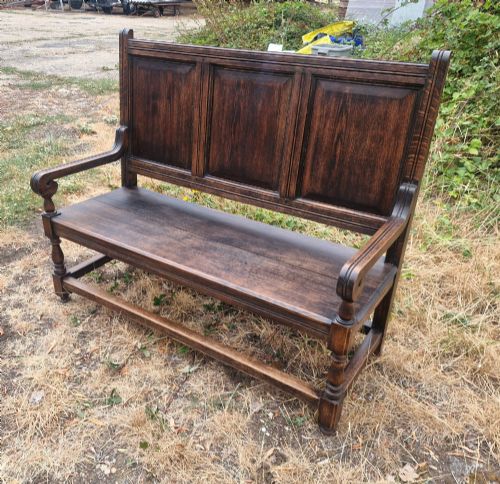
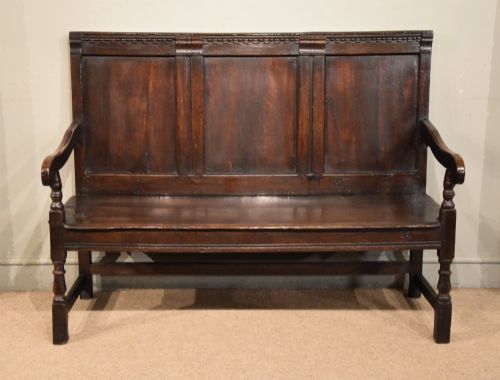
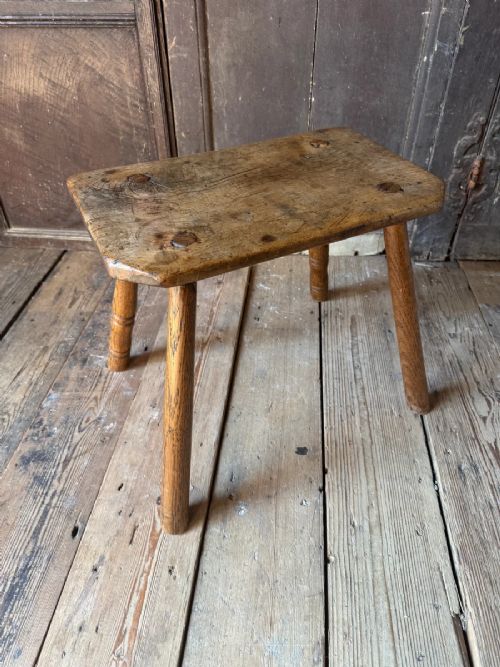
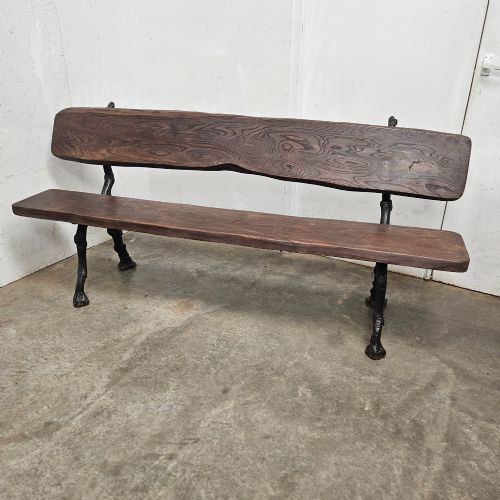
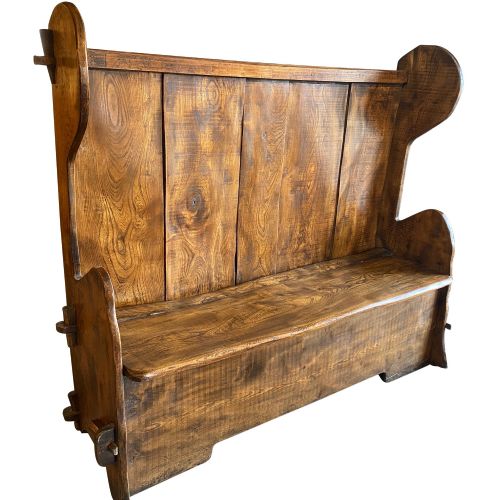
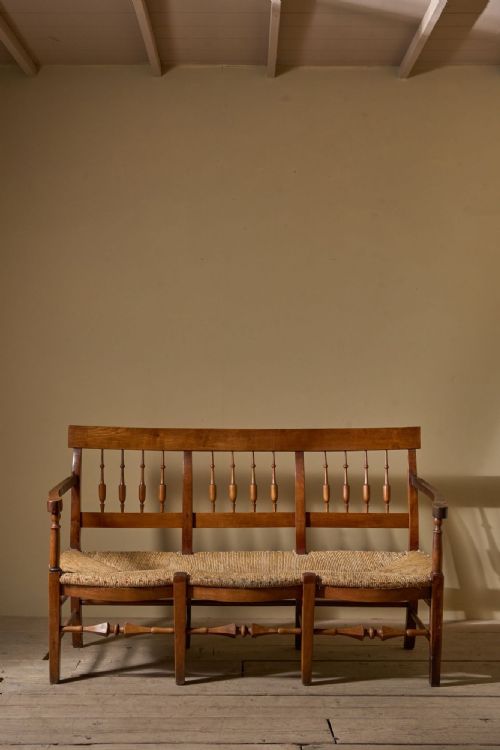
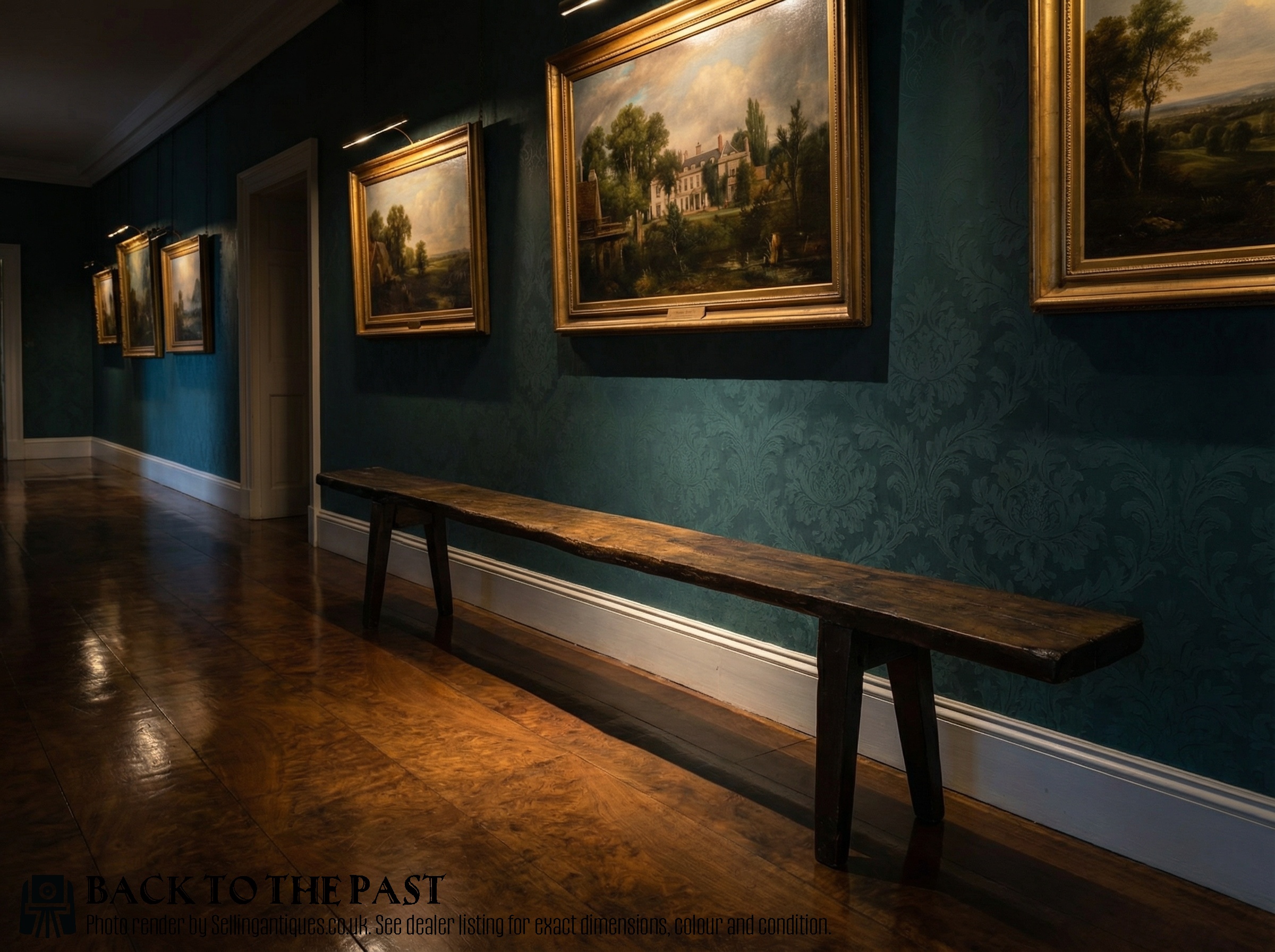
Buyers encounter diverse regional formats across this category, including French rush-seated hall benches, scratch-built country pine pieces, and sculptural teak root designs. Rocking settles and cobbler work stools also appear, bridging the gap between utilitarian seating and vernacular folk art.
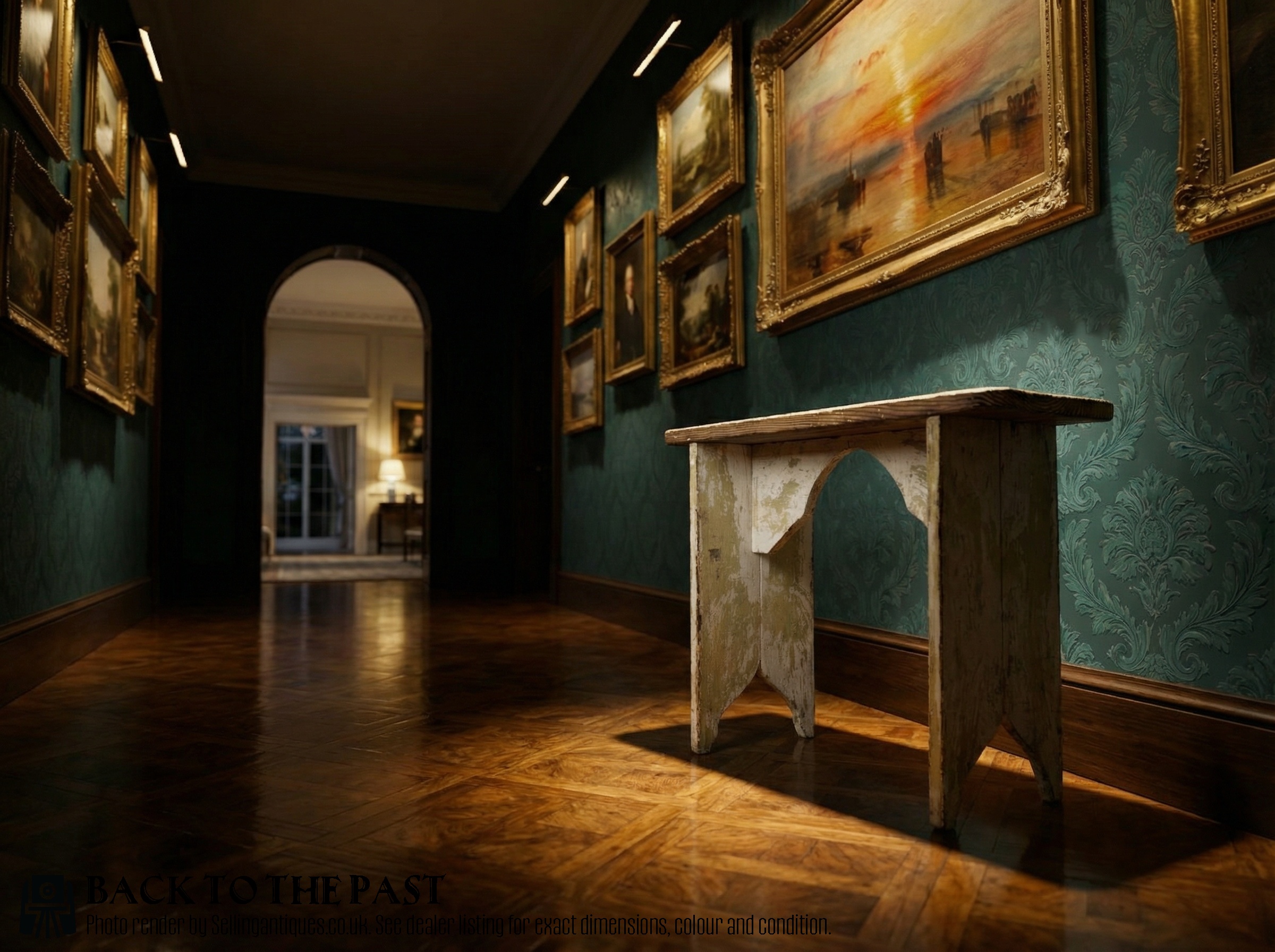
Many items derive from specific provincial traditions, reflecting English country vernacular and French provincial styles. Each survivor demonstrates the practical demands of historic rural life through straightforward construction and robust materials.
How they were made
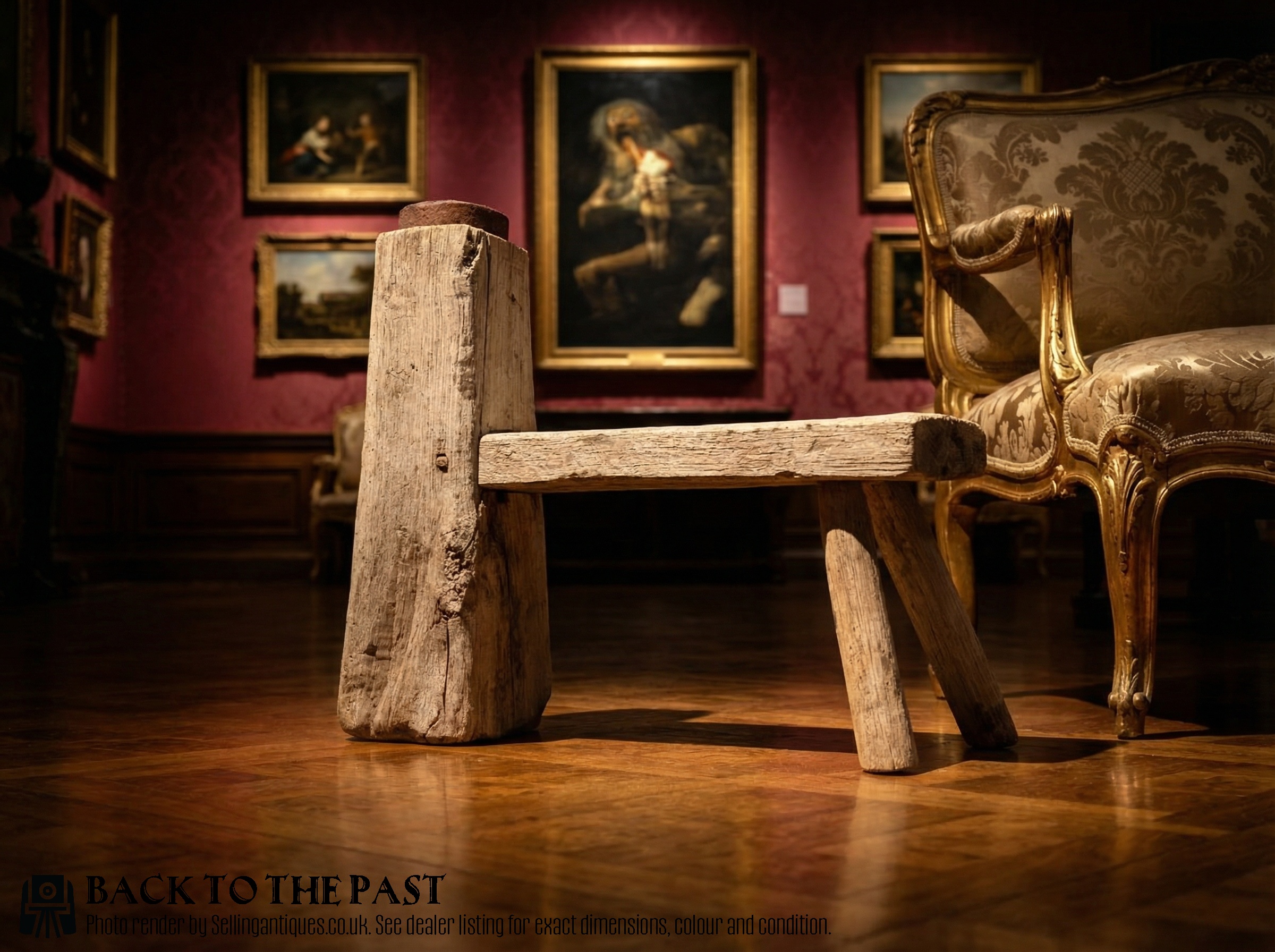
Makers utilised solid timbers such as oak, pine, fruitwood, and teak, often shaping them with hand tools that left visible marks of their manufacture. Scratch-built construction methods highlight a direct approach to carpentry where boards were joined to serve immediate domestic or workshop purposes.
Seating surfaces incorporate traditional materials like woven rush alongside solid wood planks. Paint finishes appear on certain provincial examples, adding a layer of historic surface protection that has aged organically over time.
Retail Price Guide 2026
Typical UK retail prices for rustic timber bench, calculated from the Sellingantiques database of over a million retail prices indexed since 2003. This retail price guide relies exclusively on Sellingantiques data; no external sources or auction records are used, so the figures do not describe the wider market.
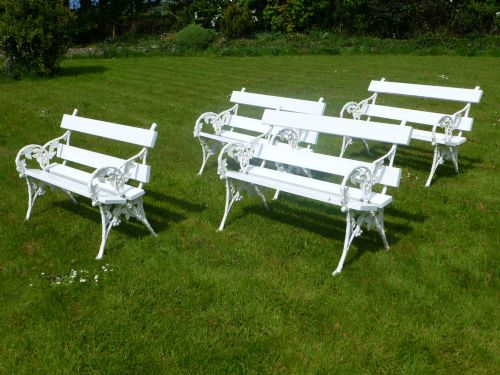
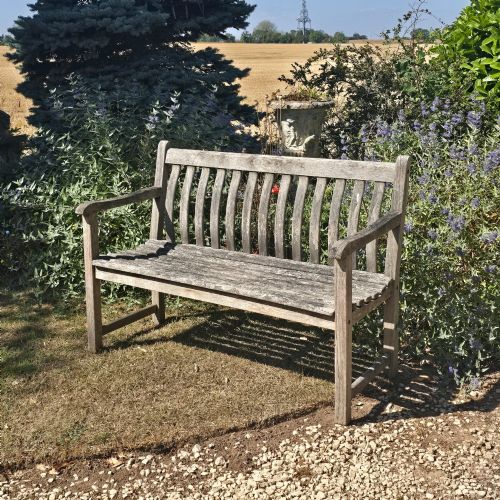
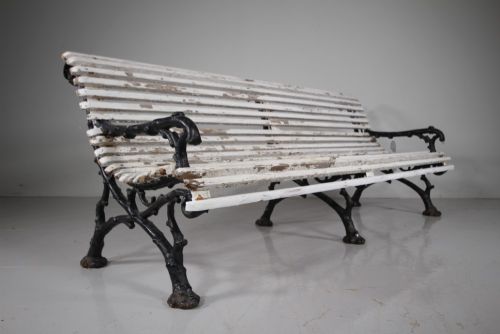
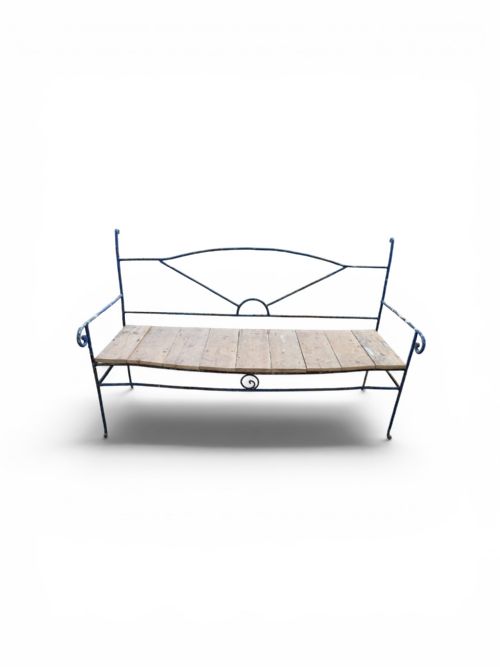
Some benches begin their second life indoors after spending centuries weathering outside as garden seats.
What varies in quality
Quality rests in the integrity of the timber and the honesty of the construction, separating straightforward vernacular utility from lesser, altered examples. Grain configuration, depth of patina, and the uncompromised survival of original joints dictate the standing of each piece.
The sophistication of regional handcrafting elevates certain forms, such as an 18th-century oak bench carrying documented provenance, above standard provincial output. Superior examples display balanced proportions that arose naturally from the maker's practical intent rather than academic design.
The Rustic Timber Bench Glossary
- Vernacular
- Everyday objects made by local craftsmen for regional use rather than high-style workshops. These pieces prioritise function and local material availability above prevailing metropolitan fashions.
- Settle
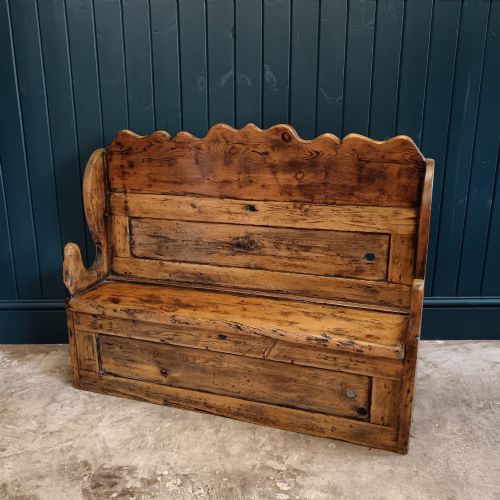
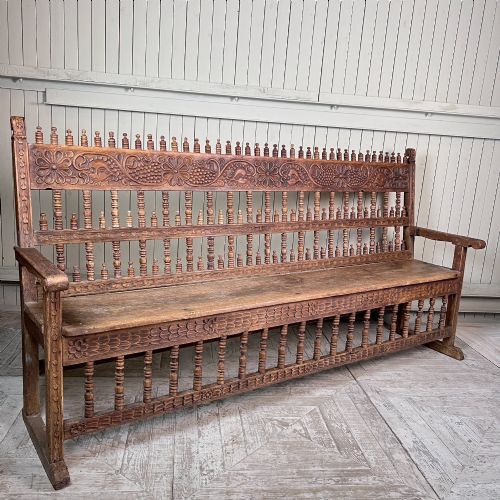
- A high-backed wooden bench with solid arms and often a storage box beneath the seat. Designed to keep draughts away from the occupant in historic domestic halls.
- Rush
- Dried marsh grass twisted into cords and used for bottoming seating. It provides a resilient, textured surface traditional in provincial chairmaking.
- Provenance
- The documented history of ownership or origin for an antique. A traceable lineage links a physical object to a specific historic location.
Frequently Asked Questions
How do I date a timber bench?
Dating relies on assessing tool marks, construction joints, and the natural ageing of the wood. Eighteenth-century examples typically show hand-hewn surfaces and pegged joinery.
Nineteenth-century pieces often introduce machine-sawn elements or simpler fastening methods while retaining regional characteristics.
Where should I place a rustic bench?
These benches suit narrow hallways, entryways, or living spaces where their narrow profile offers practical seating. Their organic textures complement both traditional and contemporary interiors.
Avoid placing antique wood directly against active heat sources to prevent timber shrinkage.
Are these benches comfortable to use?
Comfort varies depending on the specific form, with rush-seated and upholstered or cushioned variants offering a softer sit than solid plank wood. Many historic designs prioritised sturdy utility over ergonomic padding.
Adding loose textiles or sheepskins provides extra comfort for daily lounging.
How do I care for antique wood?
Maintain timber surfaces by dusting with a dry cloth and occasionally applying natural beeswax to nourish the dry grain. Keep the wood away from direct sunlight to preserve historic patination.
Avoid using modern silicone sprays or harsh chemical polishes.