

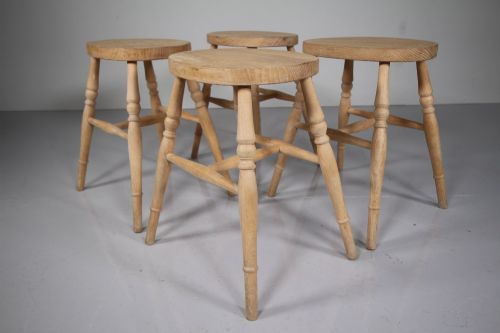
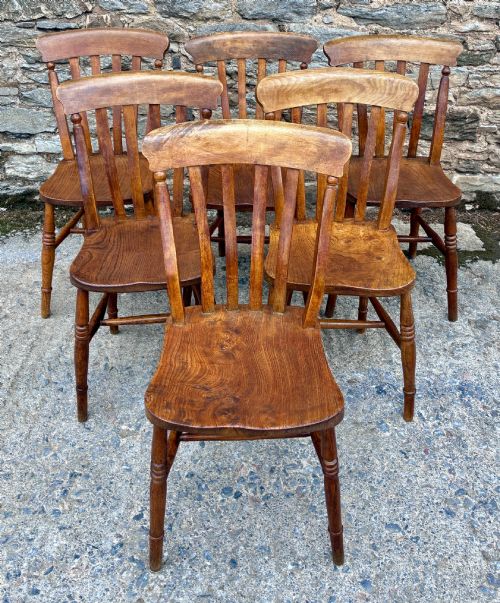
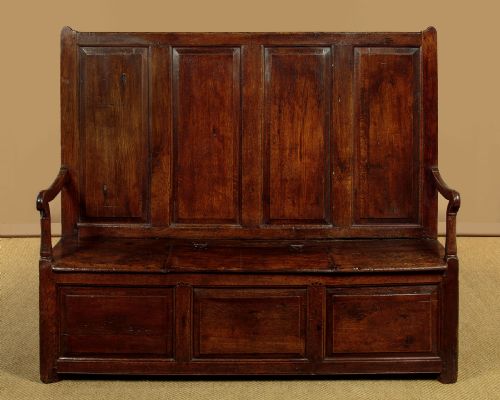
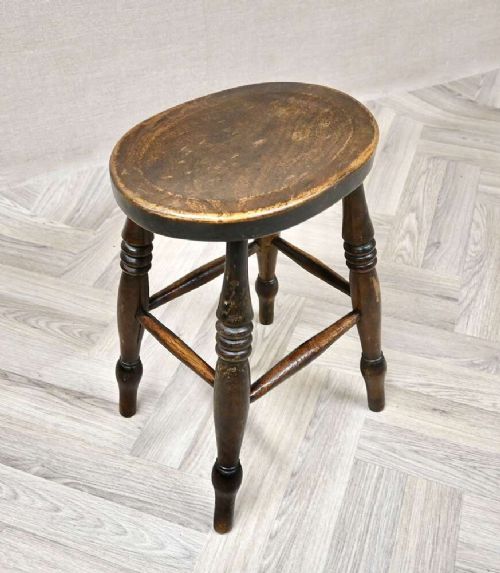
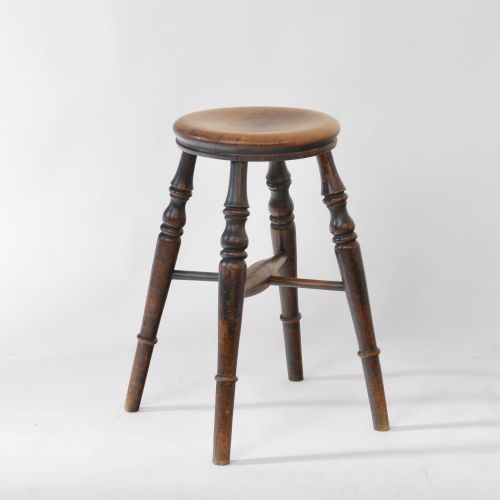
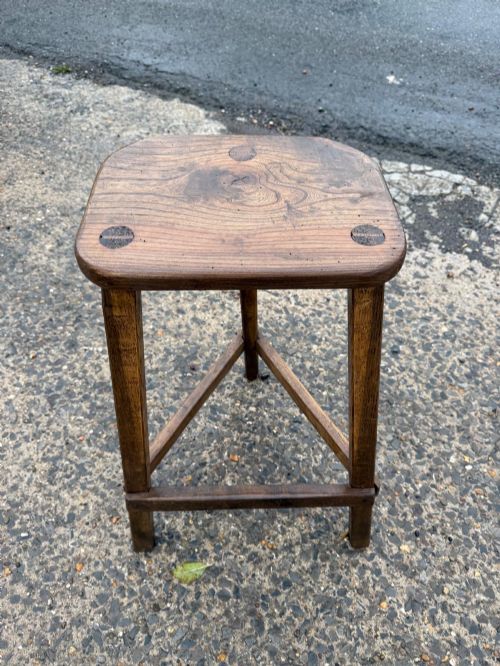
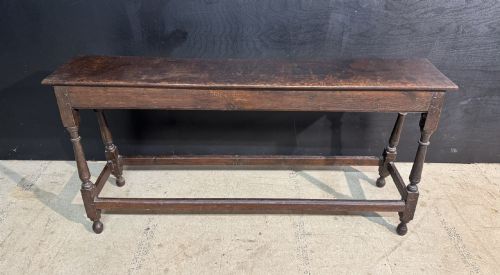
Country Oak Seating
Country oak seating brings robust vernacular character into a room, offering sturdy dining chairs, settles and stools shaped by rural traditions.
Country Oak Seating
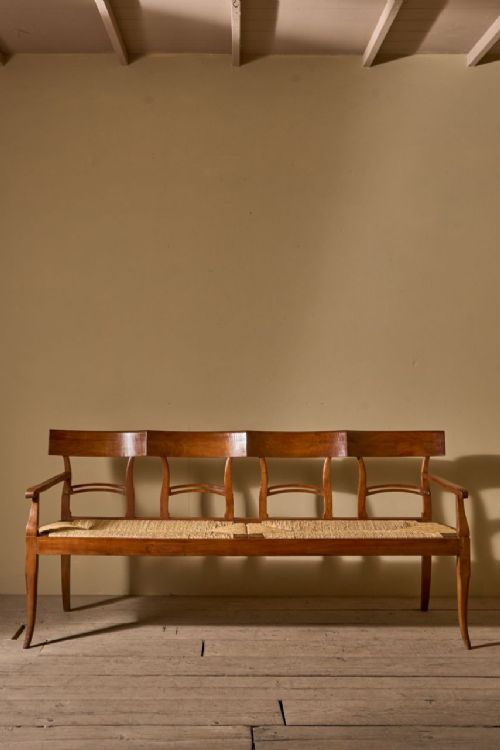
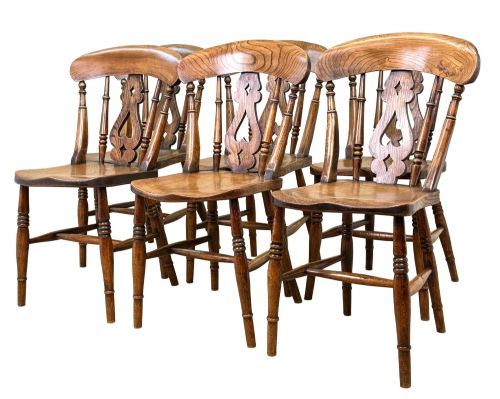
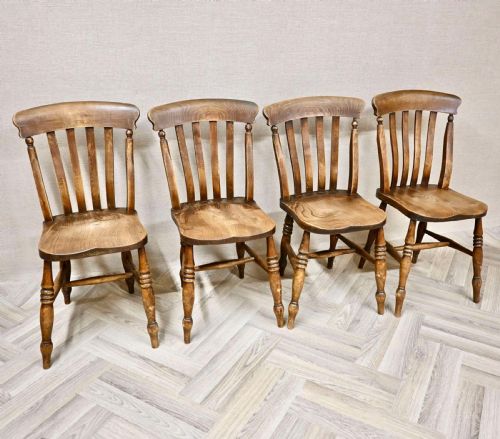
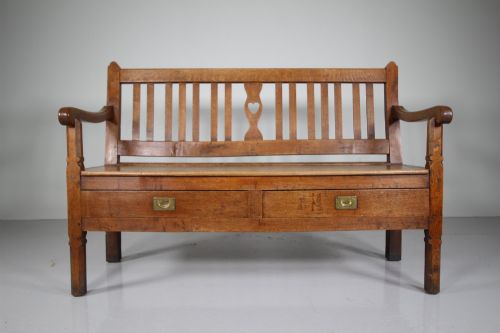
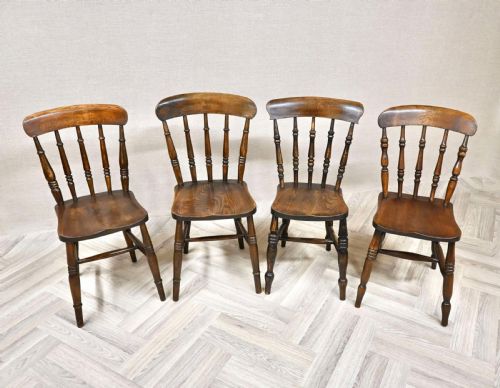
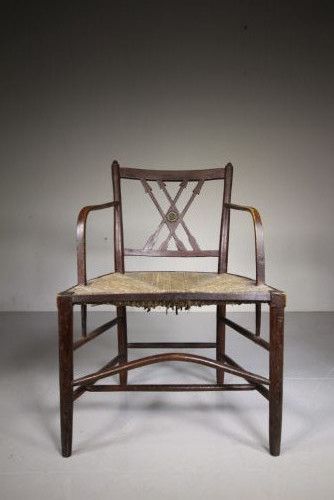
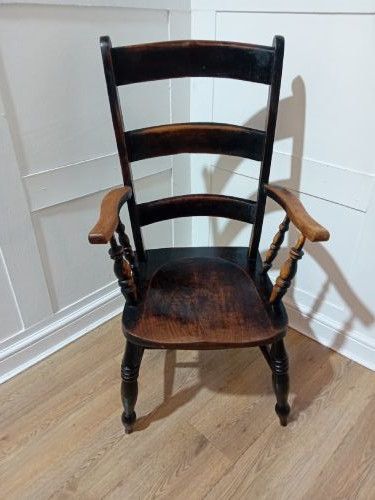
Country oak seating encompasses practical vernacular furniture produced for domestic and tavern use across British rural regions, spanning the seventeenth century through to the Edwardian period. Buyers searching for country oak seating encounter diverse forms including Windsor kitchen chairs, ladder-back dining sets, settles, joint stools, and benches. The most common examples meeting this description on this page date from the eighteenth and nineteenth centuries, reflecting the heavy output of provincial workshops.
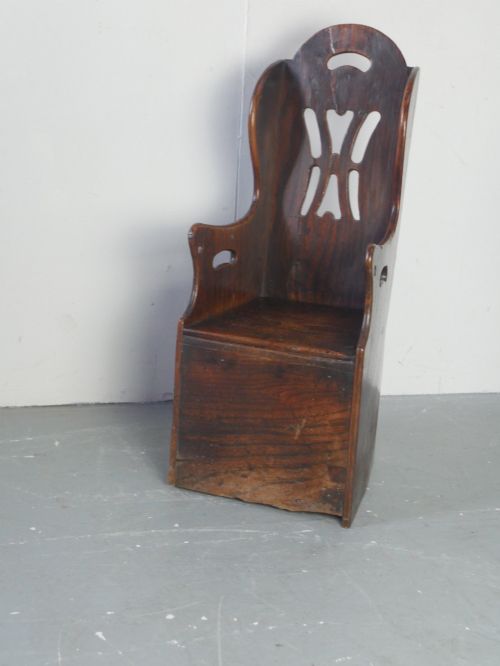
The styles range from Georgian vernacular and rustic farmhouse to English and Welsh country traditions, incorporating utilitarian designs tailored to everyday living. Items such as box settles, children's chairs, and tavern stools demonstrate how these pieces served specific domestic functions without the formal ornamentation of metropolitan furniture. Surviving examples often appear in sets or as individual provincial pieces that retain their original physical utility.
Regional variations emerge clearly across the inventory, from Thames Valley Windsor chairs to Welsh oak box settles and West Country child chairs. Makers utilised local timber traditions, pairing oak frames with elm seats, ash spindles, and rush bottoms to build resilient furniture. This regional diversity forms the core of what collectors seek when examining country oak seating.
Assessing quality and integrity
Quality in country oak seating depends upon the purity of the timber selection and the retention of original surface patination rather than smooth factory finish. Pieces that maintain their early pegged joints and unclipped legs sit higher in the range than those altered by later height reductions or extensive timber replacement. The depth of the hand-carved or dished seat on a Windsor chair and the crispness of turned spindles distinguish superior provincial work from routine utilitarian output.
Listings feature oak, elm, beech, rush, and ash across eighteenth-century and nineteenth-century forms.
The Country Oak Seating Glossary
- Windsor chair
- A wooden chair featuring a saddle-shaped solid seat into which the legs and back spindles are directly bored and wedged. These chairs often incorporate steam-bent bows and central splats.
- Settle
- A high-backed wooden bench with solid arms and a closed base, frequently built with a box compartment beneath the seat. They were designed to block draughts in farmhouse kitchens and halls.
- Joint stool
- A sturdy wooden stool constructed with pegged mortise and tenon joinery rather than turned legs inserted into a seat. They predate individual dining chairs and served multiple household purposes.
- Ladder-back
- A chair style featuring horizontal arched slats or rails set between the vertical uprights of the back. These frames typically held rush or woven cord seating.
- Vernacular
- Everyday functional furniture made by local regional craftsmen using traditional methods and native materials, distinct from high-style London cabinet-making.
Country Oak Seating: Frequently Asked Questions
What is a Windsor chair?
A Windsor chair is a form of seating where the legs and back sticks are inserted directly into a thick, solid wooden seat rather than into a separate frame. They evolved through various regional styles across England during the eighteenth and nineteenth centuries.
Makers frequently combined different native timbers within a single chair, using elm for the dished seat and ash or yew for the bentwood components.
How were box settles used?
Box settles served as dual-purpose furniture in early rural homes, providing seating by the hearth while offering secure storage space beneath the hinged seat lid. Their high wooden backs and solid sides acted as windbreaks against cold draughts in large farmhouse kitchens.
Larger examples often incorporated panelled construction and functioned as central architectural fixtures within the room.
What is a joint stool?
A joint stool is an early form of domestic seating constructed with pegged mortise and tenon joints, taking its name from the carpenter's jointed work. Before dining chairs became common in every household, these sturdy pieces provided seating at the table.
They also served auxiliary purposes around the house, including standing platforms or small side tables.
How do I identify regional chair types?
Regional chair types are identified by distinct local turning patterns, timber combinations, and structural idiosyncrasies characteristic of specific English counties or Wales. For instance, Thames Valley chairs often display specific arm styles and stretcher arrangements unique to that workshop tradition.
Examining the underside of the seat and the profile of the spindle turnings usually reveals the origin of the provincial maker.
What timber was used for seats?
Makers predominantly selected elm for chair seats because its interlocking grain prevented splitting when the legs and spindle tenons were driven in. Elm also allowed craftsmen to hollow out deep, comfortable saddle shapes using adzes and scorps.
Oak and sycamore also appeared frequently for seats, depending on regional timber availability and the specific object type.