

Antique Ladderback Chairs
A chair with a back of horizontal slats set between two uprights, made in country workshops for everyday seating and reworked in mahogany for the dining room.

Antique Ladderback Chairs
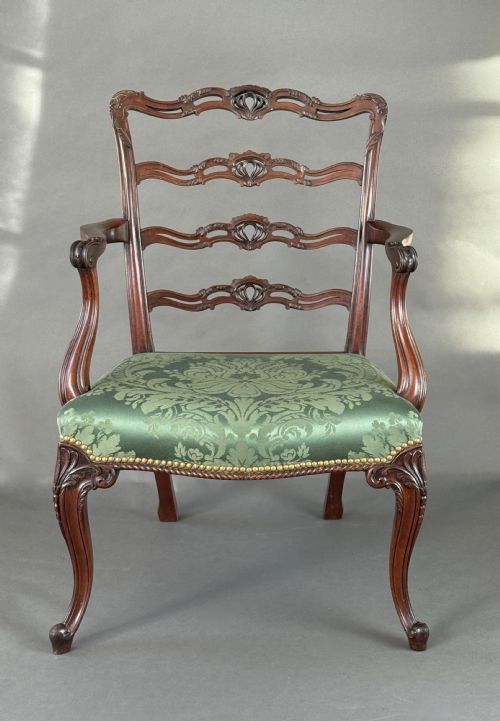
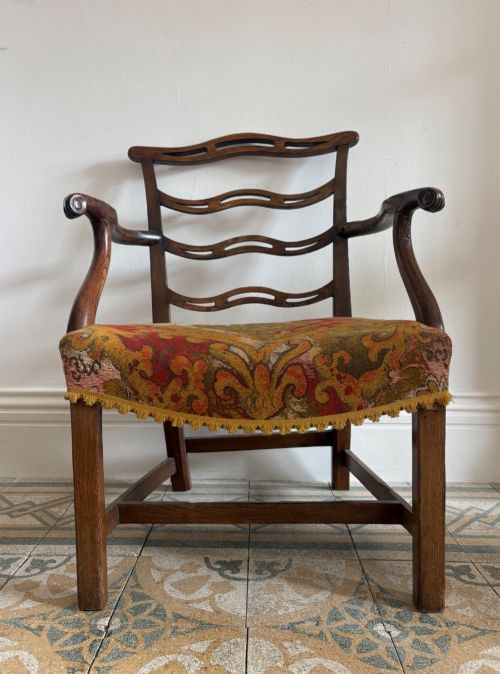
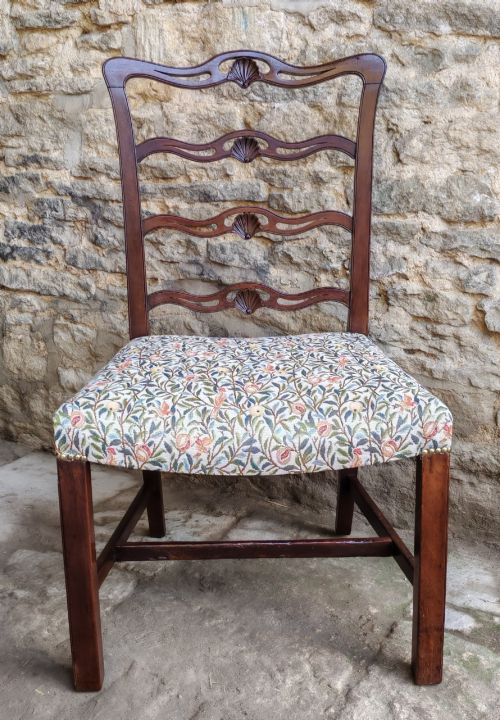
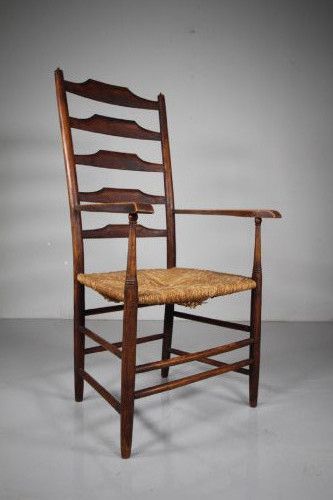
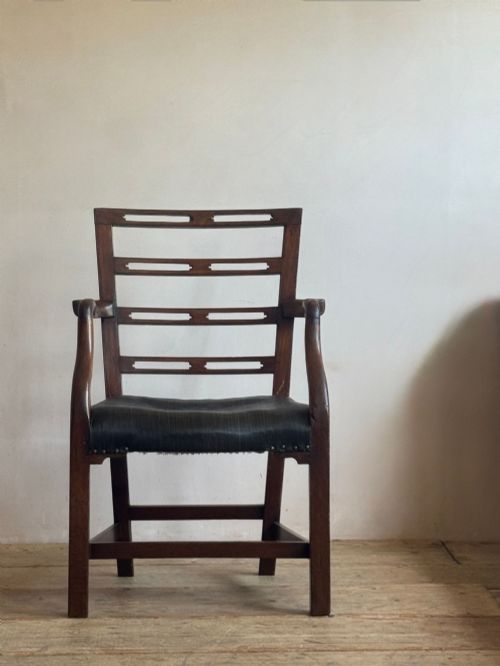
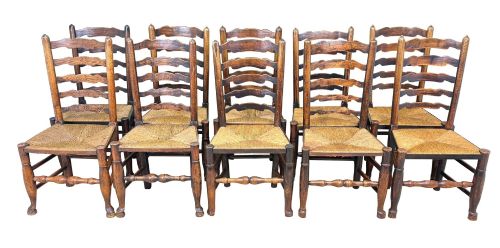
The form is simple: cross-slats between two uprights, turned or squared. It was made across Britain and Ireland as ordinary seating, usually with a woven rush seat, and from the mid-18th century the same arrangement was cut in mahogany with pierced and carved cross-rails for formal dining.
On Sellingantiques the listings are dining seating far more than single decorative chairs. 'Chairs' in the plural appears in six titles out of ten, 'dining chairs' in a third. Six is the commonest set size named, then eight, then four, with pairs equally common. Runs of ten, twelve, thirteen and one of eighteen are recorded.
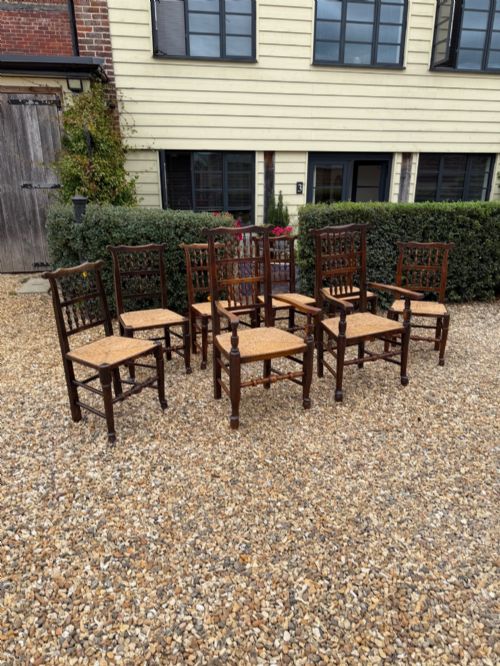
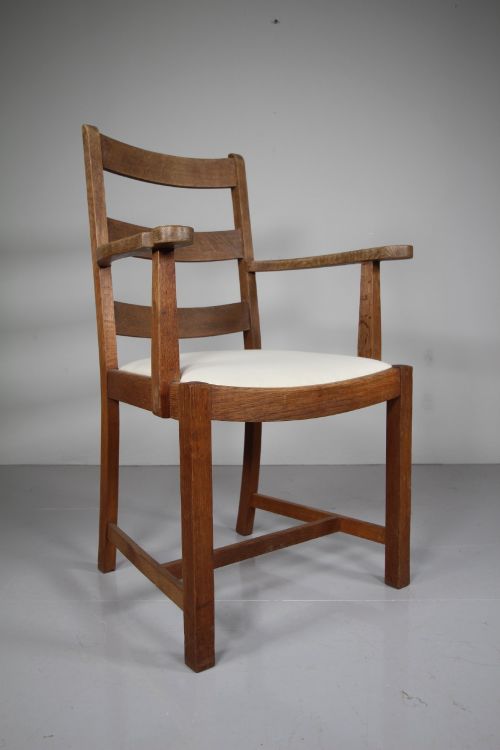
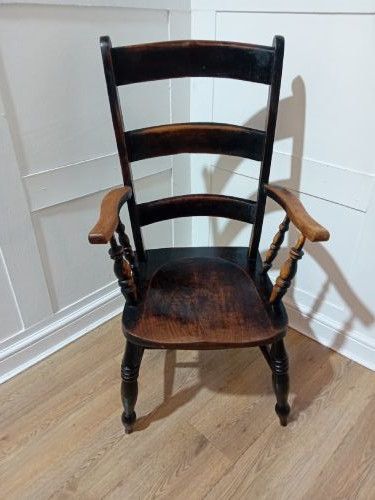
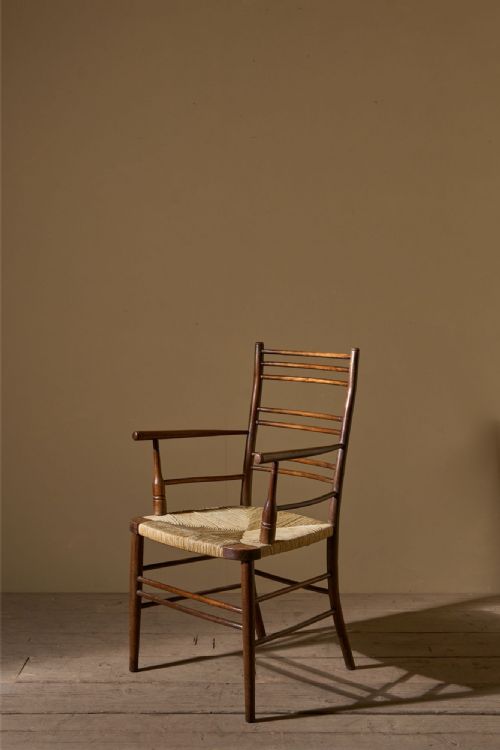
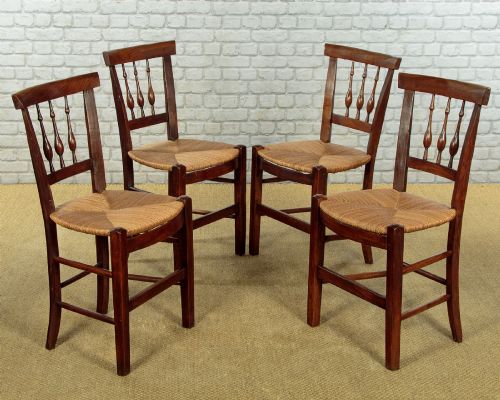
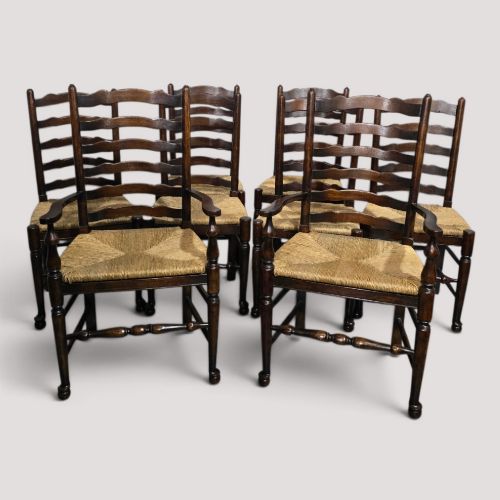
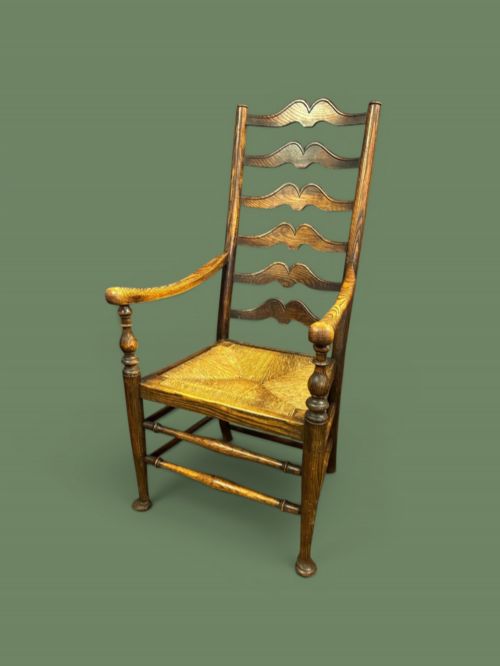
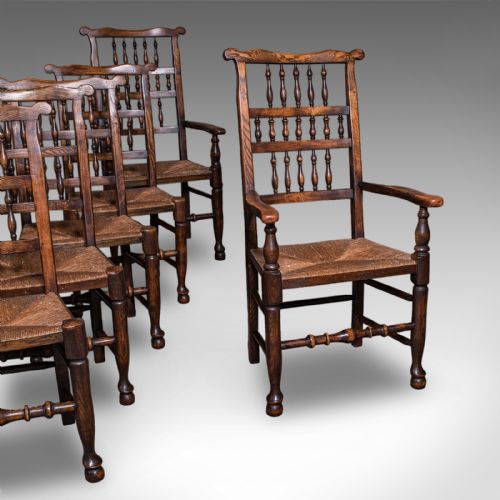
Two populations sit under the heading. The larger is the country chair in native timber - oak, elm, ash, beech - with a rush seat, and these carry regional labels: Lancashire, Macclesfield, Cheshire, Dales, Welsh, Irish. The smaller is mahogany in Georgian and Chippendale taste, with pierced back rails and drop-in or leather seats. Armchairs, carvers and elbow chairs sold singly or in pairs make up a third seam, and Arts and Crafts rush-seated chairs a smaller one.
Dating runs from 1750 to 1930. The 19th century is the single largest bucket, but pre-1800 examples are a real presence, and so is the other end: 1930s, 1900s, Edwardian and 1920s all recur. A ladderback here is as likely to be an interwar rush-seated set as a Georgian one. Rockers, children's high chairs, a nursing chair and a ladderback settee form the tail.
Where The Range Splits
Set size does most of the work. Single chairs and pairs sit at the bottom, sets of eight, ten and twelve at the top, and the set of eighteen Georgian mahogany chairs sits above all of them. Whether the run includes matching carvers matters too: the 6+2 formulation recurs through the upper part of the range.
Timber and formality separate the two populations. Mahogany fills most of the upper sample, particularly George III and Chippendale sets with pierced rails. Elm and ash country chairs cluster lower, and interwar rush-seated sets sit in the lower and middle band. Age pushes in the same direction, with 18th-century and Georgian pieces at the top.
A name helps. Chairs identified as Lancashire, Macclesfield, Cheshire, Dales, Shaker or Arts and Crafts recur through the middle and upper part of the sample, while a plain set of six with nothing attached to it sits lower. Harlequin sets, assembled from near-matching chairs rather than one original run, are described as such.
Antique Ladderback Chairs Retail Price Guide 2026
Typical UK retail prices for ladderback chairs, calculated from the Sellingantiques database of over a million retail prices indexed since 2003. This retail price guide relies exclusively on Sellingantiques data; no external sources or auction records are used, so the figures do not describe the wider market.
One-offs from the archive include a child's commode chair, a chair on wheels, an adjustable steamer armchair on castors and a ladderback settee.
The Antique Ladderback Chairs Glossary
- Carver
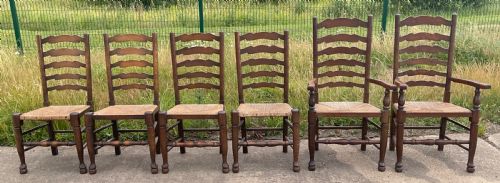
- The armchair in a dining set, as against the armless chairs. A set of eight is often six singles and two carvers.
- Single chair
- The armless side chair, the standard unit of a dining set. Sets are commonly written as 6+2 or 8.
- Rush seat
- A seat woven from rush, the seat named far more often than any other in this category. Plaited straw, sea grass and leather also appear.
- Drop-in seat
- A separately upholstered seat frame that sits down into the chair rails, the arrangement behind the leather-seated mahogany sets.
- Wavy line ladderback
- Slats with a serpentine top edge rather than a straight one, named as a type in several titles.
- Harlequin set
- A set made up of chairs that match closely but not exactly, rather than a single original run. Four titles in the sample use the term.
Antique Ladderback Chairs: Frequently Asked Questions
What is a ladderback chair?
A chair whose back is built from horizontal slats running between two uprights. The name is written variously as ladderback, ladder back and ladder-back across listings.
It's a vernacular form, made in country workshops across Britain and Ireland for everyday seating, and later reworked in mahogany for dining rooms.
How old are most of these chairs?
The dated listings run from 1750 to 1930. The 19th century is the largest single bucket, though much of it is labelled loosely rather than pinned to a year.
Both ends are well represented. The 18th century and Georgian labels together account for a substantial share, while 1930s, 1900s, Edwardian and 1920s pieces turn up throughout.
Which timbers were used?
Oak, elm and ash lead among the country chairs, with beech also appearing. These are the rush-seated vernacular chairs that make up the largest group.
Mahogany is the other main timber, used for Georgian and Chippendale-taste dining sets with pierced or carved back rails.
Do sets usually come with carvers?
Many do. The word carver appears in a run of titles, and sets are often described as six singles with two armchairs.
Armchairs, carvers and elbow chairs are also sold on their own or in pairs, and that makes up roughly a sixth of the category.
Are these chairs all British?
Overwhelmingly British and Irish. Regional labels recur: Lancashire, Macclesfield, Cheshire, Dales, Welsh and Irish, and one chair is described as a Súgán.
Non-British origins are the rarest thing in the category. A French group of nine, a Scandinavian nursing chair, an Anglo-Indian teak-framed chair and a couple of New England and Shaker chairs.
What unusual forms turn up?
Rocking chairs appear regularly, and children's chairs form a small persistent seam - high chairs, rocking chairs and a child's ladderback.
The one-offs are more varied: a child's commode chair, a chair on wheels, an adjustable steamer armchair on castors, a folk art child's high chair and a ladderback settee.