
Antique Wing Chairs
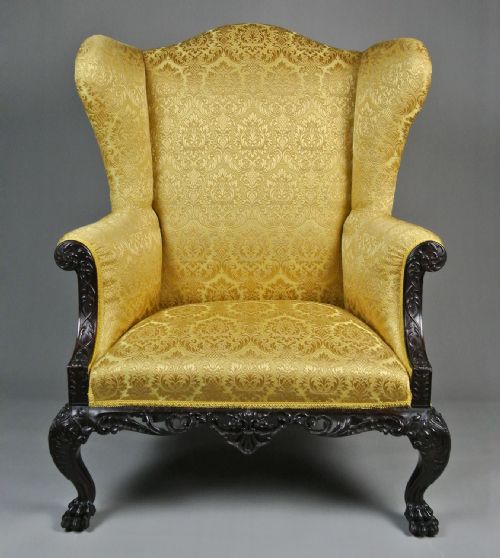
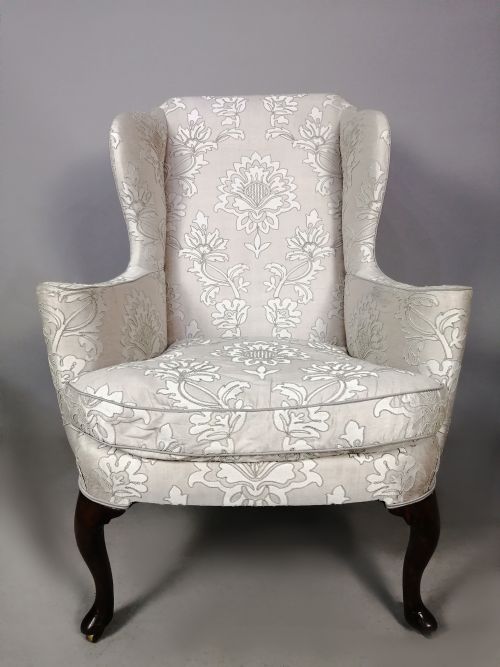
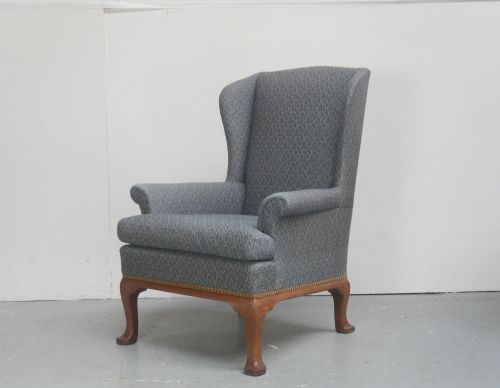
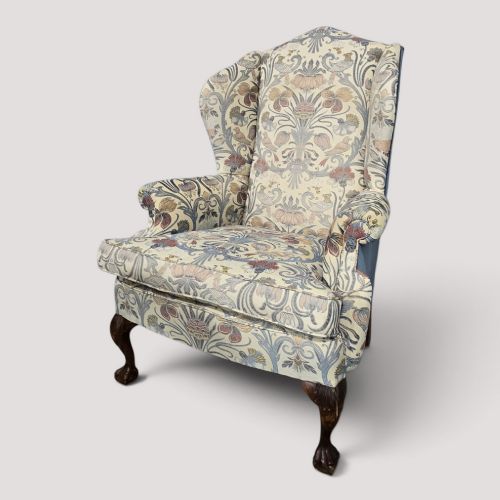
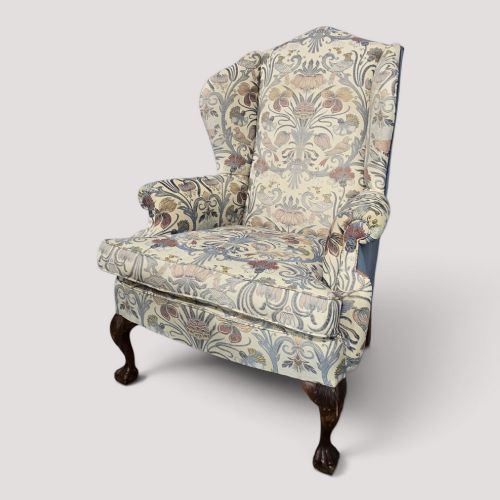
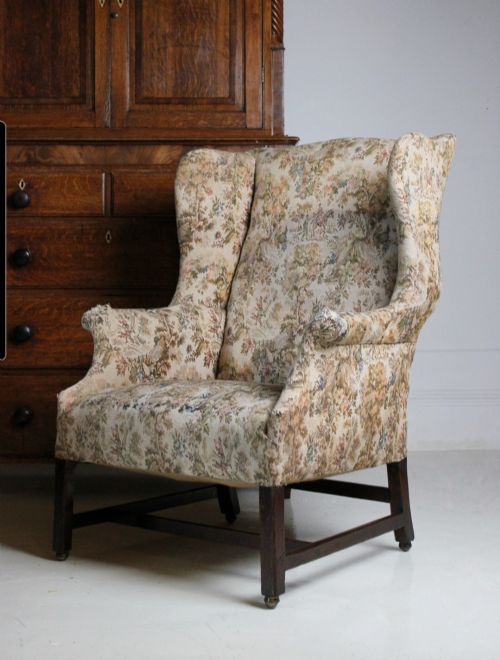
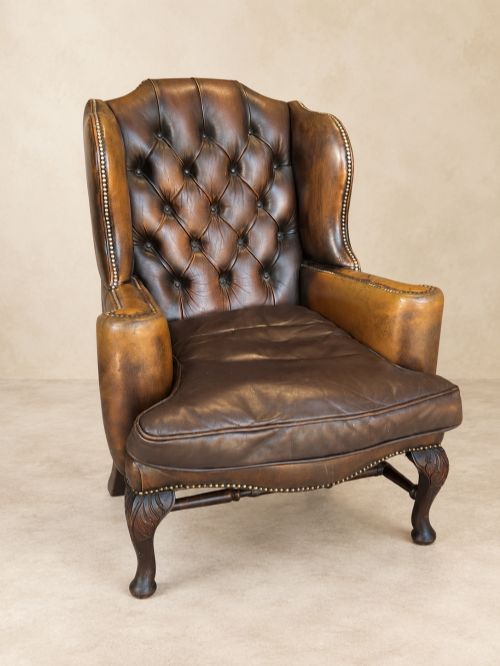
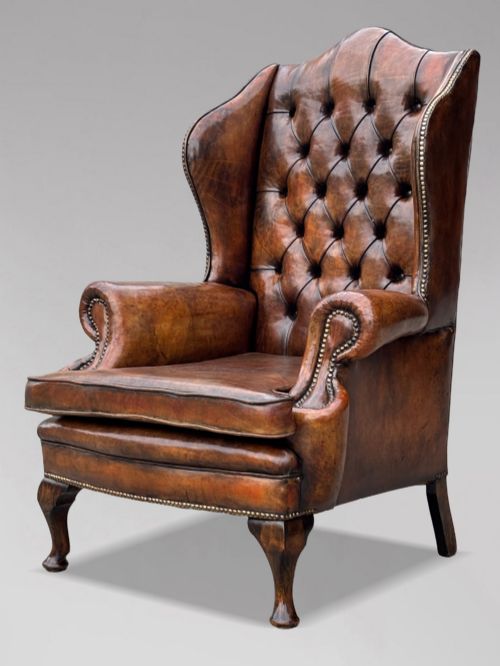
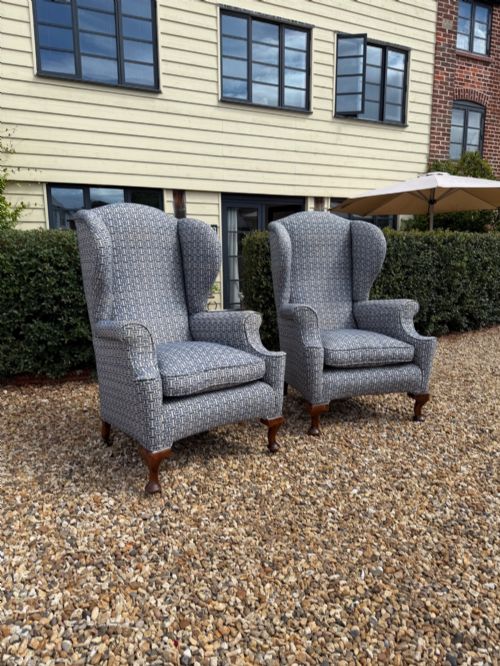
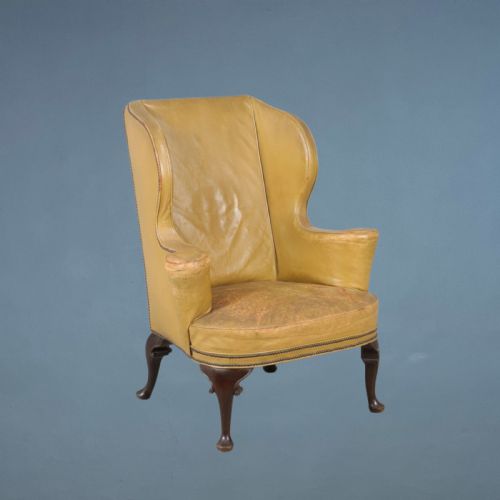
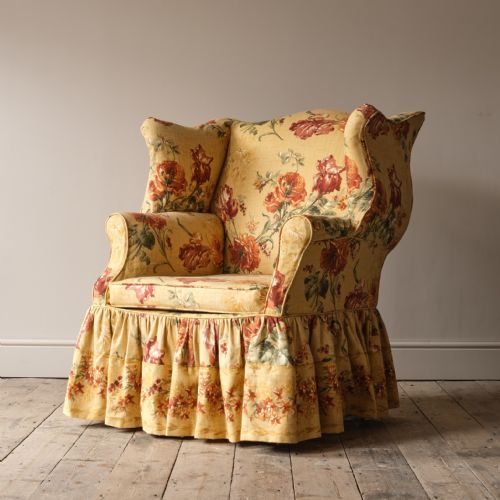
A fully upholstered armchair with tall padded sides flanking a high back, made from the late 17th century onwards as a fireside seat, the wings trapping heat and keeping draughts off the sitter.
Antique Wing Chairs
The form began in England in the late 17th century as an upholstered seat drawn up to the hearth, and it has been made continuously ever since, both in period taste and in revival. It settled early into a drawing-room and library chair and never really left.
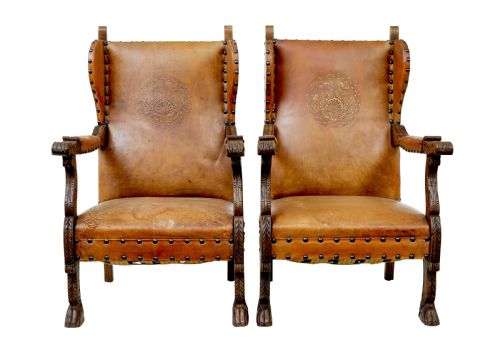
What you'll meet on Sellingantiques is the single upholstered wing armchair. "Armchair" appears in 779 of 1,423 titles, and the same feature gets written three ways: wing, winged, wingback. Pairs account for about a sixth of listings, sometimes described as "Ladies & Gentlemen's" or "His and Hers". Titles lean on the covering and the show timber rather than on design, with leather named in 367 and walnut or mahogany in a minority, the wood usually confined to legs and show frame.
Dating tends to be broad. The dealer date field runs 1700 to 1960, and the largest single bucket is "19th Century", used on 343 listings, ahead of the 1920s and Edwardian together. A great deal of the stock sits between 1880 and 1939 rather than in the Georgian period.
Period words in titles often describe style rather than date. "Georgian Style", "Queen Anne style", "George III Style" and "Georgian Revival" all turn up on chairs the dealer dates to 1900-1930. Smaller seams run alongside: barrel-back and tub forms, chairs named by room use such as library, fireside or porter's, and country lambing chairs, which appear mainly at child's scale.

Where The Range Splits
Age does most of the work. Eighteenth-century carved walnut and mahogany chairs, the sort dated to the 1720s and 1730s, hold the top of the range, while chairs made in Georgian taste around 1900 to 1930 sit through the middle. Stated timber matters too: walnut and mahogany run throughout the upper half, beech frames at the bottom.
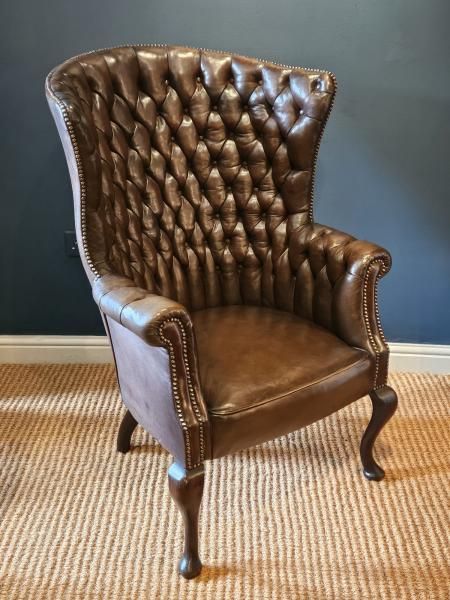
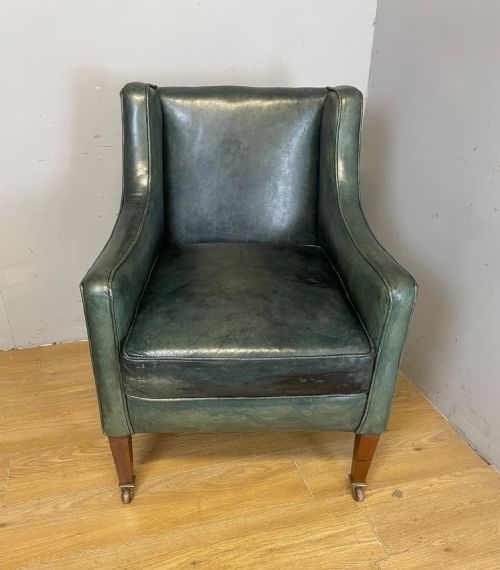
Covering is the other divide. Finished leather, especially deep buttoned or described as original hide in tan, oxblood, burgundy or faded green, sits well above a frame offered for recovering. A separate sub-trade sells the chair with the work included, titles ending "Reupholstery Included", and one is offered at the calico stage for the buyer to finish in their own fabric.
Then scale and number. Large, huge and generous proportions recur high in the range; small examples, and children's or doll's-scale wing chairs, gather at the bottom. Pairs cluster in the upper half, which is the simplest reason a matched set reads differently from a single seat.
Antique Wing Chairs Retail Price Guide 2026
Typical UK retail prices for wing chairs, calculated from the Sellingantiques database of over a million retail prices indexed since 2003. This retail price guide relies exclusively on Sellingantiques data; no external sources or auction records are used, so the figures do not describe the wider market.
Odd ones out from the archive: a giltwood wing throne chair, a carved oak chair with winged mermaids, and a doll's-scale lambing chair on rockers.
The Antique Wing Chairs Glossary
- Wing, winged, wingback
- Three spellings of one feature, the upright padded side panels flanking the back. Titles use all three interchangeably.
- Back armchair
- Shorthand for wing back armchair, in 154 titles. It means the high-backed wing form and nothing more.
- Buttoned, deep buttoned
- Upholstery drawn down at intervals with covered buttons, leaving a dimpled surface. Common on leather chairs.
- Style, revival
- A later chair made in an earlier taste. "Georgian Style" and "Georgian Revival" describe the look, not the date.
- Barrel back
- A curved, tub-like back that sweeps round into the wings, named in 47 titles, sometimes ribbed.
- Calico stage
- A frame covered in plain undercloth, ready for the buyer's final fabric to go over it.
Antique Wing Chairs: Frequently Asked Questions
Are wing chairs usually sold in pairs?
Mostly not. "Pair" appears in 243 of 1,423 titles, about a sixth, so the single chair is the norm.
Where pairs do appear they cluster in the upper half of the range, and some are described as "Ladies & Gentlemen's" or "His and Hers".
What does Georgian Style mean on a wing chair?
It describes the taste, not the age. Chairs titled "Georgian Style", "George III Style" or "Queen Anne style" are frequently dated by the dealer to 1900-1930.
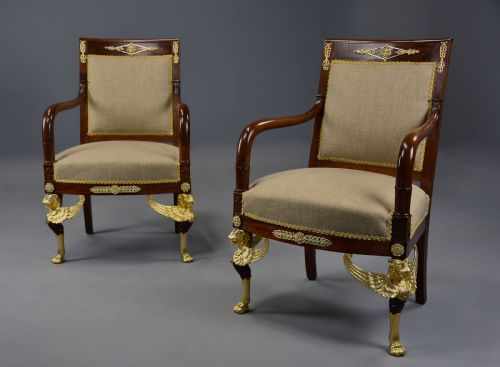
Style names outnumber true period dates in the titles. George I, George II, William and Mary, Carolean, Louis XV, Empire and Jacobean all turn up in the same way.
How old are most of these chairs?
The date field spans 1700 to 1960, with 710 listings carrying a clean year. The single largest bucket is the century-level "19th Century", used on 343.
After that come the 1920s, Edwardian, the 1900s, 1910s, 1930s and 1890s. So a great deal of the stock falls between 1880 and 1939.
The earliest dates given are a William & Mary wing armchair at 1700 and a Queen Anne walnut example put at about 1710.
Why is leather mentioned so often in titles?
It dominates the covering vocabulary, appearing in 367 titles against 151 for "upholstered". Late Victorian to 1930s leather chairs are about a quarter of everything listed.
Colours get named: tan, brown, oxblood, burgundy, chestnut, olive green, red, "Moroccan red" and faded green. "Hide" is used to mean the same thing.
What is a lambing chair?
A country version of the wing chair, usually oak or elm, sometimes on rockers.
On Sellingantiques it shows up mainly as child's examples, part of a small recurring seam of children's and doll's-scale wing chairs alongside fruitwood ones.
Do wing chairs turn up with unusual timbers or forms?
Occasionally. One-offs in the sample include a giltwood wing throne chair, a carved oak chair with winged mermaids, a simulated rosewood example and an ash and elm winged Windsor.
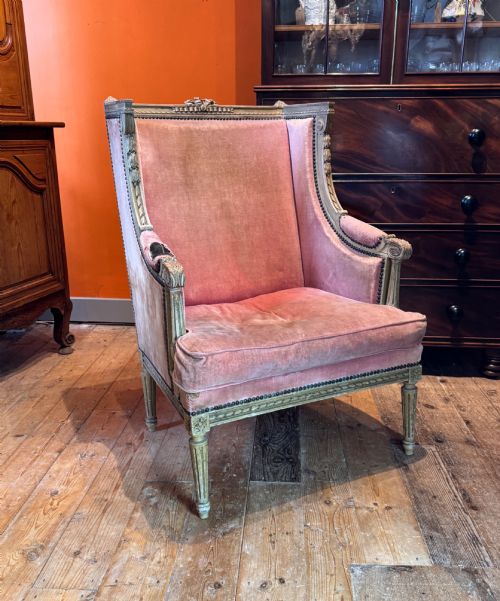
French chairs account for 42 titles, and Swedish, American and Chinese examples appear singly. Bergère turns up in a handful of titles for wing forms of French character.