

Antique Inlaid Chairs
A chair with its decoration set into the wood, stringing, marquetry, brass lines or shell, made for drawing rooms, bedrooms and dining tables.
Antique Inlaid Chairs
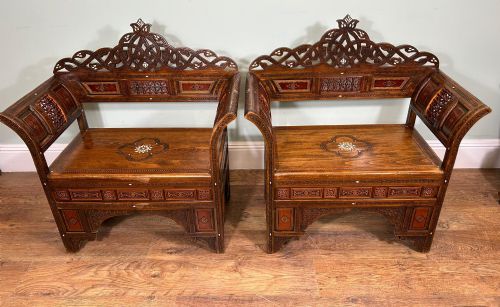
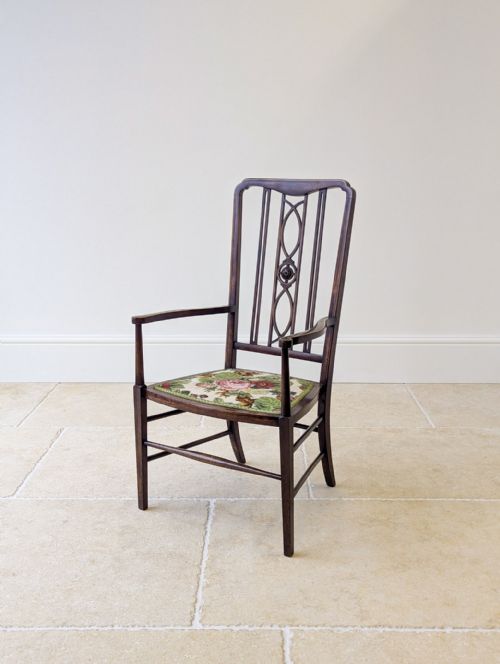
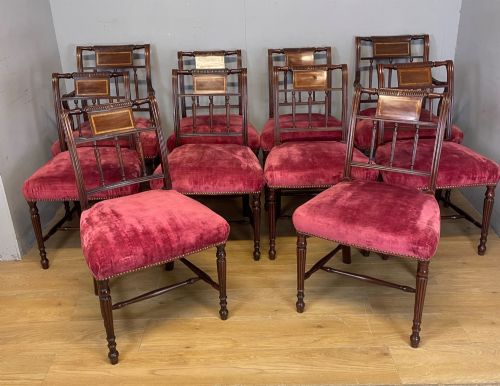
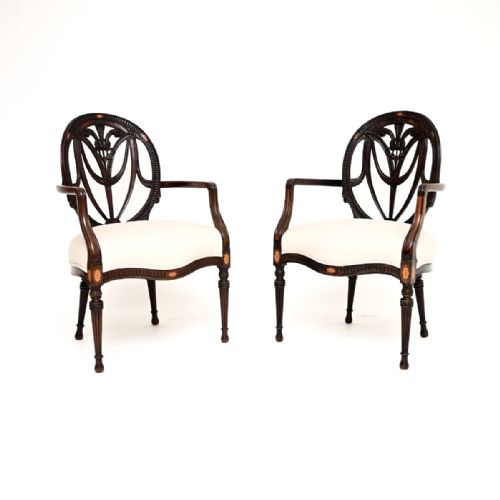
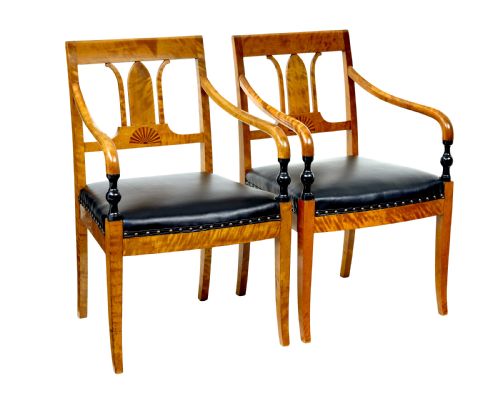
Inlay means decoration let into the surface rather than carved out of it or applied on top. On the chairs listed on Sellingantiques that runs from a single line of contrasting wood along an arm to full marquetry panels in a splat, and out to brass, bone and mother-of-pearl.
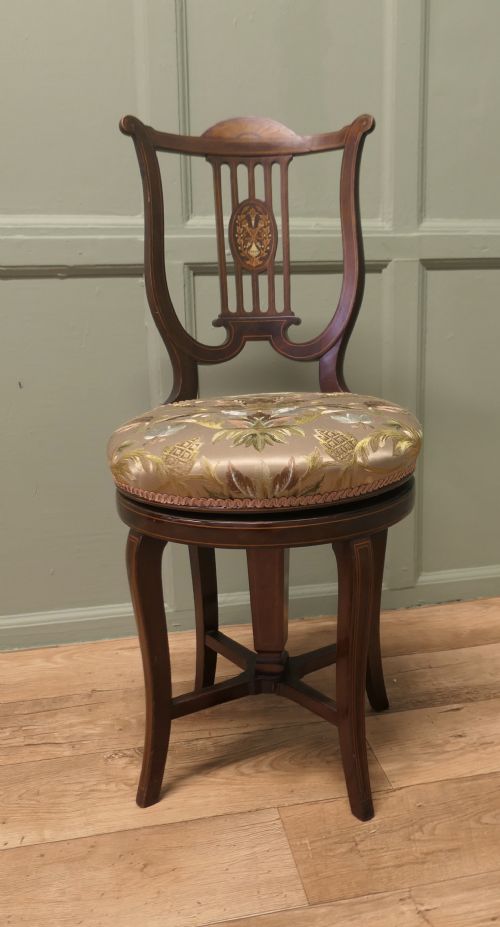
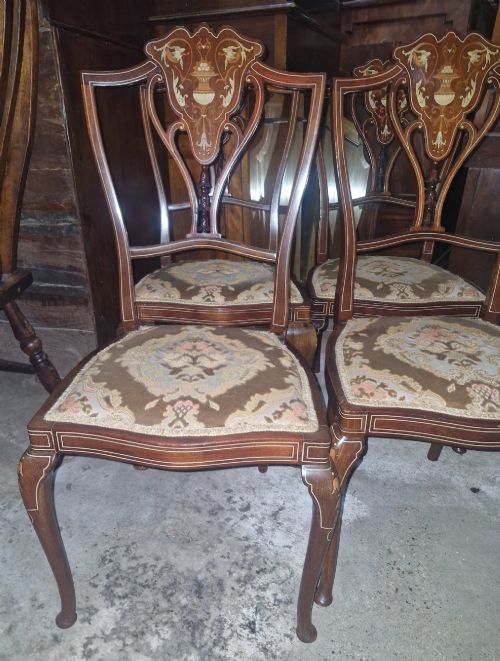
Mahogany dominates, appearing in well over half the titles, and Edwardian is the commonest period word. The form you are most likely to meet is an Edwardian inlaid mahogany open armchair or a light bedroom or salon chair, sold singly or as a pair. Tub, desk, corner and nursing chairs recur inside that group.
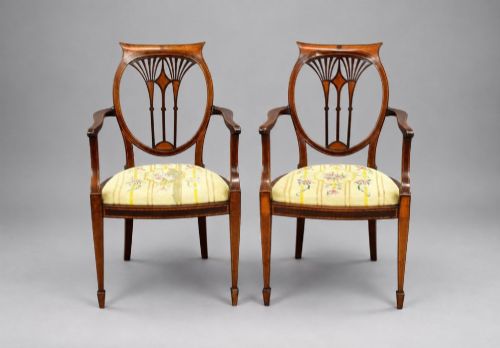
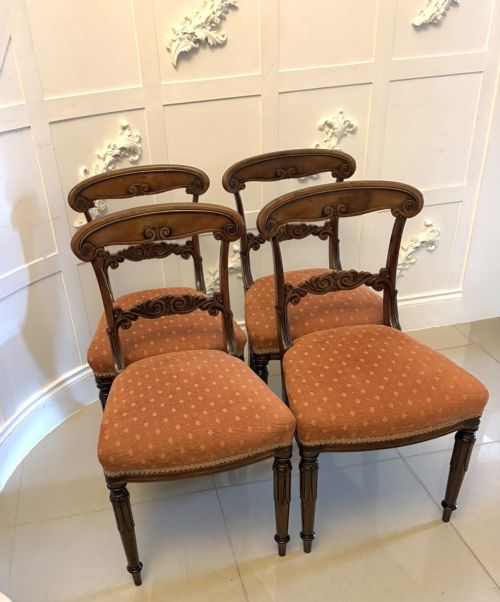
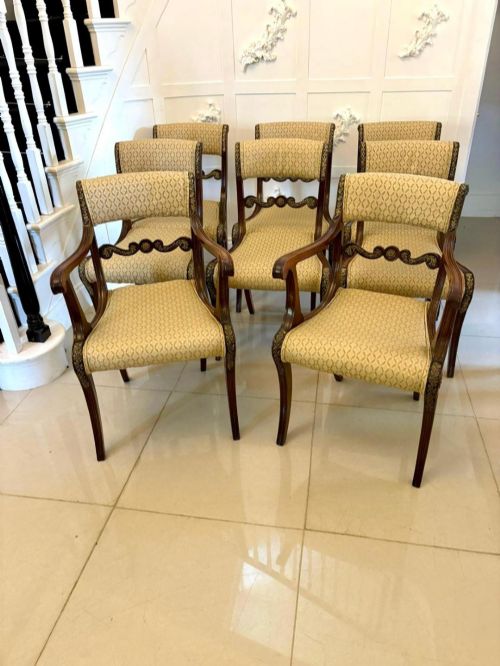
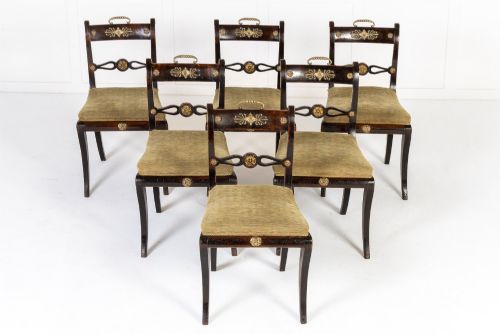
Three other strands run through. Dining sets of four, six and eight make up about a sixth of the category. Regency brass-inlaid rosewood and mahogany, including Trafalgar and bar-back chairs and faux rosewood frames, accounts for roughly a tenth. Sheraton Revival and other Georgian revival work with satinwood inlay sits under that.
Setting contrasting woods and metals into a chair frame is old practice, but it became routine on English seat furniture from the late 18th century, when satinwood stringing lightened mahogany, and again around 1900 when revival styles made inlay a selling point. A smaller run of non-British work turns up throughout: Syrian and Damascus parquetry, Italian, Dutch and Anglo-Indian.
Where The Range Sits
Quantity moves the range more than anything. Singles and pairs fill the lower half, and one chair in four is offered as a pair. Sets of eight, ten, twelve and sixteen cluster at the top, with the single bedroom chair at the bottom.
What the inlay is made of does the rest. Titles that say only 'inlaid' or 'string inlaid' sit low; brass, satinwood, bone, ivory, silver, mother-of-pearl and full marquetry recur in the upper titles. The named timber follows the same pattern, with rosewood, walnut and satinwood concentrated above plain mahogany.
Period label counts too. Edwardian listings fill the lower and middle range, while Regency brass-inlaid sets and Georgian dining sets appear repeatedly at the top. Genuinely early pieces, 17th-century inlaid oak and an early 18th-century walnut marquetry set, are isolated entries rather than a group. An attribution to a workshop also pushes a chair upward, though no single name recurs across the archive.
Antique Inlaid Chairs Retail Price Guide 2026
Typical UK retail prices for inlaid chairs, calculated from the Sellingantiques database of over a million retail prices indexed since 2003. This retail price guide relies exclusively on Sellingantiques data; no external sources or auction records are used, so the figures do not describe the wider market.
One inlaid chair in four on Sellingantiques is offered as a pair, and 'pair' is the commonest quantity word in the titles.
The Antique Inlaid Chairs Glossary
- Stringing
- Fine lines of contrasting wood let into the frame; listings often shorten it to 'string inlaid'.
- Marquetry
- Patterned inlay built from shaped veneers, named in around forty titles here.
- Carver
- The armchair in a dining set, as against the side chairs that make up the rest.
- Tub chair
- A chair with a curved back that wraps round the sitter; one of the commonest body types in the mahogany group.
- Corner chair
- Square-seated, with the back set across one corner, a small speciality that turns up in mahogany, rosewood and Syrian hardwood.
- Faux rosewood
- A cheaper timber grained to imitate rosewood, recurring in the brass-inlaid Regency group.
Antique Inlaid Chairs: Frequently Asked Questions
What wood are inlaid chairs usually made from?
Mahogany accounts for well over half the titles on Sellingantiques, spanning the whole range from single bedroom chairs to large dining sets.
Rosewood, walnut and satinwood together make up a much smaller share, and they concentrate in the upper half of the range. Oak appears only as isolated early entries.
How old are most of these chairs?
Dealers date them mostly to the turn of the twentieth century. Edwardian is the commonest label, followed by the 1900s, 1890s and 1910s, with Victorian and Regency behind them.
Only around four in ten listings carry a clean year. The rest are dated by reign or by century, with '19th Century' used freely. The dated field as a whole spans 1700 to 1930.
Are inlaid chairs sold singly or in sets?
Both. 'Pair' is the most common quantity word in the whole title set, covering about one chair in four.
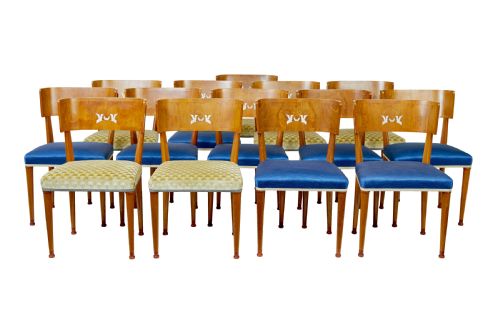
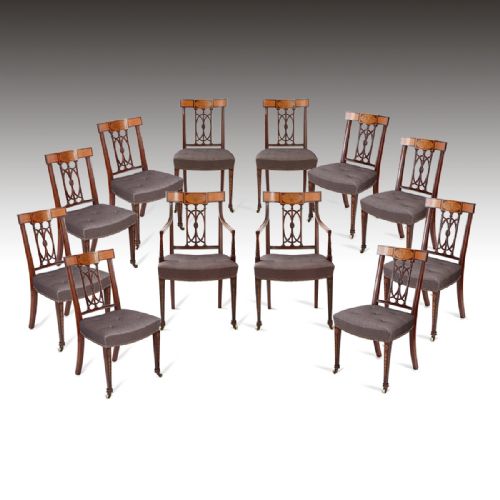
Dining sets of four, six and eight are the next block, and the archive runs to sets of ten, twelve and sixteen at the top.
What is a brass-inlaid Regency chair?
A rosewood or mahogany frame with brass lines and motifs let into the surface, a fashion of the Regency decades. Trafalgar and bar-back forms both appear.
Faux or simulated rosewood, a cheaper timber grained to look like the real thing, is common in this group. Together the brass-inlaid chairs make up roughly a tenth of the category.
Which non-British inlaid chairs turn up?
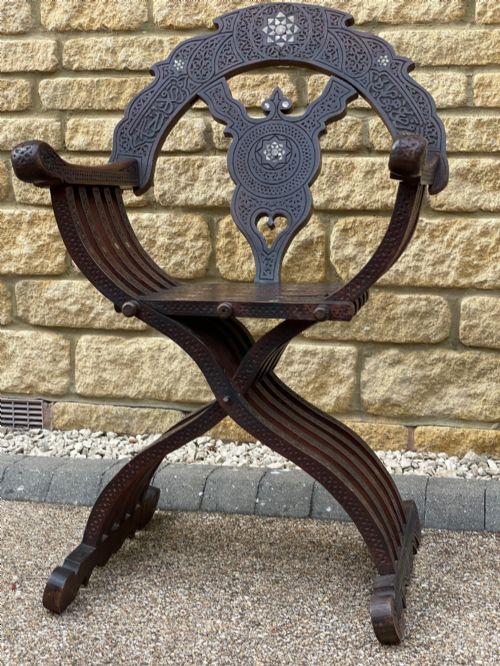
Syrian and Damascus parquetry chairs are the steadiest strand, with twenty titles naming Syria, often X-frame Savonarola armchairs with mother-of-pearl.
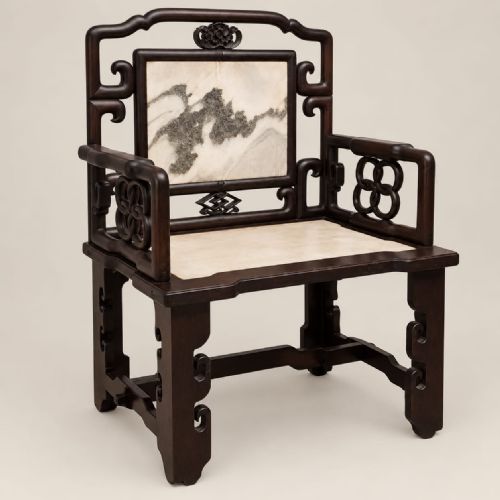
Italian, Dutch marquetry and Anglo-Indian work appear alongside them. Ceylonese ebony with specimen inlay, Andalucian folding chairs and Chinese marble-inset examples each show up once.
What does Sheraton Revival mean on a chair?
It describes furniture made around 1900 that reworks late-Georgian forms with light inlay, usually satinwood stringing on mahogany.
About two dozen titles use the term. Hepplewhite and Queen Anne styles appear in the same revival group.